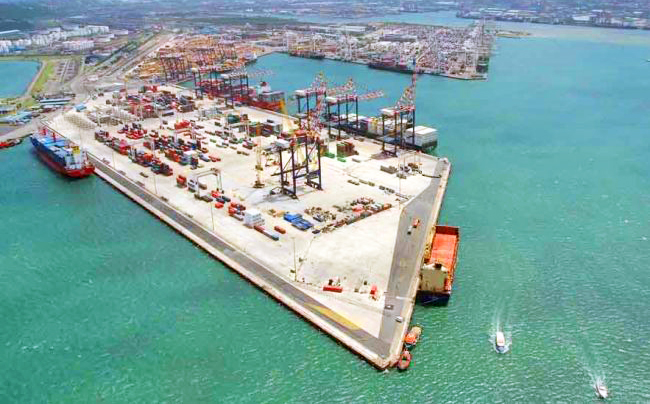
 An acquaintance in the forwarding industry brought this working paper to my attention. Titled “Cargo Dwell Time in Durban“, it is very useful reading for logistics operators, Customs and government agencies, and policy makers. The object of the working paper attempts to identify the main reasons why cargo dwell time in Durban port has dramatically reduced in the past decade to a current average of between 3 and 4 days. A major customs reform; changes in port storage tariffs coupled with strict enforcement; massive investments in infrastructure and equipment; and changing customer behavior through contractualization between the port operator and shipping lines or between customs, importers, and brokers have all played a major role. The main lesson for Sub-Saharan Africa that can be drawn from Durban is that cargo dwell time is mainly a function of the characteristics of the private sector, but it is the onus of public sector players, such as customs and the port authority, to put pressure on the private sector to make more efficient use of the port and reduce cargo dwell time. The Working Paper is the product of the World Bank’s Africa Region, Transport Unit, being part of a larger effort to provide open access to its research and make a contribution to development policy discussions around the world. Policy Research Working Papers are also posted on the Web at http://econ.worldbank.org.
Related articles
- Who pays what charges for a shipment..?? (theshippingandfreightblog.wordpress.com)
 What Happened to the Portcullis?
Very interesting reading, but even with this good turn around, the fact that the congestion in Durban exists points to………………………………??
Regards
Hariesh Manaadiar
http://shippinginsouthafrica.wordpress.com
Hi Hariesh,
It was pointed out to me that FTW’s “Are you affected by congestion and delays at Durban port?” is a good counter argument. I think with these lkind of reports one has to establish who commissioned it.
Mike