WHO Tobacco Proposal – Threatened farmers slam ‘outreagous recommendations’

FTW Online recently reported that representatives of hundreds of thousands of African tobacco farmers are gathering at the International Tobacco Growers Association Africa Regional Meeting this week to discuss what they see as outrageous recommendations being developed by international regulators that they believe would destroy their livelihoods.

Farmer leaders attending the meeting from Kenya, Malawi, South Africa, Tanzania, Zambia, and Zimbabwe will focus on the recommendations provided by the Framework Convention on Tobacco Control (FCTC) working group on Articles 17 & 18. The FCTC originally recommended that governments of these countries should help tobacco farmers find viable economic alternative crops, assuming that tobacco demand will decline.

Very little research on alternative, economically viable crops has been undertaken and as the group recognizes, any future research will require lengthy time trials. “However, the FCTC has now put forward unreasonable and absurd measures to phase out tobacco production, without offering the vast African farming community any viable fall-back solutions,” the farmers claim.

Numerous countries, such as Malawi, Zimbabwe, Zambia and Tanzania now face the prospect of seeing millions of jobs lost and a huge decline in the export of tobacco. Tobacco cultivation is critical for the economy in these countries and one of the few agricultural activities to have remained buoyant during the recent worldwide economic crisis. The latest guidelines drafted by bureaucrats in Geneva threaten to undo that for no clear benefit.

“These guidelines are just plain wrong whichever way you look at them. Nobody has explained to me how banning some cigarette products and ignoring others will have any benefit for people’s health,” said Roger Quarles, President of the International Tobacco Growers Association (ITGA). “It will just be a disaster for those growers who grow leaf for traditional blended products.” The ITGA represents more than thirty million tobacco growers across Africa, Asia, Europe, North America and South America. “We call on governments all over the world to support growers by adopting a common sense approach and discarding these irrational and potentially economically devastating guidelines.”

The Case of Malawi

The association says switching from tobacco in Malawi to other crops is unrealistic as it would require huge investments, pointing out that tobacco is by far cheaper to produce and benefits more people than most of the next best alternatives. “For example, investment required for a farmer in Malawi to grow two hectares of flowers is equivalent to the investment required to grow 1 000 hectares of burley tobacco. The difference is that 1 000 hectares of burley tobacco provides a livelihood for 500 farmers. So, given that the average farmer in Malawi only has two hectares at his disposal, switching to flowers is simply unrealistic”.

ITGA says one crop that has been recognised as being more profitable than tobacco in Malawi and other tobacco-growing countries is paprika. But the association says world demand for paprika is only 120 000 tonnes. “A single country like Zimbabwe could cope with this demand but the result would be overproduction of paprika and the impact on exiting paprika growers would be catastrophic,” it says. The association also argues that a farmer that grows burley tobacco cannot switch to Virginia tobacco because Virginia tobacco has an industrial curing process requiring huge investment and needs a much greater area than burley “in order to be profitable.”

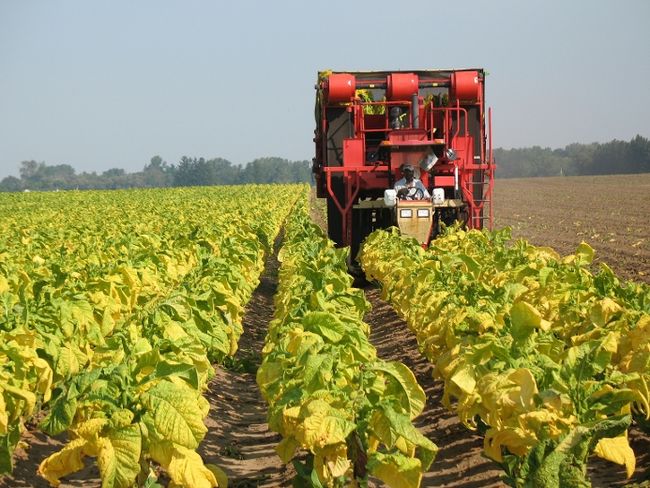
Tobacco is Malawi’s most important cash crop, accounting for nearly 60 percent of total export earnings and makes up 13 percent of the country’s gross domestic product (GDP). It is also the single largest employer, with more than two million people directly or indirectly relying on the crop. With such an influence, paralysing the industry could cripple the economy in a way that may take the country decades to recover. Sources: FTW Online, TIMSA, and Buisness Wire.

 Related articles

ZIMRA, Business to form Customs Forum

The Zimbabwe Revenue Authority (ZIMRA) is working in partnership with organised businesses associations in crafting a Memorandum of Understanding, creating the Zimbabwe Customs to Business Forum, an official has said. ZIMRA’s commissioner for customs and excise Mr Happias Kuzvinzwa said last week that the forum was a platform for his organisation and business to collaborate on issues of compliance, policy, capacity building, integrity and technical engagements. He was addressing delegates at the Shipping and Forwarding Agents’ Association of Zimbabwe 8th annual conference held in Beitbridge last week. Mr Kuzvinzwa said the interim steering committee was finalising the draft MoU and terms of reference.

“The forum is a prelude to the implementation of the authorised economic operator scheme. Membership of this forum is open to the businesses affiliated to recognised associations and shall be governed through a steering committee which is a higher committee, and standing committees which are lower committees chaired and constituted by both ZIMRA and business.

“The standing committees are organised in clusters for easy management of programmes. We expect all the concerned parties to sign the MoU soon upon its finalisation” he said.

Mr Kuzvinzwa added that in line with the SAFE framework of standards, ZIMRA would soon be plotting the authorised economic operators. He said the scheme sought to reward all compliant operators in the supply chain who meet the set criteria. He added that groundwork had been done and teams will be conducting stakeholder consultations and awareness workshops next month. “I would also want to urge the freight industry to embrace as a culture and operation ethos integrity, voluntary compliance, relevant competencies, and information technology.

“Missing these industry risks is being packed into the dustbin of history as you become irrelevant and classified as non-tariff barriers.” he said. Mr Kuzvinzwa added that ZIMRA was also in the process of putting in place a border agency single window through ASYCUDAworld. He said all border agencies would be connected to the workflow process through ASYCUDAworld to ensure that respective mandates are coordinated and streamlined.

“Discussions are at an advanced stage with other border agencies on the implementation of the single window and Beitbridge has been selected to pilot the programme with ZIMRA providing computer workstations at their respective offices,” he said.

Source: The Herald (Zimbabwe)

Zimbabwe: Dependence on SA Imports ‘Risky’

ZIMBABWE’S export trade promotion body, ZimTrade, has warned against over-reliance on South African imports, stressing that Harare could plunge into a serious economic crisis should its southern neighbour experience unexpected production and supply challenges. South African producers of basic commodities, automobile services, chemicals, agricultural inputs and farm produce have taken advantage of a significant weakness in Zimbabwean firms’ capacity to service the domestic market, which has triggered widespread shortages of locally manufactured goods.

South Africa and Zimbabwe have intensified trade relations, but the balance of trade has always been in favour of South Africa, Africa’s largest economy. In March, South Africa’s Deputy Minister of the Trade and Industry, Elizabeth Thabethe, flew into Zimbabwe with a delegation of 45 businesspeople to intensify the hunt for new markets for her country’s companies north of the Limpopo. The business delegation comprised companies in the infrastructure (rail, telecommunication and energy), manufacturing, agriculture and agro-processing, mining and mining capital equipment, as well as information and communication technology.

Zimbabwe labour unions are reportedly facing tremendous pressure from workers to campaign against an overflow of South African products into Zimbabwe to allow for the resuscitation of local industries to create jobs, have said Harare had “turned into a supermarket” for South African products. (Huh? strange since so many of the eligible working Zimbabweans have gainful employment in South Africa. Sounds more like labour union politicking)

If South Africa, for example, is to experience a supply hitch, this will be transmitted directly into Zimbabwe’s production and consumption patterns. The appreciation of the rand in the second quarter of 2011, for instance, resulted in price increases on the domestic market.In other words, heavy dependency on imports will leave an economy susceptible to world economic shocks, according to ZimTrade.

Statistics provided by the Department of Trade and Industry (dti) of South Africa in March, indicated that exports to Zimbabwe increased to R15,5 billion in 2011, from R15,1 billion in 2010, while Zimbabwe’s exports to that country increased to R2,9 billion in 2011, from R1,3 billion in 2010. The statistics indicate that South Africa imported US$1 billion worth of goods and services from the Southern African Development Community trade bloc, with 37 percent of the imports coming from Zimbabwe. The dti said imports from South Africa represented 45 percent of Zimbabwe’s total imports. Therefore, according to ZimTrade, “A growing trade deficit could increase the country’s risk of imported inflation and a direct transmission of shocks into the economy.

South Africa has also been Zimbabwe’s major source market for industrial inputs. The United States, Kuwait, China, Botswana and Zambia were Zimbabwe’s other major trading partners in 2011.However, the dti statistics indicated that Harare had narrowed its trade deficit with Africa’s largest economy in 2011 to R12,6 billion, from R13,7 billion in 2010. This translates to about US$12 million and US$13 million respectively

The dti deputy minister, Thabethe acknowledges that “South Africa and Zimbabwe are not only geographical neighbours. The two countries share historical and cultural linkages. Furthermore, South Africa’s economy is inextricably linked to Zimbabwe’s economy due to its geographical proximity to Zimbabwe whose political and economic welfare has a direct impact on South Africa”. Source: The Herald (Zimbabwe)

African countries top tobacco exports

African countries have taken up a combined 43 percent of tobacco exports with South Africa topping the list, the Tobacco Industry and Marketing Board has said. This is an increase from the same period last year when African countries consumed only 18 percent of the total exports. Latest statistics from TIMB show that current seasonal tobacco exports to the Far East rose by 4 percent from last season’s 26 percent.

The increase in exports has been attributed to improved exports in China. The Middle East, which used to take more than 15 percent of total tobacco exports, made a huge slump to 2 percent in March this year.According to TIMB, this is a result of an 81 percent decrease in exports to the region. United Arab Emirates is the major player in the region with current monthly imports pegged at 133 000kgs.The UAE consumes cutrag tobacco, which has firmed up both in volume and price over the past two years.

Exports to the European Union have decreased from 36 percent to 18 percent. As at April 13, South Africa had imported 2,4 million kg of tobacco worth US$7,5 million from Zimbabwe at an average price of US$3,16 per kg followed by China which bought 2,3million kg at US$US$6,35 per kg and Belgium 1,6million kg at US$1,43 per kg.

Hong Kong was offering the highest price buying 415 800 kg of tobacco at US$6,70 per kg.Countries also offering high prices were Poland US$6,62 per kg, and Azerbaijan which bought 19 800kg at US$6 per kg. Zimbabwe exports tobacco to African countries which include Mozambique, Angola, Kenya, Congo, Malawi, Tanzania and Lesotho.

Tobacco stocks on hand are expected to go up as a result of increased stocks from the current crop.Flue cured tobacco imports remained stagnant at 515 152kg at an average price of US$2,70 per kg.

However, seasonal import permits issued increased to almost 12 million kgs as a result of authorisation granted to import 11 million kgs of tobacco. Tobacco production has been on the increase due to the favourable prices being offered on the market. The land reform programme has also contributed towards the increase in production with more than 80 percent of tobacco producers coming from the A1 and small-scale sectors. Source: The Herald (Zimbabwe).

For related information visit: All you need to know about Tobacco

East Africa – Harmonisation of Border Procedures

Operations of all agencies working at border posts should be harmonised if the East African countries are to easily facilitate movement of goods and persons at their borders, Trade Mark East Africa (TMEA) has said. TMEA is a multi-donor funded agency that provides support for increased regional trade and economic integration in East Africa.

It takes a trader importing goods from the EAC member countries an average of 30 minutes to process documents, at the Gatuna/Katuna border. Border agencies need to collaborate on planning, monitoring, organisation and other related activities to ease the movement of traders, according to Theo Lyimo, TMEA’s director of Integrated Border Management and One Stop Border Posts.

This was at the sidelines of a one-day workshop on the establishment of the Integrated Border Management Concept and presentation on the final design of Kagitumba One Stop Border Post facilities. “Integrated border management should have a system controlling all the agencies at the borders and this will help to eliminate all trade challenges affecting the region including high prices of products, high costs of transport and others,” he noted. He cited the Chirundu Integrated border management between Zambia and Zimbabwe which he said had totally cleared trade barriers between the two countries.

However, though the One Stop Border Post (OSBP) had been introduced at some borders of the EAC member countries, they are yet to yield the expected results as traders still encounter some challenges.

The establishment of Integrated Border Management has been recognised as one of the ten building blocks of Customs in the 21st Century, a new strategic perspective and policy agreed upon by heads of the world’s customs administrations to shape the role of Customs in the current century, a century with unique demands.

Better border management entails coordination and cooperation among all the relevant authorities and agencies involved in border regulatory requirements,” said Tusabe Jane Nkubana, chairman of the exporters association, welcomed the border management saying that traders have always been affected by delays at the border posts leading to an increase in the cost of goods.

Delays at the borders are some of the non-tariff barriers affecting us in the region, and if the operations of agencies are harmonised, this would reduce on the time we spend clearing goods at the borders. Transport costs in East Africa are regarded amongst the highest in the world damaging the region’s ability to trade competitively in the international market, according to economic experts. Source: AllAfrica.com

Heartless!

Fellow blogger ZIMDEV paints a bleak picture for casual cross border traders – Cross border trade has been the lifeline for many unemployed Zimbabweans who make a living buying and selling goods from various neighbouring countries. Late last year, the Zimbabwean government together with the Zimbabwe Revenue authority have introduces a ban on the use of the $300 rebate on most goods. The new tariffs are quite steep and leave no room for profit for the traders. Cross border traders, fed the nation when Zimbabwean shops were empty. They travel across borders, bringing in goods that are not available in Zimbabwe and play a vital role in the economy. One visit to Beitbridge will prove just how vital the cross border trade is to Zimbabwe. It is disheartening to see the government’s reaction to cross border trade.

Instead of enabling and facilitating trade, the government is stifling and discouraging trade and enterprise. Importers of blankets, footwear, refrigerators, stoves and other electrical gadgets now pay 40% of the purchasing price plus a flat rate of US$5 per unit as duty. Government is also now charging between 10% and 25% duty on basic commodities such as maize meal, cooking oil, potato chips, baked beans and mixed fruit jam. The consignment of goods is also charged according to the weight of the goods, each kilo being charged at $3. Cross border trade has been dealt a heavy blow.

While continental and regional efforts wax lyrical about future ‘free trade’ in the Africa, domestic efforts and policy appear to be in contradiction, or perhaps the political utterances at regional trade and AU conferences are mere hot air!  Read the full article here! Surely this should be a case for closer diplomatic collaboration between Zimbabwe and its neighbours, or are the ‘cross border traders’ the enemy?

Zimbabwe Industry slams ASYCUDA

With much talk of intra-African trade, perhaps its a good time to consider increased collaboration between customs administrations regarding modernisation initiatives. It helps little for trade if the system only works on one side of the border. The case in point demonstrates a painful realization of too little mediation with stakeholders.

THE Zimbabwe Revenue Authority‘s introduction of the latest version of an automated customs clearance management system has brought industry to its knees as goods in transit are stuck at the country’s ports. The system challenges at Zimbabwe’s ports is particularly worrisome for importers as the majority are set to close shop today for the festive season. ASYCUDA is an acronym for Automated System for Customs Data, an automated customs clearance management system.

The Shipping and Forwarding Agents’ Association of Zimbabwe (Sfaaz) held a crisis meeting in Harare, where they intended to engage the Ministry of Finance and Zimra officials who had been invited. Ministry of Finance and Zimra officials were, however, conspicuous by their absence. Sfaaz chairman Mr Phanuel Gukwe said the system, whose implementation commenced in October, had significantly slowed down clearance procedures. “There is perennial breakdown of operations at most ports, which means no imports are coming out of Zimra, funds are locked in prepayment accounts and turnaround of bill of entries is taking up to two weeks instead of the normal three hours.

“Contrary to expectations when Zimra proposed the system, the situation at ports has worsened drastically,” he said. The situation at the country’s ports, which is now in its third month, might have implications on the revenue collection targets for the fourth quarter, especially in terms of excise duty, import duty and customs tax.

Questions sent to Zimra were unanswered by the time of publication yesterday. ASYCUDA 2.3 was the earliest version to be introduced in Zimbabwe in 1992 and was upgraded to versions 2.5 and 2.7. ASYCUDA++ later came on board in the form of version 1.15 and 1.18. Currently, Zimra is rolling out ASYCUDA World version 4.0.21 to over 14 stations.

Mr Gukwe said Zimra had ignored the association’s earlier proposal to stagger the implementation of the new system. “We had proposed to Zimra to follow the example of South Africa, which undertook to implement the system at limited ports at a time, but they rather chose to go wholesale. Zimra also ignored us when we pressed them for a fallback system to be put in place,” he said.

The Wednesday crisis meeting, that was emotionally charged, saw importers level a range of accusations against Zimra. Some said Zimra had only two examining officers at some border posts, which means the slow clearance was an issue not just of failure in connectivity but also manpower shortages. It was also observed that when clients of local importers called Zimra to find out about the system challenges, Zimra officials were telling them that problems with the system had since been rectified, a situation that was portraying the local importers in bad light.

“I do not think it is legal for Zimra officials to be discussing these matters with our clients, they should only communicate with those who put in the bill of entry,” said one Sfaaz member. Others accused Zimra for being nonchalant. “Zimra should be taking responsibility on this matter. They could have at least eased our plight by arranging for the reduction or waiving of storage fees. We are paying some serious money for storage for weeks on end, which is driving up our landing costs,” said an importer.

Observers warn that if the problem continues, it could have wider repercussions on the economy, which is still a net importer of most goods. Meanwhile, Sfaaz officials were yesterday engaged in a closed door meeting with top Zimra officials over the matter. Source: The Herald (Zimbabwe)