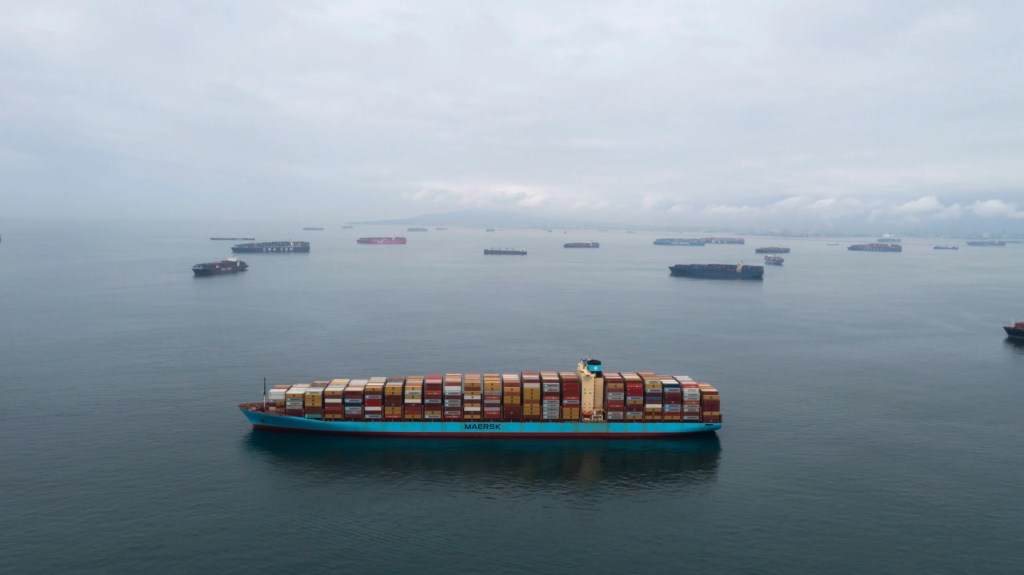
Last year, the ports and the private sector moved a historic amount of goods with record holiday sales and delivery times below pre-pandemic levels. Currently, real retail inventories excluding autos are six percent higher than at the end of 2019 and products at grocery and drug stores are 90 percent in stock, just 1 percentage point below pre-pandemic levels.
The US government is also focused on addressing the longer-term weaknesses in our nation’s supply chains, the result of decades of underinvestment, outsourcing, and offshoring instead of investment in long-term security, sustainability, and resilience. The Bipartisan Infrastructure Law (BIL) is now making a generational investment in our ports, highways, and other parts of our physical infrastructure, which will help speed up the movement of goods and lower costs. But we can further strengthen our goods movement supply chains by making a similarly bold improvement in a digital infrastructure to connect the supply chain.
To take the first step toward addressing this challenge, the US government is announcing the launch of Freight Logistics Optimization Works (FLOW), an information sharing initiative to pilot key freight information exchange between parts of the goods movement supply chain. FLOW includes eighteen initial participants that represent diverse perspectives across the supply chain, including private businesses, warehousing, and logistics companies, ports, and more. These key stakeholders will work together with the Administration to develop a proof-of-concept information exchange to ease supply chain congestion, speed up the movement of goods, and ultimately cut costs for American consumers. DOT will lead this effort, playing the role of an honest broker and convener to bring supply chain stakeholders together to problem solve and overcome coordination challenges. This initial phase aims to produce a proof-of-concept freight information exchange by the end of the summer.
Recent supply chain disruptions have raised national awareness of the need for improved information exchange. Supply chain stakeholders deserve reliable, predictable, and accurate information about goods movement and FLOW will test the idea that cooperation on foundational freight digital infrastructure is in the interest of both public and private parties. FLOW is designed to support businesses throughout the supply chain and improve accuracy of information from end-to-end for a more resilient supply chain.
Resiliency—the ability to recover from an unexpected shock—requires visibility, agility, and redundancy. The lack of digital infrastructure and transparency makes our supply chains brittle and unable to adapt when faced with a shock. The goods movement chain is almost entirely privately operated and spans shipping lines, ports, terminal operators, truckers, railroads, warehouses, and cargo owners such as retailers. These different actors have made great strides in digitizing their own internal operations, but they do not always exchange information with each other. This lack of information exchange can cause delays as cargo moves from one part of the supply chain to another, driving up costs and increasing goods movement fragility.
View the entire Fact Sheet here!
Source: White House, 15 March 2022
 The US government is proposing making social media accounts part of the visa screening process for entry into the country.
 What Happened to the Portcullis?
You must be logged in to post a comment.