EU ‘green tax’ will hit South African exporters

At the expense of coming across a bit cynical – what exactly is the aim of the ‘carbon emission’ movement? We know it’s a United Nations initiative; that many politicians, ex presidents, scientists and climatologists warn against the use traditional energy sources and preach of cataclysmic consequences if we do not need heed their call; that it has become the latest excuse for more government imposed taxes; that the very mention of CO2 conjours up animosity between the rich and poor nations in much the same way as the mention of the WTO. Lets not forget there’s even a ‘Green Customs Initiative’ just so that we can all feel mutually inclusive.

An article just published by IFW-net.com suggests that exporting from South Africa could become even more expensive if the country’s free-trade deal with the European Union (EU) is brought to an end and replaced by a shipping tax next year. The current trade deal removes tariffs on 98% of South Africa’s exported goods. Trade between the two regions creates around R400 billion (US$48bn) a year. Seems like taxation is the West’s latest answer to the failing WTO overtures on free trade!

At the United Nations conference on climate change in Durban, the EC will announce plans to tackle emissions. The proposed shipping tax, aimed at lowering carbon emissions, is expected to dramatically increase the cost of imports into the EU.

The EU’s envoy to South Africa, said shipping and aviation was a main contributor to carbon emissions.“That is why we are quite persistent that a shipping and aviation tax must be included in any deal that hopes to limit carbon emissions.” he said.

The EU has also sparked controversy over its plan for Emissions Trading Scheme that will apply to all airlines flying through its airspace from 1 January 2012.

One way or the other, SARS gets the monopoly on collecting the tax, regardless of its form.

For an alternative view on ‘green stuff’ read “The Recession Hits the Green Movement“. It’s perhaps a lot closer to the truth than all the ‘saving-the-planet’ stuff being dished up by the mainstream media.

SARS now ‘officially’ on Facebook

SARS Facebook Page

SARS has recognised the value of social media and its contribution towards getting the message out to the user. It’s Facebook page is intended to improve communication with taxpayers and other stakeholders, thus will have an external focus. Interested parties can now access SARS’ Facebook page at the following link –  www.facebook.com/sarstax . SARS internal staff will however have to make use of a private PC or iPhone or iPad to access the page.

Durban Dugout versus [nuwe] Transvaalse Tamboekiesfontein

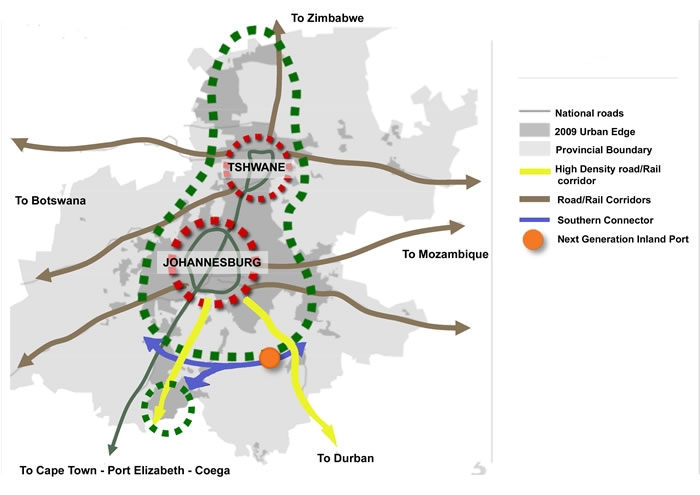
While on the topic of port expansion, an acquaintance of mine reminded me of another development, right here in my backyard. He was referring to Inframax Holding’s proposed development of an inland mega-port and logistics gateway 25 km southeast of the Johannesburg CBD. The 630ha site identified for this project will be called Tambo Springs and is located on land originally known as Tamboekiesfontein farm.

Tambo Springs Logistics Port

Gauteng is the largest metropolitan area in Africa, and one of the largest in the world, with a population of 10 million people generating the largest annual GDP in Africa. Inframax’s vision is to develop this site, and potentially add another 600ha, into a new inland port and logistics gateway that will contribute significantly to meeting Gauteng’s need to increase the current freight logistics capacity/throughput in and out of Johannesburg, to three million twenty-foot-equivalent units (TEUs) by 2015 and four million TEUs by 2020 – with further increases after that.

According to locally born, Texas-based logistics consultant, Franco Eleuteri and Associates, the logistics challenges now faced in Johannesburg/Gauteng have cropped up worldwide wherever cities have expanded fast. Typically, the original logistics centres were developed on the city peripheries. Over the years, however, these cities grow and absorb the centres, making it difficult to expand or upgrade to accommodate new demands. This is basically what is happening to Johannesburg’s City Deep Terminal, which was established in 1977 as a bonded inland container depot where containers from Durban could clear customs in Johannesburg. City Deep still has a vital role to play but the time has come to have it operating in tandem with a larger inland port or ports on the new city periphery and able to accommodate a large efficient intermodal capability for road, rail and air transport. This is fundamental to any 21st Century freight operation.

Tambo Springs is exceptionally well positioned as it is located in the southern periphery of Johannesburg and within the Johannesburg/Durban road freight and rail corridor. It has access to the N3 freeway to Durban (South Africa’s major freight transport route), to the N1 to Cape Town and via the R390, to Port Elizabeth and East London as well as to other freeways to the industrial centres just south of Johannesburg: Heidelberg, Vereeniging, Vanderbijl Park and Sasolburg, all of which are within 20 to 60km.

The site is also only 22km from the City Deep Terminal and 25km from the OR Tambo Air Freight Terminal. These excellent road linkages will allow the site to accommodate both full truck load (FTL) long distance road freight and less than truck load (LTL) regional distribution. On the freight rail side the existing dual directional links already run through the site to all the areas mentioned above. Accordingly, the Tambo Springs development can contribute significantly to optimising the country’s existing infrastructure, particularly that of the Ngqura Deep Water Port near Port Elizabeth. More optimal usage has the potential to increase this Eastern Corridor’s share of South Africa’s freight handling from about 14% to 21% in future. This is important given congestion at Durban harbour.

Inframax has from the outset engaged with key public sector authorities and agencies to canvass in principle policy support for the initiative. These include Gauteng Department of Economic Development; Blue IQ; Transnet Freight Rail and Ekurhuleni Municipality. What is not clear, however, is whether or not Inframax has read the draft Customs Control Bill, which at this point would effectively create a barrier to such development. These are interesting times: a test  as to whether business and trade ‘really’ determine economic and logistics opportunities, or whether policy makers have the vision to see the bigger picture.

Durban’s Dugout Port Proposal – Reality or Pipe Dream?

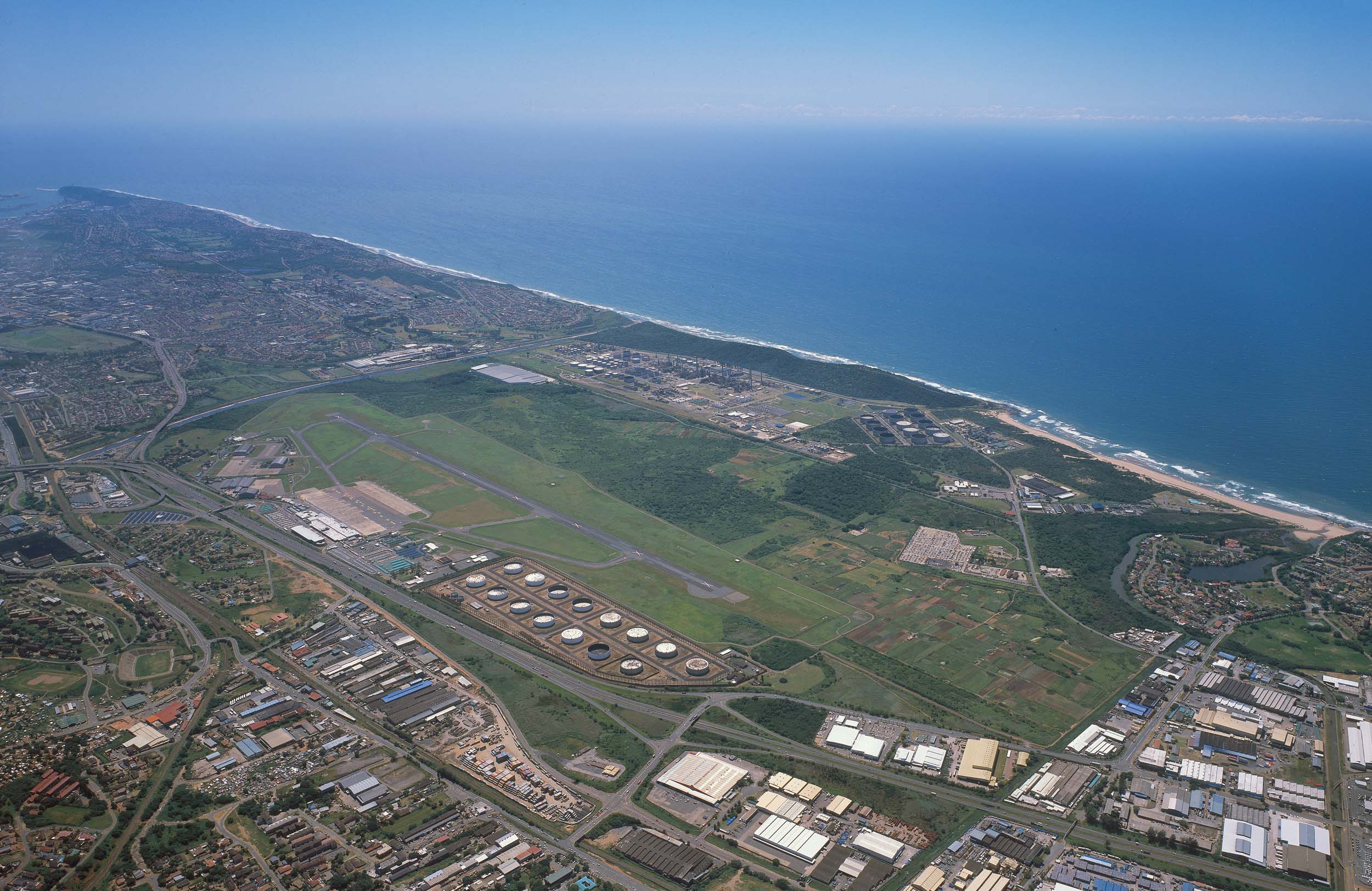
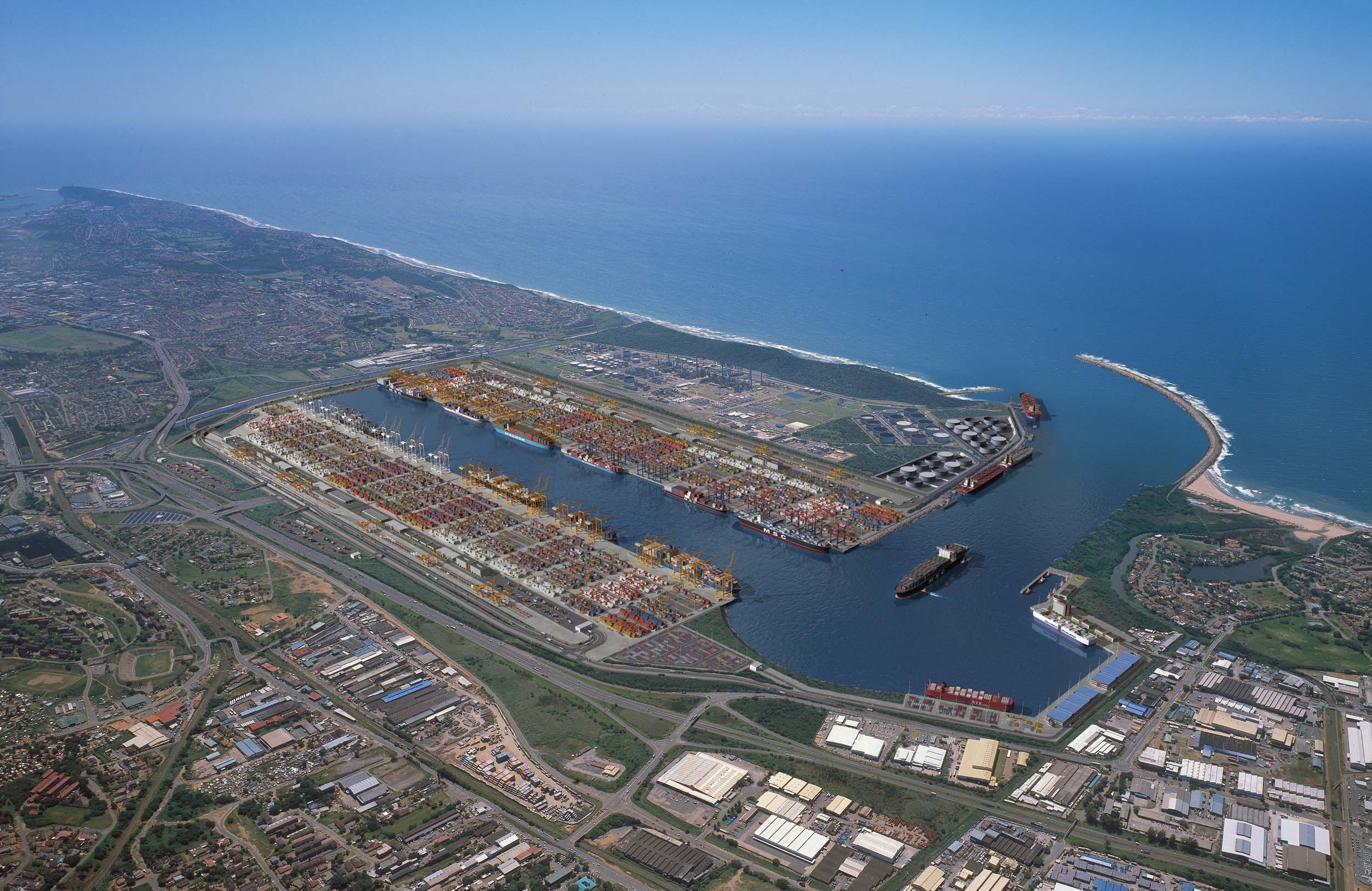
Airport Site Overall 1I received these pictures in an e-mail today. 15 minutes of surfing (the web kind) reveals plans by Transnet to procure the old Durban International Airport site from ACSA and dugout a new port to meet future demand and ensure that Durban remains Africa’s busiest port. Point of correction, Durban Harbour seeded this title to Port Said in Egypt a few years ago, so it would appear someone has a grandiose plan to bring about a mega development which is all honesty is ludicrous given the under-utilisation of Port of Ngqura (Coega) and its adjacent ‘white elephant’, the Coega Industrial Development Zone (IDZ). Government realised after 10 years that Coega was not a great strategic investment. Current levels of activity at  Ngqura are due largely to volumes since diverted from Port Elizabeth container terminal and some new transhipment activity. As long as South African high port charges, piracy up the east coast of Africa and the efficiency of the Suez Canal persist, it is highly unlikely that the shipping conferences are going to increase their traffic around the southern tip of Africa.

Airport Site Overall 2The dugout development cost is estimated at R50 billion, with a further R100 billion to be spent on infrastructure and inland logistics. Was FIFA 2010 not sufficient warning on over-capitalisation with limited return? Unless our ports and inland logistics pipelines begin offering significant advantages over Namport, Maputo and Beira, developments such as the old Durban airport will never realise its fullest potential. It has to be admitted that the concept is brilliant and awe inspiring, but realisation of such is but a daunting pipe dream, me thinks! Transnet chairman Mafika Mkwanazi, is most optimistic insisting that the project will happen with development needing to commence in 2015 to be ready for 2019. I would like to share in this optimism but not at the expense of the taxpayer. Source: IOLProperty.co.za

Managing the Challenges of WTO Participation

The article and analysis might be a few years old now, but still relevant to economists and trade specialists concerned with South Africa’s future economic viability. I think that the author of this case study, Neil Joubert, Researcher at Trade and Law Centre of Southern Africa (Tralac), has done a fine job in giving historic context to our country’s approach to trade law and the effect of its obligations under the WTO GATT agreement. Titled – The Reform of South Africa’s Anti-Dumping Regime – it examines the factors that necessitated the reform of the South African anti-dumping regime, and briefly discusses the impact of the change in regional dynamics on the anti-dumping process in South Africa.