The following comes from the Serbian Customs website – darn interesting! I would indeed like to learn of any other Customs administrations who have preserved “with diginity” their relics of the past.
The Customs profession, one of the oldest trades (emerging immediately after the clerical, ruling and military professions – lets not forget prostitution) withstood many turbulences and assaults, but it persevered, survived and developed. The number of customs officers and customs houses reflects the greatness of a state. And there lies also the greatness of the customs profession.” These words end a text written on his profession by Veljko Velikić, a customs officer from Vršac, published in the magazine “Carinik” (Customs Officer) in November 1926.
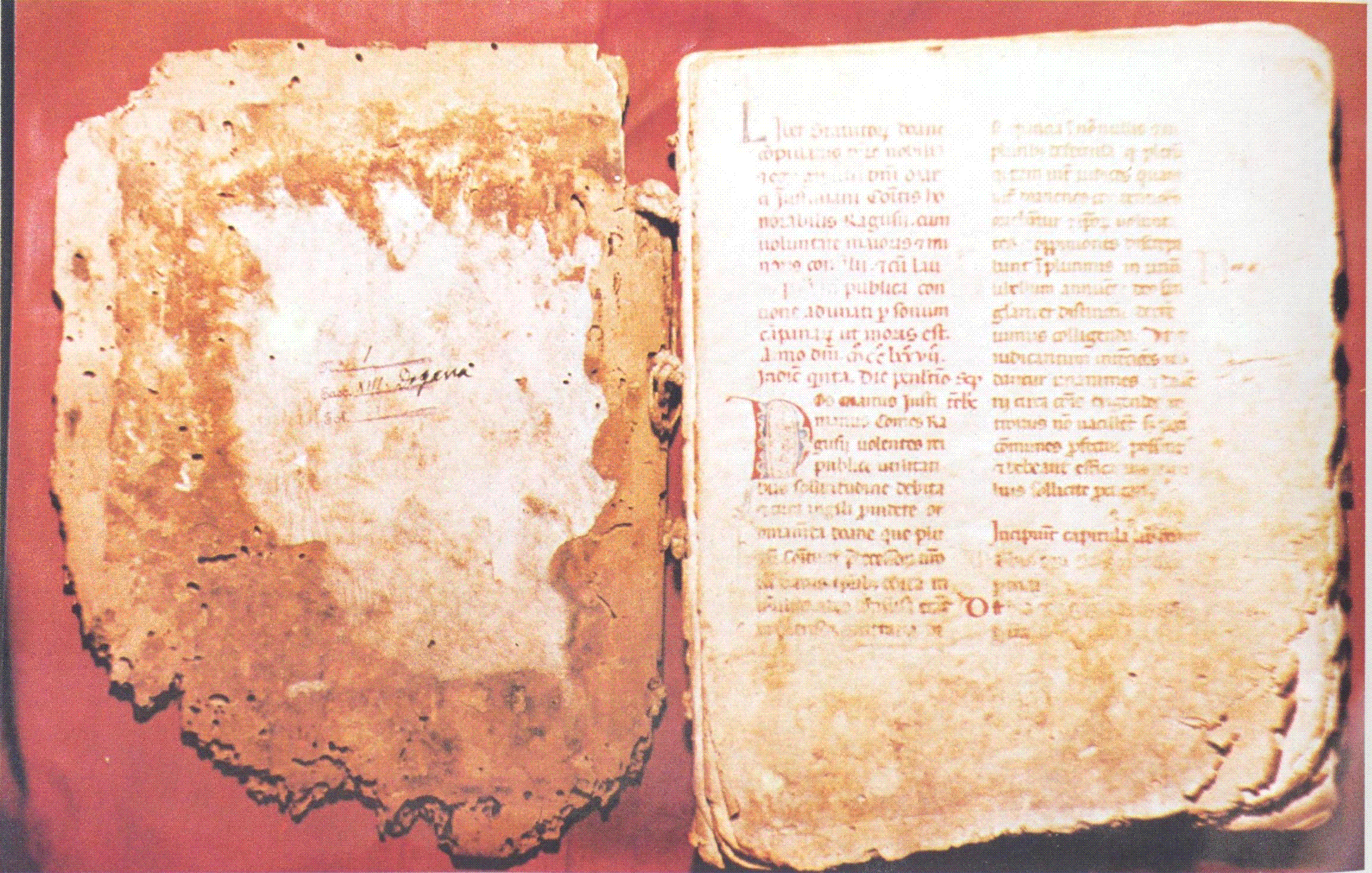
The oldest preserved customs law related to our region was the Dubrovnik customs statute – Liber Statutorum Doane – from 1277 A.D. in Serbia, in addition to case law and national written legal sources, as early back as 13th century the first written legal source of Byzantine origin was applied. Sava Nemanjić, Saint Sava, on declaration of autocephaly of Serbian Orthodox Church in 1219, issued the Nomokanon, a collection of ecclesiastical and civil law regulations.
This view of our colleague from early XX century was based on historical facts, since customs duties, in the form of tolls or taxes, were known back in the Old Ages. They were levied by the state or individual cities. The Old Greeks in Athens imposed a duty of 2% on imports and exports over the Pierian Mountains. The Romans also used to levy such duties as state and provincial or city taxes. As early back as the Roman times customs duties made up a significant part of public revenues for the state treasury. At certain communication points in the provinces there were customs stations (stationes) where the duties were charged for the goods passing such points. The amount of duties was 2.5% (quadrogesimo) of the value of imported goods. The collection of customs duties was also farmed out, at the beginning granted even to farmers from the ranks of domiciled population, and later on, from mid-2nd century on, duties were collected by officials that in our territory were called publicum portarii Illyrici et ripae Thraciae. In the Middle Ages, in addition to import and export duties, the so-called transit duties were also levied.
It was the basis for Dušan’s Code, drawn up at the times of developed feudal state in 1349, and amended in 1354, and this Code provided rules for the largest number of social relations. Medieval Serbian rulers usually farmed out the collection of customs duties, most often to Dubrovnik citizens. After the arrival of Ottoman Turks in the Balkans the structure of revenues was changed entirely. The most important tax was the one paid in money, the so-called desetak (tithe), and also in “fruit of the land” and in labour; also levied were a district surcharge (nahijski prirez), fines, and revenues were also collected from customs duties, transportation and fishing taxes. On liberation from Ottoman Turks, the revenues from customs duties and charges on ferry transportation started to be collected for the first time in May of 1804, when Karadjordje established a customs house with a ferry at Ostružnica. Similar to the rate during the Ottoman rule, the customs duties stood at 3%. The vassal Serbia had to establish its customs tariffs in line with the then applicable provisions of agreements with the Holy See, and Prince Miloš fully complied with the Holy See’s instructions in that area.
 What Happened to the Portcullis?
You must be logged in to post a comment.