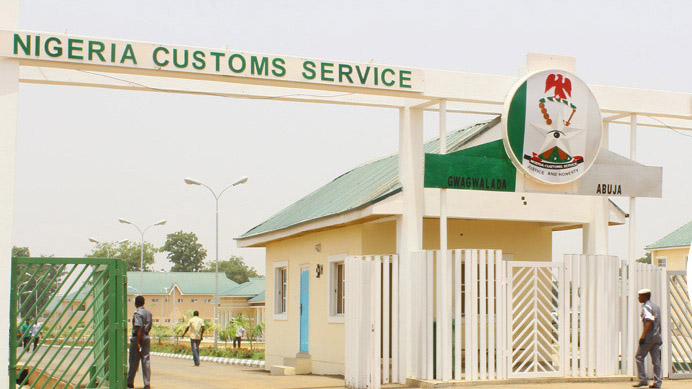
Customs and Nigeria’s Trade Hub Portal

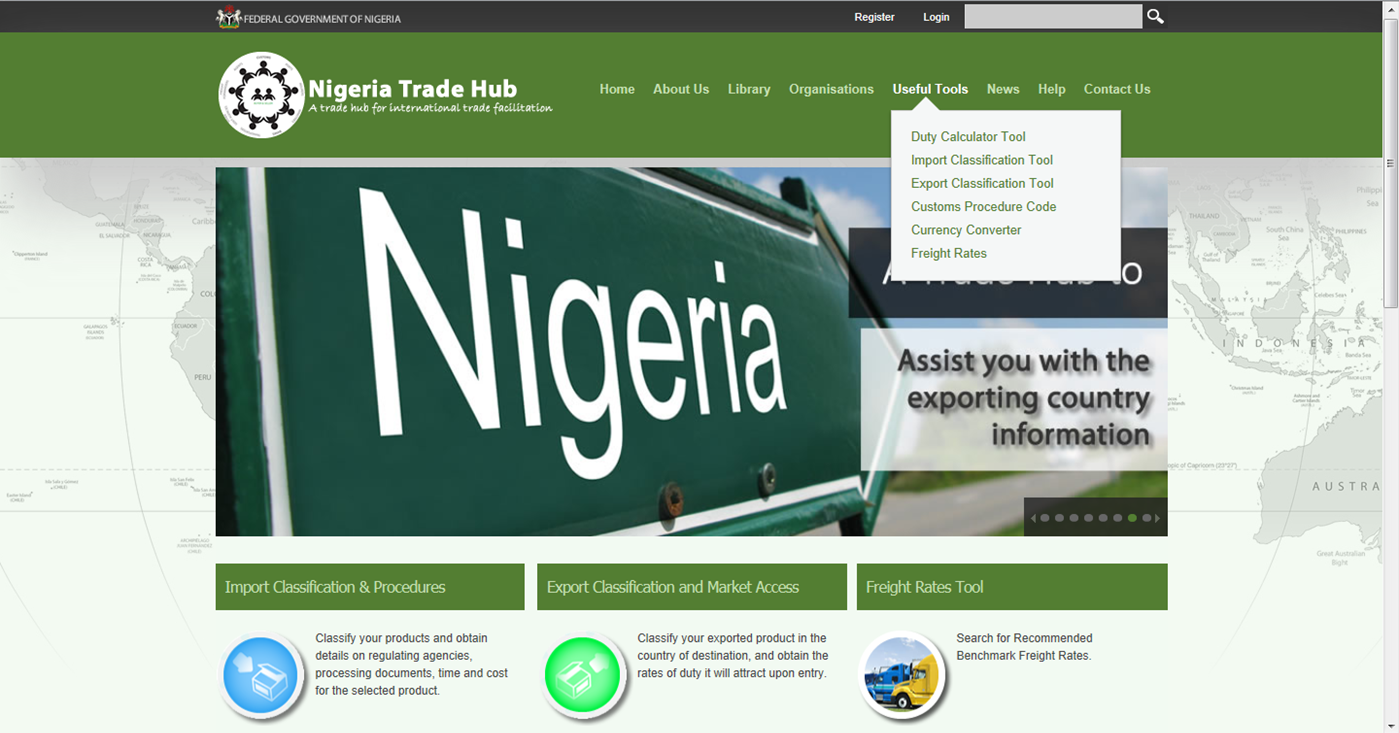
Nigeria Trade Hub 2Anyone familiar with the import and export business in Nigeria will recall how tedious the process used to be. It could take days or even weeks to complete due to ceaseless documentation that importers, exporters and their agents had to endure with the various regulatory agencies. Now, the Nigeria Customs Service (NCS) has developed a web-based application known as the Nigeria Trade Hub Portal, simplifying the entire process and providing information and guidance for international trade business processors in the areas of import, export and transit trade.

The www.nigeriatradehub.gov.ng portal, a non-restrictive and is an intuitive and interactive platform for classifying goods. Through it, trade processors are enabled to find exact Harmonised System Codes (HS Codes) required for related tariffs and duties.

This latest technology is expected to enhance compliance by traders and avail them the required information on tariff in areas like the prohibited items and taxes/levies due for payment upon importation. The application is also designed to touch on the aspect of trade facilitation such that trade processors can access information from all related government agencies. Guidelines and procedures for obtaining permits, licences and certificates of specified commodity and country of origin that a trade will require for business processing are also available on the portal.

The Nigeria Trade Hub portal allows traders to convert currencies to exchange rates set by the Central Bank of Nigeria (CBN) on a monthly basis, make payments, simulate tax and access the CPC Code. The application goes further to provide the tax and duties payable on any particular item, whilst presenting the user with the documents, i.e., the named permits or certificates required for the product, the issuing agency, the processing cost as well as the duration (no of days) for processing. This empowers the trader and provides them with sound information to assist them in competing on the international market.

A mobile Android App is also available on the Google Play store, and other platforms are to be rolled out soon. Source: Nigeria Trade Hub, Suleiman Uba Gaya and Valentina Minta (West Blue Consulting).

Nigeria to Change from FOB to CIF

Trade policy - a balancing actThe Federal Government of Nigeria is set to change its trade policy from the present Free on Board (FOB) to Cost, Insurance and Freight (CIF) which most countries across the world use because of its economic benefits, before the end of the year. FOB makes it mandatory for the buyer to determine who ships and insures the goods to his port of destination while the CIF ensures that the seller determines who ships and who insures the goods brought from him. Presently, goods bought from Nigeria are on FOB basis while Nigerian trade with other nations is on a CIF basis.

Disclosing the position of the federal government to Vanguard in Houston, Texas at the ongoing Offshore Technology Conference (OTC), Leke Oyewole, Special Adviser to President Goodluck Jonathan, said work has been completed on the document for a change in policy so as to help indigenous operators. (?)

The Economic Management Team (EMT) is to take a final look at the policy before returning it to the President for it to be signed into law.

Asked whether the policy would be reversed before the end of the year, the Special Adviser to the President said, ” I am hopeful, am very hopeful, but you also know that if today the President signs the policy into law, Nigerians would not begin by tomorrow. We need to give time sufficient enough for Nigerians to acquire vessels to begin to carry.”

He noted that the country presently “operates on FOB, in which case, as soon as we put cargo onboard the ship, foreign funds are released to Nigeria. When we go on CIF, it will mean waiting until delivery of cargo, before the money will come into Nigeria. There will be a gap, that gap most not be too wide otherwise it will hamper the national funding because we get most of our revenue from these products (petroleum products). Source: Vanguard, Lagos.

Nigerian Customs Develops Trade Facilitation Portal

NigerianCustoms-BadgeAs part of plans to consolidate on its modernisation efforts for eventual take-over from the service providers at the expiration of the extended contract by June 2013, the Nigeria Customs Service (NCS) says it has developed a web-based application to provide information and guidance for international trade business processors in the areas of import, export and transit trade.

The portal is a non-restrictive online medium and an intuitive and interactive platform for classifying goods, a statement from the Customs spokesman, Wale Adeniyi said yesterday. The portal was developed by the service’s technical partners, nominated officers as well as other stakeholders, it said.

Through the platform, trade processors are enabled to find exact Harmonized System Codes (HS Codes) required for related tariffs and duties. It is expected that the platform will enhance compliance by traders and avail them the required information on tariff, prohibited items as well as taxes/levies due for payment upon importation.

Adeniyi explained also that the application has been designed to boost trade facilitation by granting trade processors access to information from all related government agencies. “Guidelines and procedures for obtaining permits, licences and certificates of specified commodity and country of origin that a trade will require for business processing is available on the portal,”he said. He added that the portal further allows traders to convert currencies to exchange rates set by the Central Bank of Nigeria on a monthly basis, make payments and simulate tax. Source: The Daily Trust

Will Nigeria Overtake South Africa as Africa’s Powerhouse?

Is Nigerian's President Goodluck Jonathan on the road to success?  - Photograph by IITA Image Library

Is Nigerian’s President Goodluck Jonathan on the road to success? – Photograph by IITA Image Library

Posted with special permission and credit to Think Africa Press. Projections that Nigeria’s economy will be more important than South Africa’s by 2020 underplay serious instabilities in Nigeria’s economy, political systems and surrounding region.

Following Nigeria’s announcement that calculations of its Gross Domestic Product (GDP) may have been underestimated over the last two decades, the country’s economy has been portrayed much more optimistically by mainstream media. The Financial Times headline ‘Nigeria: No 1 in Africa by 2014?’ in its special edition on emerging markets, Beyond Brics, is a case in point. Similarly, headlines such as ‘Nigerians optimistic about economic prospects’ or ‘Nigeria wins ratings upgrade for tight fiscal policy’ from The Guardian and Reuters, respectively, capture the media‘s changing attitude towards Africa’s most populous nation.

And Nigeria’s economic performance has not only caught the attention of the media. The traditionally cautious business community, major global players such as the International Monetary Fund (IMF), World Bank, and influential private institutions such as Goldman Sachs, have warmly embraced this favourable analysis, setting the scene for more positive depictions of Nigeria’s economy. It appears academia, too, has joined the chorus in praising Nigeria’s apparatchiks for supposedly bringing in reforms that have resulted in “unprecedented” growth.

Several commentators are now asserting that Nigeria’s economy will be more important to Africa than South Africa’s by 2020. These analyses in particular require a closer look.

South Africa vs. Nigeria

There is little doubt that the Nigerian economy, simply in terms of size, will reach the top rung by 2020, if not earlier. By some measures, it could already be seen as the biggest economy in Africa. Its massive population has seen its economy grow at speeds unimaginable not long ago. But does that mean Nigeria will automatically become a more dynamic and important regional economy than that of South Africa?

Measured analysis is less convincing, and show that such predictions focus heavily on Nigeria’s current high growth rates at the expense of serious weaknesses and instabilities in its economy, political systems and region. In comparison to South Africa, Nigeria is still confronted by numerous challenges.

First, Nigeria’s high growth rates have been driven by consistently high crude oil prices. Indeed, the story about Nigeria’s growth is predominantly about oil. The primary engine for such high oil prices on the world market has been demand from BRICS countries: Brazil, Russia, India, China and South Africa. However, since the 2008 global financial crisis, BRICS countries have been showing signs of struggling, with growth forecasts for this year cut by almost half. If oil demand continues to weaken due to their sluggish economic performance, Nigeria’s economy could prematurely plateau in a manner analogous to Japan. On the other hand, South Africa’s economy is more diversified, and as a result, its growth rate, though more measured, is likely to be steady.

Second, Nigeria has, in comparative terms, a smaller entrepreneurial community than South Africa. Dependency on oil appears to have profoundly discouraged would-be innovators and entrepreneurs from other sectors, such as the ‘smart’ industries of finance or telecommunications. With the exception of well–established conglomerates such as the Dangote Group, Nigeria also struggles with internationalising its companies. Indeed, there is a sense that Nigerian entrepreneurs have more interest in accumulation than in global expansion. The Nigerian economy needs to reach out to international markets if it wants to sustain the momentum initiated by high GDP growth rates.

South Africa, on the other hand, has shown that it has the ability to take advantage of regional and international markets, with its companies such as Nandos Restaurants, MTN Multinational and Stanbic Bank, amongst many, showing the potential to become global brands. In a manner akin to the US, South Africa has also successfully ‘exported’ its currency, with the rand being used as official currency in Zimbabwe, Botswana, Namibia, Lesotho and Swaziland, a move that has boosted trade with its neighbours.

Third, Nigeria struggles to retain skills and continues to see an outflow of its best minds to London, New York and Johannesburg. For the past 30 years, it has been a country exporting future engineers, economists and doctors. With its workforce, Nigeria will be hard pressed to keep up with the mature knowledge of South Africa, a country whose dynamic economy continues to see it attract some of the best people in Africa. South Africa’s top industries and universities are manned by highly qualified and some of the most sought after professionals in the region, including Nigerians. For the foreseeable future, human capital will remain South Africa’s comparative advantage.

Fourth, intractable corruption in Nigeria is a formidable barrier to sustained growth. Corruption is pervasive and the problem is compounded by the fact that Nigeria lacks the political will and effective institutions to address it. To be a dynamic economy, Nigeria needs to demonstrate interest in countering corruption by building the trust of its own people and investors. In contrast, South Africa has comparatively stronger institutions for tackling corruption, including an effective judiciary system, the very elements that are missing in Nigeria today.

Fifth, Nigeria lags behind South Africa in terms of infrastructure. Its infrastructural systems are not fully competitive, nor do they resemble 21st century standards, with its rail and road networks requiring serious attention. Nigeria needs to invest in infrastructure that will better connect its regions to each other and the country to the rest of the world. More of everything, from ports and bridges to airports and industrial clusters, is required for trade with its neighbours, along with extensive broadband internet connections. The same is not true of South Africa, which has the region’s most extensive infrastructural development.

Sixth, for an economy to grow sustainably, its immediate periphery must be stable and prosperous enough for trade. In West Africa, Nigeria is in the middle of a rough neighbourhood, with social unrest in the Ivory Coast and the unpredictable politics of Mali and Chad, amongst others, posing a threat to regional stability. South Africa benefits from its relatively peaceful immediate region, with the ‘Post–Apartheid Regional System’ having seen increased stability in Southern Africa over the past 15 years.

Last but not least, Nigeria is confronted by religious violence that poses an ‘existential’ threat to its state, and relentless socio-ethnic tensions. In the predominantly Muslim North, for example, the activities of groups such as militant Islamists Boko Haram threaten security and political order – public goods upon which dynamic economic activity is dependent. The former head of state, General Abdulsalami Abubakar recently expressed concern at the deteriorating security situation, admitting that insecurity was constraining Nigeria’s potential.

South Africa has its problems too

So far South Africa has been looked at as a stable entity. However, it’s important to continue this analysis from the opposite direction: the sustainability of South Africa’s stability. Indeed, the real threat to South Africa’s leadership of the Africa region is not Nigeria, but its increasingly tense social atmosphere, undermining its fragile stability. Despite the promise that its economy shows, incidents such as the Marikana massacre give a strong sense that South Africa’s post–apartheid society still faces serious problems. Concise definition of these problems, though, has appeared difficult, with even some of the most incisive voices struggling to provide convincing explanations of what is haunting the Rainbow Nation.

South Africa’s state elites and the civil and business communities need to urgently explore the causes of such a tense social atmosphere, and confront them head on. The 2000 crisis across the Limpopo River in Zimbabwe is a stern reminder that an insecure social atmosphere bodes ill. It may only be, though, when South Africa faces a crisis of ‘Zimbabwean’ proportions, which may not be impossible, that Nigeria gains that precious title of being the regional powerhouse. Otherwise, the continental economic order is likely to look the same come 2020.

For original article Click Here!
Nigerian Trade Procedures – Customs, Freight Forwarders on a warpath

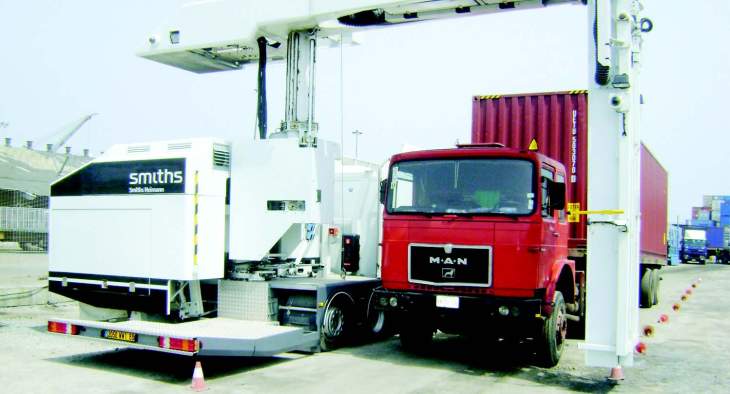
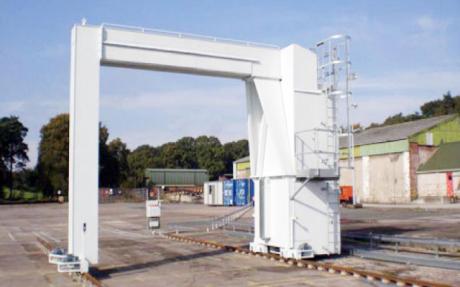
Mobile-scanner installed at Apapa Port as part of DI contract

Mobile-scanner installed at Apapa Port as part of DI contract

Destination Inspection takeover – it seems that all is not well. A stand-off between officers of the Nigeria Customs Service (NCS) and members of the freight forwarding community is festering over trade facilitation issues. The  long association between officials of the Nigeria Customs Service (NCS) and big time freight forwarders, including association leaders may have gone sour. THISDAY checks at the ports revealed that most leaders of freight forwarding associations are on the warpath with the Customs. The agents are aggrieved over what they described as high handedness on the implementation of trade policies by the Customs. They alleged that the Customs has in a bid to meet revenue targets embarked on measures that will force most traders who are mainly their clients out of business.

It is lead to believe that made some leaders of customs agents associations work against the Customs Service concerning the take-over of Destination Inspection from agencies handling the project. The Federal Government had extended the contracts of the Destination Inspection Agents (DIAs) by six months at a time that the Customs had prepared to take over the scheme. Customs had trained about 2000 officers for the scheme. The Service, it was gathered had also planned to inherit the scanning machines from the DIAs before the contract was extended. Indications are that the contracts may be further extended by more than one year at the expiration of six months. Since the extension was announced, many leaders of customs agents have not come out openly to condemn it.

Bone of Contention – When the NCS failed to introduce duty benchmark at the ports last year, the relationship between the it and freight forwarders has changed.Customs issues Debit Note (DN) to recover what is lost due in terms of under-valuation, this has often been abused as importers and their customs agents negotiate what to pay with some of the valuation officers responsible for this. So, the management of the Customs believed that the only way to address this problem was a duty benchmark which saves the importer. The idea of the benchmark was to check revenue losses as a result of under-valuation of goods coming into the country. However, the benchmark arrangement was dropped on the order of the Presidency. Since then, the Service has adopted other means to ensure that no revenue is lost, a development that has angered the clearing agents.

Duty Targets – With a revenue target of N1trillion last year, the Customs had worked hard to ensure that it meets its revenue target. The Service realised about N800bn. Freight forwarders are bitter that so many containers have been abandoned by their owners at the ports due to high-handedness by the Customs in terms of outrageous DNs on the goods. A member of National Association of Government Approved Freight Forwarders (NAGAFF) told THISDAY that the amount being issued as DN is such that many importers have been unable to pay. A top official of NAGAFF who did not want to be quoted said that it appears there is a grand plan by some officials of customs to frustrate some importers out of business by issuing outrageous DNs. “In some cases, the DN is such that the importer will be at total loss after clearing the goods. We have appealed to the management of the customs about this thing, but their officers have failed to come down on the value placed on these goods. Source: This Day (Nigeria)

Nigeria – Customs Ready (or not) for Destination Inspection Role

Nigeran flagTrade House of Representative Committee on Customs, has expressed satisfaction with the Nigeria Customs Service (NCS) preparedness to take charge of the destination inspection scheme at the expiration of the six months extension granted the Service Providers by the government. Chairman of the committee, Hon. Sabo Nakudu, who disclosed this during the tour to access the performance of service providers, commended the scanners provided by the service providers as part of the contract with the federal government.

Nakudu, however frowned at the Risk Assessment Report (RAR), issued by the service providers which he said is plagued with so much controversies. He noted that the basic reason for the tour, was to confirm the preparedness of the Customs to take over and to ensure that what the service provider delivered, are as expected. According to him, “In most cases, there are instances whereby this risk assessment report are duplicated or un-utilized and instances where a particular consignment being issued with different amount.

“Agencies found (to be involved) in this regard by the committee will be probed to ensure that refund is made to the federal government on the percentages gotten from the RAR duplication.” He warned.

Nakudu maintained that the service is ready and capable of taking over the scheme from the service providers at the expiration of the extension at the end of the six months period. In his words, ” I am convinced that the Customs are trained and as you can see, the scanners are in order, but our major problem is the area of the risk assessment report, because that is where the revenue comes in from.

He also, frowned at the services of connectivity to Web Fontaine, which powers the Automated System of Customs Data (ASYCUDA), over deficiencies in its service delivery, saying that, government pays the firm $6 million monthly, without any commensurate investment and efficiency to show for it.

The committee however toured the scanning operations site in the Lagos Ports Complex, Apapa and the Tin Can Island Port Complex, and also inspected Cotecna Destination Inspection Limited (CDIL) and Global Scan Systems facilities respectively. Source: Allafrica.com

I think Nigeria has made a bold (and correct) decision to adopt responsibility for control over its mandate. Many service providers will disagree as do many of the global audit firms who believe that the field of Customs Audit (including AEO) is best outsourced to their domain. It just shows that when business opportunity in the commercial (private sector) domain is not as easy to come by how the focus turns on what public domain opportunity lies in wake for them. The more service providers/consultants in government, the more consultants are needed to oversee what the original ones are doing! This is the sad situation in South Africa at the moment.

Nigeria – Maximizing Opportunities in Free Trade Zones

Lagos Free Trade Zone

Lagos Free Trade Zone

So how come FTZs, IDZs, EPZs, etc are working in other African countries and not here in South Africa? This Day Live (Nigeria) offers some of the critical success factors which delineate such zones from the normal economic operations in a country. Are we missing the boat? The extent of economic and incentive offering can vary substantially between the different economic and trade zone models – some extremely liberal while others tend to the conservative. Obviously the more liberal and free the regulations are the more stringent the ‘guarantees’ and controls need to be. However, in today’s e-commercial world, risk to revenue can more than adequately be mitigated and managed with through risk management systems. Manufacturing and logistical supply chain operations are likewise managed in automated fashion. I guess the real issue lies in governments appetite for risk and more particularly its willingness to relax tax and labour laws within such zones. Furthermore, a sound economic roadmap demonstrating backward linkages to the local economy and outward linkages to international markets must be defined. Herein lies some of the difficulties which have plagued South African attempts at such economic offerings – no specific economic (export specific) goals. Limited financial/tax incentives for investors, and poor cooperation between the various organs of state to bring about a favourable investment climate.

Free Trade Zones (FTZs) are at the crux of the growth attributed to emerging markets. All the BRIC nations have used the FTZs as a buffer to economic meltdown particularly in the wake of the most recent financial and economic crises. The “great recession” of 2007 – 2009 saw the BRIC nations growing at the rates of 7% to 13%. Consequently, the importance of FTZs as well as maximizing opportunities therein cannot be over-emphasized. The literature defining FTZs vary, but they all have the following characteristics in common:

  • A clearly delimited and enclosed area of a national customs territory, often at an advantageous geographical location, with an infrastructure suited to the conduct of trade and industrial operations and subject to the principle of customs and fiscal segregation.
  • A clearly delineated industrial estate, which constitutes a free trade enclave in the customs and trade regime of a country, and where foreign manufacturing firms, mainly producing for export, benefit from a certain number of fiscal and financial incentives.
  • Industrial zones with special incentives set up to attract foreign investors, in which imported materials undergo some degree of processing before being re-exported.
  • Fulfilling their roles in having a positive effect on the host economy, regulators look at FTZs from a nationalist perspective. Inevitably, they seek the following benefits:
    • Creating jobs and income: one of the foremost reasons for the establishment of FTZs is the creation of employment.
    • Generating foreign exchange earnings and attracting foreign direct investment (FDI): measures designed to influence the size, location, or industry of a FDI investment project by affecting its relative cost or by altering the risks attached to it through inducements that are not available to comparable domestic investors are incentives to promoting FDI. Implicit in this statement lies the definition of FTZ. Other traits that are recognizable when discussing FDI’s include specially negotiated fiscal derogations, grants and soft loans, free land, job training, employment and infrastructure subsidies, product enhancement, R&D support and ad hoc exceptions and derogations from regulations. In addition to FDI, by promoting non-traditional exports, increased export earnings tend to have a positive impact on the exchange rate.
    • Transfer of technology: trans-national corporations (TNCs) are a dominant source of innovation and direct investment by them is a major mode of international technology transfer, possibly contributing to local innovative activities in host countries. It is a government’s primary obligation to its citizenry to provide attractive technology, innovative capacities and mastering, upgrading, and diffusing them throughout the domestic economy. Nevertheless, through national policies, international treaty making, market-friendly approaches, a host country gravitates from providing an enabling environment to stronger pro-innovation regimes that perpetually encourage technology transfer.

FTZs can be both publicly (i.e. government) and or privately owned and managed. Governments own the more traditional older zones, which tend to focus more on policy goals that are primarily socio-economic. They emphasize industry diversification, attracting FDI, job creation and the like. Privately-owned FTZs have the advantage of eliminating government bureaucracy, are more flexible, and are better prepared to deal with technological changes. The global trend towards privatization has made privately-run zones more popular and a number are highly successful. The role of government in the case of privately-run zones is to provide a competitive legal framework with attractive incentive packages that meet the World Trade Organization (WTO) requirements.

FTZ Operations in Nigeria

FTZs were established in 1991 in order to diversify Nigeria’s export activity that had been dominated by the hydrocarbon sector. By 2011, there were nine operational zones; ten under construction; and three in the planning stages. The governing legislation includes the Nigeria Export Processing Zones Act (NEPZA) and the Oil and Gas Export Free Zone Act (OGEFZA). Zones may be managed by public or private entities or a combination of both under supervision of the Authority. For the full article go to – This Day Live

Cargo Inspection – SGS ready to hand over to Customs

NigerianCustoms-BadgeAt the wake of call by some stakeholders for extension of concession period for direct inspection (DI) service providers at the nation’s ports, one of them, Societe Generale de Surveillance SA (SGS) Scanning Nigeria Limited, has reiterated its readiness to handover its cargo scanners and related services under the DI scheme to the Nigeria Customs Service (NCS) by the end of this month in line with the concession contract it entered into with the federal government through the ministry of finance. SGS Scanning Nigeria Limited,having fulfilled its contractual obligations under the DI scheme, is looking forward to a smooth takeover of its DI activities by NCS officers from January 2013.

In 2005, SGS, along with two other service providers was awarded a seven-year contract that commenced in January 2006, to supply cargo scanning machines on a build, operate and transfer basis (BOT) as well as training services and technical support on risk management, valuation and classification.

SGS has delivered on the deployment of cargo scanners and also trained more NCS officers than was stipulated in its contract. In addition, the company, in August this year, concluded the special training of 80 Customs officers tagged ‘DI Transition Team’ at the NCS Ikeja Training School, as part of her winding down activities. Additionally, SGS carried out renovation of some of the NCS training school facilities and provided computers and other equipment.

Furthermore, SGS believes all the NCS officers sent to us for training have been well prepared to take over the DI activities as from January 2013. (Comment: One would hope that the article appended below – Nigerian Customs officials cannot operate scanners – is dated or otherwise inaccurate. It would be grossly unwise for any arm of government to undertake this responsibility unprepared.) The seven-year DI Scheme can be regarded as a transition phase from the former Pre-shipment Inspection Scheme(PIS) to the next phase of NCS development. Therefore, the conclusion of our DI contract on December 31 will be a milestone for NCS.

Having been in Nigeria for more than 50 years, SGS will continue to support the economic transformation efforts of government should the opportunity arise. The company has been in Nigeria since 1957. Source: Leadership (Abuja)

Nigerian Customs to host Single Window Feasibility Conference

Single-Window-SystemThe Nigeria Customs Service (NCS) has concluded plans to hold a conference on Single Window feasibility study findings where the national single window roadmap, implementation plan and key recommendations will be analysed.

The conference will occur in Lagos from 11 to 12 December, 2012, during which organisational, financial and cost benefit analysis for the proposed single window solution will also be analysed. The conference will address issues in areas such as business process, data harmonisation, ICT readiness of stakeholders, legislation, stakeholder relations and change management.

Feedback from all stakeholders is also expected to be collected and validated at the forum for the conclusion of the feasibility study. Furthermore, the conference is designed for policy makers, government officials, business managers, analysts, service providers, representatives of international agencies working in the field of trade facilitation, members of the academia as well as experts in trade and e-business. Source: Leadership (Abuja)

Nigeria – Who’s afraid of new Customs Law?

English: Ngozi Okonjo-Iweala, Managing Directo...

English: Ngozi Okonjo-Iweala, Managing Director, World Bank, Washington DC; Global Agenda Council on Corruption, is captured during the session ‘Zero Option for Corruption’ in the Congress Centre of the Annual Meeting 2010 of the World Economic Forum in Davos, Switzerland. (Photo credit: Wikipedia)

Not a few people raised eyebrows at one session of a senate committee when the Minister of Finance, Dr Ngozi Okonjo-Iweala, intervened during proceedings. Unlike most public hearings in the National Assembly, the particular one conducted by the Finance Committee of the Senate on the new Customs Bill was historic. Everyone agreed that the bill, which seeks to repeal the pre-independence Act, was timely. The dominant argument was that the roles and responsibilities of the Department of Customs and Excise have changed and required legislation to accommodate those changes.

From a modest outfit collecting taxes and royalties on coastal trading activities, the Department has evolved to become a large organisation employing over 20,000 Nigerians, with responsibilities cutting across revenue collection, border protection, public health and trade facilitation. The new law is to take account of the realities of the 21st century. Provisions were therefore made for electronic processes of Customs clearance, use of non-intrusive intervention methods to enforce controls and adherence with global best practice in customs operations.

However, Dr Okonjo-Iweala , who by virtue of her position is the Chairman of the Nigeria Customs Service Board raised dust when she expressed concerns over the powers of Mr President and the Minister of Finance as contained in the new Bill. Committee members were astonished when she appeared to labour to sound modest in kicking against the provisions which she complained ‘whittled down the powers of Mr President and the Minister over Customs’.

Another dissenting voice came from the Director of Budget in the Ministry, Dr Bright Okogwu, who argued that Customs should not be funded up to the tune of 2.5 % of Value on Board (FOB)’ as provided under Section 18 of the new Bill, although his earlier view appeared to support to the canvassed by Central Bank of Nigeria on the matter.

It is a fact that many Nigerians were not opportune to read the bill before the hearing. My interest in it followed claim of the possibility of creating a Customs outfit that would be too powerful to be under the thumb of the president or the minister of finance.

On the contrary, the bill does seek a stronger Board capable of enunciating policies devoid of bureaucratic bottlenecks. The bill still allows the minister enormous powers as chairman of the Board with the power to appoint some of its members.

But the notion that the bill strips the president of certain powers gave added impetus to the public hearing; Mrs Okonjo-Iweala was clearly agitated. But try as they could, no one could pinpoint the sections which allegedly render the President powerless over Customs matters.

The major omission in the existing legislations put up for repeal is the Customs, Excise Tariff, etc. (Consolidation) Act Cap C.49 of 1995. Perhaps the hullabaloo about the powers of Mr President stems from the erroneous impression that all the previous Acts relating to Customs matters were being repealed. Section 13of this Act is emphatic about the powers on the much-hyped waivers and concessions. The section vested on the president the power to impose, vary or remove any import or excise duty on goods that are liable to payment of such charges. This provision is still extant.

Opposition to Sections 42 and 43 which sought to prohibit by law the future use of Pre-shipment and Destination Inspection service providers was a source of disappointment to most Nigerians. Leading the pack of opposition was the Central Bank of Nigeria with the argument that the provision ‘ties government hands ‘, if such service is found necessary in the future.

Customs position throughout the hearing was to express readiness to take over its statutory roles. If there was any doubt about Customs ability, the CBN and the Finance Ministry, both supervisory organs of the destination Inspection should be held responsible for the orchestrated effort to perpetrate or institutionalise self-gratifying contracts.

All said and done, Nigerians are patiently waiting for the senators to do what is right and ignore sentiments associated with the various positions canvassed during the hearing. It should not be about muscle flexing of who wields what powers as was witnessed during the hearing. Nor should it be about the office holders, since the Service will outlive the current actors involved. It is about building a strong institution that can stand the test of time. Source: The Daily Trust (Nigeria)

Related articles

Nigeria Customs – Exiting the era of ‘contracted services’

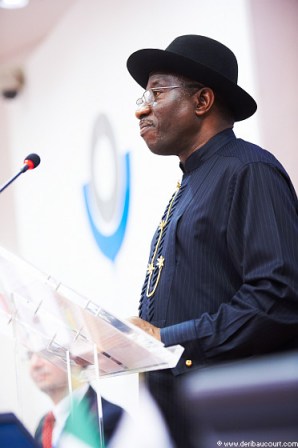
Goodluck Jonathan addressing the WCO in June 2012

As the Nigeria Customs Service (NCS) gets set to assume all hitherto contracted services from the service providers come December 31, 2012, kudos must be given to the administration of President Goodluck Jonathan for the political will which has brought this to fruition. This is a highly significant development that should encourage other African nations to follow suit.

Over the years, the functions of the Customs administrations have evolved from revenue collection to include protection of industries, protection of citizens, trade facilitation as well as trade security and environmental issues and Customs administrations have continued to improve with the dynamism brought about by the evolving global world.

Therefore, if any country must rely on contracting core Customs services to private companies, then such a country should as well disband its Customs administration. What this means is that no one can ‘Captain’ a ship better than a ‘Captain’, even the best pilot in the world would fail woefully when saddled with sailing a ship.

This is because, whilst it is necessary to contract some of these services to the private sector, such services are usually treated by benefiting firms as mere business ventures and as such, create a situation where governments use such contracts to benefit close allies, even as organisations will go to the extremes to secure such contracts, primarily for profit making.

Having critically studied the scenario, the World Customs Organisation (WCO), summed up that such practice usually results in a situation where there will be no trust in the Customs frontline and post clearance capability. This has prompted the Organisation to, in recent years, develop several diagnostic studies and programmes aimed at championing broader international Customs capability with high benefits to governments of its member countries.

Findings have however, shown that governments may choose the private-sector to complement its resources and capabilities in which supporting operations ranging from printing Customs legislation and tariff to designing Customs websites, repairing and maintaining facilities and equipment and conducting research into specific topics may be outsourced to private companies.

Core Customs responsibilities were also, through contracts with a government, outsourced to private companies that conduct pre-shipment Inspection (PSI) or Destination Inspection (DI) activities. As their names suggest, PSI activities are conducted in exporting countries in order to verify the quality, quantity, price and classification of such exported goods, while DI activities are carried out in combination with scanning technology on imported goods in importing countries.

However, this option, according to the world Customs body, has been observed to be usually more cost effective than in-house operations for many reasons including the stimulation provided by competition in the private sector.

It is therefore time that such organisations which front themselves with the ‘be all’ systems in Customs tariff and valuation appraisal rather seek a more practical and benefit-delivering model than one which not only scams governments of service and inspection fees, but also offers no benefit to trade.

Some of them offer government free cargo scanning equipment in exchange for a lucrative inspection fee. None of this is based on risk management and mostly purely profit focussed. The concept forgoes most, if not all the modern Customs principles and standards promoted by the WCO.

Rather than this concept which adds no value to trade, the focus of government should be capacity building for Customs officers; and with a commitment to capacity building under the Dikko-led management, the NCS now has capable hands to take-over the running of all its functions, and thereby retaining capital flight.

It is worthy to note that PSI and DI is normally introduced to enhance Customs functions as a stop-gap measure while waiting for Customs reforms and modernisation.

According to the WTO, as at November 2011, at least 25 countries, most of which are in sub-Sahara Africa, had contracts with private inspection entities for PSI and DI of which Nigeria was one of them, but this would no longer be after 31st December, 2012, when Nigeria would exit from that category.

Furthermore, it is also important to note that the WCO position is that such contracted core Customs services should not be considered as a permanent substitute for the Customs administration, but only as a temporary measure.

As a consequence of critical assessments of the performance of inspection companies and inefficient capacity-building and training activities, many Customs administrations have exited these outsourcing contracts and the WCO, with its accumulated knowledge, is able to assist its members with the process of discontinuing these contracts.

Nonetheless, there are certain circumstances where the hiring of inspection companies could be justified because of lack of expertise as in the case of post-conflict reconstruction situation. However, in such cases, contracts with PSI, DI companies as service providers should be accompanied by an active exit plan strategy within the context of a capacity-building or Customs modernisation programme. Even the PSI companies are in this case, expected to work in compliance with the WTO agreement on PSI and relevant WTO’s recommendations.

When Abdullahi Dikko, on assumption of office as Comptroller-General of the Nigeria Customs Service in 2009, began a campaign for the modernisation of the NCS as captured in his six point agenda with more emphasis on capacity building and improved welfare, he was criticised for embarking on such a capital intensive venture by many, who then didn’t believe in his vision. But today, the result of the huge investment on capacity building is evident as the NCS, come December 31, 2012, would pride itself among the 21st century Customs administrations, measuring with its counterparts in developed countries, by taking over full control of all Customs operations.

There are arguments that the outsourcing of supporting functions to the private sector enables the Customs administration to focus their scarce resources on their functions, but this is no longer the case with the NCS.

Facts have shown a sharp rise in the resources of the Service due to an improved revenue collection. Monthly collection has risen from the inherited N30 billion to N90 billion. The increased revenue collection has made it possible for Customs officers to have a 100 per cent salary increase and even freeing more resources for the acquisition of quarters for officers and men, renovation of Customs barracks nationwide, provision of staff buses, uniforms and clinics in most commands.

This landmark achievements have been made successful with the full deployment of the NICIS platform for e-Customs declaration and processing, manifest submission, duty payment and final release. Records show that e-manifest processing which usually took seven days and above in 2009, is now been processed same day. Same goes for e-remittance processing. Same transformation has being noticed in the number of processed SGDs which has risen from an average of 367,897 in 2009 to about 526,604 currently.

Summarily, it must be noted that the scanning aspect of the Customs supply chain security paradigm contributed to the evolution from pre-shipment inspection to destination inspection. Traditionally, many developed countries, especially in Africa, employ companies from developed countries to do pre-shipment inspection of imports to Africa primarily for classification and valuation purposes.

The pressure to consider exports as well as imports and for national security contributed to the emergence of destination inspection companies, where the Customs controls are conducted in the African country. This has reduced the internal costs of such service companies and increased their incomes but has done little or nothing to reduce checks at the border or import points. Source: Leadership (Nigeria)

Private sector finally welcome in Africa?

The acceptance of private sector participation in ports in Africa is gaining traction, and not before time. At least that’s what a meeting of port minds in Nigeria would have us believe. The Port Management Association of West and Central Africa at its 35th Council Meeting and 11th Round Table Conference held recently in Lagos, Nigeria, came out firmly in favour of increased private sector participation in ports as a means of achieving cost efficiency improvements.

The Council meeting, held under the theme ‘Impact of Port Concession on the Socio-Economic Development of Our Countries’ ended with the resolution that, “member countries should put in place robust legal frameworks that will sustain the growth of Public Private Partnerships in port management systems”. Words that are encouraging to hear and that generally reflect a much changed position from a decade ago when there was still a strong belief in the public versus private system of port operation.

Successful privatisation programmes such as the major one that has been implemented in Nigeria have, however, brought some insight into what the private sector can do better than the public sector and hence a changed perception, although the learning curve is by no means over in this respect. What would also help facilitate this however is improved process to the goal – what can perhaps be termed Step 2. In particular, concession processes that are not weighed exclusively by cash received considerations but place greater emphasis on technical considerations in the broadest sense of the word.

A better balance between the two elements can lead to the selection of a more appropriate long term strategic partner and potentially to all-round greater economic benefit. The trouble is of course that such systems are not high on the agenda of African nations where cash considerations are usually to the fore especially in today’s troubled economic times. A system of this ilk is more likely to be found deployed in a mature economy than an emerging one. It remains a laudable goal, however, as a longer term objective and as part of efforts by the IMF, World Bank and aid agencies to develop Africa’s infrastructure, particularly in Sub-Saharan Africa. Source: Port Strategy

Nigerian Customs Boss unveils new scanners

The Comptroller General, Nigerian Customs Service (NCS), Alhaji Inde Dikko Abdullahi, said that ports users would henceforth complete their business transactions within 24 hours. Speaking at the formal unveiling of the gantry scanner procured by Societe Generele Surveillance (SGS) Nigeria at Onne, Eleme Local Government Area, Rivers State, he said the new scanning facilities would boost the 48-hour target for clearance of goods at the ports, noting that it would complement government’s efforts toward reducing the cost of doing business at the ports.

Special training for a select team of 80 NCS officers has been concluded. The team is expected to take over services and operations in the Destination Inspection scheme as from January 1, 2013. The training covered all aspects of the DI activities being handled by SGS for NCS with emphasis on actual risk analysis and processing of the importer’s final document resulting in classification and valuation opinion.

Managing Director of SGS Scanning Nigeria Limited, Mr. Nigel Balchin, in his address at the occasion, said the mobile cargo scanners were capable of scanning about 34 trucks per hour as against 16 per hour by the fixed cargo scanners. Each had double tunnel that enabled it scan two trucks at the same time with equal image quality as the fixed scanner. “At SGS we are committed to quality service delivery. We are very glad to be part of this success story and we look forward to Nigeria Customs Service taking charge of the DI programme. The knowledge you have acquired is for the benefit of Nigeria Customs Service and ultimately that of the Nigerian economy. We wish you the best in your future endeavours”, he said.

The image quality of the relocatable gantry scanners is on par with a fixed scanner. Trucks remain stationary during scanning (the scanner moves on rails) unlike a fixed scanner where the truck is pulled through the scanner on a conveyor that’s more vulnerable to maintenance issues. The scanner is mounted above ground unlike a fixed scanner where one of the detectors is four metres underground. In addition, a relocatable gantry scanner can be re-deployed to an alternative site, in a relatively short time, in case of any expansion or new development.

SGS is one of the service providers contracted by the Federal Government to assist the NCS facilitate trade through risk management and use of non-intrusive inspection (x-ray cargo scanning) of imports routed through the nation’s air and sea ports as well as approved borders. The company is currently providing cargo scanning services in Bahrain, Cameroon, Haiti, Madagascar, Uruguay and has completed provision of scanning services in Gambia, Kosovo and Mexico.  Source: Leadership.ng

Nigerian Customs – a paramilitary display

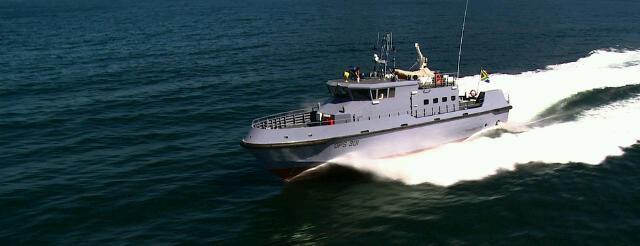
Ports.co.za reports that Nigerian Customs Service has signed an agreement for the delivery of two 24 metre P249 patrol craft, which will use them to combat smuggling and piracy.The supplier is a Cape Town based outfit called Kobus Naval Design (KND). In the context of intra-Africa trade this deal should be considered a real scoop. Kobus Potgieter, CEO of Kobus Naval Design (KND), confirmed that his company had received the order and would deliver the vessels in ten months’ time. The aluminium vessels will be built in Cape Town. This will be the sixth KND designed vessel in the Nigerian waters delivered over the last couple of years. The company is also busy with a dive boat contract for the oil and gas industry in Nigeria.

Nigeria’s Federal Executive Council (FEC) also recently approved N1.7 billion (US$11 million) for the purchase of a Cessna Citation CJ4 aircraft for the Customs Service. The aircraft would be used for surveillance missions along Nigeria’s borders and would help combat economic sabotage and cross-border crimes. Alhaji Mohammed Dikko, the Comptroller-General of the Nigerian Customs Service, said that his agency had already acquired the helicopters for surveillance of Nigeria’s borders and added that President Goodluck Jonathan had approved the purchase of 400 Toyota Hilux vehicles for border patrol.

Border control is an increasingly important issue in Nigeria. Militant groups in the oil-producing Niger Delta have been illegally supplying weapons for years and Boko Haram is also believed to have received illegal arms, raising questions about border surveillance, especially after reports that weapons looted from Libya have turned up in Nigeria. Source: Ports.co.za and Defenceweb.co.za

Nigeria – Single Window initiative back on track

After much controversy centering on allegations of corruption and impropriety, the Federal Government terminated the contract awarded to Single Window Systems and Technology Limited. The contract which allowed for a sole submission point for importers and exporters to lodge their documentation was unilaterally awarded by the Federal Ministry of Finance, under the Umaru Yar Adua administration, on behalf of the Nigeria Customs Service to the company registered in June 2010 with N 1m share capital.

The contract was reported to be worth N 4.5 trillion. The decision to discontinue the contract was based on an investigation by the Ministry of Finance which looked into the processes and the terms of the contract. The investigation which was approved by the President revealed that the contract breached the provisions of both the Procurement Act and the ICRC Act. Nigerian Customs received a letter of notification from the supervisory of the ministry of finance that a concession agreement had been entered between the Federal government and the Single Window System Technologies Limited, so where did the customs come into play before the contract was signed?”

Nigeria Customs Service had earlier said on the controversy, “How can a company enter such an agreement without the knowledge of the Nigeria Customs Service?” The Customs was not involved in the execution of the agreement entered by the Federal Ministry of Finance through the Former Honourable Minister of Finance; Olusegun Aganga. Therefore Nigerian Customs was not carried along by the company called Single Window System Technologies Limited. The tender was scuppered.

Recently, the Nigerian Customs Service convened a Single Window National Stakeholder Conference under the slogan – “Collaboration -Towards a Facilitated Trade Environment”. The conference and workshop took place between 23 and 26 April 2012, and was attended by several local and international delegates representing UNECE, UN/CEFACT, and donor companies German Development Company (GIZ), USAID and Crown Agents. Details concerning the launch of this event can be accessed via the following links – Conference Website and Conference Summary Report.

Comment: So what started on shaky ground has finally materialised into a fully-fledged Customs-led programme – the way it should be, and hopefully remain. Moreover, trade representatives and intermediaries will need to be an integral part of this development for it to attain success.

Source: Business News Nigeria and Valentina Mintah (Trade Facilitation Consultant).

Related articles