Sniffing out trouble at SA ports

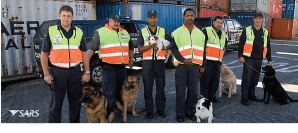
SARS DDU2A gruelling four months of training came to an end during May 2015 as 33 Customs officers and their detector dogs graduated from the SARS Detector Dog Training Academy. A graduation ceremony was held in Pretoria. It was the culmination of a training course where officers were, together with their canine charges, were trained in the finer aspects of the detection of illegal substances and goods in vehicles, vessels, aircraft, containers, cargo, mail, rail, luggage and buildings.

“The substances that they would be able to detect are explosives, firearms and ammunition in addition to narcotics such as cocaine, heroin, cannabis, mandrax, crystal meth and ecstasy,” states Hugo Taljaard, Senior Manager for the Detector Dog Unit (DDU). “They will also be able to find rhino horn, ivory, wet or dry abalone, crayfish and lion bones. This also extends to currency, tobacco products, copper wire and cell phones,” he added.

The training began in January 2015 and covered both practical and physical aspects. The following modules were accomplished during the development programme:

  1. Bonding and socialisation phase with the dog.
  2. Imprinting of substances.
  3. Paramilitary Drill – Salute and Compliment.
  4. Practical search and detect training on vehicles, vessels, aircraft, containers, cargo, mail, rail, luggage and buildings
  5. Physical training – dog and handling – Theoretical training on identification and handling of narcotics and endangered species; Dog conditioning process; Basic animal behavior; and General dog care.
  6. Change of environment training at land ports of entry.
  7. Formal assessment.

After this training, detector dog units will be established in Mpumalanga (Lebombo Detector Dog Unit), Northern Cape (Nakop Detector Dog Unit), and Northern Cape (Vioolsdrif Detector Dog Unit) to support SARS’ strategic objective to increase customs compliance at ports of entry.

Currently, all SARS DDU recruitment is sourced from within the organisation.

Visit the Servamus website (a community-based safety and security website and magazine) for an article published on Customs Detector Dog Unit – “Sniffing out trouble at SA ports” (May 2015 Edition). Source: SARS and Servamus.co.za

Related articles

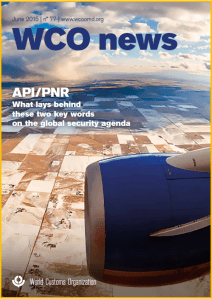
WCO News – June 2015 Edition

WCO News Edition no.77-2The WCO’s flagship magazine WCO News, aimed at the global Customs community, has published its latest edition which features a special dossier on API/PNR (Advance Passenger Information and Passenger Name Record) – two key words on the global security agenda.

Other highlights include a focus on Customs laboratories, interviews on the ‘illicit tobacco trade’ and the ‘killing of elephants,’ as well as articles covering trade-based money laundering, strengthening export controls, the illegal vehicle trade and much more.

The magazine is published and distributed free of charge three times a year, in February, June and October, and is available online or in paper format. If you do not want to miss future issues of WCO News, you are invited to fill out the online subscription form. Source: WCO

Xenophobia Backlash – Mozambique/South African Border closed

Lebombo border post has been closed until further notice Friday17 April 2015 after an unruly mob barricaded the N4 near Ressano Garcia, targeting trucks with South African registration numbers [Picture: Sowetan]

Lebombo border post has been closed until further notice Friday17 April 2015 after an unruly mob barricaded the N4 near Ressano Garcia, targeting trucks with South African registration numbers. [Picture: Sowetan]

The border post between South Africa and Mozambique has been closed until further notice Friday after an unruly mob barricaded the N4 near Ressano Garcia, targeting trucks with South African registration numbers.

This also came just as immigration officials from Mozambique early in the morning began the blocking of all vehicles coming from South Africa under unexplained circumstances. Witnesses told ZimEye.com the situation at the border is both shocking and desperate with drivers voicing their frustration at the hands of Mozambican border officials.

Lebombo border post has been closed until further notice Friday17 April 2015 after an unruly mob barricaded the N4 near Ressano Garcia, targeting trucks with South African registration numbers..

“Trucks with South African registration plates have been stoned in Mozambique. A volatile crowd of about 200 Mozambicans has barricaded the N4 about four kilometres east of the Resano Garcia border post, where there is a truck stop,” reported Corridor Gazette on Friday.

“It is suspected that this action in related to the Xenophobic attacks which have erupted in various areas of KwaZulu-Natal and Gauteng this week.”

Trac, a company which is responsible for the 570km of the road between Solomon Mahlangu off-ramp in Tshwane and the Port of Maputo in Mozambique, placed a warning on the protest action on its website.

A traveller who en route to Nelspruit from Maputo at around 9:30 on Friday morning told the website that: “The crowd let us pass because we had a Mozambican-registered car.

Event – Role of the Private Sector in Support of the Trade Facilitation Agreement

international-trade1The role of the private sector in the implementation of the World Trade Organization’s (WTO) Trade Facilitation Agreement (TFA) will be the focus of the 2015 edition of the Global Facilitation Partnership for Transportation and Trade (GFP) meeting. With the world’s customs administrations currently identifying their respective TFA  implementation commitments and setting up National Trade Facilitation Committees, trade and logistics operators can learn how they can participate in such initiatives by attending these sessions.

The GFP meeting will be held at Palais des Nations, Geneva, on 22 April, and will be divided into three thematic sessions.

The first session, ‘Governments’ Priorities: Strategies for Fostering Private Sector Participation in the TFA Implementation Process’ will look at how governments are planning to implement the TFA.

It will focus on how the private sector is consulted and how an effective participation of the private sector can be facilitated to implement the Agreement.

The second session, ‘Priorities, Perspectives, and Expectations from the Private Sector on TFA Implementation’ will assess how the private sector – including large corporates and small and medium-sized enterprises – view TFA implementation. It will look at the potential benefits from a private-sector perspective, and how the sector can contribute to national and international initiatives to implement the agreement.

The third session, ‘International Organizations’ Co-ordination and Partnership for Supporting TFA Implementation’, will provide an opportunity to share information and experiences on how the TFA can be implemented with public-private partnerships in mind, as how national trade facilitation committees can better support this process.

ITC invites all interested stakeholders to join the GFP meeting at the Palais des Nations on 22 April from 9:00. Click here for link to online registration.

Source: International Trade Centre (Geneva)

Zimbabwean Customs seizes 48kg illicit South African gold worth R20m

goldZimbabwean Customs (ZIMRA) seized 48 kg illicit gold worth R 20 million and arrested 46 people for initial investigations. Forged gold serial-number stamps, specially designed armoured vehicles, clandestine refineries, fake customs clearance papers and documents with links to the black market.

These and other pieces of evidence are the keys that the Hawks believe link a Zimbabwean and South African gold-smuggling syndicate to scores of buyers in Europe masquerading as dealers in precious metals. For two years police have been zeroing in on the syndicate, whose roots are in illegal gold mining in Zimbabwe. Inside were 48kg of gold bars valued at R20-million.On Friday, they acted. In the early hours teams from the Hawks, the Special Task Force and Crime Intelligence raided luxury homes and farms across Gauteng and the North West.

In one of the raids police discovered a walk-in vault at a warehouse outside OR Tambo International Airport. Inside were 48kg of gold bars valued at R20-million. They were being prepared for stamping with official South African gold serial numbers designating that the metal had been officially mined and refined in the country. Police sources say the gold was to have been flown to at least three European countries at the weekend before being smelted, re-refined and distributed.

A source with knowledge of the investigation has revealed the inner workings of the syndicate, from how and where the gold is mined to how corrupt customs and mining officials facilitate the metal’s passage across borders.(Now should’nt this prompt some serious cause for concern, if true?)

“The amount this syndicate has handled is immeasurable. We have known about them for two years and in that short time we have recovered R40-million,” he said.

“They have operated both in South Africa and Zimbabwe as well as other SADC [Southern African Development Community] countries for years, well before we even discovered them”

Illegal miners in Zimbabwe supplied the syndicate. “With the instability and corruption there [South Africa?] it’s dangerous but easy. Once they have the gold, runners take it to the border where, through corrupt officials, it is smuggled across disguised as things such as household products.”

The gold was taken to farms in and around Modimolle in Limpopo where illicit refineries smelted and refined it, the source said. With the help of South African mining officials, gold clearance documentation and special serial and insignia stamps were sourced.

“Once stamped you would never know the difference. We have placed it next to legitimate bars and it looks and feels the same.” He said the gold was distributed through legitimate channels in Europe.

“Those running the syndicate know what they are doing. They are well-connected and influential businessmen with ties to Africa, Europe, the US and Asia”.

“They are linked to the gold powerhouses of the world. These are not ‘mickey-mouse’ people. They are immensely powerful and extremely well connected to some of the world’s top legal firms. Within hours of Friday’s raids lawyers were arriving at their clients’ homes and businesses.”

He said police seized hundreds of official gold clearance documents, serial stamps and other paperwork with links to mines and importers and exporters. Source and picture: CustomsToday.com

Time to pull the plug on SACU?

SACU logoPeter Fabricus, Foreign Editor, Independent Newspapers through the Institute of Security Studies writes an insightful and balanced article on the history and current state of the Southern African Customs Union (SACU).

The formula that determines how the customs and excise revenues gathered in the Southern African Customs Union (SACU) are distributed among its members looks, to a layperson, dauntingly complex. But this formula has had an enormous impact on the economic and even political development of the five SACU member states; South Africa, Botswana, Lesotho, Namibia and Swaziland.

The impact has arguably been greatest on South Africa’s neighbours, the four smaller member states that are often referred to simply as the BLNS. But it has also had an impact on South Africa.

SACU was founded in 1910, the year the Union of South Africa came into existence, and is the oldest surviving customs union in the world. Originally it distributed customs revenue from the common external trade tariffs in proportion to each country’s trade..

So, South Africa received nearly 99%. Surprisingly, South Africa’s apartheid government radically revised the revenue-sharing formula (RSF) in 1969 after Botswana, Lesotho and Swaziland had become independent. This gave each of the BLS members first 142% and later 177% of their revenue dues, calculated on both external and intra-SACU imports, with South Africa receiving only what was left. But this apparent economic generosity from Pretoria almost certainly masked a political intention to keep its neighbours dependent and in its fold, as the rest of the world was increasingly turning against it.

However, as Roman Grynberg and Masedi Motswapong of the Botswana Institute for Development Policy Analysis pointed out in their paper, SACU Revenue Sharing Formula: The History of An Equation, the 1969 formula became increasingly unviable for South Africa as it had been de-linked from the common revenue pool. This threatened to burden Pretoria with a commitment to pay out to the BLS states more than the total amount in the pool.

The African National Congress government saw the dangers when it took office in 1994 and soon began negotiations with the BLNS states for a new formula. That was agreed in 2002 and implemented in 2004. But although the 2002 RSF eliminated the risk that the payouts to the BLNS might exceed the whole revenue pool, it actually increased the share of the pool accruing to the BLNS at the expense of South Africa – as Grynberg and Motswapong also observe.

The new RSF was based on three separate components. The first divided the customs revenue pool proportional to each member state’s share of intra-SACU imports. Because of the growing imports of the BLNS states from the ever-mightier South Africa, this meant most of the common customs pool went to the BLNS. This proportion is increasing – but never to more than the entire pool.

The second component of the RSF divided 85% of the pool of excise duties (the taxes on domestic production) in direct proportion to the share of the gross domestic product (GDP) of each of the SACU members. The remaining 15% of the excise duties became a development component, distributed in inverse proportion to the GDP per capita of each member. So the poorest members of SACU would receive a disproportionate share of this element of the excise.

Over the years the BLNS countries have grown increasingly dependent on the SACU revenue. It now funds 50% of Swaziland’s entire government revenue, 44% of Lesotho’s, 35% of Namibia’s and 30% of Botswana’s. Because of its own growing fiscal constraints, Pretoria launched a review of the formula in 2010. But this review got bogged down over major disagreements and seems to have gone nowhere.

In his budget speech this month, Finance Minister Nhlanhla Nene raised the issue again, calling for a ‘revised and improved revenue-sharing arrangement,’ and Parliament’s two finance committees examined it. National Treasury spokesperson Jabulani Sikhakhane told ISS Today that while efforts to reform the SACU formula are ongoing, ‘progress has unfortunately been arduously slow.’

Budget documents show that in 2014-15, South Africa paid out some R51.7 billion to the BNLS countries out of a total estimated revenue pool of R80 billion, and was projected to pay out R51 billion again in 2015-16. Kyle Mandy, a PricewaterhouseCoopers technical tax expert, told Parliament’s two finance committees last week that South Africa was paying about R30 billion a year more than it would otherwise under the SACU RSF. He said South Africa contributed about 97% of the customs revenue pool and received only about 17% of it.

The R51.7 billion payout to the BLNS this year represents about 5% of South Africa’s total of R979 billion in tax revenue, a substantial ‘subsidisation’ that was no longer affordable at a time of growing fiscal constraint, which had forced Nene to increase taxes, Mandy said.

He noted that the SACU revenue had allowed all but Namibia of the BLNS countries to set their taxes below South Africa’s. ‘This means South Africa is subsidising the BLS countries to compete with South Africa for investment with their more attractive taxes,’ he said in an interview.

‘This is not sustainable for anyone. It locks the BLNS countries into dependency on South Africa. They have neglected their own fiscal systems. But the moment that the revenue fluctuates, [as Nene’s budget predicted it would in 2016-17, dropping to R36.5 million], it puts them in a difficult position. When South Africa sneezes, they catch flu.’

But what to do about this? Some, like political analyst Mzukisi Qobo, have called for a total overhaul of the SACU agreement, which would make explicit that SACU is a disguised South African development project. The development aid would become transparent and could be tied to conditions such as democratic government.

That is on the face of it an attractive solution, offering the opportunity of leveraging democracy in Swaziland, in particular, by placing a conditional foot on its lifeline of SACU revenues. But Grynberg warns that a sudden withdrawal of the vital direct budgetary support which SACU customs and excise revenues provides, could implode both Swaziland and Lesotho and provoke economic crises in Namibia and even Botswana.

He also points out that the RSF is not plain charity by South Africa to its smaller neighbours. The formula has essentially just compensated them for the cost-raising and polarising effects of SACU – that the BLNS countries have generally had to pay more for imported goods over the years than they would have otherwise done because of import tariffs designed to protect South African industries; and because the duty-free trade within SACU has tended to attract investment to larger South Africa.

Meanwhile, South Africa has benefitted from a ready market for its much larger manufacturing machine. Grynberg wrote in a more recent article for the Botswana journal, Mmegi, that the South African government was thinking of pulling out of SACU because it couldn’t get its way in the negotiations to revise the RSF; and because the 2005 Southern African Development Community Free Trade Agreement now gave it duty-free access to the BLNS countries without the need to pay the re-distributive SACU customs revenues.

It was only President Jacob Zuma who was preventing this, because he didn’t want to go down in history ‘as the man who crippled the Namibian and Botswana economies and created two more “Zimbabwes” – i.e. Swaziland and Lesotho – right on the country’s border.’ Pretoria’s decision had turned SACU into a ‘dead man walking, just waiting for someone to pull the switch and end its life.’

Grynberg strongly advised the BLNS to prevent this by accepting that the political reality that underpinned the RSF of SACU no longer existed. He says that it should be transformed into a purely development community without the formula, but with mutually agreed spending on development – mainly in the BLNS. He suggested, though, that this radical change would take at least 10 to 15 years to phase in.

All very well. But isn’t that what SADC is supposed to be already? Which suggests that it might be time to take the 105-year-old dead man off life support.

Source: Institute of Secutity Studies (ISS)

Related articles

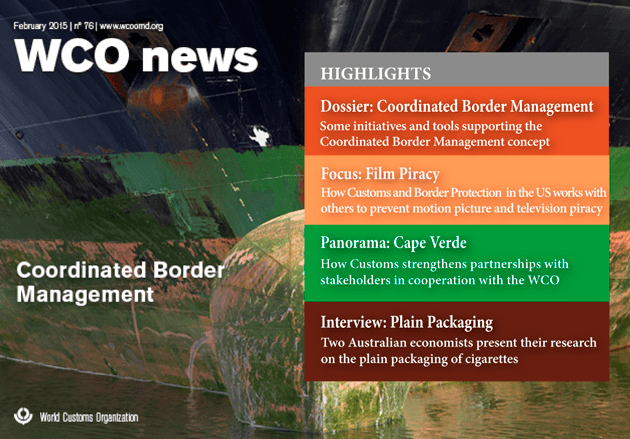
WCO News – February 2015 Edition

WCO News - Coordinated Border Management Feb 2015Check out the latest WCO News – per usual a wealth of interesting customs and supply chain information:

  • WCO launches IRIS, an application exploiting open source information
  • Harmonized System amendments effective from 1 January 2017
  • Beginning the CBM process: the Botswana experience
  • Inter-institutionality – a distinctive feature of the Colombian AEO model
  • WCO Data Model: the bridgehead to connectivity in international trade
  • Implementing New Zealand’s Joint Border Management System

and a whole lot more…

Source: WCO

Kenya Single Window Agency accuses KRA of Sabotage

KentradeThe Kenya Trade Network Agency, operator of the National Electronic Single Window System, has refuted claims by some clearing agents that the platform is lapsing. KenTrade has instead blamed slow integration of its system on the continued parallel use of the Kenya Revenue Authority’s systems – the Orbus and Simba. Currently, importers are using both systems to process documents such as import permits.
Project director Amos Wangora said there is need to retire Orbus system for agents to embrace the Single Window System, particularly in filing Import Declaration Forms. Kentrade accused KRA officials of avoiding the Single Window System.

“We don’t have any problem in the use of the Single Window System. It’s only people who don’t want to embrace the new system. Those using it are doing good only for some KRA officials who still want to use the Orbus system,” said Wangora in an interview on Friday.

KenTrade is the state agency tasked with facilitating cross-border trade through the Single Window System.

Wangora said only three modules remain for the Single Window System to be completed fully – include on declaration submission, bonds and exemption. Testing of the declaration submission module is on and is expected to be completed by 20 January 2015.

A section of clearing agents had raised concerns over delays in cargo clearance at the port of Mombasa under the Single Window System. Yesterday, the Kenya International Freight and Warehousing Association, Mombasa chapter, said KRA officials prefer their own system, which “lacks transparency”.

A clearing agent told the Star that one has to personally push for services, which involves handouts, under the KRA system. Kentrade has since written to KRA commissioner-general to halt the Orbus system on January 31.

The Single Window System integrates about 24 government agencies’ functions, offering a one-stop shop for processing import and export permit documents.  More than 6,000 imports and exports permits were issued under the new system last year, including permits from Kenya Bureau of Standards and Ministry of Health’s veterinary and pharmaceutical departments.

About 1,200 clearing agents, shipping agents, consolidators and partner government agencies will be trained on the remaining modules. Kentrade targets to have the system fully embraced by all stakeholders by July, with the country set to go paperless by 2015. Source: The Star (Kenya)

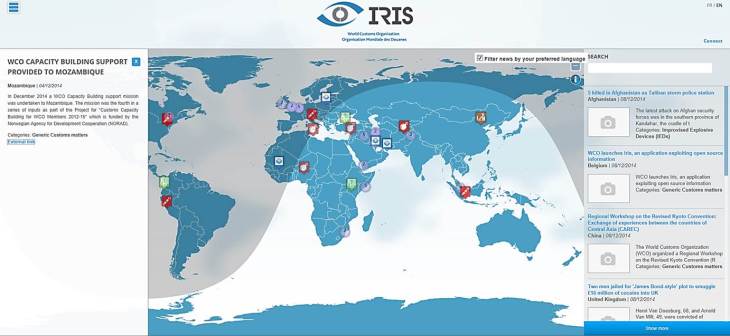
IRIS – WCO launches application to exploit open source information

WCO IRISOpen sources, such as the Internet, include a considerable amount of useful information for Customs purposes. For instance, such information can benefit Customs risk management through improved analysis and by enabling sounder decisions to be made on the basis of solid information, thereby providing decision-makers with better situational awareness.

The exploitation of this vast repository of data has become easier and markets are full of different tools that allow Customs officers to keep track of issues that impact on their daily work. Although many WCO Members already use such tools at the national level, no international tool exists that collects all this Customs related information together and makes it available in one location.

To fill this void, WCO Secretary General announced the launch of the Iris application during the Policy Commission meeting in Brazil on 8 December. Iris is a new and innovative tool which acts as an “aggregator” for all types of open source Customs information, and as such falls within the framework of the of theme of the year 2014, “Communication”.

The application utilizes Web-crawlers to search the Internet for news items and presents this information in a graphic-style world map in real-time. The system also allows for the storing of the “hits” on a specific database where they will be available for intelligence experts and other operational front-line Customs staff for further analysis.

Iris also allows the WCO to push out information about major Customs seizures which have been reported to the WCO Customs Enforcement Network (CEN) database or to the Global Shield application (seizure information itself will not be reported, but a notice about a seizure will be displayed).

“Iris is a ground-breaking initiative and will allow the WCO, for the first time, to monitor open source information on a 24/7/365 basis and to provide its Members with enhanced intelligence support”, declared Secretary General Mikuriya.

“The application also promotes CEN and Global Shield application and we hope it will encourage Members to increasingly report their seizures to both of these existing enforcement tools”, he added.

All WCO Members, Regional Intelligence Liaison Offices (RILOs), and WCO staff will benefit from Iris. Its benefits extend beyond these specific user groups, as the application is aimed at a broader audience. Some of the Iris functionality will be made available to WCO’s private sector partners, the academic community, and the public.

Iris works in all different types of devices including smart phones and tablets. The system is hosted at https://iris.wcoomd.org and can also be accessed through the WCO’s website. Source: WCO

WCO supports Capacity Building in Mozambique

Mozambique: Maputo, Mozambique Revenue Authority, Customs Division, Risk Management Unit

Mozambique: Maputo, Mozambique Revenue Authority, Customs Division, Risk Management Unit

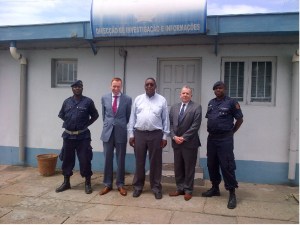
In December 2014 a WCO Capacity Building support mission was undertaken to Mozambique. The mission was the fourth in a series of inputs as part of the Project for “Customs Capacity Building for WCO Members 2012-15” which is funded by the Norwegian Agency for Development Cooperation (NORAD). The aim of the project is to deliver technical assistance to seven countries in specific areas of Customs operations. As one of the countries participating in the project the assistance provided to Mozambique has been designed to strengthen their capacity in the areas of Risk Management and Human Resources/Training Policy Management.

The mission commenced with a meeting between the WCO delegation and Mr. Guilherme Mambo Director General, Customs. Progress with the project was discussed and specific plans for the introduction of new risk management procedures.

The mission focused on the delivery of a high-level strategic Risk Management workshop. The workshop was designed to support the implementation of a new Risk Management Framework and was attended by several members of the MRA Senior Management Team.

Together with the workshop, the WCO experts also conducted a Risk Management organizational review and prepared a report summarizing key findings and recommendations. Work also continued on supporting the MRA with the development of their new Strategic Plan and specifically with a review of existing risk profiles to ensure that they are aligned with the organization’s strategic objectives.

The opportunity was taken to also discuss establishing procedures for access to the WCO e-learning modules so that the MRA can make best use of the wide range of training modules that are available for their use, particularly in the areas of Risk Management, CBM, PCA and the Revised Kyoto Convention. Source and picture: WCO

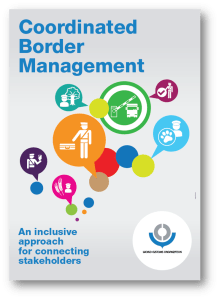
Coordinated Border Management – An inclusive approach for connecting stakeholders

WCO Customs Theme 2015The WCO is dedicating 2015 to promoting Coordinated Border Management (CBM) under the slogan “Coordinated Border Management – An inclusive approach for connecting stakeholders”.
WCO Members will have the opportunity to promote the enhanced coordination practices and mechanisms that they have implemented within their administrations and with other Customs administrations and government agencies, as well as with economic operators involved in cross-border trade.

The term Coordinated Border Management (CBM) refers to a coordinated approach by border control agencies, both at the national and international level, in the context of seeking greater efficiencies over managing trade and travel flows, while maintaining a balance with compliance requirements.

CBM can result in more effective service delivery, less duplication, cost-savings through economies of scale, enhanced risk management with fewer but better targeted interventions, cheaper transport costs, less waiting times, lower infrastructure improvement costs, more wider sharing of information and intelligence, and strengthened connections among all border stakeholders. Source: WCO


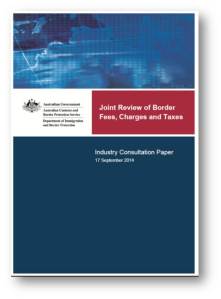
Aussie Customs and Border charges put under probe

Aussie Customs & Border Charges ReviewThere are only three weeks left to put in a submission to a government review which puts customs and border charges – worth $3 billion to border agencies – under the microscope.

The Joint Review of Border Fees, Charges and Taxes will look at ways to streamline and improve existing borders fees, charges and taxes. This includes visa application charges, passenger movement charges (the old departure tax) and Department of Agriculture fees levied on imports, such as container chargers and import declaration charges.

Immigration Minister Scott Morrison says it costs $6 billion each year to administer Australia’s borders.

“We must ensure that border fees and charges do not provide a disincentive to trade and travel that adds value to our economy,” he said.

Cost recovery, both now and in the future, is also an important focus of the review, as is charting the outcome of recent changes to visa application charges.

The review is being led by the Australian Customs and Border Protection Service (ACBPS) and the Department of Immigration and Border Protection (DIBP) and will be conducted jointly with the Department of Agriculture.

Some other fees and charges are outside the scope of the review: the Goods and Services Tax (GST), export fees, Customs Duty (including refunds, Tariff Concessions, Drawbacks) and fees and charges recovered by the Department of Agriculture such as inspections, treatments and export certification.

The Department of Agriculture is currently completing its own review into cost recovery. The inquiry was announced by Minister for Immigration and Border Protection Scott Morrison in September and the closing date for submissions is October 31.

An industry consultation paper , available on Australian Customs website tells you more about the review. Recommendations to the government should be finalised by April 2015. Source: GovernmentNews.co.au

A dedicated webpage for SARS Customs Detector Dog Unit

Picture1Due to overwhelming interest in the SARS Customs Detector Dog Unit, a dedicated page is now included – see the Detector Dog ‘tab’ at the top of this webpage for a direct link, or click here!

France – Customs in High School Education

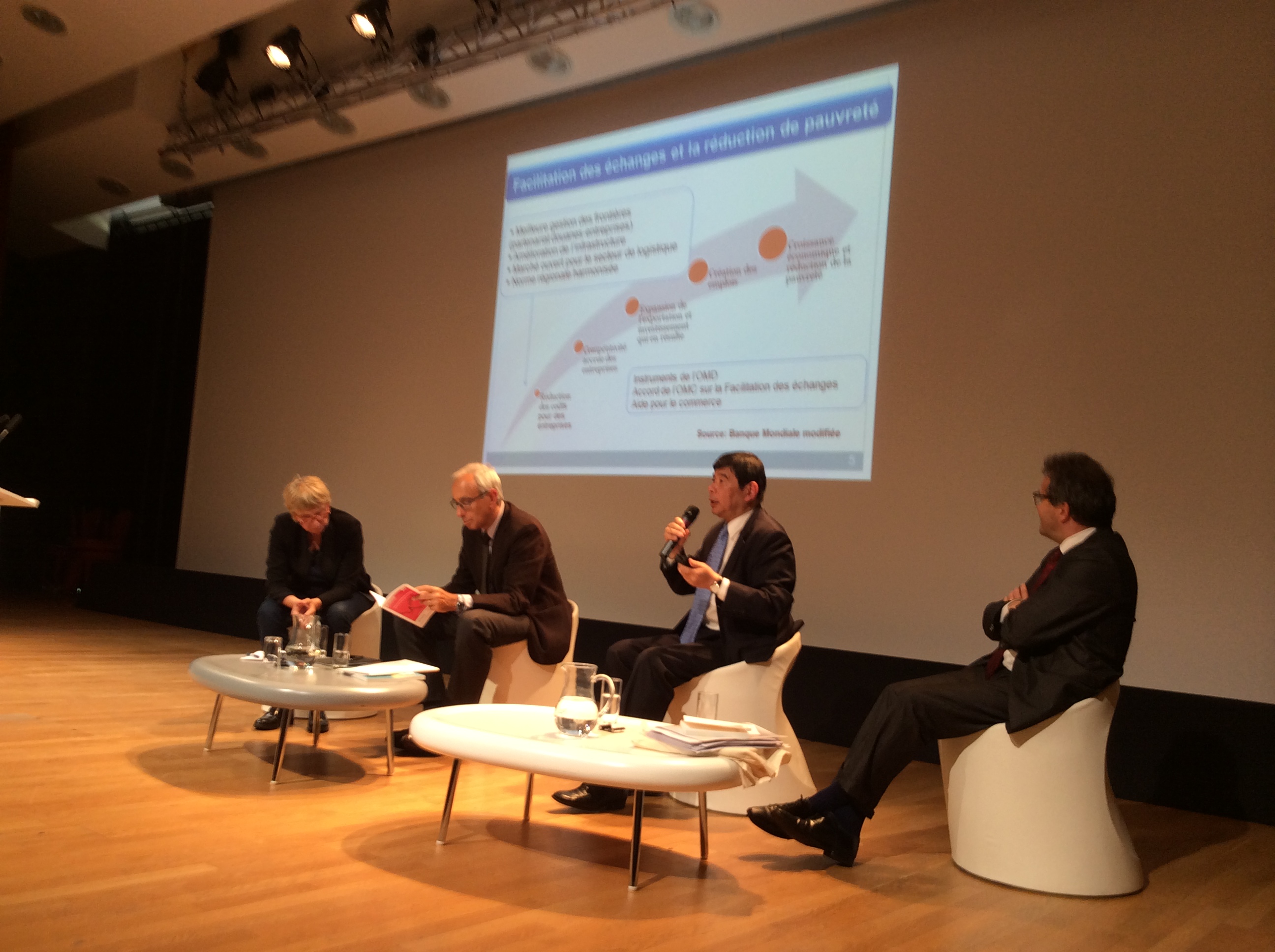
20140827%20154452At the invitation of the “Institut de l’Entreprise” in the framework of its programme “Entretiens Enseignants-Entreprises”, WCO Secretary General Kunio Mikuriya spoke at the Summer University’s conference entitled “La croissance en question(s)” (growth into question(s)) in the Veolia Campus, Jouy-le-Moutier, France on 27 August 2014.

Supported by the French ministry of Education and the Council of Economic Analysis, this forum gives the opportunity to high school teachers in economics and social sciences to exchange views with the business world. It also provides them with an opportunity to update their knowledge on current economic issues benefiting from the attendance of renowned economists and prominent business leaders.

260 High school teachers participated in the event and listened to a panel session on poverty reduction during which Secretary General Mikuriya explained the contribution of Customs through enhancing connectivity at the borders to secure and facilitate global supply chain. They were eager to understand how the WCO and Customs could play a significant role in trade facilitation to convey the messages to their classrooms. Source: WCO

1st WCO East and Southern Africa Regional Research Conference held in Harare

WCOThe first World Customs Organization (WCO) East and Southern Africa (ESA) Research Conference took place in Harare, Zimbabwe on 4-5 June 2014. The event was organized by the WCO ESA Regional Office for Capacity Building (ROCB) and hosted by the Zimbabwe Revenue Authority. The United Kingdom’s Department for International Development (DFID) provided funding.

Opening remarks were delivered by Ms. Christine Msemburi, the Executive Director for the WCO ESA ROCB in Nairobi, Kenya; Mrs. Anna Mutobodzi, the Acting Commissioner General of the Zimbabwe Revenue Authority; Mr. Happias Kuzvinzwathe, Customs Commissioner of the Zimbabwe Revenue Authority; Mr. Robert Ireland, the Head of the WCO Research Unit in Brussels, Belgium; and Professor C. Hope Sadza, Founder and Founding Vice Chancellor of the Women’s University of Africa.

Following their selection in response to a Call for Papers, eight research papers were presented at the conference by representatives of Customs administrations, the private sector, and academia from the ESA region. The research focused on topics linked to trade facilitation, including information and communications technology (ICT), risk management, transit systems, measurement, and Customs-Business partnerships. The research papers will be consolidated and published in an e-book.

The work of the researchers was supervised by Mr. Creck Buyonge, Adjunct Associate Professor (Revenue & Customs) at the Centre for Customs & Excise Studies, University of Canberra, and Mr. Mark Goodger a lecturer at the University of KwaZulu-Natal (Durban) and the University of Cape Town.

Ms. Msemburi congratulated the researchers for their sustained efforts and contributions to building knowledge on Customs matters in the region. “We need to be ruthless and honest as we write about ourselves so that we build a factual body of knowledge in Customs for East & Southern Africa” said Ms. Msemburi.

Mr. Ireland commended Ms. Msemburi for her leadership in organizing the conference. “This successful event is another step forward for the global Customs community in conducting research through systematic inquiry and consideration of local conditions in order to better inform policy formulation and implementation” said Mr. Ireland. Source: WCO