INTERPOL issues international guidelines to support law enforcement response to COVID-19

LYON, France – INTERPOL has released international guidelines in order to enhance the safety and effectiveness of law enforcement and first responder support in the context of the COVID-19 pandemic.

Shaped in accordance with international best practices and the World Health Organization’s (WHO) recommendations, the guidelines provide information on how officers can protect themselves and their families, and outline the various roles carried out by law enforcement during a pandemic. These include:

  • border control and maintaining public order
  • assisting national health authorities in identifying cases and their origin
  • relaying public health measures to the population
  • securing deliveries of medical equipment or transfers of patients

The rapid spread of the virus worldwide, and uncertainties as to its evolution, demand a global response. Here, law enforcement plays a crucial role, by contributing to the effort to control the disease, promoting safer communities, and fighting criminals who see the outbreak as an opportunity to increase – or diversify – their activities.

Accordingly the guidelines warn of emerging crimes linked to pandemic, including intimidation and deliberate dissemination attempts, fraud or phishing, cybercrime, and counterfeiting.

With police routinely running into dangerous situations to protect their communities, the guidelines are intended to be considered by law enforcement agencies as part of a response strategy to the outbreak in line with recommendations by national public health authorities. Their purpose is to supplement rather than replace national guidelines.

All measures taken by national law enforcement authorities should therefore conform with the applicable national legislation and international obligations.

INTERPOL Secretary General Jürgen Stock said all levels of law enforcement were being mobilized during this sensitive time.

“I have been speaking with police chiefs around the world who, along with their officers, are facing enormous pressure because of COVID-19,” said Secretary General Stock.

“To help them in their work, these guidelines outline both the current and emerging crime threats linked to this pandemic as well as advice on how officers should protect themselves, and the communities they serve.

“We are in this together, and INTERPOL will continue to provide whatever assistance our 194 member countries need,” added the INTERPOL Chief.

INTERPOLʼs secure global communications network I-24/7 ensures vital policing information continues to get where it is needed.

Its specialist crime units will share the latest trends and threats related to COVID-19, with its Command and Coordination Centre ensuring calls for assistance are answered.

Source: Interpol, 26 March 2020
WCO-WTO join forces to minimise disruptions to cross-border trade in goods

The heads of the World Customs Organization (WCO) and the World Trade Organization (WTO) issued a joint statement on 6 April pledging to work together to facilitate trade in essential goods such as medical supplies, food, and energy.

WCO Secretary General Dr. Kunio Mikuriya and WTO Director-General Roberto Azevêdo said the two organizations would work closely together to minimize disruption to cross-border trade in goods – in particular those essential to combat the COVID-19 pandemic – while safeguarding public health.

They also pledged to establish a coordinated approach to support initiatives that facilitate cross-border trade so that essential goods can quickly reach those most in need, including in least developed and land-locked countries. WCO and WTO members have already been invited to increase transparency by sharing information on new trade and trade-related measures introduced in response to the COVID-19 pandemic.

“As COVID-19 continues to spread globally and governments consider new measures to protect the health and well-being of their citizens, we urge Members to ensure that any new border action is targeted, proportionate, transparent and non-discriminatory,” they declared.

The text of the joint statement is below.

WCO-WTO Joint Statement on COVID-19 related trade measures

The COVID-19 pandemic, while above all a public health crisis, presents the world with unprecedented social and economic challenges.  Emergency measures needed to curb the spread of the disease have unintended impacts on the world economy and trade, including the global supply chains that produce and distribute essential goods such as medical supplies, food, and energy.

To support the ongoing efforts to mitigate the social and economic effects of the pandemic, we, the Secretariats of the World Customs Organization (WCO) and the World Trade Organization (WTO), agree to work closely together to minimize disruption to cross-border trade in goods – in particular those essential to combat COVID-19 – while safeguarding public health. We commit to provide appropriate support to all relevant stakeholders. 

Within our respective mandates, we have already invited Members to increase transparency by sharing information on new trade and trade-related measures introduced in response to the COVID-19 pandemic. To the extent appropriate, we are making such information publicly available through our respective websites.  

We are also willing to establish a coordinated approach in support of initiatives that facilitate cross-border trade in goods, in particular those key to combat COVID-19. This would allow that essential goods can quickly reach those most in need, including in least developed and land-locked countries.

As COVID-19 continues to spread globally and governments consider new measures to protect the health and well-being of their citizens, we urge Members to ensure that any new border action is targeted, proportionate, transparent and non-discriminatory – as agreed by G20 leaders. We stress that these measures should be temporary, and we encourage Members to rescind them once they are no longer needed, especially if they restrict trade. We welcome initiatives to facilitate and simplify cross-border procedures and urge our Members to prioritize those for exporting and importing essential goods. 

As the pandemic evolves, we will continue to further explore ways to coordinate the efforts of the two organizations in response to the COVID-19 pandemic aimed at keeping trade flows open for the safety of populations around the world and a strong recovery of the global economy.

Source: WCO webpage, 6 April 2020

World Bank -Trade and COVID-19 (Coronavirus)

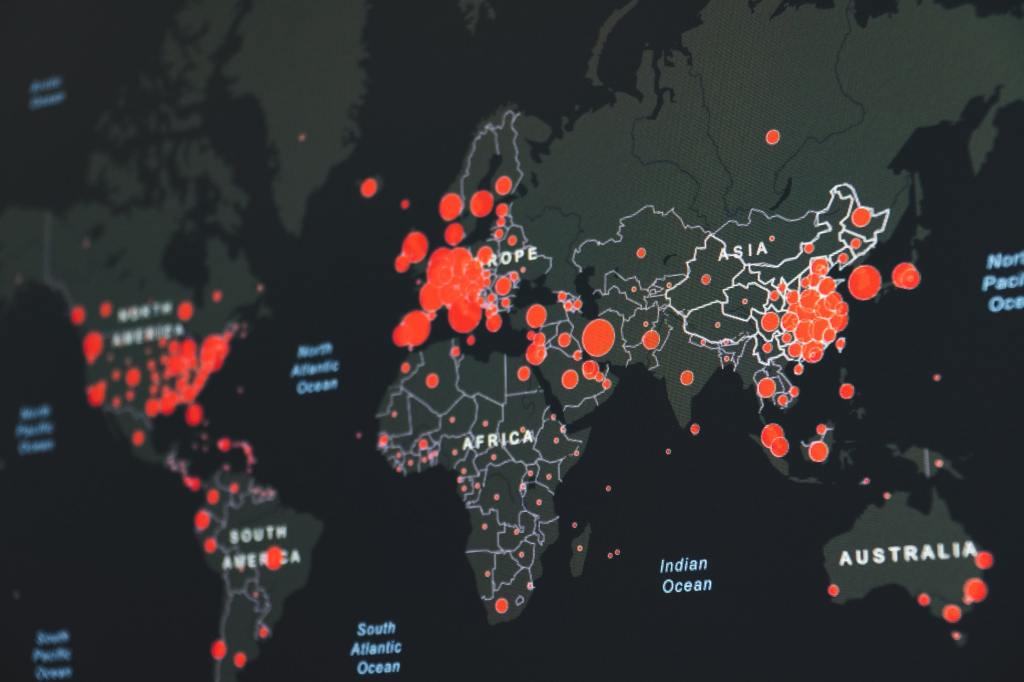
Photo: Martin Sanchez, Unsplash

Maintaining trade flows during the COVID-19 pandemic will be crucial in providing access to essential food and medical items and in limiting negative impacts on jobs and poverty.

The speed and scale of the crisis are unprecedented. But governments can ameliorate the impact. The following documents, hyperlinked to this page provide initial guidance for policymakers on best practices to mitigate pandemic-related trade risks, support trade facilitation and logistics, and implement trade policy in a time of crisis.

Managing Risk and Facilitating Trade in the COVID-19 Pandemic

Maintaining trade flows as much as possible during the COVID-19 pandemic will be crucial in providing access to essential food and medical items and in limiting negative impacts on jobs and poverty.

Some countries are closing border crossings and implementing protectionist measures such as restricting exports of critical medical supplies. Although these measures may in the short-term provide some immediate reduction in the spread of the disease, in the medium term they may undermine health protection, as countries lose access to essential products to fight the pandemic. Instead, governments should refrain from introducing new barriers to trade and consider removing import tariffs and other taxes at the border on critical medical equipment and products, including food, to support the health response.

Trade facilitation measures can contribute to the response to the crisis by expediting the movement, release, and clearance of goods, including goods in transit. The World Bank Group provides guidance and technical assistance to developing and least developed countries to implement best practices to facilitate the free flow of goods.

Download the Guideline here!

Do’s and Don’ts of Trade Policy in Response to COVID-19

Despite the initial inclination of policy makers to close borders, maintaining trade flows during the COVID-19 pandemic will be crucial. Trade in both goods and services will play a key role in overcoming the pandemic and limiting its impact in the following ways:

  • by providing access to essential medical goods (including material inputs for their production) and services to help contain the pandemic and treat those affected,
  • ensuring access to food throughout the world,
  • providing farmers with necessary inputs (seeds, fertilizers, pesticides, equipment, veterinary products)for the next harvest,
  • by supporting jobs and maintaining economic activity in the face of a global recession. Substantialdisruption to regional and global value chains will reduce employment and increase poverty.Trade policies will therefore be an essential instrument in the management of the crisis.

Trade policy reforms, such as tariff reductions, can contribute:

  • to reducing the cost and improving the availability of COVID-19 goods and services,
  • to reducing tax and administrative burdens on importers and exporters,
  • to reducing the cost of food and other products heavily consumed by the poor and contributing to themacro-economic measures introduced to limit the negative economic and social impact of the COVID-19 related downturn,
  • to supporting the eventual economic recovery and building resilience to future crises.

Governments with industries producing COVID-19 medical goods or food staples can further contribute by committing to refrain from limiting exports through bans or taxes. If export restrictions must be used, then they should be targeted, proportionate, transparent, and temporary.Measures to streamline trade procedures and facilitate trade at borders can contribute to the response to the crisis by expediting the movement, release, and clearance of goods, including goods in transit, and enabling exchange of services.

Reforms can be designed to reduce the need for close contact between traders, transporters and border officials so as to protect stakeholders and limit the spread of the virus, while maintaining essential assessments to ensure revenue, health and security. Interventions to sustain and enhance the efficiency of logistics operations may also be critical in avoiding substantial disruption to distribution networks and hence to regional and global value chains.

Download the Guideline here!

Trade in Critical COVID-19 Products

The covid-19 pandemic is increasingly a concern for developing countries. Using a new database on trade in covid-19 relevant products, this paper looks at the role of trade policy to address the looming health crisis in developing countries with highest numbers of recorded cases. It shows that export restrictions by leading producers could cause significant disruption in supplies and contribute to price increases. Tariffs and other restrictions to imports further impair the flow of critical products to developing countries. 

Download the Guideline here!

Also view the Blog post – Viral protectionism in the time of coronavirus

Source: World Bank, 1April, 2020

WCO – COVID-19 Update

Counterfeit medical supplies and introduction of export controls on personal protective equipment

The WCO reminds the general public to exercise extreme caution when purchasing critical medical supplies from unknown sources, particularly online. The use of these goods may cost lives. 

While the world is gripped by the fight against COVID-19, criminals have turned this into an opportunity for fraudulent activity. There have been an alarming number of reports quoting seizures of counterfeit critical medical supplies, such as face masks and hand sanitizers in particular. 

Customs and law enforcement agencies in China, Germany, Indonesia, Uganda, Ukraine, United Kingdom, United States and Vietnam, to name but a few, have reported such seizures in the past three weeks. 

Moreover, there was a significant increase in seizures of counterfeit and unauthorized face masks and hand sanitizers during Operation Pangea XIII, a collaborative enforcement effort by the WCO, Interpol, Europol, Customs administrations, Police forces and other law enforcement agencies. This Operation, held from 3 to 10 March 2020, resulted in the seizure of 37,258 counterfeit medical devices, of which 34,137 were surgical masks. 

Online retailers have also announced a surge in sales of counterfeit goods. In particular, a US company reported the removal from its marketplace of a million products claiming to cure or prevent COVID-19. Tens of thousands of listings were removed because of price hiking, particularly for products in high demand such as masks. In one operation, US Customs and Border Protection seized counterfeit COVID-19 test kitswhich had arrived at Los Angeles International Airport (LAX) by mail from the United Kingdom. This seizure triggered a joint investigation by the City of London Police’s Intellectual Property Crimes Unit (PIPCO), the Medicines and Healthcare products Regulatory Agency (MHRA) and the United States Food and Drug Administration (FDA), resulting in one arrest and the seizure of 300 more kits and 20 litres of chemicals for the production of such kits. 

Given the shortages and the activities of market speculators, another important trend is the introduction of export licences for certain categories of critical medical supplies, such as face masks, gloves and protective gear. In particular, on 11 March 2020 Vietnam adopted Decision 868/QD-BYT by the Ministry of Health, introducing export permits for medical masks. The European Union (EU) introduced a temporary export licensing scheme for personal protective equipment as of 14 March 2020 (see Commission implementing Regulation 2020/402). Other countries, such as Brazil, India, Russia, Serbia and Ukraine, have also followed suit. 

The EU’s dual-use export control regime will also continue to be applied to more sophisticated items such as full face masks, protective gear, gloves and shoes, specifically designed for dealing with ‘biological agents’. The full list of such items can be found in Annex I to EU Regulation 428/2009, as amended.  

The WCO urges its Member Customs administrations to remain vigilant in these difficult times.

Please consult the relevant section of the WCO’s website regarding COVID-19 information, including changes in legislation, new trends and patterns, and initiatives by partners and Member administrations. 

The WCO stands ready to continue working with all its partners to disrupt the supply chains of counterfeit products that put the lives of millions of people at risk.

Source: WCO Website, 23 March 2020

WCO – Global Customs community mobilizes efforts to mitigate the effects of the COVID-19

Following previous communications from the WCO in relation to the Coronavirus disease (COVID-19), the WCO Secretariat has published a dedicated webpage to update Members and the general public about WCO’s tools, instruments, recommendations, as well as an HS Classification reference document for COVID-19 medical supplies among others. WCO Secretary General Dr. Kunio Mikuriya also communicated with all WCO Members to provide guidance and extend a request for strong coordinated action during these challenging times. 

“During this time of crisis, the global Customs community is invited to continue advocating for and realize the facilitation of not just relief supplies but of all goods being traded in order to minimize the impact of the COVID-19 pandemic,” said Dr. Mikuriya. He further added that “We are witnessing an unprecedented situation, but I am confident that by acting together, in a spirit of solidarity, we can mitigate the effects of the COVID-19 pandemic on our societies and economies.”

The dedicated webpage will be updated regularly with further guidance material, Members’ best practices and a database of Customs administrations’ contact points, the latter accessible for Members only

In his communication to Members on 17 March 2020, Dr. Mikuriya reiterated the appeal to facilitate the smooth movement of relief consignments, as well as relief personnel and their possessions, while applying appropriate risk management. Members were also invited to share challenges and best practices to prevent and/or fight the spread of the infection, as well as to nominate contact persons who can handle inquiries regarding the applicable procedures for the import, export and transit of relief consignments and equipment for humanitarian purposes via air, land and sea modes of transport.

In less than 48 hours, the Secretariat received an overwhelming number of replies from Customs administrations around the world. 

The WCO will continue to proactively communicate with its Members and partners, not only on measures to facilitate the movement of relief consignments, but on action to safeguard supply chain continuity.

Source: WCO, 20 March 2020