Heartless!

Fellow blogger ZIMDEV paints a bleak picture for casual cross border traders – Cross border trade has been the lifeline for many unemployed Zimbabweans who make a living buying and selling goods from various neighbouring countries. Late last year, the Zimbabwean government together with the Zimbabwe Revenue authority have introduces a ban on the use of the $300 rebate on most goods. The new tariffs are quite steep and leave no room for profit for the traders. Cross border traders, fed the nation when Zimbabwean shops were empty. They travel across borders, bringing in goods that are not available in Zimbabwe and play a vital role in the economy. One visit to Beitbridge will prove just how vital the cross border trade is to Zimbabwe. It is disheartening to see the government’s reaction to cross border trade.

Instead of enabling and facilitating trade, the government is stifling and discouraging trade and enterprise. Importers of blankets, footwear, refrigerators, stoves and other electrical gadgets now pay 40% of the purchasing price plus a flat rate of US$5 per unit as duty. Government is also now charging between 10% and 25% duty on basic commodities such as maize meal, cooking oil, potato chips, baked beans and mixed fruit jam. The consignment of goods is also charged according to the weight of the goods, each kilo being charged at $3. Cross border trade has been dealt a heavy blow.

While continental and regional efforts wax lyrical about future ‘free trade’ in the Africa, domestic efforts and policy appear to be in contradiction, or perhaps the political utterances at regional trade and AU conferences are mere hot air!  Read the full article here! Surely this should be a case for closer diplomatic collaboration between Zimbabwe and its neighbours, or are the ‘cross border traders’ the enemy?

Mobile Customs Control – Great minds think alike

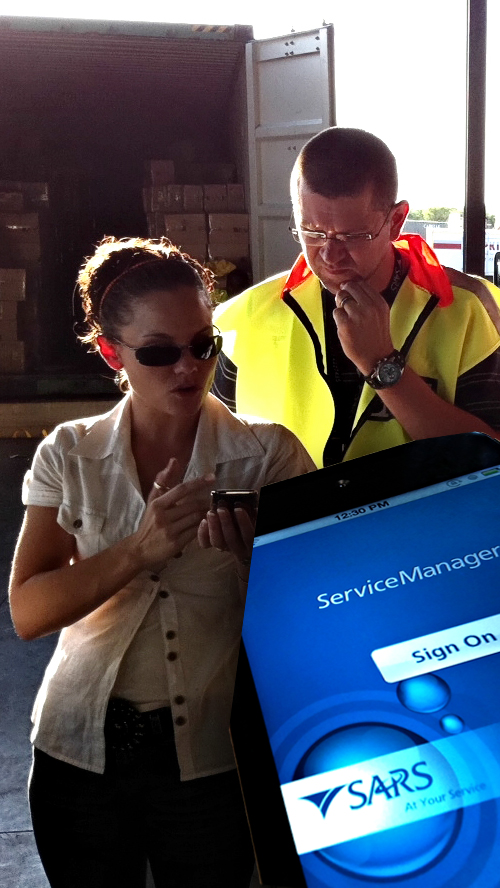
Beitbridge inspection area6 December 2010 saw the rollout of a new electronic tool for customs inspectors at Beitbridge border post. The need for a hand-held device was identified following the rollout of a new workflow system, called Service Manager, to various Customs offices over the past few months. Although the changes introduced recently were aimed at moving Customs to a totally paperless environment, customs inspectors still had to print out their instructions on paper, manually write down the inspection results and then recapture these onto the system back in the office.

The use of an iPod by a Customs officer to conduct a physical inspection at Beitbridge this week introduces significant enhancements over the previous manual process. SARS has been liaising with iPod experts in various countries around the world over the past few months to develop this function and procure the devices.

The solution comprises an Apple iPod Touch which has been configured to operate SARS’ automated inspection workflow application – Service Manager. The introduction of a hand-held device therefore means that all the functions of Service Manager are now at the inspector’s finger-tips. Inspectors receive their instructions on the iPod, capture the results and make recommendations which then go to the finalisation/adjustment inspector. They can even take photographs with the iPod if they need further clarification on the goods they are inspecting. Inspectors no longer have to go back and forth to the office and their next job can be assigned to them on the spot. This is expected to substantially reduce the time spent on physical inspections and minimise human error.

Initially 34 iPods were procured for Beitbridge, WiFi technology was made available at the port and training of affected staff undertaken. All physical inspections at Beitbridge were being conducted with iPods and will be rolled out to the other Customs border posts throughout 2012.

While SARS’ solution is the first known Apple solution of its kind, similar solutions have been introduced recently within the US Bureau for Customs and Border Control and the Australian Border Control Agency offering varying types of functionality, including the integration of RFID technology by the Australians to monitor and track cargo movements. Life for Customs officers is a whole different and will continue to evolve if it expects to remain in touch with modern era fraud and scams.