Dead Aid

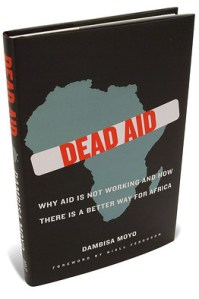
Dead Aid - Dambisa MoyoFollowing my recent post – Want to Help? Shut up and listen! – I thought it appropriate to share a link to the referenced book “Dead Aid” by Zambian born economist Dambisa Moyo.

In Dead Aid, Dambisa Moyo describes the state of postwar development policy in Africa today and unflinchingly confronts one of the greatest myths of our time: that billions of dollars in aid sent from wealthy countries to developing African nations has helped to reduce poverty and increase growth. In the past fifty years, more than $1 trillion in development-related aid has been transferred from rich countries to Africa. Has this assistance improved the lives of Africans? No. In fact, across the continent, the recipients of this aid are not better off as a result of it, but worse—much worse.

In fact, poverty levels continue to escalate and growth rates have steadily declined—and millions continue to suffer. Provocatively drawing a sharp contrast between African countries that have rejected the aid route and prospered and others that have become aid-dependent and seen poverty increase, Moyo illuminates the way in which overreliance on aid has trapped developing nations in a vicious circle of aid dependency, corruption, market distortion, and further poverty, leaving them with nothing but the “need” for more aid.

Debunking the current model of international aid, Moyo offers a bold new road map for financing development of the world’s poorest countries that guarantees economic growth and a significant decline in poverty—without reliance on foreign aid or aid-related assistance. Dead Aid is an unsettling yet optimistic work, a powerful challenge to the assumptions and arguments that support a profoundly misguided development policy in Africa. And it is a clarion call to a new, more hopeful vision of how to address the desperate poverty that plagues millions. Source: www.dambisamoyo.com

Want to help? Shut up and listen!

The subject of “Aid” is perhaps the hottest topic on the African continent, but for a variety of reasons. I came across the following video clip which I believe hits the nail on the head when it comes to international donor aid. No doubt there will be many out there who will denounce the presenter, Ernest Sirolli’s message, but as an African myself I can attest to the many examples of wasted opportunity and bullying which has occurred and continues (till this day) by NGO’s who believe they know better than any what is good for this continent. Thanks to the egotism of most politicians it is easy for such NGO’s to bulldoze their way into lucrative contracts which in most instances never see the light of day, or are so poorly implemented by outsiders, that the target country inevitably has to start all over again at its own cost. Anglo-Saxon involvement and meddling is a particular case in point … brazenly advancing the argument of ‘saving Africa from the Africans!’ I have experienced this several times in the last 15 years. Africa to donors has become little more than a box of Lego – where handpicked consultants experiment – upending all the coloured blocks and after 5 years or more leave a pile of blocks in no better arrangement than what they found when they first arrived. Sadly, the ‘developed nations’ have gotten the whole world into a financial mess and, now more than ever, will apply pressure on African governments into newer and more lucrative deals, because there are no more opportunities in their own back yards. The methods are the same, even the players are the same, just the stakes are now higher. Why, because China and the East are now the new ‘trading partners’ with a bit more bargaining power. Enjoy the video!

About the speaker

Ernesto Sirolli is a noted authority in the field of sustainable economic development and is the Founder of the Sirolli Institute, an international non-profit organization that teaches community leaders how to establish and maintain Enterprise Facilitation projects in their community. The Institute is now training communities in the USA, Canada, Australia, England and Scotland.

In 1985, he pioneered in Esperance, a small rural community in Western Australia, a unique economic development approach based on harnessing the passion, determination, intelligence, and resourcefulness of the local people. The striking results of “The Esperance Experience” have prompted more than 250 communities around the world to adopt responsive, person-centered approaches to local economic development similar to the Enterprise Facilitation® model pioneered in Esperance. Source: TED.com

Related Article

Greetings for 2012

العربية: الخريطة الهجائية لأفريقيا English: Or...

As my leave break draws to a close I thought it opportune for ‘Africans’ to maintain a positive view on developments on the continent, not that international affairs elsewhere on the globe give any cause for joy. To this I append an article “Its time for Africa” that will hopefully reinforce sentiment in both government and trade quarters on the ‘attractive’ or ‘potential’ opportunities which our continent has to offer. I look forward to a new year of interesting times and challenges. Enjoy the read.