Penalties for non-compliant Cargo Reporters

Recently SARS issued a communication signalling its intention to penalise non-conforming cargo reporters as of 1 July 2011, if they fail to report their cargo manifests electronically to SARS. Following international practice, all parties who engage in the contract of carriage of goods internationally are obliged to report the details of such cargoes. While customs has traditionally placed more emphasis on the correctness of the goods declaration alone – due to it being the sole means of duty and tax assessment and collection of revenue, the introduction of measures to safeguard the supply chain and combat other forms of nefarious activities, implies that all supply chain operators are ‘known’ and share in the responsibility for their actions and activities.

Perhaps seen in this guise, the whole matter of supply chain security encompassing the universal adoption of the Authorised Economic Operator (AEO) concept seems less appealing than it did a few years ago. Yes, Customs wants to know more and more about your business and who you do business with. Freight forwarders / Clearing Brokers have borne much of the brunt from customs over the years, it’s now time for parties involved in the conveyance of cargoes to come forward and be counted.

Because international shipping by its very nature transcends borders, it has always been difficult for national authorities to apply effective controls over information and parties who in all honesty are representatives/agents for those supplying the ‘original’ shipping documents. What the law now says is that those acting on behalf of foreign principles, liable for the import leg of imported goods are obligated to submit the ‘manifest information’ of those goods (electronically) to SARS.

For those customs brokers who operate as freight forwarders, this is in essence a further requirement which SARS places on your organisation. In essence a freight forwarder has a dual requirement with SARS – declaring the manifested contents of a consignment, as well as making due clearance for regulatory compliance and payment of duties. Another party with a similar dilemma are certain ‘ground handlers’, specifically those who are contractually responsible for the inbound operations of foreign air carriers, as well as the deconsolidation of aircargo upon arrival in their transit shed. They too must report the aircargo manifests electronically to SARS, and secondly to report the outturn of such goods, once unpacked for temporary storage and customs clearance and release.

The NVOCC or Vessel’s Agent must also report all cargo – for which they are contractually responsible – for the inbound leg into the Republic. These parties represent the foreign carrier and must consequentially report the carrier’s manifest (electronically) to SARS.

SARS is for now focussing principally on the reporting of master and house (sea and air)cargo manifests in this phase. Other reports are to follow.

Details for the registration for reporting electronically to SARS’ Automated Cargo Management (ACM) system have been widely distributed, and for sake of convenience are available for download here.

Consequences for non-compliance post 1 July 2011

SARS has put into place mechanisms to identify non-reporters. In such instances customs officers will call for administrative penalties to the extent of R1000,00 for each ‘manifest’ not reported. Moreover, should SARS take measures to ensure that these penalties are not ‘passed on’ to the importer – this would surely defeat the object of SARS’ intentions? Shortly, we’ll discuss the future matching of electronic cargo reports and goods declarations, but first lets endeavour to accomplish the first milestone.

Help with applying CPCs is here!

Apply-CPCs-betterSARS has recently produced a two-part guide to assist Customs Users in the application of Customs Procedure Codes (CPCs). This comes on the back of several enquiries concerning procedures from both the trade community and customs officers. The guides have been prepared in two parts to begin with.
Part 1 provides the user with a table of the permissible CPCs against which he/she can identify the appropriate codes that preceed that which appears in the table. For example, if you wish to clear warehoused goods, in bond, from one customs warehouse to another customs warehouse using CPC E43 42, then you must already have lodged a preceding clearance with CPC E42 00; E42 20; or E42 37. Part 2 provides the same table of CPCs, this time illustrating what CPC codes are available for use for a secondary or followup clearance. For example, , if your original or primary declaration declared goods directly into a Customs Warehouse under CPC E40 00, then your follow-up or subsequent options will be A10 40; A11 40; A13 40; A14 40; A15 40; E41 40; E43 40; F53 40; H67 40; J80 40; or K85 40.

It is important for the Customs User to understand that these are the ONLY applicable CPC combinations, and that the customs system will not permit any variations on these. Most computer service providers have likewise built-in system rules which only allow the CPC codes as permitted. It is precisely because of past mis-use of purpose codes that lead to CPCs being introduced. Users will also now notice that any CPC combination where the previous procedure code is not ’00’ must reference a previous customs declaration. This therefore provides a complete audit-trail of a transaction from point of entry/exit through to its final state, providing the trader improved evidence of his/her compliance with the law. In the coming months, my companion blog Paperless Customs Clearance will provide detailed guidance for all CPCs.

 Related articles

A new Customs Journal

Customs Scientific Journal 1st Edition 2011The Customs Scientific Journal CUSTOMS is a peer-reviewed academic journal that is published electronically, twice a year by the Academy of Customs Service of Ukraine on behalf of the Regional Office for Capacity Building & Regional Training Centers for the European Region of the World Customs Organization. It was launched by the initiative of Regional Office for Capacity Building/Regional Training Centers for the European Region of the World Customs Organization on October 1, 2010.

Founders of this Journal regard it as a mirror of the implementation of Capacity Building Strategy for the Region Europe, as the communication and the coordination mechanism within region to support the establishment of customs-to-customs partnerships as well as to enhance the identification and exchange of modern technologies and best practices within the region.

The journal covers all aspects of the roles and responsibilities of customs with the focus on: Customs & Business Partnership, Professional education in Customs domain, Implementation of the WCO Standards, Best practices, Development of scientific activity. The most prospective are also the following broad sections: Young researchers’ page, Guests (papers by representatives of Customs Administrations/Customs Universities from non-EuR Region of WCO), as well as Reference Material.

Related articles:

Time for a facelift

What Happened to the Portcullis? received a facelift this weekend. Hopefully it will come across as a little less gaudy. What Happened to the Portcullis?

You will also note that a new ‘companion’ Blog is being developed – Paperless Customs Clearance (http://ecustomsdotorg.wordpress.com) – although devoid of content for the moment. We hope to bring you some real content with this site. Thanks to all those who have contributed comments, suggestions and ‘content’ over the last 9 months. Please continue to do so.

Paperless Customs Clearance

Durban Dugout versus [nuwe] Transvaalse Tamboekiesfontein

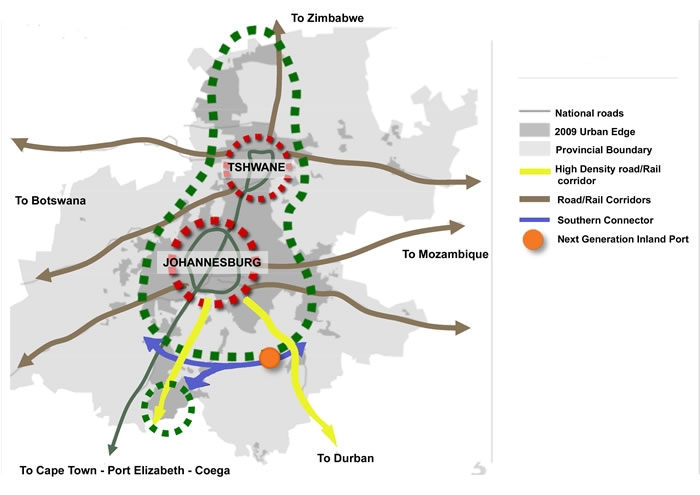
While on the topic of port expansion, an acquaintance of mine reminded me of another development, right here in my backyard. He was referring to Inframax Holding’s proposed development of an inland mega-port and logistics gateway 25 km southeast of the Johannesburg CBD. The 630ha site identified for this project will be called Tambo Springs and is located on land originally known as Tamboekiesfontein farm.

Tambo Springs Logistics Port

Gauteng is the largest metropolitan area in Africa, and one of the largest in the world, with a population of 10 million people generating the largest annual GDP in Africa. Inframax’s vision is to develop this site, and potentially add another 600ha, into a new inland port and logistics gateway that will contribute significantly to meeting Gauteng’s need to increase the current freight logistics capacity/throughput in and out of Johannesburg, to three million twenty-foot-equivalent units (TEUs) by 2015 and four million TEUs by 2020 – with further increases after that.

According to locally born, Texas-based logistics consultant, Franco Eleuteri and Associates, the logistics challenges now faced in Johannesburg/Gauteng have cropped up worldwide wherever cities have expanded fast. Typically, the original logistics centres were developed on the city peripheries. Over the years, however, these cities grow and absorb the centres, making it difficult to expand or upgrade to accommodate new demands. This is basically what is happening to Johannesburg’s City Deep Terminal, which was established in 1977 as a bonded inland container depot where containers from Durban could clear customs in Johannesburg. City Deep still has a vital role to play but the time has come to have it operating in tandem with a larger inland port or ports on the new city periphery and able to accommodate a large efficient intermodal capability for road, rail and air transport. This is fundamental to any 21st Century freight operation.

Tambo Springs is exceptionally well positioned as it is located in the southern periphery of Johannesburg and within the Johannesburg/Durban road freight and rail corridor. It has access to the N3 freeway to Durban (South Africa’s major freight transport route), to the N1 to Cape Town and via the R390, to Port Elizabeth and East London as well as to other freeways to the industrial centres just south of Johannesburg: Heidelberg, Vereeniging, Vanderbijl Park and Sasolburg, all of which are within 20 to 60km.

The site is also only 22km from the City Deep Terminal and 25km from the OR Tambo Air Freight Terminal. These excellent road linkages will allow the site to accommodate both full truck load (FTL) long distance road freight and less than truck load (LTL) regional distribution. On the freight rail side the existing dual directional links already run through the site to all the areas mentioned above. Accordingly, the Tambo Springs development can contribute significantly to optimising the country’s existing infrastructure, particularly that of the Ngqura Deep Water Port near Port Elizabeth. More optimal usage has the potential to increase this Eastern Corridor’s share of South Africa’s freight handling from about 14% to 21% in future. This is important given congestion at Durban harbour.

Inframax has from the outset engaged with key public sector authorities and agencies to canvass in principle policy support for the initiative. These include Gauteng Department of Economic Development; Blue IQ; Transnet Freight Rail and Ekurhuleni Municipality. What is not clear, however, is whether or not Inframax has read the draft Customs Control Bill, which at this point would effectively create a barrier to such development. These are interesting times: a test  as to whether business and trade ‘really’ determine economic and logistics opportunities, or whether policy makers have the vision to see the bigger picture.

Modernisation Release 2 – Trader Pocket Guide

Customs Trader Pocket Guide 2nd EditionImporters, exporters, freight forwarders, specialist trader practitioners and service providers can visit the SARS Customs Modernisation webpage and download the 2nd edition of the “Trader Pocket Guide“. Traders will find other companion documents on the webpage, in particular the “Guide to SAD Forms“. This publication will help and assist the customs user to locate the appropriate block/space for required declaration data fields. In addition, the new updated “CPC Chart” and “Guide for Application of Customs Procedure Codes” are also available for download. Stakeholders are encouraged to look out for subsequent notifications which will be uploaded to the webpage as the implementation of Release 2 progresses.

Durban’s Dugout Port Proposal – Reality or Pipe Dream?

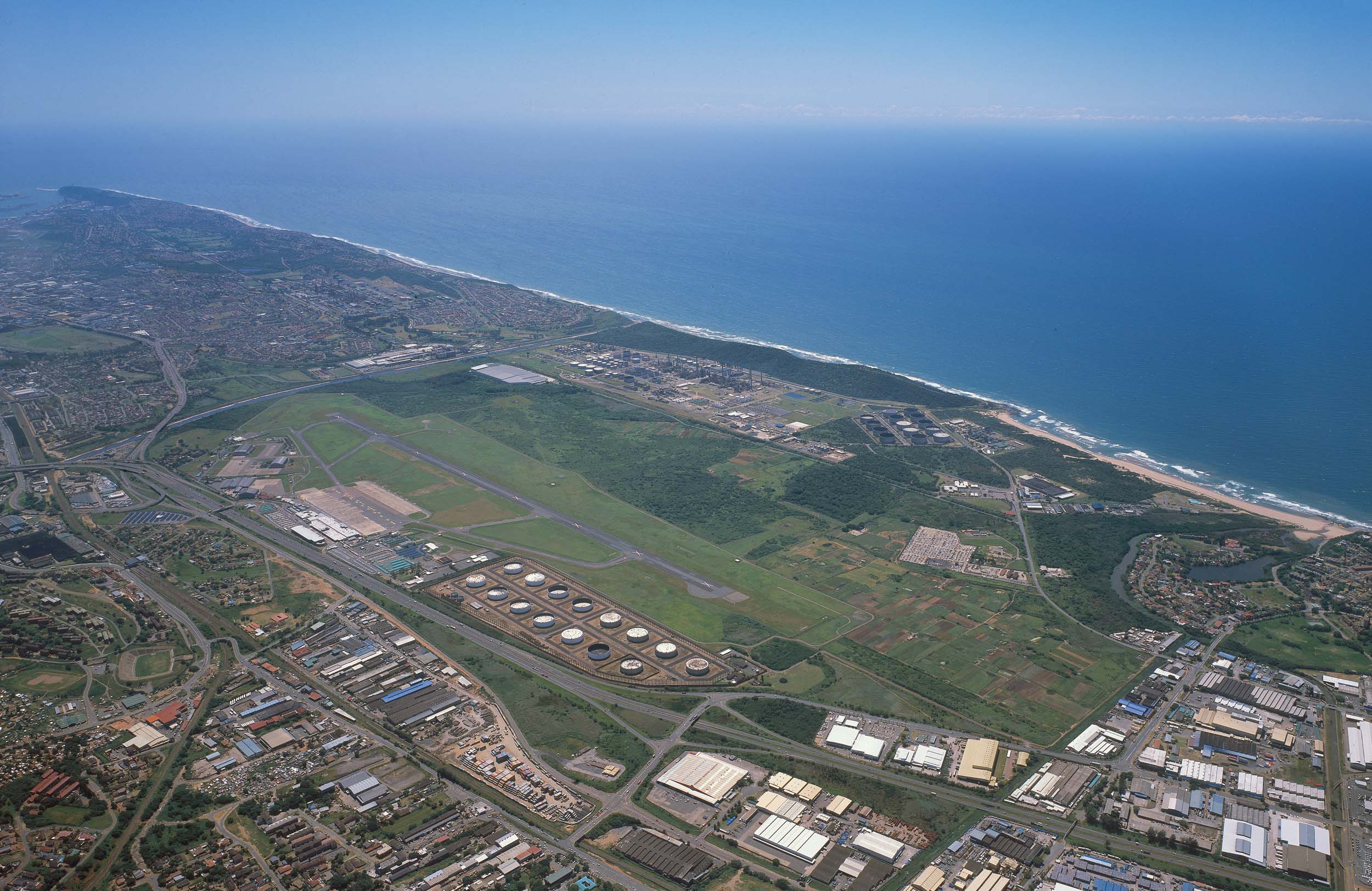
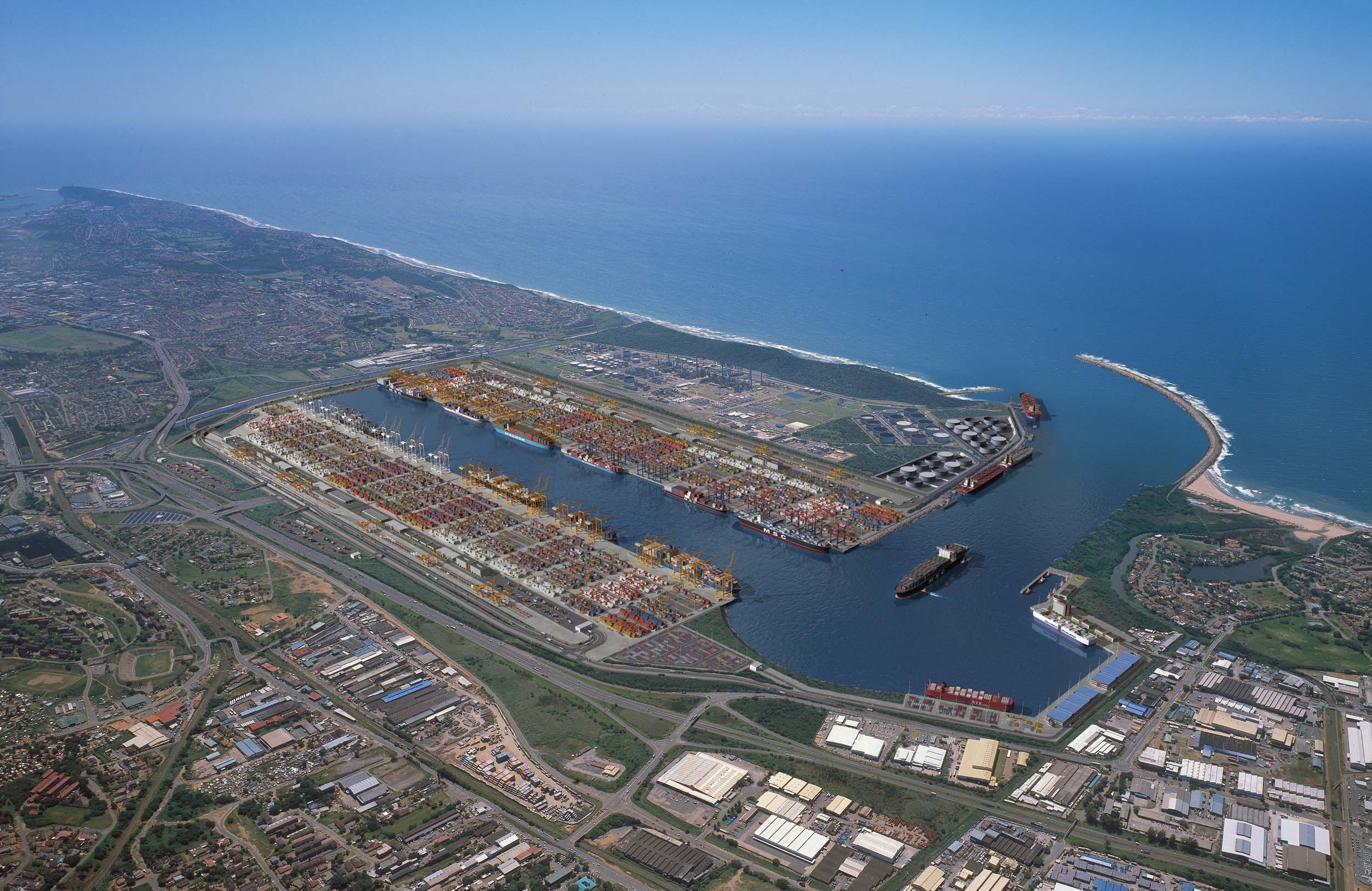
Airport Site Overall 1I received these pictures in an e-mail today. 15 minutes of surfing (the web kind) reveals plans by Transnet to procure the old Durban International Airport site from ACSA and dugout a new port to meet future demand and ensure that Durban remains Africa’s busiest port. Point of correction, Durban Harbour seeded this title to Port Said in Egypt a few years ago, so it would appear someone has a grandiose plan to bring about a mega development which is all honesty is ludicrous given the under-utilisation of Port of Ngqura (Coega) and its adjacent ‘white elephant’, the Coega Industrial Development Zone (IDZ). Government realised after 10 years that Coega was not a great strategic investment. Current levels of activity at  Ngqura are due largely to volumes since diverted from Port Elizabeth container terminal and some new transhipment activity. As long as South African high port charges, piracy up the east coast of Africa and the efficiency of the Suez Canal persist, it is highly unlikely that the shipping conferences are going to increase their traffic around the southern tip of Africa.

Airport Site Overall 2The dugout development cost is estimated at R50 billion, with a further R100 billion to be spent on infrastructure and inland logistics. Was FIFA 2010 not sufficient warning on over-capitalisation with limited return? Unless our ports and inland logistics pipelines begin offering significant advantages over Namport, Maputo and Beira, developments such as the old Durban airport will never realise its fullest potential. It has to be admitted that the concept is brilliant and awe inspiring, but realisation of such is but a daunting pipe dream, me thinks! Transnet chairman Mafika Mkwanazi, is most optimistic insisting that the project will happen with development needing to commence in 2015 to be ready for 2019. I would like to share in this optimism but not at the expense of the taxpayer. Source: IOLProperty.co.za

Thinking out-of-the-box

If container shipping is to assure itself of a licence to operate in the future, the industry needs to change now. No more battles on rates; instead, shipping lines should be giving customers what they really want. This is the view of MAERSK Line CEO Eivind Kolding. The challenge being posed for container shipping is the following:

  • What if we could guarantee that cargo would be on time, every time? 
  • What if placing a shipping order was as easy as buying an airline ticket? 
  • What if the shipping industry was known for beating environmental expectations — not struggling to meet them?

The company has recently launched a manifesto on the need for change. A campaign site – www.changingthewaywethinkaboutshipping.com — has been set up to host the discussion with all stakeholders in the industry. Even sceptics are encouraged to participate! Source: MAERSK website.

Checkpoint of the Future

Eye scanners and futuristic security tunnels may soon be standard issue in airports as the airline industry seeks to bump up safety while reducing the hassles of boarding a plane that deter some people from flying. The International Air Transport Association (IATA) unveiled a mock-up  in Singapore of what it dubbed the “Checkpoint of the Future”, where passengers separated by security risk would walk through one of three high-tech, 6.1m-long tunnels that can quickly scan shoes and carry-on luggage and check for liquids and explosives. Passengers should be able to get from curb to boarding gate with dignity,  without stopping, stripping or unpacking, and certainly not groping.

The main concepts of the Checkpoint are (1) strengthened security by focusing resources where risk is greatest, (2) supporting this risk-based approach by integrating passenger information into the checkpoint process, and (3) maximizing throughput for the vast majority of travelers who are deemed to be low risk with no compromise on security levels.

How does it work?

The Checkpoint of the Future ends the one-size-fits-all concept for security. Passengers approaching the checkpoint will be directed to one of three lanes: ‘known traveler’, Checkpoint of the futurenormal’, and ‘enhanced security’. The determination will be based on a biometric identifier in the passport or other travel document that triggers the results of a risk assessment conducted by government before the passenger arrives at the airport.  The three security lanes will have technology to check passengers according to risk. “Known travelers” who have registered and completed background checks with government authorities will have expedited access. “Normal screening” would be for the majority of travelers. And those passengers for whom less information is available, who are randomly selected or who are deemed to be an “Elevated risk” would have an additional level of screening.

Screening technology is being developed that will allow passengers to walk through the checkpoint without having to remove clothes or unpack their belongings. Moreover, it is envisioned that the security process could be combined with outbound customs and immigration procedures, further streamlining the passenger experience. Source: IATA.

Related topic: http://www.iata.org/pressroom/Documents/security-june-2011.pdf

More iTunes Gadgets for the Shipping Industry

Safmarine App3How about this free Safmarine app. for iPhone and the iPad. Look for the latest up-to-date sailing schedules by origin and destination locations, together with transit times and vessel names. Trace your cargo by entering your container, booking or bill of lading number. Via the ‘hotlist’ you can store your most important searches for easy reuse later on.  Containers saved in the hotlist are monitored actively and you will be notified when your container has moved. View the location and contact details of our country offices with a simple look-up or find the nearest office via your iphone’s GPS.

SARS e-newsletter – Customs Connect

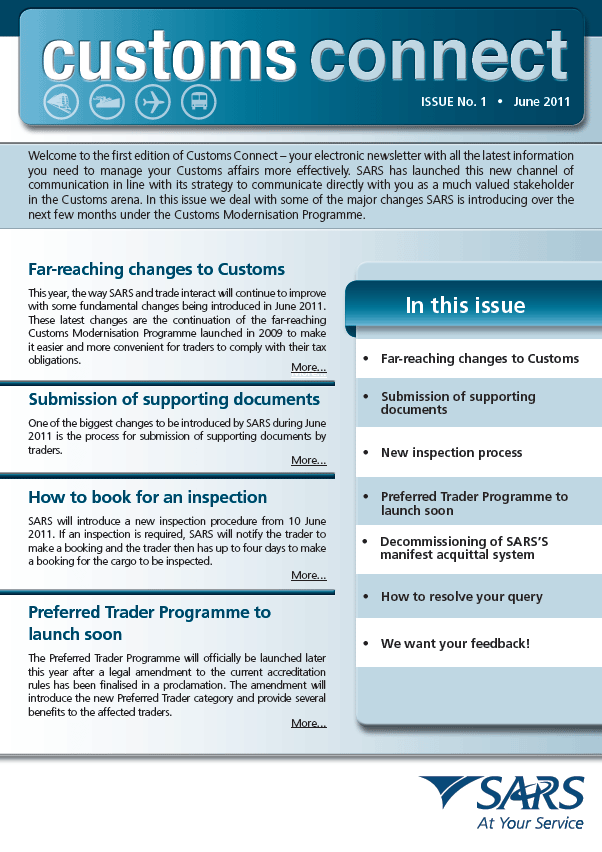
Customs Connect Issue 1SARS has just introduced a new communication medium directed specifically for external stakeholders. It is called  ‘Customs Connect’. Given the ever increasing need for public awareness and outreach in regard to on-going developments in the Customs Modernisation Programme, it is necessary to expand the scope of information to as wide an audience as possible. SARS encourages all external parties (including trade associations) in the local and regional trade community to read and circulate this newsletter. It can be accessed through the Customs Modernisation webpage, and will bring regular updates on modernisation issues.

Smiths Detection Wins German Contract for Mobile Cargo Scanners

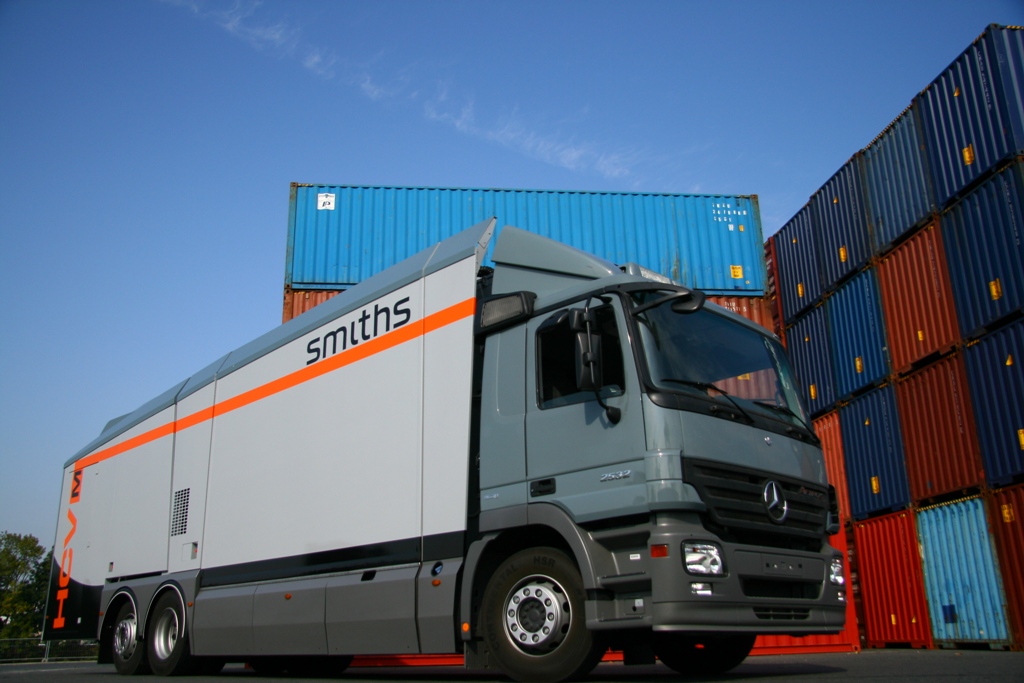
Smiths Detection has won an order from the German Federal Ministry of Finance (BMF) to provide advanced high-energy [6Mev] X-ray systems for mobile Customs checkpoints to be delivered by the end of 2011. The contract comprises three Heimann Cargo Vision Mobile (HCVM) 3 systems, Smiths’ third generation, mobile high-energy X-ray cargo series, to inspect trucks, containers HCVM-Truckand other vehicles for contraband, weapons, explosives and narcotics. They will be deployed at various locations throughout Germany. Available in truck and trailer versions, which give operators the freedom to use their own towing equipment, the HCVM 3 series improves threat identification through its viZual technology, which uses colour-coded material discrimination to distinguish between organic and inorganic substances. Operational in less than 15 minutes, with a throughput of up to 150 containers per hour, the system offers flexible scanning heights for different vehicle or load dimensions and adjustable scanning angles with a variety of scanning modes. Some of the technical features include:

  • High throughput of up to 25 trucks per hour in scan mode and up to 150 trucks per hour in pass through mode.
  • Steel penetration up to 320mm.
  • viZual technology for real organic/inorganic material discrimination.
  • Up to 6 different Scanning Modes.
  • Automatic Radioactive Material Detection.
  • Space+Cabin for up to 8 Image Analysis Workstations.
  • Automatic Guidance System.

Automated Cargo Management – Whipping up Industry Awareness

Following the recent posts on this subject, SARS took to ‘walking the talk’ this week. Over the last month a significant increase in registrations with Customs as well as vast improvements in successful electronic manifest data submission has occurred, mainly in the sea freight industry, however. This week’s initiative took the campaign to the hub of air cargo in southern africa – Oliver Tambo International Airport. Meetings were arranged with various stakeholders and industry bodies to reinforce customs cargo reporting requirements. The campaign was intended to offer an alternative approach to the usual formalities of the bi-monthly modernisation meetings. If necessary, further campaigns will be undertaken leading up to the mandatory enforcement of electronic manifest and cargo report submission for air and sea cargo operators in the very near future. SARS will soon be announcing a final cut-off date for voluntary registration for ACM and electronic submission, after which punitive measures will be introduced. Watch the Customs modernisation webpage for further details.

Managing the Challenges of WTO Participation

The article and analysis might be a few years old now, but still relevant to economists and trade specialists concerned with South Africa’s future economic viability. I think that the author of this case study, Neil Joubert, Researcher at Trade and Law Centre of Southern Africa (Tralac), has done a fine job in giving historic context to our country’s approach to trade law and the effect of its obligations under the WTO GATT agreement. Titled – The Reform of South Africa’s Anti-Dumping Regime – it examines the factors that necessitated the reform of the South African anti-dumping regime, and briefly discusses the impact of the change in regional dynamics on the anti-dumping process in South Africa.

The Geography of Transport Systems

http://people.hofstra.edu/geotrans/index.htmlYou might question why I place so many posts relating to research/academic topics. Well, it’s because several of my colleagues and work associates are crazy enough to study part-time – I naturally get bombarded with questions and therefore make a point [now] to ensure I share resourceful sites on this blog. Here is another gem of a site hosted by Dr. Jean-Paul Rodrigue, Dept. of Global Studies & Geography, Hofstra University, New York – The Geography of Transport Systems. If you’re looking for stuff on transportation, logistics, including the politics and history surrounding these topics, then you’ll find this site both interesting and useful. Kindly note the ‘usage rights’ regarding the information on this site.