Mandatory reporting of Cargo Carrier Code

On Sunday, 31 July 2011, SARS will implement a stepping stone towards full cargo/declaration matching and acquittal. All goods declarations must reflect a valid cargo carrier code as part of the house waybill number data field.  The requirement was implemented successfully in the sea cargo environment some years ago with the launch of the old Manifest Acquittal System; the challenge now lies largely within the air cargo community.

The ‘House Waybill” data field comprises two parts – The first part must reflect the Cargo Carrier Code (Eight-digit Alpha Numeric Code). This is the code assigned by the Automated Cargo Management (ACM) system to the entity who issued the House Bill of Lading e.g. the Groupage Operator or his appointed agent in the Republic. The second part must reflect the actual number of the transport document.

By way of faciliatory gesture to legitimate importers who may be blissfully unaware of the non-compliance of their forwarding agent / carrier, SARS will allow the insertion of a specific code “ZZZ99999” for non-compliant cargo reporters. This code must only be used in the event the cargo reporter is not registered with SARS for submission of cargo reports to ACM. The facility is a temporary measure which will be withdrawn after a short period.

In the event a declarant inserts the aforementioned code, the associated declaration will be selected by the customs system for scrutiny by a customs official. In order to remedy any delay to an otherwise legitimate import, the unregistered cargo reporter must immediately identify themselves to SARS by way of disclosing their company name and contact details to enable SARS to expedite registration of the entity for ACM compliance. The sooner this is accomplished the quicker the importer can obtain release if there is no further outstanding impediment.

Subsequent registration of the non-compliant carrier could also result in the imposition of a penalty against the entity concerned. Therefore as of 31 July 2011, declarants will need to be more vigilant concerning the status/standing of their local forwarding agent in regard to compliance with SARS reporting requirements. Once the temporary dispensation above is withdrawn, the effect of a customs intervention will directly impact on the release of an importer’s goods.

Freight forwarders, Customs Brokers and Service Providers are urged to make their clients and business partners aware of the new developments to mitigate disappointment.  For more information refer to the SARS Modernisation webpage.

Securing the Global Supply Chain Without U.S. Leadership

In 2007 the European Union’s Framework Programme for Research and Technological Development (FP7) was established as “…a key tool to respond to Europe’s needs in terms of jobs and competitiveness, and to maintain leadership in the global knowledge economy.”   

A new research component called the SMART-CM project (SMART Container Chain Management) was created within the 7th Framework Programme. Its purpose is to … advance technology implementation and research in order to overhaul the complete container door-to-door transport chain so that it is more efficient, secure, market driven, and competitive. It systematically analyses current processes and systems, produces new innovative concepts for processes and technologies, and demonstrates all these in a set of 2 world scale Demonstrators covering 4 supply chain corridors.

Read the full article – Securing the Global Supply Chain Without U.S. Leadership.

WCO Knowledge Academy 2011

WCO Knowledge Academy 2011After an absence of almost a decade, the WCO convened a Knowledge Academy at its headquarters in Brussels. It took place right after the WCO Open Day for Trade, and ran for eight days, between 28 June and 8 July 2011. Over 50 delegates from both the private sector and WCO Member administrations travelled to Brussels from all parts of the world to attend the Academy. One of these was local systems architect, Anton Eccles (E-Tradex) based in Cape Town.

A total of 11 modules were offered focussing on key areas of WCO work, namely tariff and trade affairs (HS 2012, Rules of Origin, Valuation, Transfer Pricing), and facilitation and enforcement (WCO Data Model, AEO/SAFE, Risk Management). Following classroom activities participants travelled to the Port of Rotterdam for a presentation by Dutch Customs followed by a boat tour. This visit provided participants with the opportunity to see Customs procedures that were discussed and analyzed during the Academy in actual operation.

Thirty-four speakers, trainers and facilitators were involved: 17 were WCO staff members and they were joined by 17 external experts who were invited to address participants in either plenary sessions or during one of the training courses. Speakers included experts from three international organizations: the World Trade Organization (WTO); the International Monetary Fund (IMF); and the Organization for Economic Co-operation and Development (OECD).

In review, Anton maintains “the course was excellent and we had access to some really knowledgeable people. I think it was a good place to get an overall view of where the world of customs and global trade is moving too. Besides the course itself, the opportunity to share some experiences with people from other countries really gives you a good perspective what we do in South Africa”. The next Knowledge Academy is planned for July 2012.

South African visitors also attended the Trade Open Day.  Louise Wiggett (E-Tradex) and Mark Goodger (GMLS) stressed the importance of good partnerships between customs and trade. Both parties cannot operate effectively in their own capacity and it is only by joining forces that international trade can flow in a compliant, operationally effective and cost effective manner. 

To view a selection of photos from the WCO Council Session 2011, click here!

Draft Taxation Laws Amendment Bill, 2011 – Impact on Customs

As if the myriad of changes affecting the Customs industry are not enough, there’s some more important considerations for customs traders and practitioners, soon, posed by the Draft Taxation Laws Amendment Bill [2011].

Goods Sold in Bond. For the purposes of the VAT Act, the Bill proposes that ‘the value to be placed on the importation of goods into the Republic which have been imported and entered for storage in a licensed Customs and Excise storage warehouse but have not been entered for home consumption shall be deemed to be the greater of the value determined in terms of subsection (2)(a) or the value of acquisition determined under section 10(3) if those goods while stored in that storage warehouse are supplied to any person before being entered for home consumption.’

Duty free goods imported on a temporary basis. Goods imported in terms of Rebate Item 470.03, which are duty free, will in future have to be declared under a specific rebate sub-item for duty free goods. In addition, provision is also to be made for the importer of duty free goods, where the importer is contractually entitled to keep a portion of the goods manufactured, processed, finished, equipped or packed in lieu of payment for the operations carried out, that importer must:
a) export those goods within the 12 month period, or
b) process a goods declaration for payment of the VAT on the goods retained and pass a voucher of correction amending the quantity and value of the original declaration.

New tax incentives for Industrial Development Zones. Government is seeking to renew its efforts to enhance the Industrial Development Zone (IDZ) regime to encourage industrial development within certain geographical areas. The main focus of the incentive is to promote capital expenditure. Greenfield projects receive an additional 55% allowance and brownfield projects receive a further 35% additional allowance. The additional allowance for greenfield projects located in IDZ’s will be increased to 100% (instead of the current 55%) and to 75% for brownfield projects (instead of the current 35%).This change will be welcomed by IDZ Operators that are constantly looking for ways to make IDZ’s more attractive. In terms of the Customs and Excise Act, it should be noted that duty rebate and VAT dispensations ONLY apply to entities establishing licensed premises within the customs controlled area of an IDZ.

For more information on the above please click here!

The Draft Taxation Laws Amendment Bill, 2011 is available on the SARS website.


USCBP commits to CTPAT Mutual Recognition Agreements

The Customs-Trade Partnership Against Terrorism (C-TPAT) is a voluntary public-private supply chain security initiative. C-TPAT members – including importers, carriers, consolidators, licensed customs brokers, and manufacturers – voluntarily adhere to cargo security standards in exchange for a range of benefits, such as reduced CBP inspections and priority border processing.

C-TPAT Mutual Recognition (MR) Arrangements facilitate bilateral trade by extending reciprocal recognition to qualifying foreign customs programs, thereby enabling members of the foreign programs to receive the benefits of C-TPAT membership. MR Arrangements indicate that security requirements, standards, and verification procedures of foreign industry partnership programs are substantially equivalent to those of C-TPAT.

CBP currently has MR Arrangements with only five countries: Canada, Japan, Jordan, New Zealand, and South Korea. These five countries have accounted for about 20 percent of US trade since 2004.

CBP has indicated that it is committed to growing the number of C-TPAT MR Arrangements. In December 2010, at a Transatlantic Economic Council meeting, US and EU officials discussed the possibility of implementing a MR Arrangement between the United States and the European Union by October 31, 2011.

In a June 2011 report, the US Chamber of Commerce called for CBP to develop a MR Arrangement with Mexico.

You can read up more in the fact file on  USCBP Mutual Recognition Agreements and for a non-US perspective, you will find an excellent essay on Mutual Recognition of AEOs which I found on the World Customs Journal website.

SARS honoured by WCO for World Cup work

SARS receives WCO Award

Acting Chairperson of the WCO Council, Zouhair Chorfi (left) with SARS Commissioner Oupa Magashula and WCO Secretary-General Kunio Mikuriya at the award hand-over

A special award was recently presented to SARS by the World Customs Organization (WCO) in recognition of SARS Customs’ commitment in the fight against counterfeiting and piracy, in particular before and during the 2010 FIFA Soccer World Cup. South Africa was flooded with counterfeit products, particularly clothing and footwear, in the run-up to the World Cup, and SARS Customs pulled out all stops to prevent these goods from entering the country. Approximately R350 to R400 million worth of counterfeit goods, including over 1.1 million Bafana Bafana shirts, were confiscated by Customs during this time. The award was handed over to the Commissioner of SARS at a WCO Council meeting in Brussels at the end of June. Source: SARS eNews

For more pictures of the WCO Council Session 2011, click here!

Modernisation Release 2 under scrutiny

Significant changes to South African Customs internal declaration processing and inspection procedures were introduced just over two weeks ago under the banner of Release 2. From the outset it was clear that while technical developments had attained a level of stability through a substantial testing process, both internally and with external traders, the real impact would only be gauged upon implementation, or to quote a ‘sage’ in SARS – when the users begin to use the system in anger.

For traders, the biggest challenge lay in two areas: use of the new E@syScan software – a facility to scan, package and submit shipping documents to Customs – the intellectual property having been provided ‘free of charge’ to the industry’s service providers for integration in their proprietary offerings to the business community. Secondly, the operational interaction of traders with Customs branch offices in regard to the new case management and inspection system.

As was expected, there were some issues which challenged users, particularly in the area of amendment declaration processing (VOCs) and the inspection process. Tempers flared and patience was pushed to the limit. In some instances  delays resembled the kind of customs response times last seen prior to implementation of EDI in 2000. There were times too, when frustration levels so overwhelmed local customs staff, the issues spewed over to confront head office personnel.

Let’s not forget that there are no exemptions from financial loss during times like these. It’s not as though supply chain operators are going to be lenient and forgiving for shortcomings and delays in other quarters. No, these are the times of frustration and distress. On the one hand, the potential (and reality) of loss of business, and on the other, a yearning desire for better insight and judgement as to what to do when things are haywire.  At the heart of this lies the technology with it’s numerous interfaces, store and call procedures, dealing with the millions of instructions per second on which hang the expectations of all the users across the country. It matters not how much scenario testing and training occurred prior to implementation – this is the real deal.

The shortcomings of Customs have been highlighted by many, but the pandemonium and chaos at service provider call centres and indeed at clearing and forwarding houses escapes scrutiny and criticism. A finger-pointing exercise is most definitely counter-productive. What has been planned through the Modernisation Programme is indeed with the best intentions of the country in mind – of this most parties will agree. The fact that people’s comfort zones are jolted is what causes the pain.

With the logic and decision-making of customs and trade business activities becoming more and more embedded in the information systems we use, the frustration and helplessness of the user will continue until such time as these systems stabilise and the users become more trusting. The ‘challenge’ for systems builders and users lies in their ability and willingness to communicate and exchange the issues, solutions, and temporary workarounds. Clearly we have some way to go in this department. Users want systems and the convenience they bring. They are however not very forgiving when things go wrong; tolerance and understanding in short supply. Get used to this; there are at least another half-dozen forthcoming Modernisation Releases. In Part2 I’ll discuss some of the transitional pains which lie ahead. I also encourage readers to share their views on the matter – please be constructive.

Contrasting fortunes for Freight Forwarders

Freight forwarder associations were celebrating this week after helping force through changes to the International Air Transport Association’s (IATA) Cargo Accounts Settlement System (CASS) in Europe, which could save forwarders having to provide bank guarantees of up to £400,000 (US$655,440). On the other side of the globe, in the US, two US Congressmen have introduced a bill aimed at clamping down on fraudulent brokers and freight forwarders.

The British International Freight Association (BIFA) said that until the recent global financial crisis, the requirement for forwarders, when appropriate, to undergo a financial assessment by IATA had largely been dormant. However, the crisis had sparked a u-turn by IATA, with European forwarders having to undergo financial assessment, and as a consequence, provide CASS with a bank guarantee.

One member, it said, had been faced with having to provide a £400,000 guarantee. However, BIFA along with international freight forwarder association FIATA managed to get this requirement overturned after a small working group – of BIFA, FIATA and IATA – was established through a meeting of the European Air Cargo Programme (EACP) joint council.

In the US, Congressmen Russ Carnahan and Frank Guinta’s bill has won the backing of the US-based Owner-Operator Independent Drivers Association (OOIDA), the Transportation Intermediaries Association (TIA) and the powerful American Trucking Association (ATA). The Fighting Fraud in Transportation Act 2011 would put a stop to a system that allows ruthless brokers and scam artists to continue to operate unchecked. Moreover it would require brokers and freight forwarders to carry a US$100,000 bond rather than the current requirement of $10,000. It would also improve transparency of those seeking to become brokers and establish “significant” penalties, including unlimited liability for freight charges, for those operating without authority. The TIA believes brokers, forwarders, owner-operators and carriers need each other, and the speed of today’s logistics marketplace means that companies must be able to reasonably rely on representations made in the terms of their agreement.

Just goes to show the power of lobbying!

Why are customs and excise taxes treated differently and left outside of the fold of the Tax Administration Bill?

SARS moved forward in creating a new legislative framework for tax when updates to the Tax Administration and Customs Control Bills were published for comment. Werksmans Attorneys Director Alison Wood says contradictions between the Bills may cause delays.

Read the full article titled Second Draft Customs Control Bill – why are customs and excise taxes treated differently and left outside of the fold of the Tax Administration Bill?

Source: Creamer Media

The mystery of the identity of the carrier on an inland haulage leg

Herewith an interesting article on a topic which many of us in the customs and supply chain industry are not always fully aware of – authored by Tony Norton and Crispen Camp of Edward Nathan Sonnenbergs.

Over ninety percent of the world‟s commodities are transported by sea. Since the 1960‟s, containerised cargo has steadily grown to become the leading means by which goods are transported across the world‟s oceans.    

Importers of containerised cargo have to consider a number of factors when contemplating the most cost-effective means to bring about the importation of their goods. These factors include the financing of the transaction, insurance, customs duties as well as how the goods are to be conveyed. Importers that have their places of business located at an inland destination, such as Johannesburg, also have to consider who will undertake the onward carriage to Johannesburg from a discharge port such as Durban.

The contracts which govern the conveyance of the cargo are in most cases evidenced by the terms of documents known as „bills of lading‟. Bills of lading traditionally perform three functions, namely: they act as a receipt by the carrier of the cargo concerned; they evidence the terms of the contract of carriage, and they reflect the entitlement of the holder thereof to the goods.

The parties reflected on the Bill of lading are ordinarily the shipping line engaged to transport the goods which is reflected as the carrier, the shipper of cargo and the party to whom the cargo has been consigned.

The terms of the agreement of sale concluded between the exporter and importer of the cargo will impose the obligation on one of the two parties to arrange the transport of the cargo to either the discharge port, for example, Durban, or point of final destination, for example, Johannesburg. Where the agreement of sale does not impose a duty on the exporter to arrange the transport of the cargo to final destination, the importer will have to arrange to do so.

Where an importer has to arrange for the transport of cargo to an inland destination it can do so by a number of different methods.

Firstly, it can make its own arrangements to contract a local road or rail haulier to do so. This is generally known as “merchant haulage” in that it is the merchant or receiver that contracts for the haulage, which has nothing whatsoever to do with the ocean carrier. In those circumstances, if the cargo is lost or damaged en route on the land leg between, say, Durban and Johannesburg, the merchant looks directly to the local road or rail haulier and not to the ocean carrier for compensation. Of course the advantage for importer in choosing to arrange for the onward carriage of the cargo to Johannesburg is that it will be in a position to negotiate transport rates with its nominated road haulage company.

Secondly, the importer can arrange to ensure that the bill of lading contract for the carriage of the cargo extends to Johannesburg, in which event the land leg is generally known as being covered by “carrier haulage”, with the ocean carrier being directly responsible for any loss of, or damage to, the cargo during that leg subject to the terms of the bill of lading concerned.

Lastly, there is a third variation which is commonly and misleadingly known as “carrier assisted haulage” or “carrier haulage”. This is when the importer approaches the ships agent of the ocean carrier to arrange for the on carriage of the cargo from the discharge port, for example, Durban, to the point of final destination, for example, Johannesburg. However, the ships agent generally has no authority from the ocean carrier in these circumstances to agree to extend the ocean carriage to a point of final destination and any assistance rendered by the ships agent in this respect is generally intended by the ships agent to be rendered with the importer as principal so that the contract for the road or rail haulage is directly between the road or rail haulier and the importer, and not between the ocean carrier or the ships agent, on the one hand, and the importer, on the other.  

The problem here is that the correspondence between the parties in this respect does often not clearly reflect that intention, with the term “carrier haulage” or “carrier assisted haulage” leaving the importer with the impression that the ocean carrier or the ships agent is responsible for the road or rail haulage of the cargo and the actual agreement between the ships agent and the importer not clearly reflecting who is responsible one way or another.  

As a general rule of thumb importers should be aware of the fact that if the contract of carriage in the bill of lading does not extend to the inland point of final destination, it is unlikely that the ocean carrier will assume responsibility for the road or rail haulage concerned. In those circumstances, the agreement for the road or rail haulage with the ships agent concerned should be closely examined and clarified to ascertain who the responsible party is for the road or rail haulage leg. Generally it will be found that the intention is that it is the road or rail haulier contracted by the ships agent, on behalf of the importer, notwithstanding the term “carrier haulage” or “carrier assisted haulage” applied to that situation.  

In an ever increasing globalised world economy, the transportation of containerised goods will only continue to expand and, in this environment, importers of goods will have to consider numerous factors along the import chain, not least of which will be whether or not to conclude land leg merchant or carrier haulage contracts or variants thereof and to properly understand the significance of them.

Source: Lexology.com

Are Customs Unions Tenuous Arrangements?

Recent reports from Europe suggest all is not entirely well with the ‘customs union’ concept. Let’s face it the philosophy of such economic arrangements has existed for many years. However, human nature and the failure of politicians to learn from history prevail.

On the one hand we have Russia, Belarus, and Kazakhstan entering a new customs union on 1 July 2011. At the same time, Russian Customs will become responsible for transport, sanitary, veterinary, quarantine and phytosanitary control. The impact of this change foresees the displacement of national border controls to the outer borders of the new Customs Union. 35 customs checkpoints and approximately 3,500 customs officers will be made redundant following the implementation of the Customs Union. To take control of the additional functions (transport, sanitary, veterinary, quarantine and phytosanitary control) Customs will need to recruit over 1,000 new specialists. Customs will try to close the gap by a short-term redeploying of personnel, but in the future expects to employ some specialists previously made redundant in other governmental agencies responsible for transport, sanitary affairs. This sounds a bit ludicrous given that 3,500 customs officers are about to be turfed into economic oblivion – truly, the interests of customs staff are not very high on this agenda!

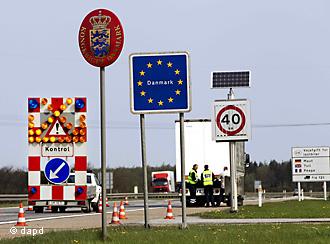
Denmark border crossingElsewhere, tension is developing between Denmark and Germany in a dispute over the Danish government‘s plans to re-establish permanent border controls – this in the EU. Some commentators have even gone so far to state that this could be the writing on the wall for freedom in Europe. The agreement guarantees the free movement of people between the 26 European member states. Denmark insists that the sole aim of the new border controls was “to fight the entry of illegal goods and drugs” into the country.

So, is the dream of a united Europe showing signs of cracks? It seems that the scourge of illegal goods and trafficking have placed some strain on the trust between these two nations. How long before it spreads to other states? At home, here in Southern Africa, there have been several reports of tension between the Republic and the BLNS states. Although the basis for this lies more in the distribution of the common revenue pool, it is no secret that the Southern African Customs Union (SACU) and its porous inland borders offers little support for maintaining the union. With the new Customs Control Bill emphasizing the movement of goods within the union as ‘imports’ and ‘exports’, it would indeed seem a matter of time before full customs controls are reinstated at the national borders rather than current VAT controls.

Customs Bill makes Local Headlines

The Business Day has published an article featuring the Customs Bills. Prominent attention has been given to the question of penalties under the new dispensation. Given months of industry analysis of the Bills, I think it is a welcomed occurrence that the topic has reached the press. For the full article please click  HERE!

WCO 2011 – Photo Contest Winner

2011 WCO Photo Competition: “In the desert, the next shift arrives” is the title of the winning photo submitted by Algerian Customs ( Photo by Francis Roche, a retired French Customs photographer – Copyright © Algeria Customs). To see a selection of this year’s entries click  HERE!

Algerian Customs

WCO News – Latest edition

WCO-News-June-2011The June 2011 edition of the WCO News is a bumper 56 pages. You will find several interesting articles relating to the latest developments and initiatives on trade facilitation. A particular article features East Africa’s efforts at facilitation at its land borders. Read also about –

  • Korea’s Client-oriented Logistics Information System which automatically measures the time taken for processing imported cargo at each stage of clearance from arrival at port to release (arrival at port > bonded warehouse > import declaration > permission > release), to diagnose and eliminate bottlenecks in logistics.
  • TradeFIRST, Singapore Customs’ latest initiative to improve trade facilitation through better partnerships with business. TradeFIRST is a single trade facilitation window that integrates the concepts of facilitation, compliance and risk management, and promises to make trade easier, fairer and more secure.
  • Latin America leads the way with AEO implementation, and
  • The concept of multi-layered security.

The Magazine is available in traditional PDF format or as an ebook. www.wcoomd.org

Shipping lines get tough over new EU cargo information rules

Seems like ‘cargo reporting’ is becoming as infectious as a virus! The shipping industry has warned its customers that failure to comply with new EU regulations will mean fines and their cargo will not be loaded. Following similar measures introduced by the US in 2002, it seems that not only is there a possibility of “fines” and “no loading of cargo”, but that shipping lines even get to cash in on a revenue opportunity; some to the extent of US$25 per bill of lading. It absolutely amazes me that this is allowed to happen – talk about non-tariff barriers!  While SARS, for example, can give thousands of ZA Rands worth of intellectual property (for free) to the trading community – with the hope of making trading easier – why can the bastions of the sea not do likewise? Seems as though the “war on terror” has been interpreted by some as a ‘cash cow’!  Read the full article online: www.bdpinternational.com.