WCO – New technology-assisted capacity building: the Virtual Reality (VR) assisted training program

The WCO has announced that it has set up a VR training program with the support of CCF-Korea at the WCO Headquarters on 9th November 2021. 

This program was developed and first established in RTC Korea last September to support customs officials to learn and understand the basic procedures of physical inspection on containerized cargo at a maritime port.

With the help of VR devices and a cyber master, a trainee is requested to select one of three individual scenarios and detect contraband items such as drugs, counterfeit goods and explosives smuggled in imported cargo.

After selecting one case, documents have to be compared and discrepancies identified. The program will show necessary steps to wear safety gear, inspect the exterior of the container, scan it with ZBV vehicle and study the X-ray black/white and coloured images. In the following step, the container is opened and inspected with tools like a chisel, magnifying glass, scanner, etc., at a bonded area of a dedicated warehouse.

RTC Korea, KCS and WCO Secretariats contributed to the program production and provided materials on drug smuggling cases with pictures, advice on preparatory steps, inspection scenarios taking into account risk indicators from the WCO RM compendium.

The length of one training session is approximately 10 to 15 minutes depending on the trainee‘s progress, and the devices for the VR training are the headset, controller, high-end computer, TV screen and kiosk. The program also developed a screen version that Customs officials can play on their desktop computer and notebook and have the 3D experience.   

During the experience session, Dr. Kunio Mikuriya, the Secretary General of the WCO, expressed high interest and called on feedback on future activities from those who experience the program to make it more relevant for Members’ capacity building. In this regard, the immediate task is to prove its effectiveness through regional capacity building activities and WCO meetings. 

Dr. Taeil Kang, the Director of Capacity Building Directorate expressed his plans to develop content for other topics including e-commerce transactions, X-ray image screening and uploading on CLiKC and installation in other WCO regions. 

For more information, please contact Sungsig Kim, CCF-Korea manager at the Capacity Building Directorate (sungsig.kim@wcoomd.org).
Visualizing Congestion at America’s Busiest Port

The Busiest Port in America: Los Angeles

U.S. e-commerce grew by 32.4% in 2020—the highest annual growth rate in over two decades. Such rapid growth has resulted in many more goods being imported, leaving America’s western ports completely overwhelmed. 

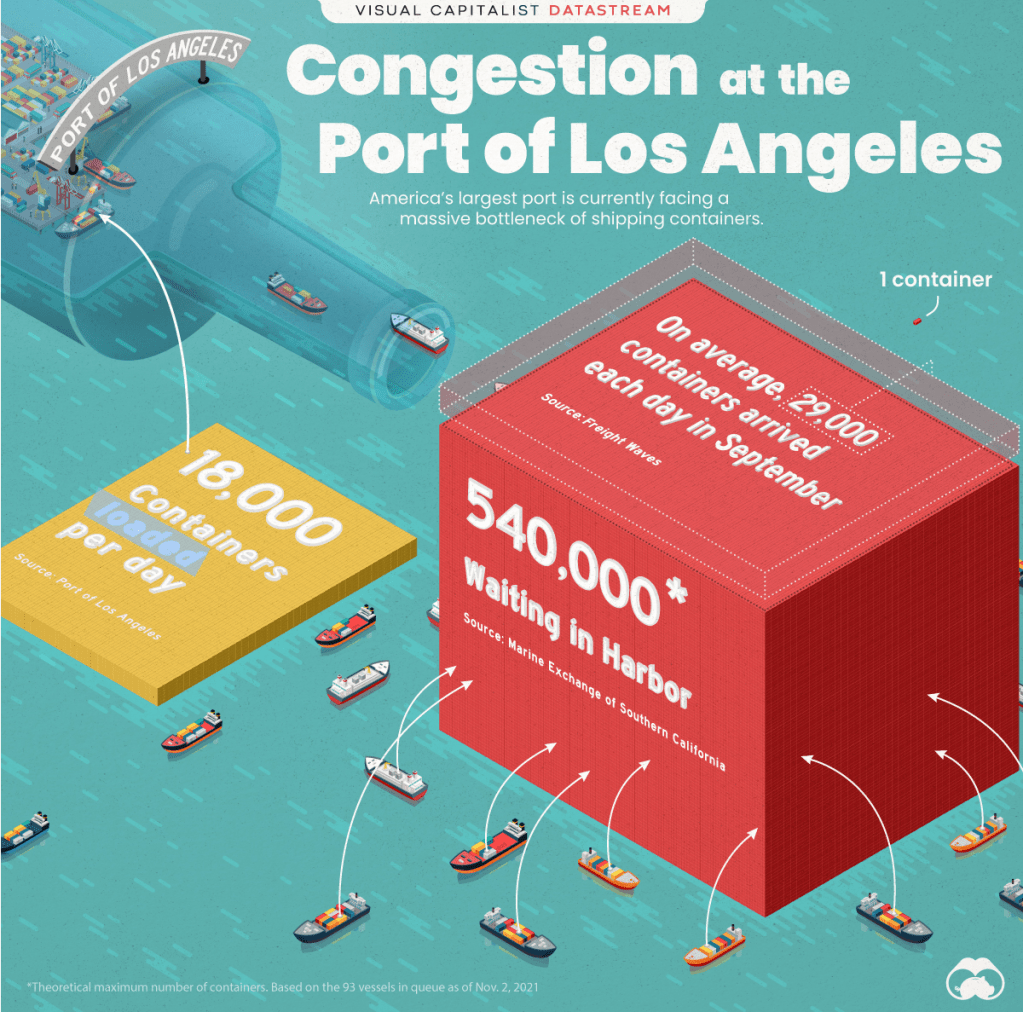
To help you understand the scale of this issue, we’ve visualized the number of containers waiting at sea in relation to the Port of Los Angeles’ daily processing capacity. 

Stuck at Sea

As of November 2, 2021, the Port of Los Angeles reported that it had 93 vessels waiting in queue. Altogether, these ships have a maximum carrying capacity of roughly 540,000 containers (commonly measured in twenty-foot equivalent units or TEUs). 

On the other side of the equation, the port processed 468,059 import containers in September (the most recent data at the time of writing). Because the port does not operate on Sundays, we can conclude that the port can load roughly 18,000 containers each day. 

That capacity seems unlikely to reduce the congestion. Over a two-week timeframe in September, 407,695 containers arrived at the Port of Los Angeles, which averages to around 29,000 containers arriving each day…

Read the full article

Source:VisualCapitalist.com

WCO News, October 2021 Edition

The WCO has published the 96th edition of WCO News, the Organization’s magazine aimed at the global Customs community, providing a selection of informative articles that bring the international Customs and trade world to life.

This edition’s “Dossier” focuses on cross-border e-commerce, in other words those “transactions which are effected digitally through a computer network (e.g. the internet), and result in physical goods flows subject to Customs formalities”. We have invited several administrations to share information on the initiatives they are taking to build their capacity for monitoring the compliance of such flows. Despite every country’s situation being unique, we still believe that it is important to share experiences and explain initiatives.

The “Panorama” section addresses a broad variety of topics such as rules or origin, goods classification, training and reforms. It also includes two articles which respectively present, from a Customs perspective, two recent regional Free Trade Agreements: the Regional Comprehensive Economic Partnership (RCEP) and the African Continental Free Trade Area.

The “Focus” section brings together two articles dealing with non-intrusive inspection (NII). In the first one, the WCO Secretariat shows how some Customs administrations and manufacturers manage the decommissioning of NII equipment when it has reached the end of its life. The second article describes the challenges of X-ray image analysis and the value of training.

Lastly, in the “Point of View” section, Dutch Customs explains the structure of the ISO Audit Data Collection Standard and why it supports the Standard’s extension to cover data related to Customs and indirect tax audits, while an attorney from Israel argues that governments should consider waiving taxes on transport costs until we are back to “normal” and the effects of the COVID-19 pandemic are no longer being felt.

To discover the full content of this edition please visit the magazine website.

SARS to Administer Control over Advance Payments for Imports

Draft amendment to rules under section 120(1)(mC) – Insertion of rule to advance foreign exchange import payments

The Advance Import Payment (AIP) project is one of Customs’ modernisation initiatives. This project aims to bring together data from SARS, Authorised Dealers and the South African Reserve Bank (SARB) to increase regulatory controls relating to advance foreign exchange payments in order to prevent illicit financial flows and combat customs valuation fraud associated therewith.

Proposed rules under section 120(1)(mC) of the Act have been inserted providing for –

  • procedures for notifying Commissioner of intention to submit application for advance payment to authorised dealer;
  • issuing of advance payment notice (APN) reference number;
  • requirements for authorised dealers; and

·        communication through eFiling for purposes of advance payments.

Concerned parties must record their comments on the Customs & Excise Comment Sheet.

How Countries can Diversify their Exports

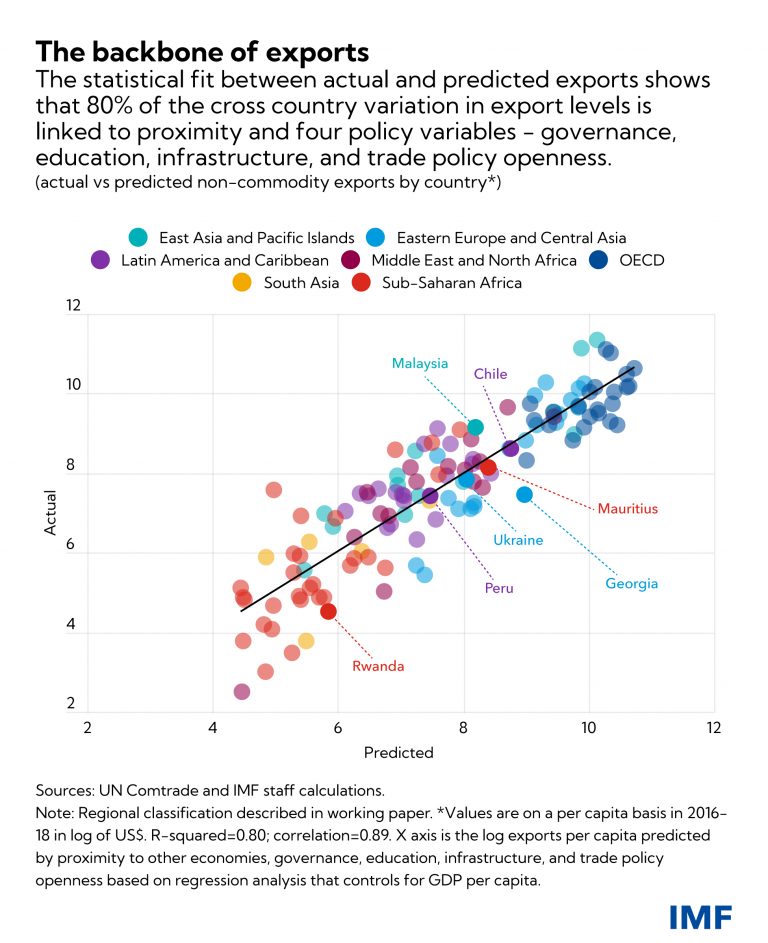
Four economy-wide factors—governance, education, infrastructure, and trade policy—relate closely to more varied and complex exports across countries

As the world’s biggest copper producer, Chile’s shipments of the metal meet around one-third of global demand and represent about half its goods exports.

But beyond mining’s dominance, Chile’s trade flows are more varied and complex than they may appear, with significant exports of vehicles, pharmaceuticals and telecommunications equipment. And according to a recent IMF staff paper, the Andean economy is among those that shine as a role model for diversification policies.

By looking beyond commodities, the research shows that economy-wide policies such as governance and education help foster diverse exports more than narrowly targeted industrial policies, a finding that can better guide nations aiming to expand their international trade.

The examination of 201 countries and territories goes beyond the economic complexity indices that have traditionally been used by economists. Those proxies for the productive capability of a given economic system have strong sensitivity to commodities, which can distort their accuracy.

For a more nuanced read, staff research proposes new ways to gauge diversity and complexity of national exports and suggests how economy-wide policies can foster such variety. Economists call these horizontal policies because they apply broadly across a country instead of targeting single sectors. The approach also takes stock of an economy’s geographic proximity to trade partners, and how it affects exports excluding commodities like metals or oil.

This lens offers policymakers lessons for how they can better support more multifaceted trade, a common objective in emerging and developing economies because it’s associated with less volatile economic output and faster long-term expansion.

Four key factors

The methodology shows a clear a link between the non-commodity exports that aid diversification and complexity and four economy-wide variables that help support them: governance, education, infrastructure, and open trade. Improving those areas helps to diversify by creating conditions that make it possible to boost complex or higher-value-added exports.

This is significant because demonstrating how economy-wide policies do explain diversification challenges the belief that industrial policies, meant to support specific industries, offer the best way to broaden trade.

The analysis shows that, except for abundant copper reserves, Chile’s economic profile, surprisingly, resembles Malaysia’s. The Asian nation has similarly strong education and institutions, but it benefits from being much closer to the major global supply-chain hubs of China, Japan and Korea.

Prominent Asian and European exporters, from Hong Kong and Singapore to Ireland and Denmark, have among the most diverse and complex shipments and the strongest horizontal policies.

Good policies can make a big difference

For governments aspiring to more varied trade flows, the new approach to explaining diversification underscores the need to effectively shorten geographic distance by enhancing connectivity between nations. Better transportation logistics, at seaports for example, effectively shorten distance by reducing transit times for goods. Other helpful policies include easing trade policy barriers, enhancing trade facilitation, fostering the spread of technology through educational exchange programs, and investing in communication technologies such as broadband that support the digital economy.

Strengthening horizontal policies may seem challenging, especially for countries with lower income. However, several countries have much stronger policies than expected for their income levels, including Rwanda for governance; Georgia and Ukraine for educational attainment; Malaysia for infrastructure; and Mauritius and Peru for tariffs. These economies can be role models.

To be sure, that doesn’t deny the potential effectiveness of more targeted support for individual sectors. Industrial policy levers, though, may be less effective or even harmful. Potential drawbacks include diminished fiscal capacity, a race to the bottom in taxation, and eroded multilateralism. Furthermore, there is no cross-country statistical evidence of their effectiveness.

Instead, diversification strategies built around broader policies and connectivity are both less controversial and more supportive of export diversification and complexity.

Source: IMF, article by Gonzalo Salinas, 22 September 2021

World Bank – to Discontinue Doing Business Report 

The World Bank Group today issued the following statement on the Doing Business report: 

Trust in the research of the World Bank Group is vital. World Bank Group research informs the actions of policymakers, helps countries make better-informed decisions, and allows stakeholders to measure economic and social improvements more accurately. Such research has also been a valuable tool for the private sector, civil society, academia, journalists, and others, broadening understanding of global issues.

After data irregularities on Doing Business 2018 and 2020 were reported internally in June 2020, World Bank management paused the next Doing Business report and initiated a series of reviews and audits of the report and its methodology. In addition, because the internal reports raised ethical matters, including the conduct of former Board officials as well as current and/or former Bank staff, management reported the allegations to the Bank’s appropriate internal accountability mechanisms.  

After reviewing all the information available to date on Doing Business, including the findings of past reviews, audits, and the report the Bank released today on behalf of the Board of Executive Directors, World Bank Group management has taken the decision to discontinue the Doing Business report. The World Bank Group remains firmly committed to advancing the role of the private sector in development and providing support to governments to design the regulatory environment that supports this. Going forward, we will be working on a new approach to assessing the business and investment climate. We are deeply grateful to the efforts of the many staff members who have worked diligently to advance the business climate agenda, and we look forward to harnessing their energies and abilities in new ways.”

Source: World Bank Group, 16 September 2021

WCO News – June 2021

The WCO has published the 95th edition of WCO News, the Organization’s magazine aimed at the global Customs community, providing a selection of informative articles that bring the international Customs and trade world to life.

This edition’s “Dossier” focuses on “People”, and includes several articles discussing experiences, tools and practices related to Human Resource management and development. We hope this will inspire readers to take action and contribute to creating a work environment which enables people to continue growing professionally and to learn new skills that will benefit their organization, their country and the global community.

In the “Panorama” section, Algeria Customs introduces its advance ruling system for the classification of goods, Belarus Customs explains how its role in border management has developed, and a private company gives an overview of the Electronic Cargo Tracking System launched in Mozambique.

Given that the WCO Secretariat organized the second edition of its Global Origin Conference in March 2021, we decided to dedicate the “Focus” section of the magazine to rules of origin. It opens with an article highlighting the key points made by the Conference speakers and continues with articles on advance rulings, problems associated with non-preferential rules and the joint proposal for the review of Specific Annex K to the Revised Kyoto Convention.

Lastly, in the “Point of View” section, Argentina Customs explains how it has increased its participation in WCO committees and working groups following the move to online meetings, the International Federation of Freight Forwarders Associations presents some of the challenges facing freight forwarders, and a software engineer shares his views on data analytics tools and how to make them work for all.

To discover the full content of this edition please visit the magazine website.

Source: WCO, 24 June 2021

WCO – Two new Instruments on Customs Valuation to Support Customs and Economic Operators

At its 52nd Session, held from 17 to 19 May 2021, the Technical Committee on Customs Valuation adopted two instruments (Advisory Opinions 4.18 and 24.1) concerning royalties and licence fees under Article 8.1 (c) of the WTO Customs Valuation Agreement (Agreement) and the Customs valuation treatment of imported goods bearing the buyer’s own trademark, respectively. 

These two instruments were adopted after a virtual session which extended over three days, having regard to the current circumstances relating to the pandemic. It rewards the efforts constantly being made by the Technical Committee to improve the certainty of the interpretation and uniform application of the provisions of the Agreement in all member countries of the WTO. Practical instruments of this kind help Customs, the private sector and the Members in the fair control of Customs valuation, the facilitation of international trade and the optimization of Customs revenue.

In the first instrument, the Technical Committee gives its opinion on the valuation treatment of income tax deriving from the royalty paid to the country of importation’s tax authorities in accordance with the terms of the licence agreement signed by the importer and the seller, who is also the licence holder.

The second instrument relates to the valuation treatment of the trademark belonging to the buyer and provided free of charge to the seller for use in connection with the production of the imported goods.

These instruments adopted by the Technical Committee, once they have been approved by the WCO Council, will be available on the WCO Publications website and published in the WCO Customs Valuation Compendium.

Source: WCO, 27 May 2021

WCO – Cross-border movement of vaccines enhanced with further guidance and good practices

The World Customs Organization (WCO) published the 2nd edition of the Secretariat Note on the Role of Customs in facilitating and securing the cross-border movement of situationally critical medicines and vaccines that enhances the inaugural version launched on 25 February 2021.

WCO Secretary General Dr. Kunio Mikuriya stated, “How to achieve equitable distribution of COVID-19 vaccines is critical, and Customs administrations around the world should support global efforts by not only facilitating the cross-border movement of the vaccines themselves, but also by speeding up and facilitating the Customs clearance of the raw materials and components used in the vaccine manufacturing process.” He added that “This will greatly contribute to the efforts to scale up vaccine manufacturing and the 2nd edition of the Secretariat Note highlights the critical role Customs”.

The document contains further guidance on practical ways to implement the measures of the December 2020 Resolution of the Customs Co-operation Council on the Role of Customs in facilitating the cross-border movement of situationally critical medicines and vaccines, a greater number of Members’ case studies, and operational guidelines developed for the WCO Membership by the Australian Border Force. 

The guidance outlined in the Secretariat Note draws upon relevant WCO instruments and tools, Members’ good practices and insights gathered as a result of the collaboration with other international organizations, the pharmaceutical industry, logistics providers and other relevant private sector entities.

The Secretariat Note is designed to be a living document that will be enhanced with more Members’ practices and further practical guidance as WCO Members and the industry gain experience and share information with the WCO Secretariat on the Customs clearance of COVID-19 vaccines, related supplies, inputs and equipment.

Also refer to – COVID-19 vaccines distribution across borders

Source: WCO, 28 May 2021

UNECE eTIR – Turning Borders into Bridges

The United Nations Economic Commission for Europe (UNECE) administers the TIR Convention, which was established in 1959 and extensively revised in 1975 and which has, at present, 68 Contracting Parties. The TIR Convention provides for an internationally recognized procedure to facilitate the cross border transportation of goods in transit through the use of a standard, internationally recognized Customs document, the TIR Carnet, which also serves as proof of existence of an internationally valid guarantee.

For many years the TIR Convention proved to be an efficient facilitation tool. However, with the progress in technology, the use of the paper TIR Carnet is increasingly becoming archaic, in particular when it comes to linking it to the electronic procedures applied by national Customs administrations. At each border crossing, Customs officers are faced with additional work of having to key in up to 50 data elements into their national electronic Customs system. In addition, the current situation does not enable Customs authorities to effectively apply risk management procedures based on advance cargo information, as demanded by an increasingly more security-conscious environment.

The eTIR Project

The Contracting Parties to the TIR Convention launched in 2003 the so-called “eTIR Project”, aimed at providing an exchange platform for all actors (Customs authorities, holders, guarantee chains) involved in the TIR system, known as the “eTIR international system”. The eTIR international system aims to ensure the secure exchange of data between national Customs systems related to the international transit of goods, vehicles or containers according to the provisions of the TIR Convention and to allow Customs to manage the data on guarantees, issued by guarantee chains to holders authorized to use the TIR system.

For more information on eTIR click here!

For more information about eTIR Specifications click here!

For the eTIR flyer click here!

Peroni beer deploys blockchain for batch traceability

Italian beer brand Birra Peroni has started using EY’s blockchain platform for the purposes of supply chain traceability.

EY has said that the beer company will be using its EY OpsChain Traceability on the public Ethereum blockchain, with each batch having its own non-fungible token (NFT) – a unique, digital certificate of ownership.

Each NFT is recorded on the blockchain, digital ledger distributed around lots of different users instead of held centrally, with each transaction – for example as a product moves through the supply chain or is paid for – time stamped and encrypted to prevent tampering.

In simple terms, it is a technology to store and exchange information within a group in a secure, trustworthy, and efficient manner that doesn’t rely on the use of a database.

NFTs are becoming increasingly used to “tokenise” and confer ownership on physical and virtual goods – including fine art, collectibles and even the first-ever tweet by Twitter founder Jack Dorsey.

However, the technology is also being deployed to protect goods from counterfeiting and as a traceability tool for consumers who are increasingly demanding that the products they buy are made using sustainable and ethical ingredients.

Peroni – part of Japan’s Asahi Group – said using the technology will be a step forward in bringing visibility and transparency to its supply chain, for both consumers and supply chain partners.

“For Birra Peroni, the bond with the agricultural supply chain and the quality of our 100 per cent made-in-Italy malt are fundamental strategic assets,” commented Federico Sannella, the company’s corporate affairs director.

“We believe that sustainability is deeply related to the respect for the raw material, and we wanted to bring this value alive to our consumers, allowing them to follow the journey of the malt from the field to the bottle,” he added.

It’s not the first brewer to take this approach. AB InBev, which sells brands like Budweiser and Stella Artois, is running a blockchain pilot in Europe to give consumers a view of its barley supply chain via a QR code on the packaging.

5th WCO Global AEO Conference opens in Dubai

On 25 May 2021, the WCO Secretary General, Dr. Kunio Mikuriya, welcomed approximately 3,650 registered participants from 160 WCO Member administrations to the 5th WCO Global AEO Conference. The Conference is being hosted by Dubai Customs and the Federal Customs Authority (FCA) of the United Arab Emirates (UAE), with support from the Korea Customs Service. 

Under the theme “AEO 2.0: advancing towards new horizons for sustainable and secure trade”, the Conference brings together 80 prominent speakers from Customs administrations, international organizations, academia and the private sector who are engaging virtually to share collaborative input that will help shape the future of Authorized Economic Operator (AEO) programmes. This is the first time that the Global Conference has been organized in the WCO’s North of Africa, Near and Middle East region. 

The Conference was opened by His Excellency Sultan Ahmed Bin Sulayem, Chief Executive Officer of DP World and Chairman of the Ports, Customs & Free Zones Corporation, on behalf of His Highness Sheikh Ahmed Bin Saeed-Al Maktoum, President of Dubai Civil Aviation Authority and Chairman and Chief Executive of the Emirates Group. He delivered an inspiring message on the importance of innovation and collaboration among Customs and other government agencies (OGAs) to support resilient recovery for global supply chains. He congratulated the WCO for providing the international community with a discussion platform on topical issues of interest and highlighted the need for renewed trust and commitment to preserving sustainable and secure trade. 

In his welcome address, Dr. Mikuriya highlighted that in the 16 years since the SAFE Framework of Standards (FoS) was first adopted, the number of WCO Members implementing AEO programmes had increased substantially, from 45 to 97, while the number of Mutual Recognition Arrangements/Agreements had risen exponentially from 17 to 91. Dr. Mikuriya underlined that this demonstrates not only the success of the SAFE FoS but also the importance of monitoring implementation of AEO programmes. 

Secretary General Mikuriya offered food for thought regarding the possible next steps to ensure that AEO programmes more effectively support supply chain recovery as the world moves into a post-COVID-19 pandemic environment. These steps may include ways of inviting more economic operators to take part in AEO programmes, strengthening cooperation between Customs and OGAs, and leveraging disruptive and transformative technologies for the benefit of AEO programmes. Finally, consideration should be given to the role played by training and capacity building in making the AEO concept a key tool at the centre of resilient and sustainable supply chain recovery.

Dr. Mikuriya also commended Dubai Customs and the FCA for their strong commitment and generous support towards making this event an immense success. He further acknowledged the backing provided by regional entities as well as other partners, sponsors and exhibitors, who have all contributed to ensuring that this event will be a remarkable and memorable experience for all.

During his opening remarks, His Excellency Ahmed Mahboob Musabih, Director General of Dubai Customs, said that this Conference provided the UAE with the perfect forum for sharing information on innovative work pushing the boundaries of Customs. He added that it would be an opportunity for everyone to learn more about Dubai’s experience of building up Customs to form one of the pillars of the Emirate’s development and prosperity.

The Conference will continue on 26 and 27 May with discussions on topics including emerging supply chain security threats; the role of technologies in promoting supply chain renewal; risk management; best practices; and partnership and capacity building activities. 

More information can be found on the event website

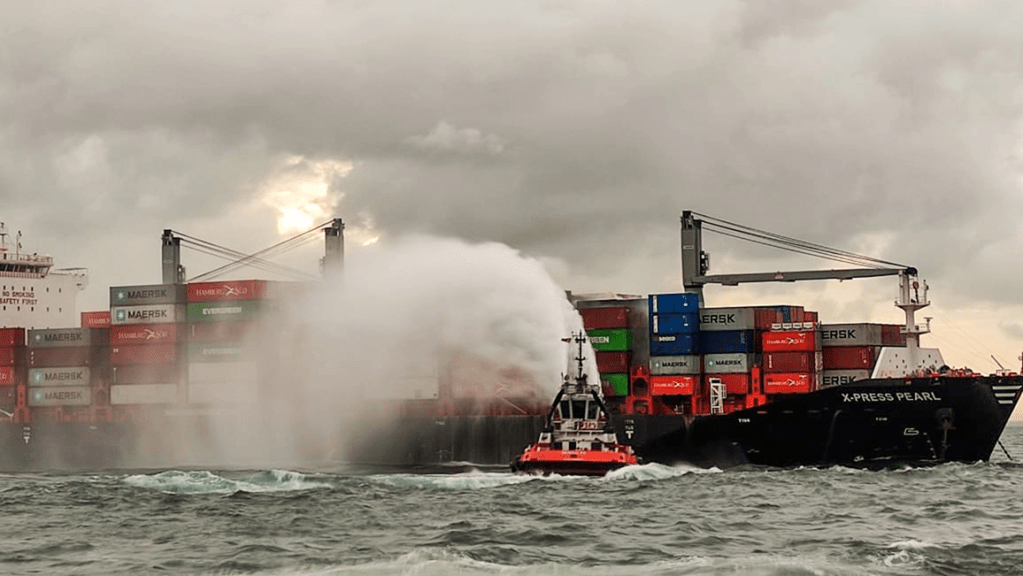
Chemical Fire on ‘X-Press Pearl’ Under Control Off Colombo, Sri Lanka

Photo: Sri Lanka Port Authority

The fire on board the X-Press Pearl is reported under control at an anchorage off the coast of Colombo, Sri Lanka, but fire-fighting efforts are continuing, according to the vessel’s operator.

The Sri Lankan Navy continued its response to the incident over the weekend with three tugs from the Sri Lankan Ports Authority on site conducting cooling operations on containers near the fire. At times, the fire flared up with visible flames (see photo below) coming from containers above deck, the Navy said over the weekend.

The fire on board the X-Press Pearl was first reported Thursday as the ship was awaiting entry to Colombo harbor at an offshore anchorage.

The Navy said the ship is carrying 1,486 containers, including 25 tons of Nitric Acid and other chemicals which it had loaded at the port of Hazira, India on May 15. Preliminary investigations indicate the fire started due to a chemical reaction of the hazardous cargo.

All 25 crew members are reported safe, the ship’s operator reported Monday. Meanwhile a salvage team from SMIT has boarded the vessel for an assessment. 

“Fire/smoke still remain on board the vessel but is currently under control. More firefighting tugs have been deployed and they will continue to fight the fire. The salvage team with fire experts and firefighters are already on board the vessel and are carrying out the risk assessment. They have already taken steps to stop the spreading of fire into other areas,” X-Press Feeders said in its update.

“We have been advised that special firefighting equipment will arrive tomorrow. We therefore remain hopeful that the fire will be put out by the salvage team at the soonest time possible,” it added.

Source: G Captain, 24 May 2021

DP World Komatipoort – Handles First Import

Trade solutions multinational DP World has completed the first transit import through the DP World Maputo port, in Mozambique, to DP World Komatipoort, in South Africa.

This is a significant milestone as it demonstrates that the Maputo port can be seamlessly used as a gateway to South Africa, the company says.

International container imports landed in the Maputo port and destined for the South African hinterland can be moved under bond to Komatipoort where full customs clearance can be provided and made ready for delivery across South Africa.

“The Komatipoort facility as a bonded container depot is a game changer for the Maputo Corridor. The success of the trial brings DP World a step closer to enabling a more cost effective, seamless and efficient user experience for our local customers and enhances trade linkages for countries in the Southern African region,” DP World Maputo CEO Christian Roeder says.

Currently, in South Africa, 69% of maritime imports are transported through the Port of Durban. Local customers now have the option to consider using the Maputo port as a gateway to transport their international freight to Komatipoort where it can be cleared more easily and efficiently for customers based in and around Gauteng.

DP World Komatipoort has a full-service offering and links via the Maputo Corridor to DP World Maputo’s modern and efficient container terminal where there is no vessel and port congestion, as well as fixed berthing windows available to major shipping lines, which provides customers with transport savings and avoids delays for consignees in Mpumalanga, Limpopo and Gauteng.

Once a shipment is retrieved at the DP World Maputo port, the organisation handles the entire supply chain process from there to Komatipoort without delay and beyond to various areas in the hinterland. While the cost of this service varies per user, the service is estimated to be equivalent in costs or cheaper compared to traditional routing through Durban.

However, it is more efficient, especially for the northern areas of the country, DP World note.

Source: Engineering News, Schalk Burger, 3 May 2021

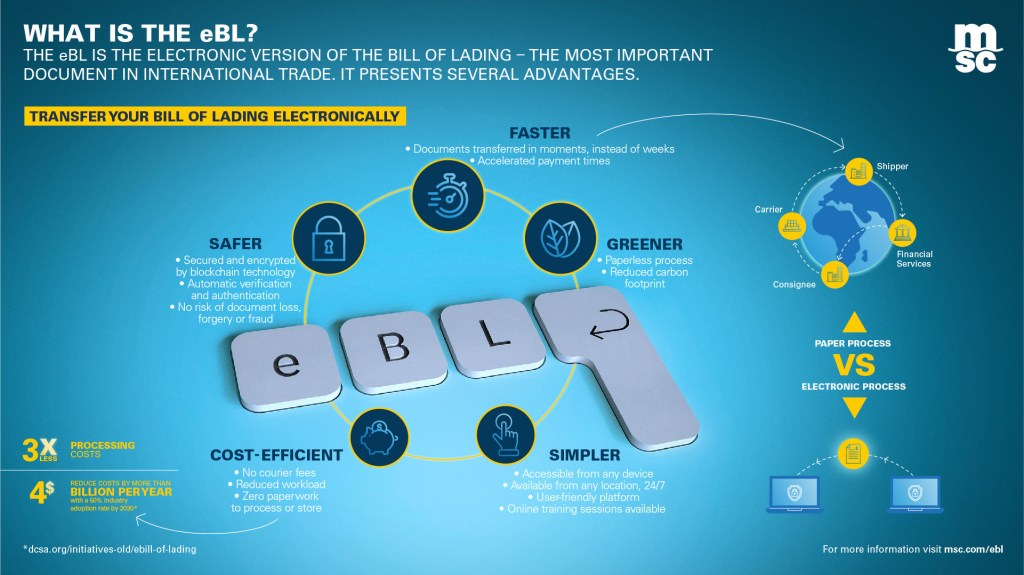
MSC Introduces New Electronic Bill of Lading for Customers Worldwide Using WAVE BL’s Platform

MSC Mediterranean Shipping Company, a global leader in container shipping and logistics, is officially introducing the electronic bill of lading (eBL) for its customers around the world, following a successful pilot phase, using a solution on an independent blockchain platform WAVE BL. The eBL enables shippers and other key supply chain stakeholders to receive and transmit the bill of lading document electronically, without any change or disruption to day-to-day business operations.

WAVE BL is a blockchain-based system that uses distributed ledger technology to ensure that all parties involved in a cargo shipment booking can issue, transfer, endorse and manage documents through a secure, decentralised network. Users can issue all originals, negotiable or non-negotiable, and exchange them via a direct, encrypted, peer-to-peer transmission. It’s also possible for users to amend documents. WAVE BL’s communication protocol is approved by the International Group of Protection & Indemnity Clubs, and meets the highest industry standards for security and privacy.   

“MSC has chosen WAVE BL because it is the only solution that mirrors the traditional paper-based process that the shipping and cargo transportation industry is used to,” says André Simha, Global Chief Digital & Information Officer at MSC. “It provides a digital alternative to all the possibilities available with traditional print documents, just much faster and more secure.”

The WAVE BL platform can be used free of charge throughout 2021 for exporters, importers and traders. Users only pay for issuing the original documents, and they do not need to invest in any IT infrastructure or make operational changes in order to use the service. They can simply sign up via MSC’s website: www.msc.com/eBL.

Source: Mediterranean Shipping Company, 28 April 2021