Singapore and China’s Mutual Recognition Becomes a Reality

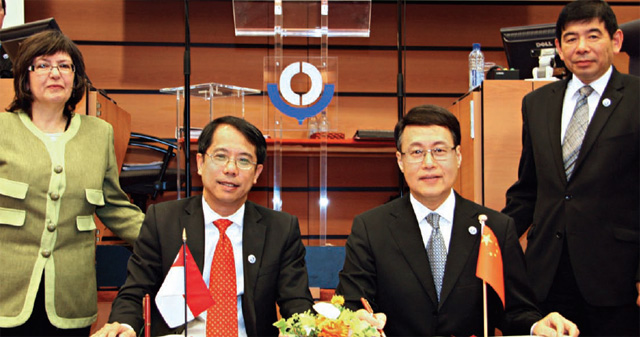
Director-General of Singapore Customs Fong Yong Kian and Vice Minister of the General Administration of China Customs Sun Yibiao (both seated), signed the China-Singapore MRA at the WCO Council Sessions in June 2012. The signing was witnessed by Chairperson of the WCO Council and Chairman of the Revenue Commissioners of Ireland, Josephine Feehily and WCO Secretary-General   Kunio Mikuriya.

Director-General of Singapore Customs Fong Yong Kian and Vice Minister of the General Administration of China Customs Sun Yibiao (both seated), signed the China-Singapore MRA at the WCO Council Sessions in June 2012. The signing was witnessed by Chairperson of the WCO Council and Chairman of the Revenue Commissioners of Ireland, Josephine Feehily and WCO Secretary-General Kunio Mikuriya.

General Administration of Customs of Singapore has announced that the Mutual Recognition Arrangement (MRA), signed with Customs of the People’s Republic of China went into effect on March 15, 2013.  Following the effective date, both Singapore’s STP-Plus companies and China’s Class AA accredited companies will be recognized as Authorized Economic Operators (AEOs) of the respective countries.

This recognition as AEOs allows Customs from both countries to grant clearance facilitation for accredited AEOs such as lower examination rates, priority inspections, and priority handling of customs clearance documents at each country’s port.  Included in the announcement were specific instructions for how importers in both Singapore and China should fill out customs forms when receiving exported goods from one of their respective AEOs.

For goods exported directly to Singapore from a Chinese Class AA company, the Chinese exporter would need to provide the Singapore importer with the 10-digit Customs Registration Code to place on their import declarations to Singapore along with inputting the “AEO code” into the portal for mutual recognition purposes and benefits of AEO.  The AEO code is comprised of “AEO”, “CN” and the 10-digit Customs Registration Code.

For goods exported to China from a Singapore STP-Plus company, the Chinese importer must fill in the “AEO code” of the Singapore’s exporter in the “remark column” in their import declarations to receive mutual recognition benefits.  The format for the AEO code is as follows:  “AEO (written in English half-width characters and capital letters)” plus “<” plus “SG” plus “12-digit AEO code” plus “>”.  For instance, if the AEO code of one Singapore STP-Plus company is AEOSG123456789012, then the remark column filled in by the Chinese importer would read as “AEO”.

The MRA signed between China and Singapore is but one example of several security programs in different countries making it easier for trusted traders to move goods through the supply chain. Other countries that also participate in MRAs include:

  • US Customs & Trade Partnership Against Terrorism (C-TPAT) which has MRAs in place with Canada’s Partners in Protection (PIP), New Zealand’s Secure Export Scheme Program (SES), Jordan’s Golden List Program (GLP), Japan’s Authorized Economic Operator Program (AEO), Korea’s AEO, and the European Union’s ( EU) AEO
  • European Union (EU) AEO which has MRAs in place with Canada’s PIP, Japan’s AEO, Australia’s AEO, New Zealand’s SES, and US C-TPAT
  • Japan Customs has MRAs in place with New Zealand’s SES, EU’s AEO, Canada’s PIP, Korea’s AEO, and Singapore’s STP-Plus
  • Singapore Customs has signed MRAs in place with Canada’s PIP, Korea’s AEO, Japan’s AEO, and China’s Class AA

Part of participating in any security program is the ability to assess and manage risk across the supply chain.  This includes soliciting and analysing information received from every partner within the supply chain to corrective actions and best practices.  While are security programs are still voluntary in nature, companies that take advantage of them are reaping benefits such as faster customs clearance and less inspections. Source: Integration Point

Durban Dig-Out Port – First Stakeholder Engagement Concluded

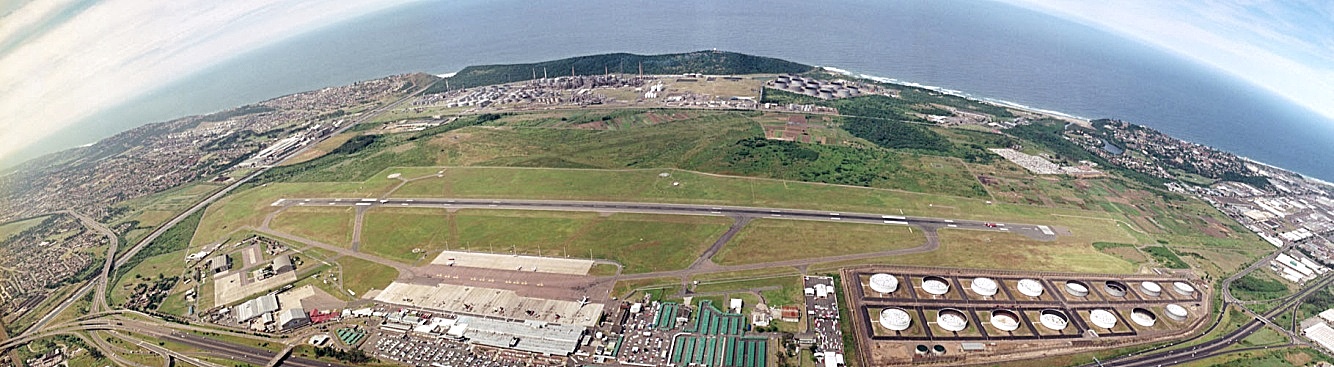
Old Durban airport - site for new Dig Out Port (Picture credit: ACSA)

Old Durban airport – site for new Dig Out Port (Picture credit: ACSA)

Transnet has concluded the first in a series of early stakeholder engagement sessions with local organisations on the proposed Durban dig-out port project. If built, the new port will be to the south of Durban on the site of the former Durban International Airport and 15 minutes by car from the existing port. It has been proposed that it will consist of 16 container berths, three Ro-Ro berths for the automotive business, and several oil and product tanker berths.

The engagement sessions just concluded form an integral part of the project’s concept phase which includes the development of a Sustainable Port Development Framework (SPDF) that will inform all future designs as well as operations. Transnet commenced with high-level technical and environmental studies in 2012 as part of the proposed Durban dig-out port project process. The current concept phase is scheduled to conclude in July this year, and comprises the generation of a number of technical design options.

The engagement sessions involved key representatives from local business, property, environmental and civic associations who met in order to comment on a discussion document which was distributed to them in mid-February 2013. The discussion document included important information on the background to, and process involved in, validating the viability of constructing a major container port on the site of the old Durban International Airport.

The sessions were held at various public venues and were facilitated by an independent sustainability consultancy. All feedback obtained during the engagement sessions was captured and will be factored into the development of the SPDF which will ensure the effective implementation of sustainability objectives throughout the life cycle of the proposed port project.

Along with promoting the long-term sustainability and operational excellence of the port, the framework also seeks to integrate environmental and social principles into the planning process. The series of engagement sessions, which will continue throughout the project’s lifespan, will also form part of the Department of Transport’s requirement for engagement during the strategic level environmental assessment as part of the legislative requirement for the promulgation of the port.

The process of moving from the current concept phase through the pre-feasibility and feasibility phases, and finally to actual implementation is anticipated to take approximately four years. The next phase, which is the pre-feasibility phase, is expected to proceed in July this year when the viability of the preferred design option will be thoroughly investigated.

The proposed port forms a key pillar of Government’s Strategic Integrated Projects (SIPs) to upgrade the Durban-Free State-Gauteng Freight Corridor (otherwise known as SIP2 in the National Infrastructure Plan). Source: Ports.co.za

Parallel imports in South Africa – Some sound advice

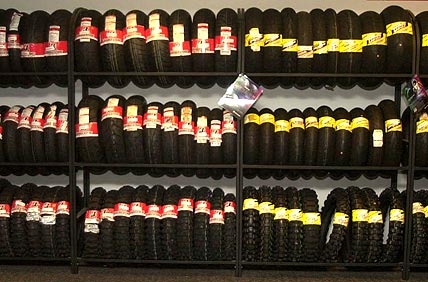
newTyres_m_mThe following article was penned by lawfirm Edward Nathan Sonnenberg and featured on Lexology.com. It was reported recently that bikers had protested outside Parliament about proposed measures which would have the effect of making life very difficult for those businesses who are involved in the parallel importation of motorbikes. The report did not make it clear exactly what the proposed measures comprised, but it did suggest that they involved special testing of bikes that are brought into the country by parallel importers, together with some system of issuing certificates for such bikes. Measures that, the report suggested, would not only require parallel importers to raise their prices, but might even put them out of business altogether, leaving authorised suppliers as the only source of motorbikes in the future. Amongst the protesters were the Parallel Importer of Motorcycles Traders Association of SA and Cosatu, which said that it was worried about job losses.

So just what are parallel imports, or ‘grey goods’ as they are sometimes known? Well, a foreign manufacturing company will normally appoint an authorised distributor for its product in South Africa. That distributor is then responsible for sales of the product, after-sales service and, of course, marketing, advertising and all those other good things that go into brand-building. A parallel importer is someone who buys that same manufacturer’s product in another country and imports it into South Africa for resale. The reason why the parallel importer bothers to do this is quite simple- the product is often so much cheaper abroad that the parallel importer can undercut the authorised distributor and still make a profit.

Needless to say the authorised distributor does not like the parallel importer, because the parallel imports threaten the authorised distributor’s business. The manufacturer generally doesn’t like the parallel importer much either – not only does it have to deal with complaints from an unhappy authorised distributor, but it also has no control over what the parallel importer does with the brand. But can the manufacturer or the authorised distributor actually do anything to stop the parallel imports?

Parallel importation is certainly legal under trade mark law. That’s because Section 34 (2) (d) of the Trade Marks Act provides that a trade mark registration is not infringed by ‘the importation into, or distribution, sale or offering for sale in the Republic, of goods to which the trade mark has been applied by or with the consent of the proprietor.’ This makes perfect sense if you bear in mind that a trade mark is essentially an indicator of origin, and that trade mark law is basically there to ensure that there is no consumer confusion. In the case of a parallel import, the consumer gets exactly what they expected, namely a product that was made by or under the control of the company that owns the trade mark – contrast this with the situation where the consumer buys a rip-off or counterfeit, where they get something very different from what they expected.

There is a proviso to this, and that is that the parallel importer must be quite open about the fact it is not an authorised distributor. That’s because Section 25 (2) of the Consumer Protection Act provides that ‘a person who markets any goods that bear a trade mark, but have been imported without the approval or licence of the registered owner of that trade mark, must apply a conspicuous notice to those goods in the prescribed manner and form.’

So, if you’re a parallel importer you should be OK provided that you make it clear that you are not the authorised distributor of the product. But there are other legal matters to consider, and the first of these is copyright. Copyright might be an issue where the product that’s being imported bears a trade mark that consists of more than just a name, but also something that could be described as an artistic work – this might be a logo, or it might simply be a stylised form of a name. There was a case a number of years back where a foreign manufacturer successfully used copyright law to stop parallel importation of cassette tapes. But it was an extraordinarily contrived thing: time to concentrate hard…

The Copyright Act provides that copyright is infringed where someone imports an article into South Africa in circumstances where they knew that the making of that article would have been an infringement if the company that made it had in fact made it in South Africa. To use this provision, the cassette tape manufacturer had to go through a number of hoops: it had to assign the South African copyright in the label to the authorised distributor; it then had to warn the parallel importer that it was importing articles that – had they been made by the manufacturer in South Africa – would have infringed the authorised distributor’s copyright; finally when the parallel importer ignored the warning (probably because it didn’t understand it!) it could sue for infringement. There has, as far as I’m aware, never been another case like this and one wonders whether – in an age where intellectual property law is considered in the light of constitutional and competition law and policy – the same result would be achieved if a similar case ever went to the highest court.

Finally it’s worth remembering that, in the fairly rare event of the product that’s imported being covered by a patent or a design registration, there may well be an issue. Section 45 of the Patents Act says that a patentee has the ‘right to exclude others.. from importing the invention’, whereas Section 20 (1) of the Designs Act says that the owner of a design registration has the right to exclude ‘other persons from …importing … any article included in the class in which the design is registered and embodying the registered design.’

EAC Traders Encouraged to Grab AEO Business Opportunities

EACThe EAC business community has been asked to take advantage of the Authorized Economic Operator (AEO) scheme that seeks to cut down costs of doing business in the East African member states.

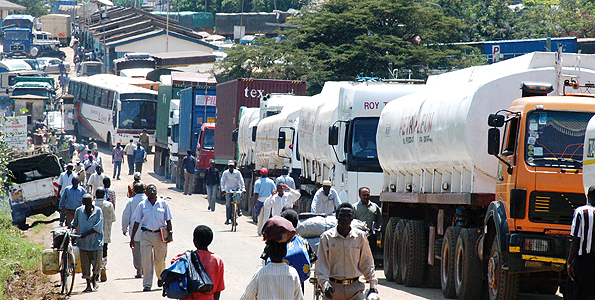
The AEO programme, launched in Dar es Salaam on Wednesday, is an entity involving importers, clearing agents, transport companies authorized to import and move cargo within the EAC region with minimal inspections and other customs interventions at checkpoints.

The Permanent Secretary in the Ministry of East African Cooperation Dr Stergomena Tax, launching the World Customs Organisation (WCO)-AEO pilot programme said, “The AEO status can provide companies with significant competitive advantages in terms of supply chain certainty and reduced import costs and finally to the final consumer.”

Apart from reduced transport costs, Dr Tax said the programme would also pull down storage charges because of minimal customs border inspections as well as few checkpoints or road blocks for transit goods.

The Swedish Ambassador to Tanzania Mr Lennarth Hjelmåker said the AEO scheme is a broader compliance strategy to reward compliant traders with simplification benefits which are concrete and predictable.

“Regional integration and cooperation are factors which are important for development, including creation of favourable conditions under which private sector can operate and provide for economic growth with focus on sustainability,” he said.

Sweden, through the Swedish International Development Cooperation (SIDA), has been supporting the work carried out by the WCO-EAC-AEO programme since 2008. Speaking on behalf of the Tanzania Revenue Authority (TRA) Commissioner General Mr Saleh Mshoro, the revenues body’s Finance Director said efficiency and effectiveness of customs procedures can significantly boost the nation’s economic competitiveness.

The launching of AEO programme marks the beginning of a journey between the region’s revenues authorities and the business communities in facilitating smooth and win win trading activities. Source: Tanzania Daily News

Serious Regional Competition – China to build Africa’s largest port

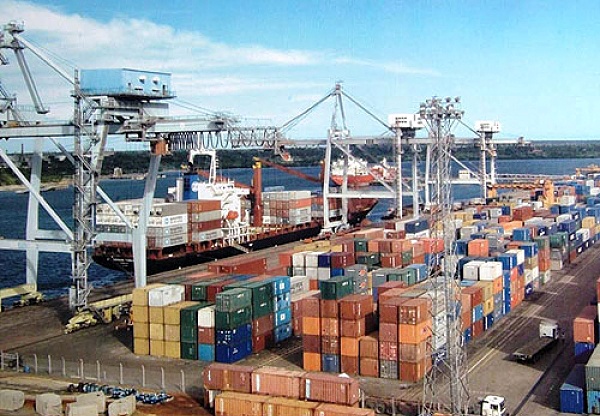
Port of Dar es Salaam, Tanzania, West Africa. Image credit: TPA

Port of Dar es Salaam, Tanzania, West Africa. Image credit: TPA

China has announced plans for a new US$10 billion mega port in the Tanzanian town of Bagamoyo.

The new port, boasting an annual capacity of 20 million TEU, will not only become Africa’s largest box facility but will also rival the major ports of the Persian Gulf.

Dwarfing Tanzania’s current largest port in Dar es Salaam, which handles an estimated 800,000 TEU a year, the new port, northwest of the capital, will be used as a transhipment hub for raw materials coming in and out of landlocked Malawi, Zambia, Congo, Burundi, Rwanda,and Uganda.

China will also help to establish new road and rail networks in the area, whilst contributing to the upgrade of existing links. Source: Port Technology International.

Egypt’s Most Ancient Maritime Harbor in Suez Discovered

Statue of Khufu in the Cairo Museum

Statue of Khufu in the Cairo Museum

A French-Egyptian archaeological mission discovered the oldest commercial harbor from the fourth dynasty King Khufu (Cheops) at Wadi Al-Jarf area, 180 km south of Suez. On the Red Sea shore at Wadi Al-Jarf area along the Suez-Zaafarana road, a French-Egyptian archaeological mission from the French Institute for Archaeological Studies (IFAO) stumbled upon what it believed to be the most ancient harbor ever found in Egypt.

The harbor goes back to the time of the fourth dynasty King Khufu. The harbor is considered one of the most important commercial ports where trading trips to export copper and other minerals from Sinai were launched.

A collection of vessel anchors carved in stone was also discovered as well as different docks.

Minister of State for Antiquities Mohamed Ibrahim announced that a collection of 40 papyri, showing details of daily life of ancient Egyptians during the 27th year of King Khufu’s reign, was also unearthed during excavation.

“These are the oldest papyri ever found in Egypt,” asserted Ibrahim. He also stated that these papyri are very important because they reveal more information about the ancient Egyptians’ daily life. Source: Egypt State Information Service

For a more detailed account, checkout The History Blog – Click Here!

To view a video report click this link:

http://www.youtube.com/watch?v=OCmvillIUrc&feature=player_embedded

Storm in a Teacup – South Africa to apply “the system” to protect Rooibos

South African rooibos (Afrikaans for red bush) is caffeine-free, high in anti-oxidants and minerals, and traditionally grown in the Cederberg region, 250 kilometres to the north of Cape Town. Credit: John Fraser/IPS

South African rooibos (Afrikaans for red bush) is caffeine-free, high in anti-oxidants and minerals, and traditionally grown in the Cederberg region, 250 kilometres to the north of Cape Town. Credit: John Fraser/IPS

A trademark system which is used to protect Europe’s finest wines, cheeses and hams could soon brew up benefits for a humble tea from a remote region of South Africa.

The trade protection system called Geographic Indications (GIs), which is highly favoured by the eurocrats of Brussels, could be used to protect a South African red tea, locally known as rooibos (Afrikaans for red bush) as French firm Compagnie de Trucy is trying to secure the exclusive rights to market it in France.

GIs are increasingly important in the global trade arena, although it is wrong to think they offer enormous bulk trade opportunities. This form of food copyright already applies widely to specialty products, which can be linked to a specific region – such as French champagne, Parma ham and many types of cheese.

They (GIs) open-up niche markets for increased value add products, which taken together can total something significant. In addition, they involve cutting-edge frontiers in trade that largely rely on intellectual property rights for value, and are also linked to trade issues regarding brands and logos.

South African rooibos is caffeine-free, high in anti-oxidants and minerals, and traditionally grown in the Cederberg region, 250 kilometres to the north of Cape Town. It is growing in popularity worldwide due to its healthy properties, which helps to explain Compagnie de Trucy’s move to obtain marketing rights.

The issue has been elevated to diplomatic level between the European Union and South Africa at a time when both parties hope to finally conclude negotiations on updating their wide-ranging trade framework, after more than a decade of discussion. The GI system has enabled EU countries to clinch niche markets for brands such as champagne, which have enormous growth potential on a global basis.

While China as a country is South Africa’s biggest trading partner, the EU as a bloc is more important in value terms, and there are powerful arguments that both sides should expand GIs in their future relations. Soekie Snyman, the spokeswoman for the South African Rooibos Council, which represents rooibos producers, told IPS that the red tea needed to receive official trademark status in South Africa itself before it could qualify as a GI.

Rooibos, Aspalathus linearis (N.L.Burm.) R.Dah...

Rooibos, Aspalathus linearis (N.L.Burm.) R.Dahlgr., Clanwilliam, Western Cape, South Africa (Photo credit: Wikipedia)

The EU supports the protection of indigenous crops, with one of the main requirements being that the product must be protected in its country of origin, and we are nearly ready to file for trademark protection in South Africa. Rooibos is a unique plant, coming from the Cederberg mountain area. It is a caffeine-free beverage.

The EU ambassador in Pretoria, Roeland van de Geer, confirmed in a news release in March that he received a request from South Africa’s Minister of Trade and Industry Rob Davies “for the protection of South African food product names as Geographic Indications in the EU.

As well as rooibos, there have been requests for Honeybush, which is another type of tea, and for lamb from the Karoo desert region. The development of a GI system for South African farmers will reinforce the uniqueness and quality of South African products. South African wine makers have used the GI system for many years and have found it an effective way to protect famous names like Paarl and Stellenbosch.

There is a range of other South African products that might also be eligible for GI protection, such as ostrich and springbok meat, and the marula fruit from which the Amarula liquor is made. Meanwhile, the same criteria could apply to produce from other countries of the Southern African region – such as Mozambican prawns, Botswana beef and Namibian oysters. Source: AllAfrica.com

ASYCUDA – more technical glitches

In the waiting... vehicle queue at Beitbridge

In the waiting… vehicle queue at Beitbridge

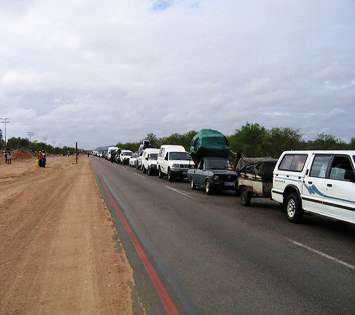
Scores of car importers were left stranded at Beitbridge Border Post on Wednesday after the Zimbabwe Revenue Authority‘s (Zimra) vehicle clearance system went offline for eight hours.

Zimra introduced the ASYCUDA plus system for processing vehicle imports in March this year in a bid to ensure efficiency and reduce regular interface between the customs officers and its clients. Asycuda is (Automated System for Customs Data) is a more efficient and advanced system for customs data processing since it is internet based. Upon its introduction the system left little room for wheeling and dealing between Zimra employees and criminals.

However, connectivity has remained a major challenge at the Manica Bonded warehouse where vehicle imports are processed. When The Herald visited the bonded warehouse yesterday restless car importers were seen moving around the yard while others were making numerous inquiries from the Zimra help desk.

In separate interviews motorists advised the revenue authorities to consider having a back-up plan in case of the Asycuda system breakdown. He said it was worrying that the revenue authority had introduced the Asycuda system yet they had little capacity to sustain it.

It was the second time in a week that the Asycuda system went offline after operations came to a standstill on Friday last week. Prior to the introduction of Asycuda system, Zimra had been using a station based system which operated with very few technical glitches.

Figures from Zimra show that between 60 and 100 vehicle imports are processed at Manica per day and rise to 120 during peak times. Asycuda system is connected to the parastatal’s national grid which is accessible at any of its stations countrywide. Efforts to get a comment form Zimra spokesperson were fruitless. Source: The Herald (Zimbabwe)

In for a Penny, In for a Pound

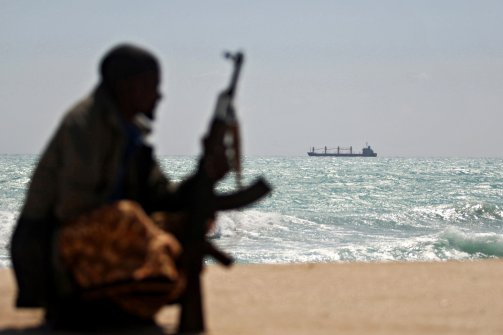
An armed Somali pirate sits along the coastline of Hobyo town in northeastern Somalia on January 7, 2010. (Mohamed Dahir-AFP-Getty)

An armed Somali pirate sits along the coastline of Hobyo town in northeastern Somalia on January 7, 2010. (Mohamed Dahir-AFP-Getty)

Are ‘Somali Pirates’ Real? Some may only be acting. According to Channel 4 the “fixer” offers journalists the opportunity to interview real live pirates – for a fee of US $200. Touting his local knowledge, he promises to reach parts of the community a western journalist never could. He then follows an elaborate scheme to convince journalists that he is legitimate.

The video opens in the slums of Eastleigh, a sprawling suburb of Nairobi in Kenya and home to ‘the fixer,’ a man who the UK’s Channel 4 claims has duped countless western journalists. But it’s a scam, one that has fooled the readers of many top media organizations including Time magazine. Watch the video above for the full details.

Somali pirates have kidnapped hundreds of people and cost millions in ransom payments. Jamal Osman finds journalists keen to interview them do not always get what they bargained for. Click this link to watch the video:

http://www.youtube.com/watch?v=p8BGOyBR7Fk&feature=player_embedded#t=0s

Source: gcaptain.com

US C-TPAT member exports to receive expedited EU customs clearance

4209_image002January, 2013 saw the United States and the European Union implemented the mutual recognition arrangement for their respective supply chain security programmes. The US Customs and Border Protection (CBP) administers the Customs-Trade Partnership Against Terrorism (C-TPAT), which is now recognised as equivalent to the European Union’s Authorised Economic Operator (AEO) programme.

Should they elect to allow CBP to share certain information with the European Union, US importers authorised under C-TPAT will be considered secure and their exports will receive a lower-risk score by the customs administrations of EU member states. In practice, certification translates into time and money savings for parties dealing with trusted operators. In that sense, certified operators are successfully marketing their status as a distinguishing competitive advantage.

Both programmes are voluntary, security-based programmes aimed at improving supply chain security. As programme members, importers receive lower risk-assessment scores in customs administrations’ computer targeting software. Therefore, members are subject to fewer security-related inspections and controls. The mutual recognition arrangement between the United States and the European Union allows for members of one programme to receive reciprocal benefits when exporting to the other jurisdiction.

However, not all C-TPAT members qualify for full AEO benefits. Only Tiers 2 and 3 C-TPAT importers (considered as more secure) may receive a lower risk-assessment score, and consequently undergo fewer inspections when exporting to an EU member state. In addition, in order to receive these benefits, C-TPAT members must expressly elect for the United States to share certain information with the European Union and certify that their exports meet all applicable requirements.

The mutual recognition arrangement may also exempt members’ facilities from undergoing validation site visits by both administrations when initially being certified or during revalidation visits. This benefit is available for every tier of C-TPAT membership.

The mutual recognition arrangement applies only to C-TPAT importers which also act as exporters. A C-TPAT manufacturer will benefit from the arrangement only if it also acts as the US exporter. For example, if a US company owns a C-TPAT-certified manufacturer in Mexico that directly ships merchandise to the European Union, those shipments will not benefit from the arrangement.

CBP’s targeting system recognises AEO-certified entities by their manufacturer identification number. Certified manufacturers will receive benefits under the arrangement regardless of whether they are the EU exporter. A certified exporter which is not a manufacturer may obtain a manufacturer identification number to gain from the benefits of mutual recognition. As such, AEO-certified manufacturers and exporters may benefit under the arrangement, but only US exporters are eligible for benefits.

Although the United States and the European Union have recently announced the possibility of a US-EU free trade agreement, this arrangement is a trade facilitation measure that companies may elect to participate in immediately, regardless of the results of potential free trade agreement negotiations.

The United States also has mutual recognition arrangements for supply chain security with Canada, Japan, Jordan, Korea, New Zealand and Taiwan. Source:  Sidley Austin LLP, and The International Law Office

100% Container Scanning in Ports – a solution on the horizon?

Decision Sciences maintains that 100% container scanning is possible without bringingcommerce to a crawl (Credit: Maritime Professional)

Decision Sciences maintains that 100% container scanning is possible without bringing
commerce to a crawl (Credit: Maritime Professional)

The following article published by Maritime Professional describes a new technology, already in use by a major terminal operator, which appears to put the requirement for 100% scanning of all inbound containers back on track. The article has been doing the rounds on a social media platform with some sceptism still being shared on its viability as a ‘100%’ scanning solution. All the same its always interesting to learn of new innovations. I guess the US Treasury has spent billions sponsoring these types of tech-development so as to vindicate its original threat to the rest of the world! (For the PDF version please click here!)

In July 2007, U.S. legislators passed a law requiring 100% scanning of U.S. bound containers at their last foreign ports by the year 2012. That federal requirement nearly died a quick death recently but has received a reprieve of sorts. Originally scheduled to take effect July 1, Homeland Security Secretary Janet Napolitano in May of 2012 notified Congress that she would use her authority under the 2007 law to delay implementation by two years. Napolitano said systems available to scan containers would result in a negative impact on trade capacity and the flow of cargo, and that some foreign ports do not have the physical characteristics needed to install such systems. If the last part was true then, however, it may not necessarily be the case now.

As reported in our 1Q 2012 edition of MarPro, pilot efforts were established at several foreign ports under the Secure Freight Initiative (SFI) targeting in-bound containers for weapons of mass destruction (WMD) prior to loading. Objections by trading partners surfaced and were confirmed by the Government Accounting Office (GAO).

In her testimony before the Senate Commerce, Science and Transportation Committee, DHS Secretary Janet Napolitano said in part, “DHS has learned a great deal from these pilots, but it has also encountered a number of steep challenges. Some of these issues relate to the limits on current technology. Technology doesn’t exist right now to effectively and automatically detect suspicious anomalies and cargo. This makes scanning difficult and time-consuming. …Therefore, DHS is compelled to seek the time extensions authorized by law with respect to the scanning provision.” At the time DHS’s Science & Technology Directorate (S&T) had already spent nearly $10 million on efforts to develop a container security device; to no avail.

New Technology: New Hope for Compliance
As the U.S. government continues to try to find a solution to its own scanning requirements, it also continues to fund testing when a promising solution comes to light. In September of last year, Decision Sciences International Corporation (DSIC), a provider of security and detection systems, announced that it was awarded a $2.7 million contract by the DHS Domestic Nuclear Detection Office (DNDO) for an Advanced Technology Demonstration (ATD) of its Multi-Mode Passive Detection System (MMPDS). Under the contract, DSIC supports government testing of MMPDS intended to evaluate the system’s effectiveness and readiness for transition to production. Before that, Decision Sciences was awarded another contract – this one worth $400,000 – by the U.S. Department of Defense to test muon tomography based scanning systems capable of detecting explosives. 

The Multi-Mode Passive Detection System – how it works
Based in Chantilly, VA, with a development/production facility in Poway, CA, DSIC and its 27 employees and contractors hope to bring together hardware and software development, systems integration and cutting edge science to improve the safety and security of global commerce. Based on patented technology invented by scientists at the Alamos National Laboratory, the Multi-Mode Passive Detection System (MMPDS) was developed with private sector investment and expertise. MMPDS is billed as a safe, effective and reliable automated scanning device for detecting unshielded to heavily shielded nuclear and radiological threats. In reality, and as MarPro found out during a focused site visit in Freeport, Bahamas, the system does so much more.

DSIC’s passive scanning technology uses naturally occurring cosmic ray muons to detect potential threats in cargo, vehicles and other conveyances. DSIC President and CEO Dr. Stanton D. Sloane explains, “Equipment can generally be classified into two main categories; active and passive. Active systems include x-ray and/or radiation technologies. In other words, they add some sort of radiation or energy to the environment. Our system is 100 percent passive; we don’t generate any additional energy. We simply use the existing cosmic ray ‘muons’ to do the scanning. When cosmic rays hit the upper atmosphere, they create showers of atomic particles. One of the particles is a muon. High in mass, muons travel at near the velocity of light. Because of this, muons penetrate materials … even very dense materials … readily.

Normal cosmic radiation is 5000 muons per minute and penetrates through lead, steel, concrete and just about anything else. Sloane adds, “That’s really the breakthrough technology. We have upper and lower detectors. As the muons go through the upper detector we calculate their trajectory. As they go through the bottom detector, we calculate their trajectory and we look for a change in that track. The angular change of the track is a function of the density of the material that the muons go through. The denser the material that the muons penetrate, the larger the angular change.”

Beyond the efficacy of the system is its vivid imagery of the inside of the container it is scanning. With x-ray machines, if something is found, the container must be taken to the side, analysis performed and delays to the container magnified. Not so with Decision Sciences technology: false positives are eliminated because the density of typical items – and the dangerous ones too – can be catalogued.

Continue reading →

Serbia – History of Customs Law & Customs Tariffs

The following comes from the Serbian Customs website – darn interesting! I would indeed like to learn of any other Customs administrations who have preserved “with diginity” their relics of the past.

The Customs profession, one of the oldest trades (emerging immediately after the clerical, ruling and military professions – lets not forget prostitution) withstood many turbulences and assaults, but it persevered, survived and developed. The number of customs officers and customs houses reflects the greatness of a state. And there lies also the greatness of the customs profession.”  These words end a text written on his profession by Veljko Velikić, a customs officer from Vršac, published in the magazine “Carinik” (Customs Officer) in November 1926.

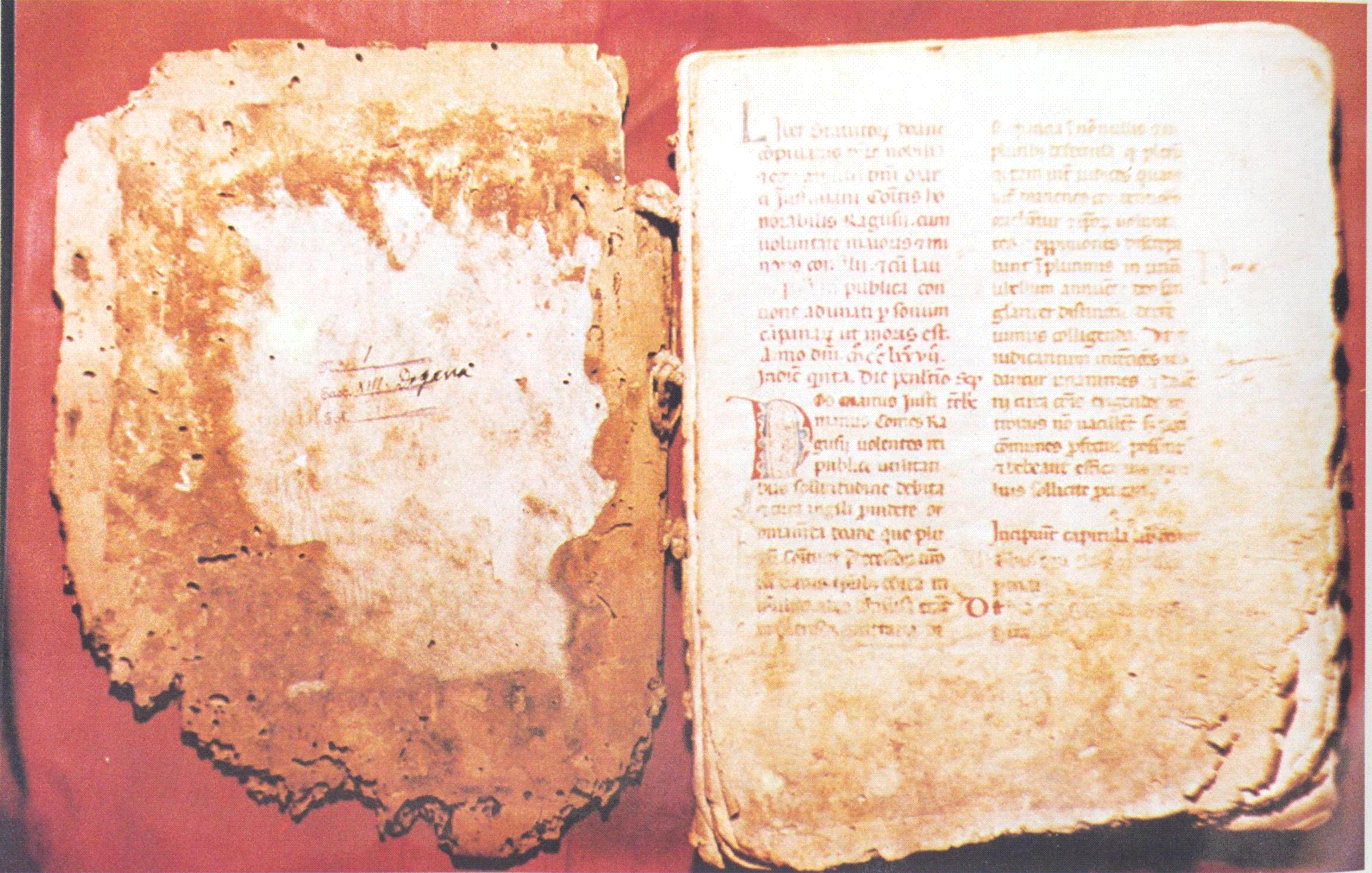
The oldest preserved customs law related to our region was the Dubrovnik customs statute – Liber Statutorum Doane – from 1277 A.D. in Serbia, in addition to case law and national written legal sources, as early back as 13th century the first written legal source of Byzantine origin was applied. Sava Nemanjić, Saint Sava, on declaration of autocephaly of Serbian Orthodox Church in 1219, issued the Nomokanon, a collection of ecclesiastical and civil law regulations.

The oldest preserved customs law related to our region was the Dubrovnik customs statute – Liber Statutorum Doane – from 1277 A.D. in Serbia, in addition to case law and national written legal sources, as early back as 13th century the first written legal source of Byzantine origin was applied. Sava Nemanjić, Saint Sava, on declaration of autocephaly of Serbian Orthodox Church in 1219, issued the Nomokanon, a collection of ecclesiastical and civil law regulations.

This view of our colleague from early XX century was based on historical facts, since customs duties, in the form of tolls or taxes, were known back in the Old Ages.  They were levied by the state or individual cities.  The Old Greeks in Athens imposed a duty of 2% on imports and exports over the Pierian Mountains. The Romans also used to levy such duties as state and provincial or city taxes.  As early back as the Roman times customs duties made up a significant part of public revenues for the state treasury. At certain communication points in the provinces there were customs stations (stationes) where the duties were charged for the goods passing such points. The amount of duties was 2.5% (quadrogesimo) of the value of imported goods. The collection of customs duties was also farmed out, at the beginning granted even to farmers from the ranks of domiciled population, and later on, from mid-2nd century on, duties were collected by officials that in our territory were called publicum portarii Illyrici et ripae Thraciae. In the Middle Ages, in addition to import and export duties, the so-called transit duties were also levied. 

It was the basis for Dušan’s Code, drawn up at the times of developed feudal state in 1349, and amended in 1354, and this Code provided rules for the largest number of social relations.  Medieval Serbian rulers usually farmed out the collection of customs duties, most often to Dubrovnik citizens. After the arrival of Ottoman Turks in the Balkans the structure of revenues was changed entirely. The most important tax was the one paid in money, the so-called desetak (tithe), and also in “fruit of the land” and in labour; also levied were a district surcharge (nahijski prirez), fines, and revenues were also collected from customs duties, transportation and fishing taxes. On liberation from Ottoman Turks, the revenues from customs duties and charges on ferry transportation started to be collected for the first time in May of 1804, when Karadjordje established a customs house with a ferry at Ostružnica. Similar to the rate during the Ottoman rule, the customs duties stood at 3%. The vassal Serbia had to establish its customs tariffs in line with the then applicable provisions of agreements with the Holy See, and Prince Miloš fully complied with the Holy See’s instructions in that area.

Continue reading →

Illicit financial outflows estimated at $854 billion to $1.8 trillion over 38 years

Illicit-Financial-Flows-Report-Dec-2012A new report from Global Financial Integrity (GFI) estimates that Africa lost $854 billion to $1.8 trillion in illicit financial outflows between 1970 and 2008. The estimated outflows grew at an average rate of 11.9% per year and were approximately double the level of international aid to Africa over that period. According to GFI director Raymond Baker “staunching this devastating outflow of much-needed capital is essential to achieving economic development and poverty alleviation goals in these countries.”

Of the estimated outflows, it is believed that at least 3 percent ($25 billion) can be attributed to the proceeds of bribery and theft by corrupt government officials; at least 30 to 35 percent to criminal activities such as drug trafficking, racketeering and counterfeiting; and the final 60 to 65 percent to the proceeds of commercial tax evasion.

Sub-Saharan African countries experienced the bulk of illicit financial outflows. However, the top five countries with the highest measurable outflows were detailed as:

  • Nigeria ($89.5 billion);
  • Egypt ($70.5 billion);
  • Algeria ($25.7 billion);
  • Morocco ($25 billion); and
  • South Africa ($24.9 billion).

What is clear is that as long as these countries continue to experience significant illicit financial outflows, economic development and prosperity remain elusive. Addressing this problem will require a concerted effort globally. More insight on Illict Trade Flows and how they are estimated can be found at Wikipedia – Click Here!

Also check out fellow blogger Nwarini Nerima’s article – Illicit Financial Flows from Africa

MSC ship sets Durban Container Terminal record

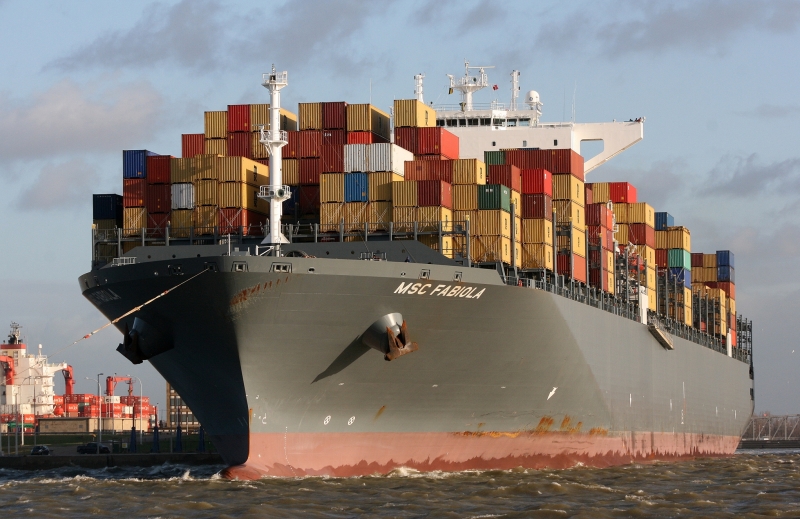
MSC Fabiola - sets new record for Durban container vessel capacity

MSC Fabiola – sets new record for Durban container vessel handling capacity


The visit to Durban, a fortnight ago, of the MSC FABIOLA has again raised the limit in terms of container ship sizes to call at the port. The previous largest box ship to call at Durban was the 11,660-TEU MSC Luciana, whereas MSC Fabiola can carry up to 12,562-TEU.

Obviously the ship was not fully laden otherwise the port would not have been able to accommodate the ship. The deepest berths at the Durban Container Terminal are 12.8m and those at Pier 1 are about the same.

MSC Fabiola is a charter vessel and is currently deployed on MSC’s pendulum service between Northern Europe and Singapore via Durban, Cape Town and Ngqura. The rotation is Northern Europe ports, Cape Town, Ngqura, Durban, Singapore, Durban, Ngqura, Northern Europe.

The next objective to aim at is to have the 14,000-TEU box ships deployed on the South African service, defying all previous projections, as indeed has been the case with the 12,500-TEU MSC Fabiola.

Of course, the main obstacle in having these post panamax ships calling at Durban is that the country’s main container port lacks a deepwater berth. This is despite the entrance channel having been dredged and widened several years ago to -19m decreasing to – 16.5m in the harbour inside entrance. In the process South Africa has once again been exposed by rapidly moving circumstances and questions need to be asked as to why the process of providing Durban with deep water berths is being delayed. Source: SAPorts.co.za

Zim-EU Agreement to Suffocate Trade

ZimbabweThe Interim Economic Partnership Agreement (IEPA) Zimbabwe signed with the European Union (EU) is set to suffocate the country’s trade and industrial development policies due to the removal of taxes, a regional non-governmental organisation has warned. Zimbabwe alongside Mauritius, Seychelles and Madagascar concluded the IEPA with the EU that would result in the removal of taxes between the African countries and the EU.

But in an analysis of the trade pact, the Southern and Eastern Africa Trade, Information and Negotiations Institute (Seatini) said the elimination of the export taxes is a blow to both the National Trade Policy (NTP) and Industrial Development Policy (IDP) meant to promote the trade and industrial revival respectively.

Last year, the Zimbabwean government launched the Industrial Development Policy 2012-2016 that advocates value-addition or beneficiation and the NTP to guide the country’s trade with the rest of the world.

“There is no doubt that for Zimbabwe to successfully implement the NTP and IDP it will need to use tools such as export taxes. However, Article 15 of the interim EPA agreement that Zimbabwe signed and ratified provides for elimination of export taxes, thereby suffocating the policy space Zimbabwe is referring to in its National Trade policy on the need for value-adding natural resources,” Seatini said in a discussion paper, Zimbabwe’s control over its natural resources in the WTO context.

Article 15 of the IEPA provides that for the duration of the agreement, the parties shall not institute any new duties or taxes on, or in connection with, the exportation of goods to any other party in excess of those imposed on products destined for sale. The organisation recommended that Zimbabwe “must exercise its right to develop its economy and protect the environment through the use of export taxes, until such a time when the economy can competitively trade with the rest of the world enabling it to then gradually eliminate the taxes on a product by-product basis”.

It also recommended that government should consult widely all relevant ministries and the private sector on its existing and proposed laws relating to any prohibitions and restrictions on the export of natural resources especially metals and minerals. Seatini warned that the use of export restrictions would be in violation of World Trade Organisation (WTO) rules.

Article XI:2(a) of the General Agreement on Tariffs and Trade does not allow WTO members to impose prohibitions and restrictions on the importation of any product, unless they (restrictions and prohibitions) are temporary, addresses critical shortages, relates to foodstuffs or other products and are essential to the exporting WTO member. It said it would be difficult for Zimbabwe to prove the critical shortage requirement. Source: The Standard – Zimbabwe