When will the AfCFTA be customs-ready?

Picture: Grayomm @ Unsplash.com

The negotiations to finalise the tariff schedules and rules of origin (RoO) of the African Continental Free Trade Area (AfCFTA) are taking place during the last two weeks of January 2022. Senior Trade Officials (STOs) and the AfCFTA Council of Ministers (COM) will then meet to confirm the results or to decide the outstanding issues. Once the State Parties have agreed on the content of these important Annexes to the AfCFTA Protocol on Trade in Goods, they must be adopted. This is the responsibility of the African Union (AU) Assembly.[1]

Trade in goods under AfCFTA preferences can then begin among the State Parties presently trading with each other under most-favoured-nation (MFN) rates. (Non-State Parties will first have to accede to the AfCFTA Agreement in terms of Article 23 of the AfCFTA Agreement.)

Those State Parties that are members of Regional Economic Community (REC) Free Trade Areas (FTAs), Customs Unions (CUs) and other trade arrangements will continue to trade under existing preferential arrangements.

Article 19(2) AfCFTA Agreement provides that

“… State Parties that are members of other regional economic communities, regional trading arrangements and custom unions, which have attained among themselves higher levels of regional integration than under this Agreement, shall maintain such higher levels among themselves”.

Article 8(2) of the Protocol on Trade in Goods adds the following:

“… State Parties that are members of other RECs, which have attained among themselves higher levels of elimination of customs duties and trade barriers than those provided for in this Protocol, shall maintain, and where possible improve upon, those higher levels of trade liberalisation among themselves”. 

However, there is also the practical requirement that the AfCFTA regime must be “customs ready”. It means that the tariff books of individual State Parties and of CUs such as the Southern African Customs Union (SACU), and presumably the East African Community (EAC) and the Economic Community of West African States (ECOWAS), need to be updated. AfCFTA columns will have to be added to these tariff books in order to ensure the new preferences will be enjoyed when customs officials and border control agencies clear goods under this new trade arrangement.

The updating of a tariff book normally happens through national legislative procedures such as the promulgation of a Government Gazette. Customs and other border officials can only act in terms of domestic legal instruments granting them the necessary powers. Trade agreements are not self-executing.[2]

The importation and exportation of goods entail detail procedures involving customs clearance. Customs clearance is the procedure of procuring permission, through its customs authority, to either take goods out of its territory (export) or have goods enter its territory (import). Failure to provide the correct paperwork will mean that goods cannot clear customs and enter the market of the country of destination.

The customs authority of a country is the administrative agency responsible for collecting tariffs and for controlling the flow of goods into and out of a country. Depending on local legislation and regulations, the import or export of some goods may be restricted or forbidden, and the customs agency enforces these rules. The customs authority is different from the immigration authority, which monitors persons who leave or enter the country, checking for appropriate documentation, apprehending people wanted by international arrest warrants, and impeding the entry of others deemed dangerous to the country. A customs duty is a tariff or tax on the importation or exportation of goods.

The approach taken by the World Customs Organisation (WCO) is to improve the security of borders, without unduly hindering legitimate international trade. The WCO initiative focusses on the entire international trade supply chain, rather than restricting customs’ interest to that aspect of the international trade transaction, when goods move across a border. The basic principle underpinning its work is to create an international mechanism for Customs Administrations to gain access to relevant information relating to international trade well in advance, for the purposes of risk management and risk assessment.[3]

The AfCFTA is a free trade agreement (FTA). This is an agreement between States that removes tariffs and other restrictions on goods which are traded between the State Parties, according to the applicable RoO. The main difference between a customs union and a free trade agreement is that even where zero (or reduced) tariffs are part of an FTA, extra bureaucracy is needed to take advantage of those tariffs. Exporting under an FTA means companies have to comply with a complex set of rules (known as preferential rules of origin) to prove that goods only come from countries who have signed up to the FTA and that such goods have been produced or manufactured in accordance with the applicable RoO. For a customs union, once the common external tariff has been paid for a product then it is in “free circulation”. Traders only have to prove the common external tariff has been paid on goods or parts they have used. This is easier to demonstrate than proving the origin of imported goods.

Source: Authored by Gerhard Erasmus, TRALAC, 24 Jan 2022


[1] Art 22 AfCFTA Agreement.

[2] Constitutional systems based on monism, may provide otherwise but will have other requirements to ensure that the executive branch of government respects the powers of the legislature.


[3] https://www.osce.org/files/f/documents/a/6/24649.pdf

Global Supply Chains Making a Huge Bet on Blockchain

System Shock: The $50 Trillion Industry Making a Huge Bet on Blockchain

Blockchain may one day eliminate inefficiencies and lack of transparency in supply chains. While slow in coming, this revolution would benefit not only customers and brands, but the “invisible” workers who power global trade.

In this episode of Bloomberg’s System Shock, we explore how cumbersome, paperwork-bound supply chains—like one stretching from kitchen refrigerators in Europe and the U.S. all the way back to a small farmer in Ecuador—are being transformed by that most modern of technologies.

Source: Bloomberg, System Shock, Gloria Kurnik, 26 January 2022

WCO supports the launch of the Global NTFC Forum 2022

The World Customs Organization (WCO) has joined hands, once again, with partner Annex D+ organizations (GATF, ITC, OECD, UNECE, UNESCAP, WBG and WTO) in supporting the Global Forum 2022 for National Trade Facilitation Committees (NTFCs). The Forum is being held from 1 to 4 February 2022 in a virtual mode and led by the United Nations Conference on Trade and Development (UNCTAD). It has brought together more than 500 participants, around half of which are members of their NTFCs.

In the high-level opening session, the speakers agreed on the need to ensure well-functioning, holistic and dynamic NTFCs, with their critical role in facilitating trade especially during the COVID-19 pandemic, through collaborative arrangements amongst all relevant public and private sector stakeholders. Embracing digital tools, the e-commerce growth and the importance of MSMEs and women traders were also highlighted by the speakers.

In his video address, Dr. Kunio Mikuriya, the Secretary General of the WCO emphasized the importance of trade facilitation during the COVID-19 pandemic recovery phase. Through simplifying and standardizing border procedures and creating transparent and predictable conditions for trade, Customs administrations facilitate legitimate business that, in turn, increases economic growth and job opportunities.

Secretary General Mikuriya mentioned a survey carried out in 2021, where the WCO took stock of the situation in the area of NTFCs, including the challenges and opportunities observed during the COVID-19 pandemic. Many NTFCs have put their work on hold, due to the inability to meet in person. However, in some instances NTFCs played an important role in addressing facilitation priorities during the pandemic, and have benefited from the sense of urgency generated by the crisis.

Dr. Mikuriya emphasized the need to strengthen the partnership among all relevant government authorities for improving border agency cooperation, which is essential in emergency situations. He reiterated the need to foster the dialogue and collaboration with the business community and underscored the private sector contribution to digitization, to conducting the Time Release Studies and in advancing Authorized Economic Operator (AEO) programmes, while taking into consideration the specific challenges of MSMEs.

The importance of increased diversity and inclusion in trade facilitation reforms, including improving the conditions for women traders was also highlighted. The WCO supports this agenda through its Network for Gender Equality and Diversity, amongst others.

The WCO reiterated its commitment to the TFA agenda in developing and least developed country Members through the WCO Mercator Programme.

The NTFC Forum was made possible with the support of the United Kingdom’s Her Majesty Customs & Revenue (HMRC) through the HMRC-WCO-UNCTAD Trade Facilitation Capacity Building Programme, which brings together the WCO and UNCTAD in a partnership for TFA implementation.

The whole address of the Secretary General can be found here.

AfCFTA, EU and WCO join forces to support digital transformation of Customs work

Picture: Damien Patkowski

On 27 January 2022, representatives of the WCO, the AfCFTA Secretariat and the European Commission held a virtual meeting to review the state of play in the implementation of the African Continental Free Trade Area (AfCFTA). The meeting focused on the trade liberalization mechanism envisaged by the AfCFTA Agreement, the management of tariff offers and a possibility of setting up a continental digital platform to handle information on applicable tariff rates covering all African countries.

In opening the meeting, Mrs. Demitta Chinwude Gyang, Head of Customs at the AfCFTA Secretariat, expressed her appreciation for the support provided by the WCO and the EU on the implementation of the Harmonized System (HS) under the EU-WCO Programme for HS in Africa (HS-Africa Programme), funded by the EU. She emphasised that the trade under the AfCFTA had already started from January 2021, and 44 tariff offers had been submitted by AfCFTA signatories already. She explained that the AfCFTA Secretariat intended to create a web-based ‘tariff book’ whereby all the necessary information on tariff offers and applicable tariff rates would be made available in a user-friendly and easily accessible manner.

The representatives of the WCO and the EU welcomed the AfCFTA initiative to set up a digital tariff platform at the continental level, recalling that electronic tariffs had been successfully implemented in some African countries in the recent past, with the support of the HS-Africa Programme. They stressed that such digital tools contributed significantly to trade facilitation efforts of Customs administrations and Regional Economic Communities by providing data that were vital for trade operators. The EU and the WCO reiterated their firm commitment to offering continued support to the AfCFTA in that regard, under the HS-Africa Programme.

In conclusion, the meeting participants agreed that the initiative should start by developing terms of reference for the implementation of the AfCFTA digital ‘tariff book’ and launching a tendering process to select a service provider that would carry out the required technical work. It was felt that this project would contribute to scaling up digital transformation of Customs, announced as the theme of the year 2022, and create a foundation for the next steps in the establishment of the Customs union on the African continent.

For more details, please, contact capacity.building@wcoomd.org.

Africa and the adoption of HS2022

Picture: Samendra Singh on Unsplash

The new edition of the Harmonised Commodity Description and Coding System 2022 (HS2022) entered into force on the 1st of January 2022. This development means that Customs tariffs, associated Information, Communication and Technology (ICT) management systems as well as accompanying Harmonised System (HS) tools and instruments must have been successfully migrated from the previous edition (HS2017) to the new version (HS2022).

A few weeks prior to entry into force of HS2022, African countries’ experiences in this regard still indicated widely ranging inconsistencies and discrepancies in the application of the HS in general. Whilst all the Contracting Parties were expected to have fully migrated to the HS2017 by then, apparently some had not yet done so. The majority of those were still either using HS2012 or even HS2007, whilst some had huge delays in rolling out HS2017. Only 30 African countries had successfully migrated to HS2017 and were already applying it. At the launch of the operational phase of the African Continental Free Trade Area (AfCFTA) during the 12th Extraordinary Session of the Assembly of the Union on the AfCFTA in Niamey, Niger held on the 7th of July 2019, HS2017 was already in its third year. At that time, half of the African Union Member States were still to ratify the AfCFTA.

Source: TRALAC, Rwatida Mafurutu, 1 February 2022

Pakistan Customs Joins TradeLens

By joining the blockchain-underpinned platform TradeLens, Pakistan Single Window is supporting Customs in modernizing its import-export documentation through a safe & secure, paperless, digital solution to strengthen its controls against trade-based money laundering.

On 20 December 2021, On behalf of Pakistan Customs, the Pakistan Single Window Company today signed an agreement with TradeLens, a blockchain-underpinned logistics platform supported by 5 of the 6 largest ocean carriers globally, to digitize import-export documentation of the containerized cargo moving in and out of the country. Pakistan’s international trade ecosystem is being rapidly transformed through the introduction of technology driven initiatives led by the Pakistan Single Window and the country’s authorities recognize the potential benefits of digitizing supply chains for efficiencies, enhanced transparency, and data-driven decision making.

Advisor to the Prime Minister on Finance and Revenue Mr. Shaukat Tarin added, “Joining the TradeLens platform is allowing us to enhance our ecosystem in a way that all the involved stakeholders get access to a transparent and secure platform that makes processes more efficient.”

Cross-border containerized supply chains are some of the largest and most complex business ecosystems in the world today. It is not uncommon for 30 independent parties, 100 people and up to 200 exchanges of information to be connected to a single shipment. With increased complexity comes increased cost. Shippers or beneficial cargo owners (BCOs) need consistent, auditable and immutable data from multiple sources to effectively manage their supply chains.

The authorization to sign the collaboration came from the PSW Governing Council chaired by Mr. Shaukat Tarin. The Chief Executive Officer of PSW Aftab Haider formally signed the agreement with Irtaza Hussain, the Regional Head of Network for TradeLens at IBM.

PSW integration with TradeLens will help Pakistan Customs and other trade regulators to improve their operational efficiency and create value through the blockchain platform. The immutability of Blockchain-underpinned document information is important in the identification of illegal activities, as well as, improving the smooth operation of legal trade.

Marvin Erdly, Head of TradeLens at IBM. commented “The growth of the TradeLens’ network is evidence that participants from all across the supply chain ecosystem can derive significant value through digital collaboration.  Pakistan now joins an increasing number of connected Customs Authorities on the TradeLens platform exploring innovative solutions to enhance global trade access and enhance process efficiencies for all involved”.  

TradeLens is a neutral platform brings together data from the entire global supply chain ecosystem including shippers and cargo owners, 3PLs and freight forwarders, intermodal operators, customs and government authorities, ports and terminals, and several ocean carriers. This data allows TradeLens and its network partners to modernize manual and paper-based documents by replacing them with blockchain-enabled digital solutions. It also allows the network partners to provide their customers with deeper visibility into the entire journey for their cargo from origin to destination and reduce uncertainty allowing for better planning and reduced inventory costs. TradeLens welcomed it’s first network member in Pakistan, Al-Hamd International Container Terminal, earlier this year.  

Source: TradeLens, 28 December 2021

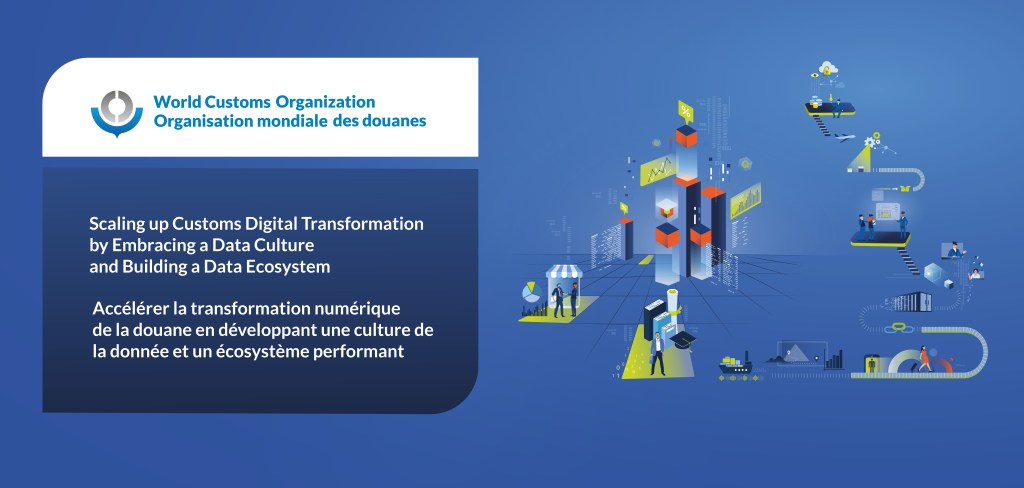
International Customs Day 2022

The WCO dedicates 2022 to the Scaling up Customs Digital Transformation by Embracing a Data Culture and Building a Data Ecosystem

Traditionally, every year, the Customs community comes together on 26 January to mark International Customs Day. This day of celebration is a unique opportunity for WCO Members, the WCO Secretariat and global Customs’ partners to reflect on a particular theme and to act upon it. 

Thus, throughout 2022, under the slogan “Scaling up Customs Digital Transformation by Embracing a Data Culture and Building a Data Ecosystem”, the Customs community will be focusing on how to operate in a fully digital environment and create an operating model that captures and exploits data from across the trade ecosystem.

Over the years, digital technology has evolved rapidly and Customs can now tap into data from other government agencies, commercially available databases, and open-source information platforms such as digitized global public records and multilingual news sources. 

The extent to which data can be used effectively depends on various factors surrounding data ethics, including privacy, commercial secrecy and legal issues regarding the use of data by Customs and Tax administrations, and the importance assigned to innovation in public administrations. 

To build data ecosystems, or consolidate existing ones, the following enabling actions may be considered:

  • establishing formal data governance to ensure the relevance, accuracy and timeliness of data;
  • making use of the standards developed by the WCO and other institutions regarding data format and data exchange;
  • providing appropriate management of data to ensure that the right people have access to the right data, and that data protection regulations are respected; and,
  • adopting progressive approaches, such as data analytics, to collect and successfully exploit data to drive decision-making.

A robust data culture empowers people to ask questions, challenge ideas and rely on detailed insights, not just intuition or instinct, to make decisions.

In order to nurture a data-driven culture, administrations need to enhance the data-literacy of their staff – in other words, their ability to interpret and analyze data accurately. 

Customs administrations should integrate data science into their curriculums for newly recruited officers and participate in the development of distance learning courses to familiarize Customs officers with the collection and analysis of data in order to forge a data-driven culture. Staff also need to understand the bigger picture, namely the impact of Customs on the effective protection of society, trade facilitation and fair revenue collection. 

On the other hand, Customs administrations are invited to consider leveraging data in their relationships with other actors along the supply chain, as well as making data available to the public and academia as a means of enhancing transparency, stimulating the production of knowledge and enabling dialogue with civil society.

Sharing data analysis with other government agencies increases the role and visibility of Customs in policy-making and in obtaining necessary resources, including donor funding. Disseminating Customs data and information in society is part of governments’ response to the general demand for open governance.

To support Customs administrations, the WCO Secretariat has placed data-related topics on the agendas of several committees and working groups, organized awareness-raising seminars, developed e-learning modules, drafted a Capacity Building Framework for Data Analytics which was adopted by the WCO Council in December 2020, issued practical publications and published articles in the WCO News Magazine.

Moreover, a community of experts has been established, under the name of BACUDA (BAnd of CUstoms Data Analysts), which brings together Customs and data scientists with the objective of developing data analytics methodologies. 

The Secretariat will continue to investigate ways to collect and share data on Customs administrations with a view to enhancing the way it delivers capacity building, and will continue to undertake data-driven assessments and work with international experts to respond to assistance requests.

More measures will be presented in the WCO Data Strategy that the WCO Secretariat is currently working on. The ambition will be to make data a vernacular language among Customs administrations and between the WCO Secretariat and WCO Members. The road ahead is not an easy one, there will inevitably be challenges along the way, but as we have learned during the COVID-19 pandemic, the Customs community is united, stronger and more resilient in the face of adversity. 

Dr. Kunio Mikuriya

WCO Secretary General

26 January 2022

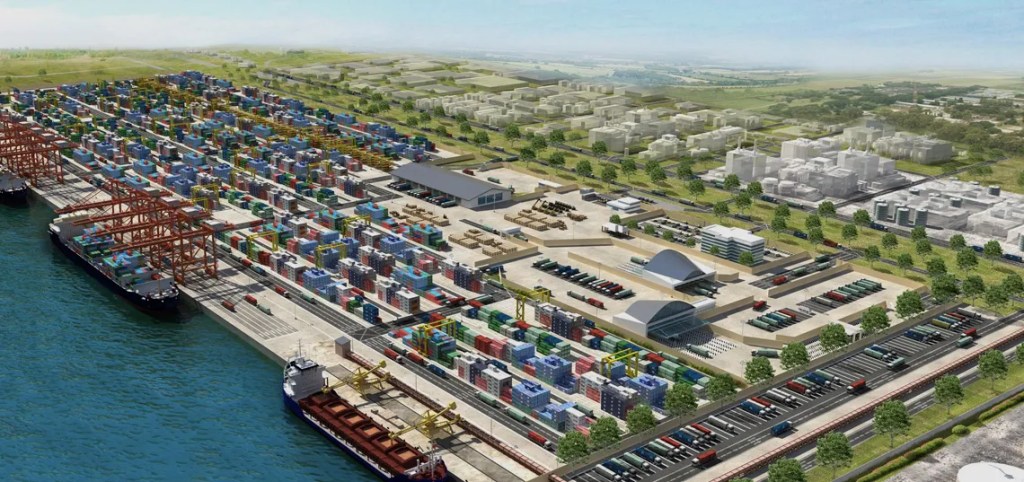
Nigeria – Lekki Seaport now 80% complete, to be commissioned 2022

The Minister of Transportation, Chibuike Amaechi, has urged contractors of the Lekki Deep Seaport Project to speed up work to enable the government approve all the necessary processes before the next election.

Mr Amaechi made this known in a statement on Saturday while inspecting the ongoing construction of the Lekki Deep Seaport Project in Lagos.

He, however, commended the contractors for the progress of work done so far stating that in less than five months, a lot of civil work had been done.

“I want to congratulate you for the very huge progress. By the time we came here, there were no civil works; it was just pure sand. You have tried.

“I am suggesting that if you work day and night you will go far and complete the work before commissioning. If the President sees it, approval will be easier.

“You need to speed up the work so we can get approval from the government side before election, process of election will be completed in July.

“This is because by law, six months to election people start politics and if you wait till that time, you won’t meet anyone in the office,” he said.

Mr Amaechi, however, said that the port should be automated to avoid all forms of physical contact.

Speaking during the tour, the Chief Technical Officer, Lekki Port, Steven Heukelom, explained that construction work on the project was on course and as scheduled.

He noted that dredging and reclamation works had reached 89.93 per cent completion, Quay Wall 85.65 per cent completion, Breakwater 79.66 per cent completion, and the landside infrastructure development 67.82 per cent completion.

He added that this brings total works carried out on the project to approximately 80 per cent completion stage.

Mr Heukelom also informed the minister that work had commenced on the marine services jetty, which the NPA would use to carry out their marine services obligation.

He commended the Acting Managing Director, Mohammed Bello-Koko, for the support and partnership in preparing the port to start operations.

Mr Bello-Koko reaffirmed the agency’s readiness to provide marine services for the port’s operations.

To this end, he disclosed that NPA was procuring tug boats and other necessary infrastructure for the smooth take-off of the Port.

In his remarks, the Chief Operating Officer of Lekki Port, Laurence Smith, reaffirmed the company’s commitment to delivering the project by the fourth quarter of 2022.

He noted that the EPC Contractor, China Habour Engineering LFTZ Enterprise, was working day and night to make this commitment a reality.

Mr Smith expressed confidence that the Port, upon completion, would be a world-class port and would become a regional distribution and transhipment hub for the African region.

The News Agency of Nigeria reports that Lekki Port is being developed by Tolaram and China Harbour Engineering Company.

The Lagos State Government and NPA are also shareholders in the project company.

The port is scheduled to start port operations by the end of 2022.

Source: PremiumTimesng, 23 January 2022

Former SpaceX Engineers making Electric & Autonomous Railway Vehicles

Former SpaceX engineers banded together to create a new startup looking to make electric and autonomous railway vehicles to revolutionize rail-based freight transport. They have a big task ahead of them.

The railway business is a tough one to break into. It’s a static oligopoly dominated by a few giants sitting on their railroad rights and making minimal investments to maximize profits.

Over the years, railroads were privatized in North America, and the businesses have no issues closing smaller railroads. They often close smaller railroads when they can’t find a way to make money off of them and focus on the most profitable routes with longer trains – often as long as 3 miles.

Despite those issues, freight trains have remained a good solution since they are about four times as efficient as trucks. But, with trucks expected to become electric and autonomous in the coming years, they are going to close the efficiency gap with trains.

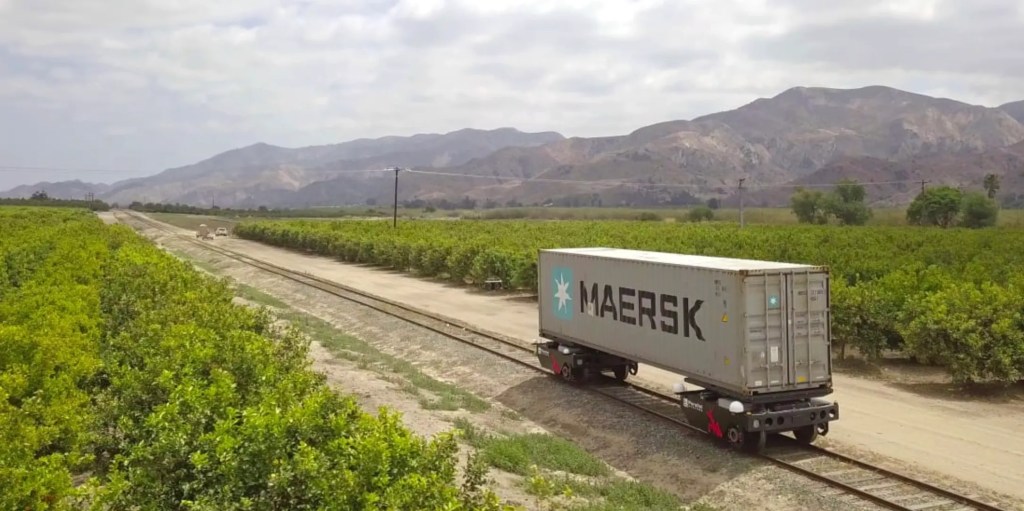
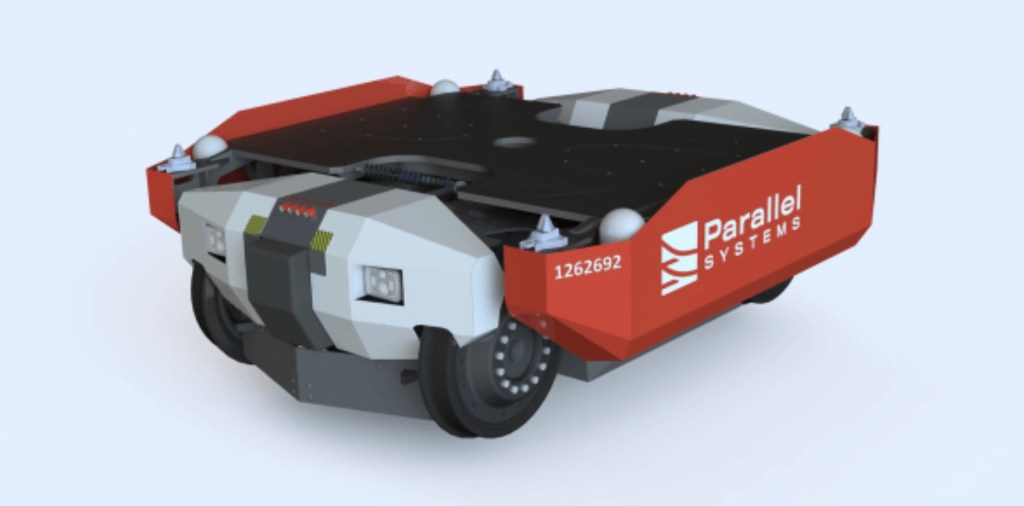
Now Matt Soule, a former long-time SpaceX engineer, has partnered with former colleagues at Elon Musk’s space company to launch a new startup, Parallel Systems, developing new electric and autonomous vehicles.

The company just raised $50 million in a Series A funding round and came out of stealth mode with an article in Fortune. The idea is to create small autonomous electric-powered rail vehicles that can enable a different way to use railroads.

You can drop the cargo on individual Parallel Systems vehicles and have them move without waiting for the whole train to be unloaded.

As for the vehicle itself, Parallel Systems vehicles can carry 128,000 pounds, which is more than twice the capacity of a semi-truck. The vehicles have a range of 500 miles on tracks and can charge in about an hour.

Visit Elecktrek’s webpage for the full article and related media.

WCO Data Model 3.11.0 – Online

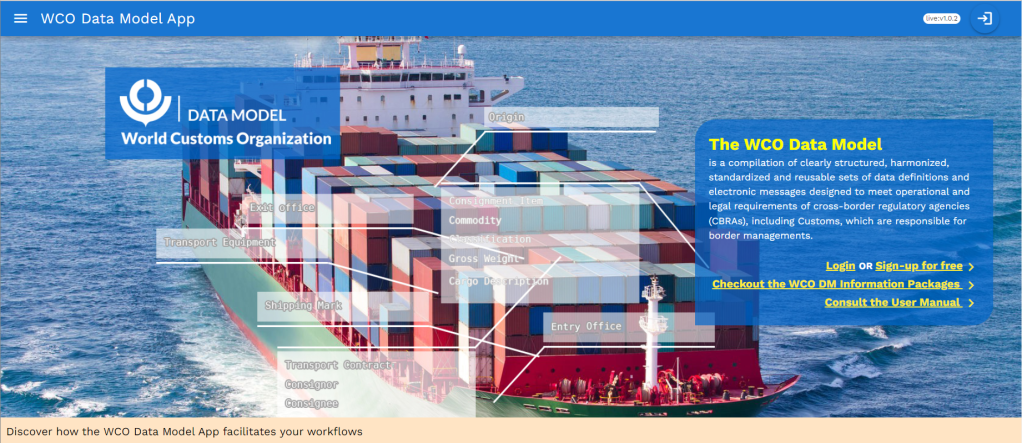
Unlike the previous versions where the WCO DM was made available on the WCO Members’ website in a downloadable format, version 3.11.0 of the WCO DM is being released on a new publication platform: the WCO DM app. This app interactively displays WCO DM components and aims to enhance the user experience of working with the WCO DM. In so doing, it helps users navigate through different WCO DM data objects, such as classes, data elements and information models, more easily.

The publication of version 3.11.0 in December 2021 marks the culmination of the maintenance process undertaken by the DMPT in its meetings held from September 2020 to April 2021.

In addition to incorporating changes requested by Members through the regular maintenance procedure, version 3.11.0 introduces two new Message Implementation Guides (MIGs) – for implementing the IMO Compendium and WCO-UPU Joint Message Standards.

The MIGs offer practical guidance and additional technical information useful for implementation of the DM, in addition to the semantic definitions available in the Base Information Packages (BIPs) and/or Derived Information Packages (DIPs).

The IMO MIG includes technical information for implementing ship reporting formalities outlined in the Convention on Facilitation of International Maritime Traffic (FAL Convention). This MIG is the result of the joint efforts of the WCO and the IMO in updating the IMO Compendium on Facilitation and Electronic Business.

The UPU MIG contains technical information relating to primary electronic message formats, namely CUSITM, a message for a postal operator to transmit mail item information to its local Customs authority, and CUSRES, a message to respond to a CUSITM message.

In accordance with the Council Decision of December 2020, the WCO DM package published in the DM app is available free of charge to all interested parties, including Members, partner international organizations and private-sector stakeholders. All those interested in accessing the WCO DM will be able to take advantage of the app after accepting the WCO DM use terms and conditions. The app is accessible at http://datamodel.wcoomd.org.

WTO Joint Statement Initiative on E-commerce

The COVID-19 pandemic has highlighted the digital economy’s importance, accelerated the digital transformation and heightened the need for global rules governing digital trade. As Co-convenors of the Joint Statement Initiative on Electronic Commerce, we are committed to responding to this challenge. This initiative will update the WTO rulebook in an area of critical importance to the global economy.

We recognise the importance of the digital economy in post-COVID-19 economic recovery. The digital economy offers enormous opportunities for developing Members and least-developed country (LDC) Members, including by lowering the costs for businesses, particularly MSMEs, to access and participate in global markets. WTO rules and commitments on digital trade can help unlock these opportunities.

In this context, we will continue to drive negotiations towards a high standard and commercially meaningful outcome building on existing WTO agreements and frameworks. We will continue to promote inclusiveness and encourage the participation of as many WTO Members as possible in the negotiations, which were launched in our January 2019 Ministerial statement.

We welcome the substantial progress made to date in the negotiations. We have achieved good convergence in negotiating groups on eight articles – online consumer protection; electronic signatures and authentication; unsolicited commercial electronic messages; open government data; electronic contracts; transparency; paperless trading; and open internet access. The outcomes already achieved in these areas will deliver important benefits including boosting consumer confidence and supporting businesses trading online.

In addition, we have seen the consolidation of text proposals in other areas, including on customs duties on electronic transmissions, cross-border data flows, data localisation, source code, electronic transactions frameworks, cybersecurity, and electronic invoicing, as well as advanced discussions on market access. We will intensify negotiations in these areas from early 2022. We note that provisions that enable and promote the flow of data are key to high standard and commercially meaningful outcome.

Participants in the initiative support the continuation of the multilateral e-commerce moratorium in fostering certainty and predictability for businesses. The co-convenors consider it crucial that the initiative makes permanent among participants the practice of not imposing customs duties on electronic transmissions.

We recognise the importance of supporting the engagement of developing Members and LDC Members in the initiative, including implementation of commitments. We will continue to deepen the discussion, including through a series of roundtables, dialogues and webinars, on capacity building options and support for implementation for developing Members and LDC Members in 2022.

In light of the strong progress that has been achieved to date, the co-convenors will arrange the JSI work programme to secure convergence on the majority of issues by the end of 2022. We will identify opportunities throughout 2022 for Ministers to provide guidance on key issues in the negotiations.

We look forward to working with all participating Members as we intensify the negotiations and work towards a successful conclusion.

The Hon Dan Tehan MP, Minister for Trade, Tourism and Investment, Australia

H.E. Mr HAYASHI Yoshimasa, Minister for Foreign Affairs, Japan
H.E. Mr HAGIUDA Koichi, Minister of Economy, Trade and Industry, Japan H.E. Mr Gan Kim Yong, Minister for Trade and Industry, Singapor
e

Amazon is making its own containers and bypassing supply chain chaos

For years, Amazon has been quietly chartering private cargo ships, making its own containers, and leasing planes to better control the complicated shipping journey of an online order. Now, as many retailers panic over supply chain chaos, Amazon’s costly early moves are helping it avoid the long wait times for available dock space and workers at the country’s busiest ports of Long Beach and Los Angeles. 

“Los Angeles, there’s 79 vessels sitting out there up to 45 days waiting to come into the harbor,” ocean freight analyst Steve Ferreira told CNBC in November.  “Amazon’s latest venture that I’ve been tracking in the last two days, it waited two days in the harbor.”

By chartering private cargo vessels to carry its goods, Amazon can control where its goods go, avoiding the most congested ports.

“Who else would think of putting something going into an obscure port in Washington, and then trucking it down to L.A.? Most people are thinking, well, just bring the ship into L.A. But then you’re experiencing those two-week and three-weeks delay. So Amazon’s really taken advantage of some of the niche strategies I believe that the market needs to employ,” Ferreira said.

Still, Amazon has seen a 14% rise in out-of-stock items and an average price increase of 25% since January 2021, according to e-commerce management platform CommerceIQ.

“The consumer has been feeling price increases in everything that they’re purchasing,” said Margaret Kidd, Supply Chain & Logistics Technology program director at the University of Houston. “Ultimately, when there’s an increase in the cost of transportation, it gets passed down to the consumer.”

Amazon has been on a spending spree to control as much of the shipping process as possible. It spent more than $61 billion on shipping in 2020, up from just under $38 billion in 2019. Now, Amazon is shipping 72% of its own packages, up from less than 47% in 2019 according to SJ Consulting Group.

It’s even taking control at the first step of the shipping journey by making its own 53-foot cargo containers in China. Containers are in short supply, with long wait times and prices surging from less than $2,000 before the pandemic to $20,000 today.

“Amazon has produced probably 5,000 to 10,000 of these containers over the last two years I’ve been tracking it,” Ferreira said. “When they bring these containers onto U.S. soil, once they unload them, guess what? They get to be used in the domestic system and the rail system. They don’t have to return them to Asia like everyone else does.”

A cargo vessel called the Star Lygra called at the Port of Houston on October 5, 2021, filled with Amazon containers.

“By creating their own containers, they are essentially guaranteeing that equipment is going to be available for them,” said Lauren Beagen, maritime lawyer and founder of Squall Strategies. She was working at the Federal Maritime Commission when Amazon first registered with the agency in 2015, the first indication it was exploring its own ocean freight business. 

Then in 2017, Amazon started quietly operating as a global freight forwarder through a Chinese subsidiary, helping move goods across the ocean for its Chinese sellers who pay to be part of the Fulfilled by Amazon program. Internally, Amazon dubbed this project “Dragon Boat.” 

“They are doing over 10,000 containers per month of the small- and medium-sized Chinese exporters. Amazon’s volume as an ocean vendor — that’s right, you heard me correct, they’re considered an ocean vendor — would rank them in the top five transportation companies in the Trans Pacific,” Ferreira said.

This season, a handful of other major retailers — WalmartCostcoHome Depot, Ikea and Target — are also chartering their own vessels to bypass the busiest ports and get their goods unloaded sooner.

“The real purpose of these vessels when they were built was not containers. It was really lumber, chemicals, grain, agricultural products. But because of the ingenuity and creativity and lack of space, Amazon and many other smart people have quickly figured out how to convert some of these multipurpose vessels to container,” Ferreira said.

For some of the highest-margin goods, Amazon is avoiding ports altogether by reportedly leasing at least ten long-haul planes that can get smaller amounts of cargo directly from China to the U.S. much faster. One of the converted Boeing 777 planes can carry 220,000 pounds of cargo. According to capacity estimates from Ocean Audit, the small 1,000-container freighters being chartered by Amazon and others can hold 180 times that, with the biggest cargo ships carrying more than 3,600 times what the planes can hold.

Another strain on the supply chain is manpower.  

“We’ve been hearing a lot about the great resignation, with a lot of jobs going open and unfilled. So I think companies are looking to get very creative in attracting labor. It might be signing bonuses, higher pay,” said Judy Whipple, supply chain management professor at Michigan State University.

To fight the worker shortage — and a reputation for relentless workload and breakneck speed — Amazon says it’s offering sign-on bonuses of up to $3,000 to all the 150,000 seasonal workers it’s hiring this year. Last year, it hired 100,000 seasonal workers.

“That 50,000 increase in employees this year over last year is probably people to do the unloads. They’ve got these containers coming in at the last second, man, they want to unload those goods and get them on the shelves in the fulfillment centers as quickly as possible,” said John Esborn, who used to run logistics operations for Wayfair and is now the head of international transportation for Amazon aggregator Perch.

The seasonal workers are unloading and loading, picking and packing at more than 250 new facilities Amazon says it’s opened in the U.S. just in 2021 — a clear indication that it planned far ahead for the final bottleneck in the supply chain backlog: warehouse capacity.

Watch the video to learn more about all the bold and costly ways Amazon is avoiding the worst of the supply chain crisis this holiday season.

Source: CNBC, article by Katie Schoolov, 4 December 2021

France orders block on online store Wish on safety grounds

France has ordered search engines and other platforms to delist the online retail site Wish, saying it is a source of non-compliant and unsafe products. 

The website – which has also been accused of allowing the sale of counterfeit goods – has been investigated by France’s DGCRF, which regulated good and services in France.

The agency carried out test purchases of products including electronic devices, toys and costume jewellery, and determined that 95 per cent of toys did not meet EU standards, and 45 per cent were dangerous to children.

Moreover, 95 per cent of electronic devices were non-compliant, almost all of which (90 per cent) were hazardous, with 62 per cent of costume jewellery also deemed risky to consumers.

The DGCRF also concluded that Wish wasn’t meeting its obligations on carrying out product withdrawals and recalls “as is required by its status as a distributor.” It is the first time that such an action has been taken by an EU member state, according to the regulator.

“This decision aims to protect consumers and fight against unfair competition from economic operators,” said Bruno Le Maire, France’s economy and finance minister.

“These players are flouting product safety regulations,” he added. “The same rules must be applied in physical stores and online stores.”

Last year, the DGCRF said it had conducted a year-long investigation into Wish which found evidence of the sale of counterfeit products falsely claiming to be from major brands.

The investigation came after UK consumer group Which carried out test purchases of a number of items on Wish which turned out to be either fake, illegal, dangerous, never delivered, or arrived too late to be tested properly.

US-headquartered Wish has responded by saying it will challenge what it considers to be “an illegal and disproportionate act” in the courts.

The company says it is under no obligation to carry out controls on the 150 million products sold by the platform – many from suppliers in China – but claims it has invested in measures to weed out quality problems.

Source: Securing Industry

WCO – 2022 edition of the Harmonized System Nomenclature is now available online.

As of 18 November 2021, the online version of the 2022 edition of the Harmonized System Nomenclature is available through the WCO Website to all HS users.  The HS 2022 edition, as the world’s global standard for classifying goods in international trade, will enter into force on 1 January 2022.

Used by over 200 countries and economic or Customs unions as the basis for their Customs tariffs and for trade statistics, as well as by international organizations such as the United Nations Statistical Division (UNSD) and the World Trade Organization (WTO), the Harmonized System (HS) Convention currently has 160 Contracting Parties, making it the WCO’s most successful instrument to date.

The 2022 edition of the HS Nomenclature includes significant changes with 351 sets of amendments (including some complementary amendments): 77 relating to the agricultural sector; 58 to the chemical sector; 31 to the wood sector; 21 to the textile sector; 27 to the base metal sector; 63 to the machinery sector; 22 to the transport sector and an additional 52 that apply to a variety of other sectors, comprising a total of 1,228 headings identified by a 4-digit code, and 5,612 subheadings identified by a 6-digit code. 

These amendments have been made to update the Harmonized System Nomenclature, taking into consideration public health and safety, protection of society and fight against terrorism, goods especially controlled under various conventions, food security and environment protection, technological progress, trade patterns, and clarification of the HS texts.

Click here for the HS Nomenclature 2022 Edition.

The digital version of the HS 2022 edition is also available for free on WCO Trade Tools, which is the WCO’s new online database platform that encompasses the last five editions of the HS and functionalities to support all those involved in international trade.  The WCO Trade Tools encompasses various free and subscription only tools relating to the classification and valuation of goods, origin determination and the application of preferential rules of origin.

The paper version of the HS 2022 edition can be purchased on WCO’s Bookshop.

Global Trade Braces for a Mini Y2K With Customs Code Overhaul

Picture by Kyle Glen

The following article was published in Supply Lines, Bloomberg

As if the foot soldiers of global trade needed more complications this holiday season, many logistics managers and customs brokers are starting to brace for a mini Y2K moment come Jan. 1.

That’s when changes will take effect to the official nomenclature for hundreds of product groups used to classify imports and exports. So-called Harmonized System numbers — known as HS codes — exist on more than 5,000 product categories developed by the World Customs Organization, an intergovernmental group in Brussels that updates them every five years or so.

In 2022, the biggest changes are coming for electrical machinery and parts, wood, textiles, fish and organic chemicals.

More than 350 global HS codes are getting updated, and some 1,500 harmonized U.S. tariff codes are subject to revisions, according to a recent webinar from Flexport. The categories are important, if a little wonky, because most items of international commerce fall into one and they can determine tariff levels.

Some codes are disappearing. After a respectable run through the 1970s and ‘80s, answering machines are about to lose their HS code. Made obsolete by voicemail, they rank 5,296th among 5,832 U.S. imports this year, according to Flexport data.

Globes — those spinning spheres that taught geography to schoolkids of the 1970s — will have their number (4905.10) retired, too.

“The trade in globes is not quite what it used to be,” Marcus Eeman, a global customs manager with Flexport, lamented about the U.S.’s 4,025th-biggest import.

Chemical Weapons?

Some new HS codes will appear, like one for pomace oil, a lower-grade form of olive oil.

Among the more intriguing additions, Flexport says there’ll be a “new code created for petroleum resins and other organic chemical compounds used in the manufacture of chemical weapons.” That should make it easier for authorities to track which countries are importing it and potentially using them illegally.

Other categories are getting renamed. Lamps will no longer fall under “lamps,” they’ll be classified as “luminaires.” There will be new subheadings for popular gadgets like smart phones, high-speed digital cameras and flat panel displays.

Economies preparing for the changes include the U.S., China, the European Union, Canada and Australia. The U.K., meanwhile, is still “finding their footing with Brexit and we expect them to get their act together by the end of the year,” Eeman said.

For all the changes to take effect on Jan. 1 in the U.S., there will need to be a presidential proclamation published in the Federal Register with the required 30 days of advanced notice.

So it’s worth looking out for that in coming days.

“My fear is that Dec. 1 will come and the presidential proclamation will be published and that’s when people will start to scramble,” said Tom Gould, Flexport’s vice president of global customs. “Then Jan. 1 will hit and you’ll have a bunch of people that have products that they need to import but they don’t know the classification, because the code that they’ve used in the past is no longer a valid code.’’

Source: Bloomberg, authored by Brendan Murray, 24 November 2021