Kenya Charges Foreigners Over Maritime Drug Smuggling

Kenya Heroin Seizure [www.maritime-executive.com]

Kenya Heroin Seizure [www.maritime-executive.com]

Nine foreign nationals were charged in a Kenyan court with trafficking the biggest ever single seizure of drugs at the Indian Ocean port of Mombasa.

There has been a surge in the volume of heroin trafficked through east Africa in recent years, the U.N. Office on Drugs and Crime says, with east Africa’s biggest port of Mombasa cited as a transit point for narcotics and other contraband.

The suspects, who included six Pakistanis, two Indians and an Iranian, denied trafficking the heroin and were detained until November when their trial will begin.

Prosecutors told the court on Thursday that the 377.2 kg drug haul had a market value of 1.1 billion shillings ($12.54 million). Police also found 33,200 liters of liquid heroin whose value is yet to be established.

If convicted, the suspects face life imprisonment or a fine worth three times the value of the heroin, or both, a Mombasa-based lawyer told Reuters. The drug is typically transported from Pakistan and Iran to east Africa, known for its porous borders and weak maritime surveillance, and onwards to Europe.

They accused were arrested in Kenyan territorial waters in early July on board MV Bushehr Amin Darya, a stateless vessel, which was towed into the port of Mombasa, and police found the heroin hidden in the ship’s diesel tank.

Kenyan police said they were communicating with India, Pakistan and Iran to find the owners of the vessel, which they said was headed for Mombasa at the time it was intercepted.

An Australian warship seized a dhow in Kenyan waters with more than a tonne of heroin worth $268 million in April. Source: Reuters

New Zealand Customs ‘Cash Dogs’ go International

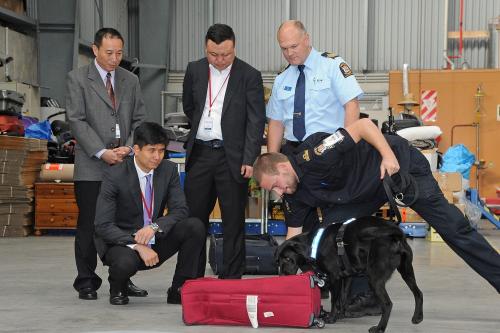
Detector Dog Rajax demonstrates his cash-sniffing abilities during training at a NZ Customs facility

Detector Dog Rajax demonstrates his cash-sniffing abilities during training at a NZ Customs facility

Customs Minister Nicky Wagner today welcomed a new partnership between New Zealand, Hong Kong and Chinese Customs to develop cash detector dog capabilities in the region.

Officials from Hong Kong Customs and the General Administration of China Customs’ Anti-Smuggling Bureau have been in Auckland to learn how drug dogs are trained to detect cash, so they can progress similar programmes in their own Customs administrations.

“It’s fantastic we’re able to assist Hong Kong and China to build this special capability, as detecting undeclared or hidden cash is an increasing priority for many Customs authorities as evidence shows following the money trail can lead to cracking serious organised crime such as drug smuggling.

“Having Hong Kong and China Customs detector dogs sniff both drugs and cash will disrupt drug smuggling and money laundering by transnational syndicates, with flow-on benefits for us in New Zealand,” Ms Wagner says

New Zealand shares formal agreements and a close customs-customs operational relationships with both Hong Kong and China, with the agencies working together to target the illicit drug trade through cross-border efforts.

Officials spent a week getting an overview from Customs’ Source: NZ Government (contributed by M Reddy)

U.S. and Kenya sign Customs Mutual Assistance Agreement

kenya-usa-flagThe U.S. signed a Customs Mutual Assistance Agreement (CMAA) with Kenya marking a significant milestone in collaboration on security and trade facilitation between the two countries. U.S. Customs and Border Protection (CBP) Deputy Commissioner (Acting) Kevin McAleenan signed the agreement on behalf of CBP and U.S. Immigration and Customs Enforcement (ICE) and Minister of the Treasury Henry Rotich signed the agreement on behalf of Kenya.

“Customs Mutual Assistance Agreements are valuable tools in the enforcement of our laws as they facilitate information sharing between international partners,” said Deputy Commissioner (Acting) Kevin McAleenan. “This agreement will expand our efforts to combat illicit cross-border activities and will enable us to continue our work to prevent, detect and investigate customs offenses.”

“Today’s signing represents the United States and Republic of Kenya’s joint commitment to elevate cooperation to safeguard our borders through the exchange of information and mutual assistance to combat customs law violations,” said ICE Principal Deputy Assistant Director Thomas S. Winkowski. “U.S. Immigration and Customs Enforcement, together with our partners at CBP, looks forward to future cooperative enforcement efforts with the Kenya Revenue Authority.”

The U.S. has now signed 71 CMAAs with other customs administrations across the world. CMAAs are bilateral agreements between countries and enforced by their respective customs administrations. They provide the legal framework for the exchange of information and evidence to assist countries in the enforcement of customs laws, including duty evasion, trafficking, proliferation, money laundering, and terrorism-related activities. CMAAs also serve as foundational documents for subsequent information sharing arrangements, including mutual recognition arrangements on authorized economic operator programs.

The U.S. – Kenya CMAA was signed at CBP headquarters as part of the U.S. – Africa Leadership Summit in Washington, D.C. The Summit included meetings between President Obama and 51 African heads of state. Source: GSN Magazine

Maputo Corridor “held ransom” by new RSA Immigration border crossing requirements

maputo_corridorSouth African authorities implemented legislation requiring all travellers from Mozambique to prove they hold enough funds to cover their visit, either by showing R3000 minimum or by providing a credit card with a bank statement, the Maputo Corridor Logistics Initiative (MCLI) said in a statement today. This led to considerable delays for freight, tourists, business and informal traders, which was worsened when a riot and blockade broke out at the Lebombo/Ressano Garcia border post.

Following the blockade the requirements were withdrawn, allowing traffic to pass through the border.

In their statement the MCLI declared they will directly contact the Minister of Home Affairs to settle the issue. “This requirement takes us back to the pre 2005 era where similar requirements were implemented”, the statement says, “and [it] is in direct conflict with the regional integration policy of SADC which expressly seeks to promote the ease of movement of people and goods through our borders.”

The statement calls the implementation for this legislation discriminatory towards informal traders who move through the border on a daily basis, and warns the long term impact on the region’s economy could be “dire”. Source: Club of Mozambique

South African Air Cargo Security Systems receive International thumbs up!

Cargo Screening [www.aircargonews.net]

Cargo Screening [www.aircargonews.net]

Both the European Union (EU) as well as the United States’ Transport Security Administration (TSA) have approved South African air cargo security systems.

Poppy Khoza , The South African Civil Aviation Authority (SACAA) director, says, “The two affirmations place South Africa in a unique position, making the country the only one on the continent with such recognition and agreements in place.”

“This essentially means that, following audits by the European Union and the United States, South Africa is acknowledged as one of the countries where the level of aviation security is regarded as robust and reliable. This will benefit air carriers operating between South Africa and the two regions.”

In the case of the US, the TSA carries out yearly assessments of South Africa’s aviation security regime with the last audit conducted in June 2014.

The results of the audit indicate that South Africa did not attract any findings or observation and in some instances, the standards were found to be higher than in previous years.

“The TSA audit comes after almost a year since the SACAA and the TSA concluded a recognition agreement on air cargo security programmes, thus acknowledging that South African systems are on par with the stringent requirements of the USA.”

“This agreement also enhances air cargo security measures and initiatives between the two countries. Most significantly, the agreement enables quicker facilitation of goods between the two countries, and helps eradicate duplicative or redundant measures while still ensuring the highest levels of security that both the TSA and the SACAA require.”

The EU recognition means that South Africa has been included in the list of third countries where air carriers are exempted from the application of the ACC3 (Air cargo and mail carrier operation into the EU from a third country airport) regime of which the requirements are viewed as stringent to operators from countries outside the EU.

In terms of the ACC3 process, carriers wishing to carry cargo into the EU have to request an ACC3 status, and this process requires rigorous screening of air cargo or the existence of a properly functioning and secure air cargo system.

As from July this year, cargo operators flying to the EU destinations must therefore either hold a valid EU validation report, proving that they have adequate security measures in place, or in the absence of such assurance, cargo operators will have to use the services of EU validators to pronounce their cargo as secured.

“The services of EU validators are not free and come at a cost to air carriers, but it does acknowledge that security measures applied in South Africa and the EU are equivalent.”

“This recognition by the EU is a significant milestone for the country and South African carriers, as this means that they can now benefit from an exemption from the ACC3 regime, provided that the level of risk remains similarly low, commensurate with a robust oversight system being in place.”

Source: SAnews.gov.za

Which country has the world’s longest railway network?

The United States has the world’s longest railway network, followed by China and Russia. Railway-technology.com profiles the 10 largest railway networks in the world based on total operating length. For full details of this analysis visit – www.rail-technology.com

‘Around the World in Freighty Ways’

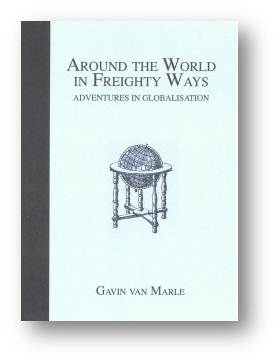
I found the following book review on AllAboutShipping.co.uk and I’m sure the featured book will appeal to many of you associated with shipping, containers and trade in general.Around the World in Freighty Ways

A unique first-hand account of the inner workings of globalisation from the heady days of manic growth in the noughties, Around the World in Freighty Ways is a personal travelogue with a difference. Covering over 50,000 miles with not a flight in sight, Gavin van Marle’s anthology puts into perspective the unsung heroes of world trade, the simple shipping container and the freight people who move them throughout the world.

The urge to travel is irresistible for those who have it in their genes. For Gavin and his equally restless wife Alex, what better way to slake their thirst to explore the wide horizons than to take a three-year honeymoon around the globe. If more justification for such a noble quest was required, they would report on the wondrous and rapid developments in freight transport that were occurring between 2002 and 2005.

The result is this compilation of articles, columns and thoughtful opinions entitled Around the World in Freighty Ways, which is published today by Right River Press Ltd., of London.

Both Gavin and Alex are professional journalists and have extensive experience in the freight industry. Their travels brought much insight into the varied and often ingenious ways the freight industry coped with, and indeed facilitated, the remarkable expansion of trade and economic growth between 2002 and 2005. As Gavin comments, “The humble container has done for globalisation what Alexander Graham Bell did for the internet – made it possible.”

The couple’s adventures however encompass not just freight experiences but also a variety of tales and a breadth of encounters that enable an astute, insightful and sometimes irreverent view on bureaucratic incompetence and political ineptitude. Many are laced with passionate descriptions of social inequality and gallant struggles for survival.

However, it is the similarity of basic human characteristics that shine through time and again as the episodes unfurl. As Gavin points out, it may in fact be the good fortune of people whose business it is to move freight around the world to recognise that, “Regardless of nationality, the vast majority of people share the same ambitions, hopes and fears, and that for most, joy and contentment comes simply from being nice to each other.”

WTO Trade Facilitation Agreement – Dead!

The World Trade Organisation headquarters in Geneva [AFP Photo]

The World Trade Organisation headquarters in Geneva [AFP Photo]

The World Trade Organization got a surprise setback on Thursday when India, pushing for concessions on agricultural stockpiling, vetoed plans for universal customs rules. The deal could have added $1 trillion and 21 million jobs to the world economy.

The July 31 deadline on the first proposal for major global economic reform in two decades – a series of customs procedures known as “trade facilitation” – left negotiators empty-handed after India refused to sign up to it.

India, with its large number of poor and new nationalist government, had demanded the exclusive right to subsidize and stockpile grains which is not permitted by WTO rules.

The WTO, experiencing what may be its worst setback in its 19-year history, reluctantly admitted defeat.

We have not been able to find a solution that would allow us to bridge that gap,” WTO Director-General Roberto Azevedo told negotiators in Geneva just hours before the deadline was set to lapse.

Some analysts are of the opinion the failure represents the beginning of a new era of trade deals, which will depend more on individual economies forging their own initiatives, as opposed to attempting to force global reform.

Today’s developments suggest that there is little hope for truly global trade talks to take place,” Jake Colvin at the National Foreign Trade Council, a leading US business group, told Reuters.

The vast majority of countries who understand the importance of modernizing trade rules and keeping their promises will have to pick up the pieces and figure out how to move forward.

Whether or not other countries will pick up the dropped ball and try to move forward despite the loss is not yet clear, but the present mood is noticeably downbeat.

We’re obviously sad and disappointed that a very small handful of countries were unwilling to keep their commitments from the December conference in Bali, and we agree with the Director-General that action has put this institution on very uncertain new ground,” US Ambassador to the WTO Michael Punke told reporters.

Meanwhile, there is speculation that some countries may decide to go ahead with the plan without India’s support.

However, Azevedo said that while the world’s largest economies had choices on how to respond to the failed talks, the poorest economies would suffer the brunt of the fallout.

If the system fails to function properly then the smallest nations will be the biggest losers,” he said. “It would be a tragic outcome for those economies – and therefore a tragic outcome for us all.

Source: Russia Today (contributed by V Singh)

Related articles

Bill of Material Analysis Tool – and its for Free!

Picture1Social media certainly provides a useful platform to share ones knowledge experience and creativity. I spotted this one on a LinkedIn group which should certainly be useful for US shippers and trade practitioners. The designer Jason Ge, Senior .NET Consultant at Mercer, has created a web-based tool for analyzing the origin status of bills of materials. It contains more than 6000 rules of origin of these US-based free trade agreements:

North American Free Trade Agreement
U.S. – Chile Free Trade Agreement
U.S. – Australia Free Trade Agreement
U.S. – Central America / Dominican Republic Free Trade Agreement
U.S. – Colombia Free Trade Agreement
U.S. – Korea Free Trade Agreement
U.S. – Panama Free Trade Agreement
U.S. – Peru Free Trade Agreement
U.S. – Singapore Free Trade Agreement

If you want to quickly check your product’s origin status, this would be a good tool to use. Try it out for free at – https://www.originreview.com

Port Expansion Africa 2014 – increasing capacity of East African Ports

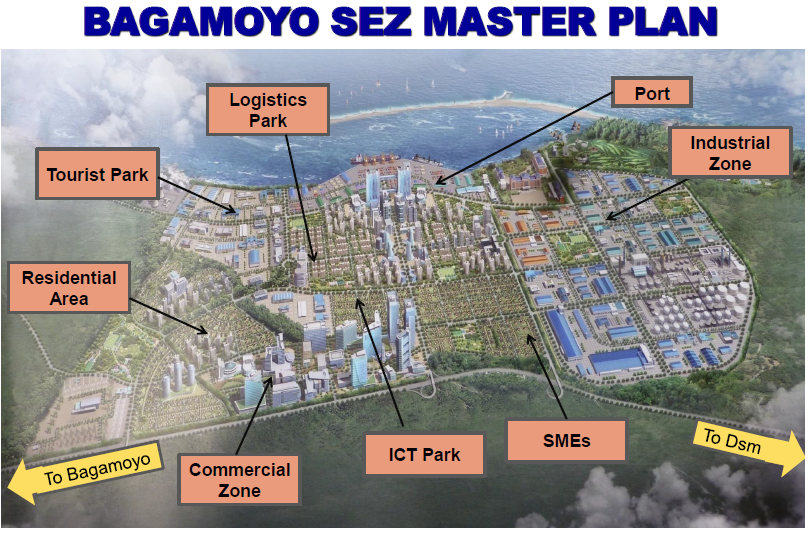
Artist's impression of the Bagamoyo SEZ Masterplan - Source: http://www.ansaf.or.tz/Investment%20...0(%20EPZA).pdf

Artist’s impression of the Bagamoyo Port and SEZ Masterplan – Source: http://www.ansaf.or.tz/Investment%20…0(%20EPZA).pdf

Growing volumes of cargo at all African ports has forced port authorities and operators to increase capacity, analyse operations to increase efficiency, and employ measures to allow bigger ships into their ports. The East Africa Region has various projects underway. The new Lamu Port in Kenya costing $5.3 billion (Reuters.com) and the Bagamoyo port in Tanzania costing $11 billion (The East African) are examples of countries preparing for the ever-growing port capacity needs. When completed in 2017, Bagamoyo will become the biggest container terminal in Africa: with a planned cargo of 20 million TEU a year; it will be 20 times larger than the port at Dar-es- Salaam and likely to rank in the top 10 terminals in the world in terms of volume capacity.

Reconfiguring port layout, and increasing berths at existing ports and conducting dredging more often, have been other strategies that numerous ports have employed to meet this need. Port of Maputo will be undertaking dredging to increase its channel depth from 11 meters to 14 meters this year, to allow larger vessels entry (Dredgingtoday.com). Tanzania will invest $523 million for new berths 13 and 14 to more than double its container capacity at Dar es Salaam Port (Tradeinvestafrica.com).

Source: portexpansioneastafrica.com

Related articles

Smoked! Tobacco tax law cost U.S. billions in revenue

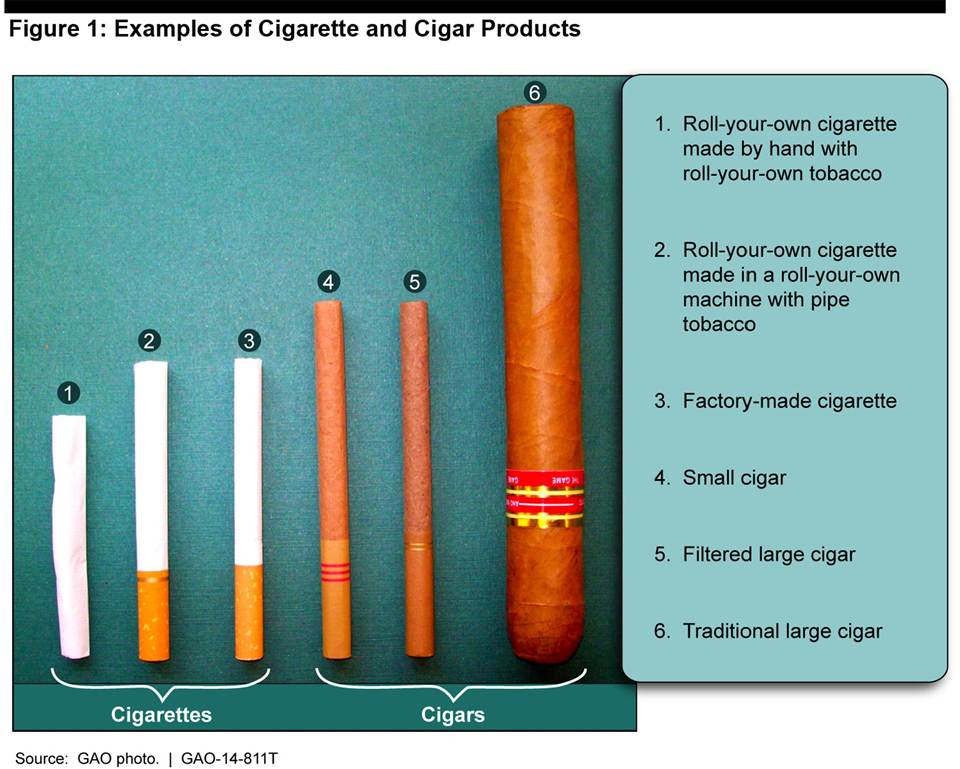
Examples of cigarette and cigar products - Photo: GAO

Examples of cigarette and cigar products – Photo: GAO

A 2009 law that raised federal taxes to discourage smoking cost the U.S. government billions of dollars in lost revenue as manufacturers relabeled products and consumers shifted to cheaper pipe tobacco and large cigars, the U.S. Government Accountability Office said in a report released on Tuesday.

The GAO estimated $2.6 billion to $3.7 billion in lost revenue from April 2009 to February 2014 as manufacturers exploited loopholes in the Children’s Health Insurance Program Reauthorization Act which raised taxes for smoking-tobacco products.

“Each of the three tobacco manufacturers that agreed to speak with us explained that their companies switched from selling higher-taxed roll-your-own tobacco to lower-taxed pipe tobacco to stay competitive,” the congressional watchdog agency said in the report, which was the focus of a Senate hearing on Tuesday.

At the hearing, Liggett Vector Brands LLC Chief Executive Ronald Bernstein urged lawmakers to take action against abuses by manufacturers.

He held up two seemingly identical, but differently labeled non-Liggett bags of tobacco. Showing a third sample, he pointed out that a label saying “all-natural pipe tobacco” covered up a statement that the bag “makes approximately 500 cigarettes.”

“Everyone knows this is cigarette tobacco,” Bernstein said. “The manufacturer knows. The consumer knows. And I know. I know because I tried smoking it in a pipe and it was not a pleasant experience.”

Some manufacturers also add a few ounces of tobacco to small cigars so they qualify as the larger product. Others even mix in clay or kitty litter to increase the weight, Michael Tynan, policy officer at the Oregon Public Health Division, told the hearing.

The GAO said the tobacco market shifted accordingly. Yearly sales of pipe tobacco rose more than eight-fold from fiscal 2008 to 2013, while sales of roll-your-own tobacco declined almost six-fold. Over the same period, large cigar sales doubled, while small cigar sales dropped to just 700 million from 5.7 billion.

Senate Finance Committee Chairman Ron Wyden, who convened the hearing, criticized the Treasury Department’s Alcohol and Tobacco Tax and Trade Bureau (TTB), which is responsible for collecting tobacco taxes and cracking down on evasion, for “footdragging.”

In recent years, the agency has pushed to apply “advanced investigative techniques to uncover illicit trade and fraudulent activity,” including deploying about 125 auditors and investigators, the TTB wrote in its Senate testimony.

Responding to a push to better differentiate between roll-your-own and pipe tobacco, the agency published an “advanced notice of proposed rule making” in 2010 and 2011. But no rule had yet been issued, the GAO wrote.

In 2015, the TTB will issue a proposed regulation cracking down on the illegal activities, TTB Administrator John Manfreda said on Tuesday. Source: nbcnews (contributed by Z Taylor)

US extends Air Cargo Screening Scheme

CBP_0US Customs and Border Protection (CBP) has extended its Air Cargo Advance Screening (ACAS) pilot programme for a further year following representations from freight forwarding representatives, and has reopened the application period for new participants. The pilot was set to expire this month but will now be extended until 26 July 2015, and CBP is also accepting applications for new participants until 26 September 2014.

The programme, which analyses advance data on inbound air shipments to the US to assess risk, is currently in pilot phase, but US Customs and Border Protection (CBP) has signalled that it intends to expand it to apply to all inbound air cargo via a “rulemaking”. The extensions follow a letter sent in June to CBP and the US Transportation Security Administration (TSA) from a coalition of associations representing air freight forwarding companies, calling on the US government to solicit input from small and medium-sized forwarders before expanding the ACAS programme.

The Airforwarders Association (AfA), the National Customs Brokers and Forwarders Association of America (NCBFAA), The International Air Cargo Association (TIACA), and the Express Delivery and Logistics Association (XLA) jointly sent letters to CBP and the TSA noting their support of the concept of the ACAS programme’s risk-based analysis at the shipment level, but expressing concerns about certain issues. In addition to detailing issues regarding potential negative impacts on small and medium-sized air forwarding businesses, the letters included requests to meet with both agencies and representatives from air carriers in June to discuss the concerns and try to resolve them.

TIACA said it was strongly encouraging airlines and freight forwarders to apply for and engage in the pilot. “Only through wide participation, which can fully test the various IT connectivity issues for Advance Filing, as well as understanding the operational impact for the future, will we be able to ensure an effective programme when it becomes mandatory,” TIACA said.

It noted that this extension was for a full year, whereas CBP had only extended the pilot in six-month intervals in the past. TIACA said that following the pilot, CBP plans to issue a Notice of Proposed Rulemaking (NPRM), “and the current estimate is that this may occur in Q3/2015, with the likelihood of possibly Q4/2015 or Q1/2016.”

It said the issuance of an NPRM is followed by a mandatory comment period from industry, after which CBP reviews all of the comments. CBP must then respond to those comments when the final rule is issued.

“Thus, ACAS may not become a mandatory CBP data transmission programme until sometime in late 2016,” TIACA noted. “In comparison, the EU PRECISE programme is currently targeted for the first half of 2016.”  Source: Lloyds Loading List

Special Economic Zones roll-out

SEZ-economist.comThe roll-out of special economic zones is under way, with the first two in KwaZulu-Natal and the Free State to be proclaimed shortly, Trade and Industry Minister Rob Davies said yesterday.

The Dube trade port and the Tshiame industrial development zone in Harrismith would both be transformed into special economic zones as soon as the regulatory framework had been established, which the minister said would take place within the next 100 days.

The regulations and guidelines would be finalised. The special economics zones board would be established, as would a one-stop-shop for fast-tracked support to investors.

The Dube trade port industrial development zone will specialise in high-value, niche agricultural and horticultural products, as well as manufacturing and value-addition for the automotive, electronics and clothing industries.

The Tshiame industrial development zone at Maluti-a-Phofung near Harrismith in the Free State will focus on automotive, clothing and agro-processing activities.

Mr Davies said the department was evaluating the feasibility of special economic zones focusing on the beneficiation and value-addition of platinum in Limpopo and North West. These zones would be used to encourage investors in beneficiation to locate their plants close to the mineral deposits.

“What we know is that significant opportunities to partner with international producers of fuel cells are available, and that these partnerships have the potential for SA to become an established hub for the production of fuel-cell components,” Mr Davies said.

“This would be a very significant development because fuel cells are new technology used for back-up power generation in telecommunication masts, base-load power generation in rural areas, and fuelcell passenger vehicles.

“This technology is fast becoming the subject of intense international competition for investment and is also a technology well suited to SA’s comparative advantage in platinum mineral resources.”

The department was assessing the feasibility of a solar industrial development zone in Upington in the Northern Cape.

“We have no doubt the support available through the special economic zones programme will lead to increased investment by the private sector and contribute to building new economic infrastructure in provinces,” the minister said.

The Saldanha Bay industrial development zone was well positioned to become a hub for oil, gas and marine repair, engineering and logistics. “An application to operate as a Customs Control Area to service the West and East African offshore oil and gas industry is being finalised. To date 18 companies, nine local and nine foreign, have signed nonbinding expressions of interest.”

The Coega, Richards Bay and East London industrial development zones had together generated R3.4bn in investments and created more than 67,000 direct and indirect jobs. A number of new investments worth several billion rand were also under negotiation. Source: SAnews.gov.za

New drug analyser to save New Zealand Customs time and money

New Zealand Customs Minister Nicky Wagner says the introduction of a new state of the art drug analyser will free up hundreds of hours a year for more enforcement work at the border.

The handheld device, a Thermo Scientific FirstDefender RM, shoots a laser beam into an unknown substance, accurately identifying it in a matter of seconds.  Customs purchased it with money recovered under the Proceeds of Crime (Recovery) Act.

“The device will drastically reduce the number of substances that have to be sent away for expensive testing, with savings expected to pay for it in less than six months.

“Its effectiveness will allow Customs officers to spend at least 520 more hours each year on frontline border work because they can make decisions quickly on what investigative action, if any, is required.

In addition to the drug analyser, Customs is building a laboratory in Auckland to test unidentified chemical samples.

“The enhanced capability will help to achieve outcomes sought in the government’s Methamphetamine Action Plan and allow Customs to identify an increasing number of new psychoactive substances stopped at the border,” Ms Wagner says.

More than 11,000 substances can be identified almost instantly by the FirstDefender analyser.  It can penetrate through certain types of packaging, so opening a packet or bottle may not be necessary, which also means a safer working environment for officers. Source: New Zealand Customs (contributed by Mogen Reddy)

Durban dig-out port plan likely to be delayed

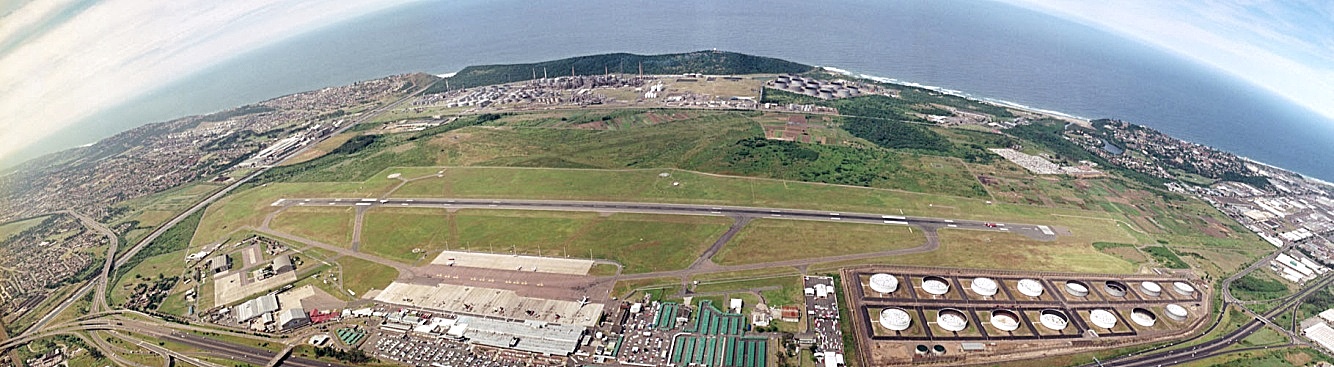
Old Durban airport - site for new Dig Out Port (Picture credit: ACSA)

Old Durban airport – site for new Dig Out Port (Picture credit: ACSA)

The first phase of Durban’s dig-out port, which was expected to generate hundreds of jobs and turn the city into the shipping hub of Africa, would not be ready by 2020 as planned, and the current harbour might have to be expanded to provide a short-term solution. This emerged at a KZN Freight Task Group meeting recently where Transnet dig-out port programme director Marc Descoins admitted that a new completion date was being investigated.

‘The actual start date of the new port is uncertain as we are still in the early design phase,’ Descoins said last night. Technical issues, such as the requirements for the construction of a new single buoy mooring to replace the existing one, were affecting timelines. Other factors affecting the development were being re-examined, but Descoins did not give further reasons for the delay.

Transnet was still tracking demand forecasts to ensure that capacity creation was aligned to demand, he said. Nevertheless it had other plans for port expansion to ensure capacity met this demand. If an alternative could be found to expand the capacity of the port, the dig-out port project at the old airport site could be set back by a few years, he said.

However, a previously discussed option – the expansion of the current port into the Bayhead area – was ruled out by Descoins, as complex problems involved in developing the area as an additional container terminal would take at least 15 years to resolve. Engineering and technical businesses in Bayhead did not appear shocked at the news yesterday, saying they knew expansion in the area would not happen.

One of the most seriously considered – and quickest – options would be for the container terminal on Pier 1 to be expanded in the direction of Salisbury Island. This would also provide Durban with increased container capacity. A decision on this could be made soon, but if this option was decided on, the dig-out port might be even further delayed as Transnet would not develop both projects and create unnecessary capacity in the short term.

However, the dig-out port project would not be cancelled, and preparations at the old airport site would continue, Descoins said. Transnet had warned that without the dig-out port Durban would not be able to meet medium- and long-term shipping capacity demand. The project would increase the volume of container trade at the Port of Durban from the current 2.69 million twenty-foot equivalent units (TEUs) to between 9 million and 12 million TEUs over 30 years.

Durban was also the first choice for a port upgrade because of its good infrastructure, although the road and rail systems need to be considerably upgraded. Completion of the feasibility study was scheduled for the end of 2015 followed by a four-year construction phase. The first ships were expected to come into the port in 2020. For this to have been achieved groundwork would have had to begin by the end of 2016. Transnet bought the old airport land in 2012 for R1.85 billion. Building the port was expected to cost R75bn to R100bn over the next 30 years.

Desmond D’Sa, chairman of the South Durban Community Environmental Alliance, was pleased with the delay, but said the project should be abandoned.

‘Why do we even need another port? It is only going to become another white elephant like the Coega Industrial Development Zone in the Eastern Cape.

‘This is all about people with big pockets, and the extra time will only allow corruption.’

Durban Chamber of Commerce and Industry chief executive Andrew Layman said imports and exports from the harbour were not accelerating as much as expected.

‘This is reflected in the international trading market. South Africa is not the flavour of the month.’

There had always been plans for expansion of the current harbour, he said.

‘This is because ships are bigger these days – it needs to be deepened and widened. So I don’t think it is a case of one or the other.

‘The need for the dig-out port is not as imminent as originally thought, and money is probably not as readily available either.’

Layman said it was not ‘a train smash’ as jobs had not been created yet, but it was unfortunate that job creation would be delayed.

‘It is understandable that it would be further delayed in the current climate.

‘It would be pre-emptive to start construction as the system still needs a lot of work, such as our tariffs, which are higher than most ports around the world, and our service delivery.’ Source: The Mercury

Related articles