TFA has increased trade by over US$ 230 billion

Picture by Tyler Casey

he WTO Trade Facilitation Agreement (TFA) led to a US$ 231 billion increase in trade, particularly in agriculture, according to estimates for the first couple of years of its implementation presented to the Committee on Trade Facilitation on 22 March. Developing members and least-developed country (LDC) members that have made commitments under the landmark agreement posted the most gains, the estimates find.

Based on estimates for the years 2017-2019, WTO economists attribute to the TFA an average 5% increase in global agricultural trade, 1.5% in manufacturing trade and 1.17% in total trade. These increases are largely driven by the trade growth in LDCs, where agricultural exports rose by 17%, manufacturing exports by 3.1%, and total exports by 2.4% under the TFA. The estimates further point to a 16-22% increase in agricultural trade between developing members that have made TFA commitments. These estimates are conservative, as large gains have already been realized, particularly in manufacturing, in anticipation of the Agreement’s entry into force and by developed members making full commitments since the start of the TFA’s entry into force, as noted in previous studies.

In 2015, the WTO forecast that complete implementation of the TFA could lead to an increase of up to 2.73% in global trade flows by 2030. The latest estimates note that as the benefits of the Agreement continue to be realized, the trade and welfare gains are likely to expand. Stronger increases for manufacturing trade may still be detected after more years of TFA implementation for developing members as well. The latest estimates are part of the Secretariat’s ongoing work tracking the impact of the TFA. 

The TFA, which entered into force on 22 February 2017, contains provisions for expediting the movement, release and clearance of goods, including goods in transit. It also sets out measures for effective cooperation between customs and other appropriate authorities on trade facilitation and customs compliance issues. It further contains provisions for technical assistance and capacity building in this area. 

The TFA is the first WTO agreement in which developing members and LDC members can determine their own implementation schedules and seek to acquire implementation capacity through the provision of related assistance and support. Developed members were required to implement all provisions of the TFA from its entry into force. As of 22 March 2023, notifications submitted by WTO members indicate that they have committed to implement 76.1% of TFA obligations.

The estimates were presented at the meeting of the Committee on Trade Facilitation upon WTO members’ request, in line with recommendations from the first review of the TFA in 2021. The next TFA review is scheduled for 2025. 

At the meeting, the Committee also considered notifications from members regarding TFA measures, presentations of national experiences and suggestions to enhance trade facilitation implementation, and specific concerns on customs procedures. The next committee meetings are scheduled for 15-16 June and 3-5 October.

Source: World Trade Organisation
Visualizing the World’s Flower Bouquet Export Market

For many, flower bouquets are the go-to gift choice when congratulating a colleague, visiting an ailing relative, or simply showing love and kindness to partners and friends.

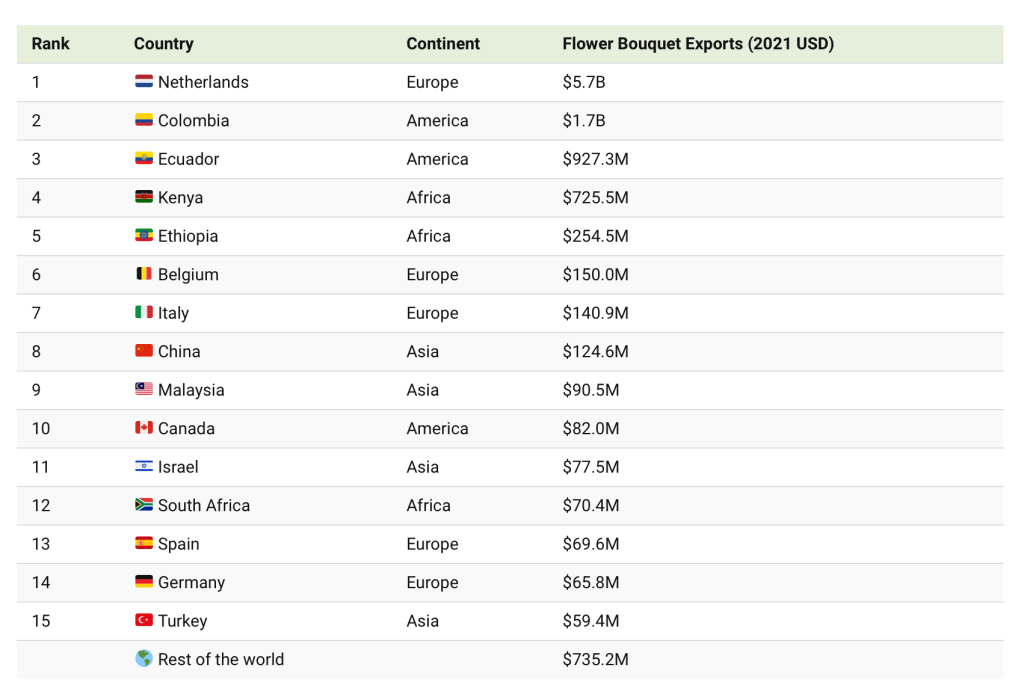
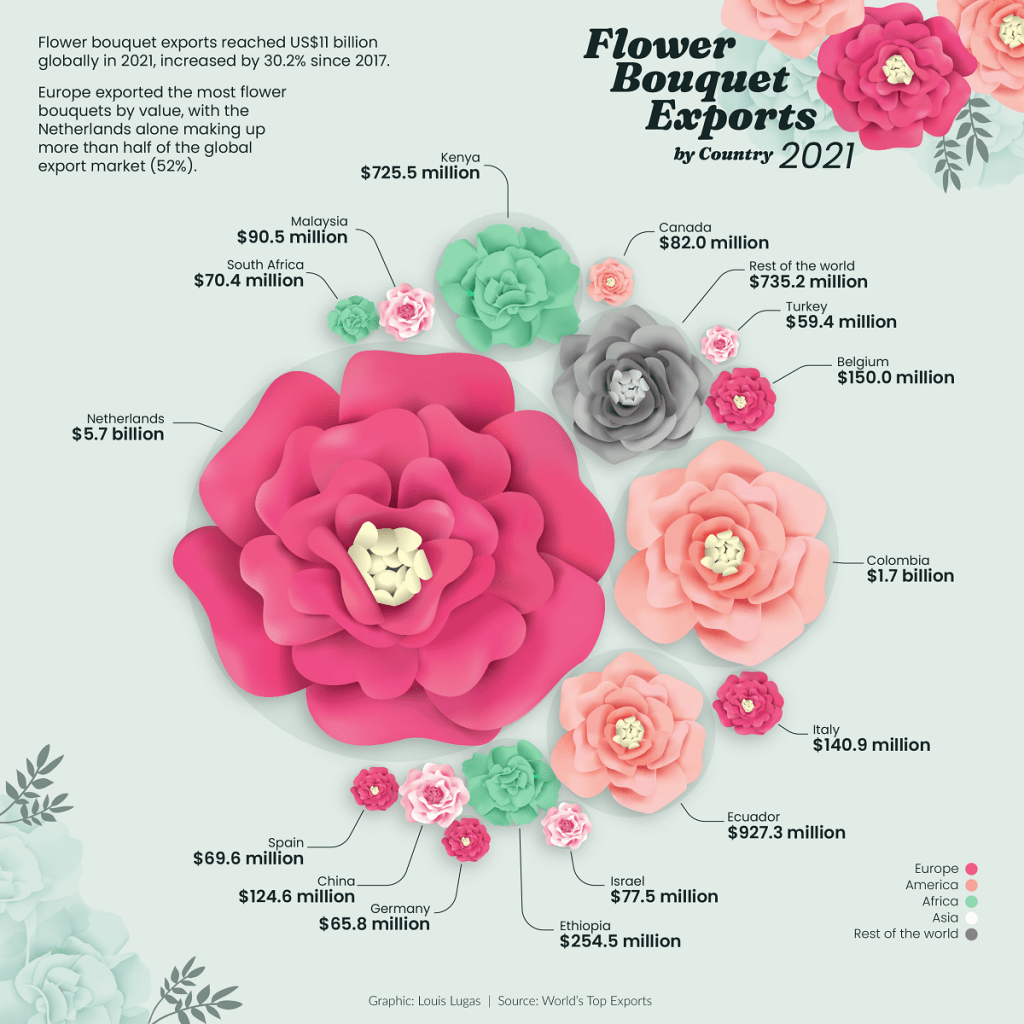
And the global popularity of these carefully-arranged and vividly-colored bundles has led to the creation of a billion-dollar flower bouquet market. And demand for beautiful bouquets has kept growing, with global flower bouquet exports in 2021 reaching $11 billion—which is a 30.2% rise since 2017.

Louis Lugas Wicaksono uses data from World’s Top Exports to highlight the spread of this industry. In this image, he shows the flower bouquet exports across different countries in 2021.

Far at the top of the list and best known for their tulips, the Netherlands dominated the flower bouquet export industry in 2021. 

Source: VisualCapitalist.com

US CBP Celebrates 20th Anniversary

U.S. Customs and Border Protection celebrates its 20th anniversary Friday, March 17, at 11 a.m. at a ceremony in the Ronald Reagan Building in Washington, D.C.

Established March 1, 2003, as part of the U.S. Department of Homeland Security, CBP united several legacy agencies, including the U.S. Border Patrol and the U.S. Customs Service. With more than 60,000 employees, CBP is one of the world’s largest law enforcement organizations. 

It is charged with protecting America’s borders and economic security by enforcing immigration and customs laws, interdicting narcotics, and facilitating legitimate travel and trade.

The ceremony will include remarks from Acting Commissioner Troy A. Miller, a video presentation, and a roundtable discussion which will include former Commissioners Robert C. Bonner, W. Ralph Basham, Alan D. Bersin, R. Gil Kerlikowske, and Kevin K. McAleenan.

Over the next year, CBP’s 20th anniversary will be highlighted with a series of events and workforce award ceremonies.

World’s largest boxship delivered to MSC

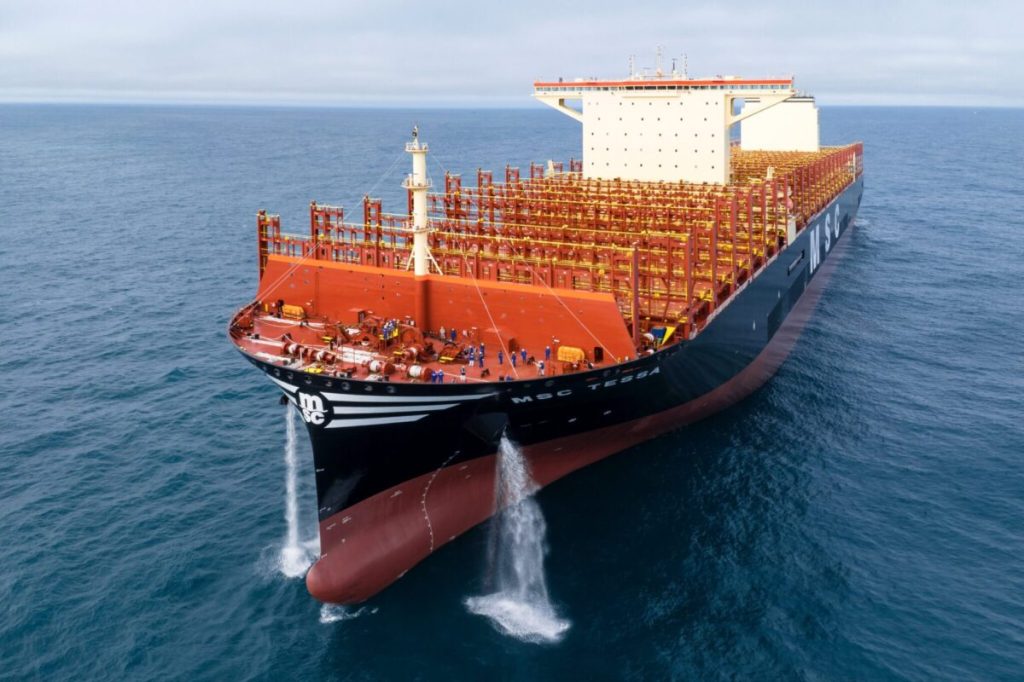
Chinese shipbuilder Hudong-Zhonghua Shipbuilding has delivered the 24,116 TEU MSC Tessa, the world’s largest containership.

The delivery takes place as part of a four-vessel deal with Mediterranean Shipping Company (MSC), worth around $600 million.

MSC Tessa is one of only a handful of ships to surpass the 24,000 TEU mark and is classed by DNV classification society.

According to the shipyard, vessels in the same class measure 1,312 feet in length, making them almost 200 feet longer than a typical aircraft carrier, with a beam of nearly 202 feet.

While the loading configuration varies slightly between different shipyards, all the vessels can stack containers up to 25 layers high.

The MSC Tessa uses air lubrication, reducing its energy consumption and carbon emissions by between 3 per cent and 4 per cent. It is also fitted with a hybrid scrubber, a small bulbous bow, large diameter propellers and energy-saving ducts.

The giant vessel will be calling at Rotterdam, Antwerp, and Felixstowe in Northern Europe, with a call at Tanger during the return trip, before proceeding to Singapore.

Hudong-Zhonghua Shipbuilding Group reported that the second ship on order from the series has completed sea trials and that the third and fourth containerships are also under construction.

The Swiss-based container shipping giant has the largest order book in the industry with around 131 containerships on order, according to Alphaliner.

The ships are scheduled for delivery in 2023, with orders spread between Chinese and South Korean shipbuilding majors.

Upon completion, the 14 new Ultra Large Container Vessels (ULCVs) ordered by MSC will constitute one-third of the company’s current fleet, with a combined capacity of 1.7 million TEU.

Although the current ships run on conventional fuel, MSC is venturing into the use of more sustainable options, such as biofuels and LNG dual-fuel vessels. The company has already conducted tests with biofuels and plans to increase its usage in the near future.

Additionally, MSC has recently ordered its first ammonia-ready designs, which are being built in China.

Source: PortTechnology, article by Marghertia Bruno, dated 10 March 2023

Guidance to Customs and trade practitioners on how to deal with the complex, demanding and risky field of Customs knowledge

The following article featured in the 1st Issue of the WCO Newsletter 2023. It is authored by Anthony Buckley, Chair of Customs Knowledge Institute. The article argues that a formal plan for building and managing Customs knowledge is necessary for a Customs brokerage to operate effectively. The components of such a plan are discussed, as well as the determinants that may affect the choices made. The discussion refers also to general issues of Customs knowledge acquisition, management and updating. The considerations apply to all Customs practitioners and trading businesses.

The number of possible games of chess is greater than the number of atoms in the observable universe according to Claude Shannon. In Customs, there are many more variables than the 32 pieces on a chessboard. In any transaction, we have the interested parties, the type of transaction, the goods involved, the route being followed, the intended procedure, the non-tariff controls, the rates of duty and the liability for payment, each of them with many possible variations, combinations, and types of supporting evidence. On that basis, it seems that every single movement of goods across a Customs border is unique, at least in some minor way. How does a Customs broker meet the expectation of a client, who expects the broker to be familiar with every possible variation?

As if the challenge of complexity is not enough, the broker is also expected to maintain records of all transactions and retrieve them in various formats as required by customers and Customs administrations.

In practice, of course, we find ways of doing things that are theoretically impossible. Most Customs movements fall into certain categories and are handled accordingly, by operators familiar with one or a few of the categories. High value complex transactions are handled by teams with a mix of expertise, at considerable expense. Low value consignments use simplified procedures and reduced checking. Significantly, evidence[1] suggests that many transactions proceed despite errors, sometimes of significant effect. Thus, when considering “Customs knowledge”, we must distinguish between what is necessary for all, and what is essential only for certain functions.

All economic operators must have a general understanding of what Customs is, how it controls trade, what its legal structure is, what rights, entitlements and obligations attach to the operator and to the Customs authorities, the importance of compliance with legal requirements, and the costs of non-compliance. For many who buy and sell internationally, their knowledge does not proceed far beyond this general understanding, except perhaps for some detail concerning the particular goods they trade.

For a Customs broker, this level of knowledge is only the beginning.

Continue reading →

WCO News – March 2023

The theme for this edition is “Managing Knowledge“. Of course there is much more for Customs users and trade practitioners in this publication.

View the magazine at this link

Download a PDF copy at this link

Source: WCO

WCO RKC Committee kicks off discussion on the draft revisions to the RKC Guidelines

The 31st Revised Kyoto Convention Management Committee (RKC/MC) Meeting was held from 6 to 8 March at WCO Headquarters in a hybrid format. The Committee was attended by representatives from Contracting Parties, Member administrations, academia and partner organizations. 

The meeting was launched with opening remarks from Pranab Kumar Das, Director of the Compliance and Facilitation Directorate. The Director welcomed participants and briefed them on the agenda of the meeting.

The meeting began with the election of a Chairperson and a Vice Chairperson to preside over the meeting. Maria Vournou of Greece and Yves Patrick Tchami of Cameroon were re-elected as the Chairperson and Vice Chairperson respectively with overwhelming support from delegates.

During the meeting, the RKC/MC focused intensively on the draft updated Guidelines to the General Annex (GA) of the Convention. Delegates discussed the following concepts: data issues, electronic declarations, advance goods declaration, perishable goods, advance cargo information, Authorized Economic Operators, electronic payment of duties, Customs control, Post Clearance Audit and publication and availability of information. Review and revision of the Guidelines is critical for ensuring that they continue to guide Contracting Parties in the implementation of the RKC and in facilitating international trade and promoting compliance with Customs procedures. The RKC/MC will continue reviewing the Guidelines at its next meeting.

The RKC/MC also granted an extension request from Brazil Customs for the implementation of certain standards within Chapter 10, Appeals in Customs Matters of the General Annex. 

The meeting discussed the treatment of goods admitted for inward processing, as well as the exit/termination treatment of the compensating goods, at the request from Guatemala Customs. Delegates shared their national practices to help clarify questions raised by Guatemala.

In addition, the meeting reviewed and endorsed the draft RKC/MC Work Programme, which outlines key activities and initiatives that the Committee should fulfill until 2025. 

The next RKC/MC Meeting will take place in the second half of 2023. For further information, please contact us at RKCReview@wcoomd.org.

Digital FIATA Bill of Lading, to be launched for SAAFF members and exporters in South Africa

The introduction of the new generation digital FIATA Bill of Lading (FBL) has been confirmed and will be launched by the South African Association of Freight Forwarders (SAAFF) as a new standard to members and exporters for use across the Supply Chain in South Africa.
 
This development will positively impact supply chain efficiencies and South Africa’s competitive position as a provider of world class logistics services, says Dr Juanita Maree, Chief Executive Officer of SAAFF.
 
South Africa hosted the Annual Rotational Presidency meeting of the International Federation of Freight Forwarders (FIATA) in Cape Town earlier this month. The FIATA delegation, led by President Ivan Petrov had the opportunity to delve deeper into the South African supply chain logistics sector during their visit, in consultation with industry leaders. Terry Gale, representing Exporters Western Cape and the Fresh Produce Exporters Forum (FPEF) welcomed the imminent introduction of the digital FBL.
 
Industry recognises the digital FBL and its proven tracking service as a strong solution that will add capacity and increase security of cargo movement through the entire logistics process – a valuable development in a challenging trading environment.
 
In global terms, the Bill of Lading is recognised as the most important document used in the transportation of goods, FIATA’s Multimodal Transport Bill of Lading is seen as the benchmark; long-standing but in constant evolution and acknowledged by the International Chamber of Commerce (ICC) as a document fully aligned to the UNCTAD/ICC Rules for Multimodal Transport.
 
This new generation secured digital FBL and tracking solution allows FIATA to protect against fraudulent manipulation and to promote a digital ecosystem of trust for transport and trade documents. It supports transparency and security across the supply chain and will help member companies accelerate their digitalisation efforts. The digital FBL data model is fully aligned with the UN/CEFACT MMT Reference data model to ensure its interoperability with other standards and all trade parties.
 
Verifiable at any time by legitimate stakeholders interacting with the document, which dramatically reduces fraud risk, the digital FBL can be issued in digital and paper format and cannot be tampered with, with each document also being recorded on an immutable ledger. Stakeholders will be able to access the document audit trail through a unique QR code or on FIATA’s verification portal to certify the validity of the document, the integrity of its issuer and the integrity of its content.

The tracking solution used by FIATA for the digital FBL is already implemented and used by banks, corporates, warehouses, and inspection companies to protect other documents. Software providers worldwide make the secured digital FBL accessible in 17 territories so far through FIATA Association members. Forwarders can implement the digital FBL solution on their own in-house system or use a free digital FBL generator tool.

R1.3bn worth of cocaine seized at Durban harbour in dawn raid

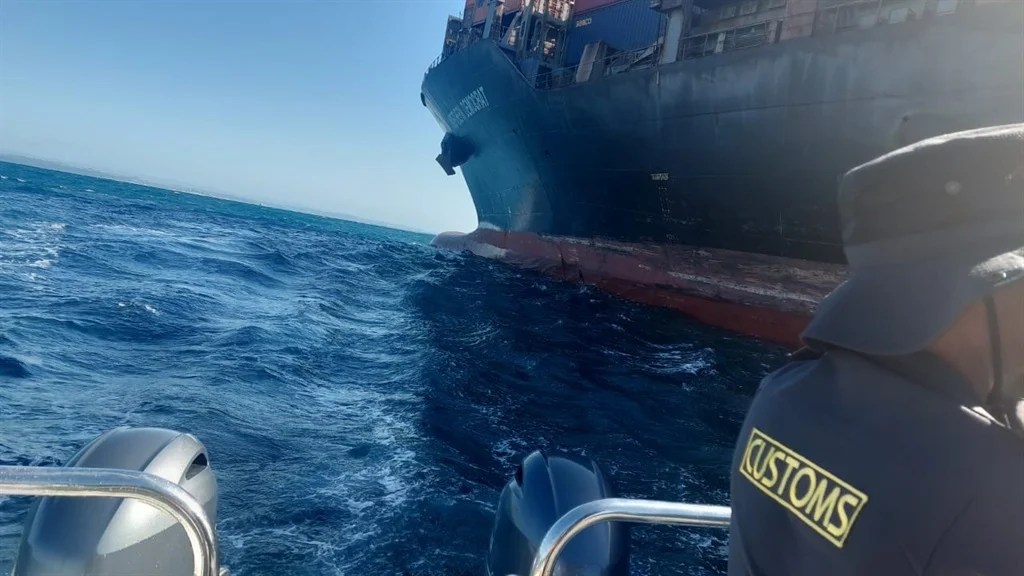
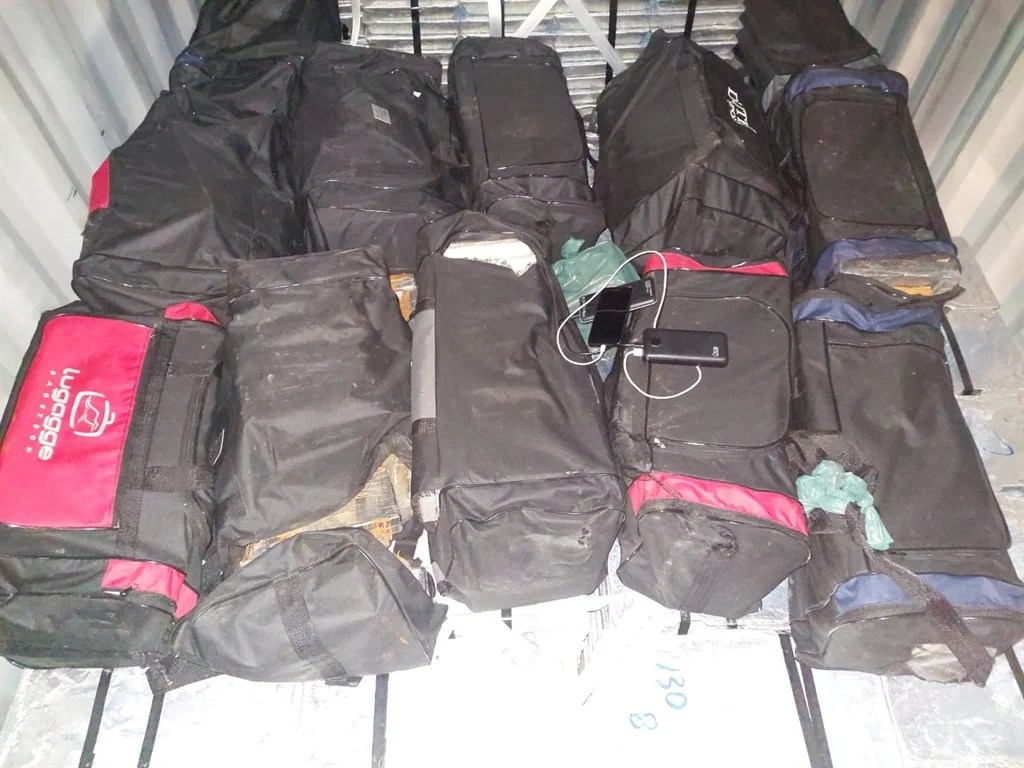
Customs officers of the SA Revenue Service and the SA Police Service (SAPS) seized some R1.3 billion worth of cocaine in an early morning raid on a container ship at the Durban harbour, SARS said in a statement on Friday morning. 

The 300kg of cocaine was found in one of the containers aboard the ship. It was detected after a week-long intelligence operation led by the SARS National Targeting Unit. 

“The SARS Marine unit, Durban Operations, South African Police Service (SAPS) Crime Intelligence and National Detective Services boarded the vessel heading from South America to secure several containers that were profiled by SARS,” SARS said. 

The containers were inspected after they were unloaded in the Durban harbour, which revealed zinc metal products and several black bags containing 378 bricks of pure cocaine. 

The illicit cargo and what appeared to be cellular tracking devices were handed over to SAPS for further investigation, SARS added.

SARS commissioner Edward Kieswetter said it there was a commitment to “fight the scourge of narcotics entering the country and destroying the lives of its users, especially the youth.”

“SARS will not tolerate these illegal activities but will rather continue to fulfil its mandate of facilitating legal trade to further economic development of our country,” he added.

Source: New24, Marelise van der Merwe dated 24 February 2023

Cabinet approves OSBP Bill for public comment

Cabinet has approved the One-Stop Border Post (OSBP) Bill, among others, for public comments.

This was confirmed by Minister in the Presidency, Mondli Gungubele, during a Post Cabinet media briefing.

He said the Bill follows approval of the OSBP Policy and its implementation strategy in March 2022.

The Bill, he said, seeks to harmonise the movement of people and goods between South Africa’s land ports of entry and its neighbouring countries.

He said: “This will alleviate current congestions at our land ports of entry for cross-border travellers and traders. These interventions are also key in the country’s efforts in driving the African Continental Free Trade Area (AfCFTA) Agreement”.

The agreements envisioned in the Bill, he said, will ensure that the processing of goods, vehicles and people is seamless and fast.

The Bill also responds to relevant international legal instruments that relate to trade facilitation and movements of people and goods. 

The OSBP Bill of 2022 will be published in the Department of Home Affairs website: www.dha.gov.za.  

Vietnam seizes 600 kg of ivory smuggled from Africa

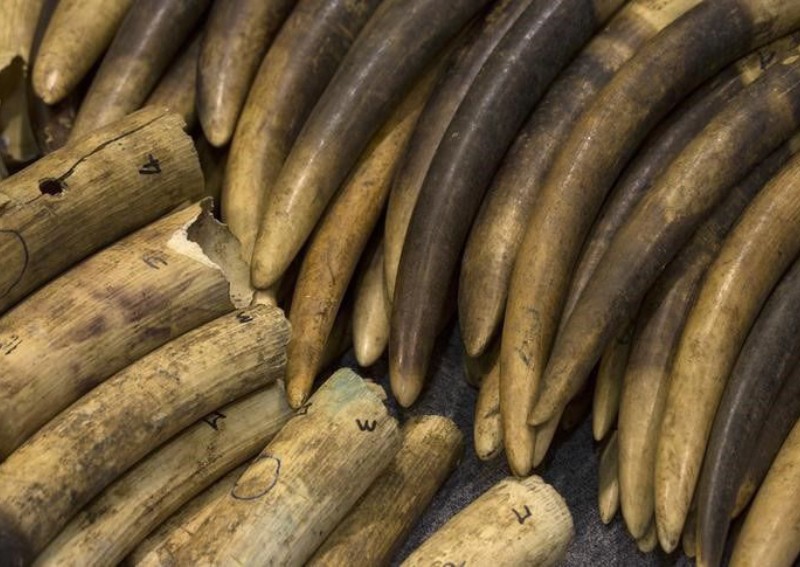
Vietnamese authorities have over the past week seized more than 600kg of ivory smuggled from Africa, the government said on Monday, 6 February 2023.

Trade in ivory is illegal in Vietnam but wildlife trafficking remains widespread. Other items often found smuggled into the country include pangolin scales, rhino horns and tiger carcasses.

Customs authorities in the northern port city of Haiphong on Monday found nearly 130kg of ivory hidden in a container of cow horns originated from Africa, the government said in a statement.

This followed the finding of nearly 500kg of African ivory on Thursday last week at Lach Huyen Port in the city, the government said.

This has been the largest seizure of smuggled ivory in the country in more than four years. The authorities had in October 2018 seized more than eight tonnes of ivory and pangolin scales in one of the country’s largest wildlife trafficking cases for years.

Source: Asian.com

International Customs Day 2023

Each year, International Customs Day provides an opportunity for the WCO Secretariat to invite the Organization’s Members to focus on a theme it considers relevant to the Customs community and its partners. In 2023, under the slogan “Nurturing the Next Generation: Promoting a Culture of Knowledge-sharing and Professional Pride in Customs”, the Secretariat is inviting Members to look at how they support newly-recruited officers, facilitate the sharing of knowledge, and heighten the sense of pride in being part of this institution and of the global Customs community.

This is about placing human capital, and especially the new generation, at the heart of the transformation of Customs – an approach the WCO has been advocating for a number of years. Young Customs officers often have particular strengths, but they need to acquire specific, and often tacit, knowledge and know-how. This approach to learning must be rooted in the culture of the administration, holding true throughout the officers’ careers. It requires not only dynamic inter- generational relationships, but also an outward-looking attitude, characterized by exchanges with the actors engaged in the movement of goods and passengers, as well as with service providers and with academia.

However, it has to be recognized that certain Customs organizations do not have the processes and methodologies in place for managing knowledge and ensuring that it is transmitted. In 2023, Customs administrations are therefore being invited to focus on this issue and develop a knowledge management system which fosters the identification and provision of knowledge and know-how in all their forms: reports and other documentation, training courses, whether online or in-person, forums, mentoring programmes, work placements, exchanges between services, magazines and newsletters, among others.

Another interesting approach is to extend collaboration among Customs stakeholders and collect multi-disciplinary views. For this purpose, some administrations collaborate with academia and participate in think tanks. This will ensure that Customs knowledge is acquired through the rigorous analysis of data, and is supported by expert opinion, skills and expertise. Knowledge acquired in this way can be a valuable resource for decision-making.

Customs must avoid the loss of organisational memory, to ensure that mistakes are not repeated and experience is transmitted between departments and to the next generation.

By creating a stimulating work environment and offering learning opportunities to their officers, Customs administrations can not only attract and retain talent, but also enhance their officers’ sense of professional pride. It is often said that the new generation are searching for meaning; working in Customs is a noble mission, whose fulfilment is essential for the wellbeing of nations.

As the reputation of an organization depends largely on its employees, it is important that they take pride in their work, and that the way their work connects with the government’s vision is clearly explained. To achieve this, Customs administrations must increase their visibility, not only among their natural partners but also among those – such as decision-makers and the general public – who may be less familiar with the multi-faceted role of Customs, and less aware of the challenges faced by Customs and the constraints it has to manage.

I have every confidence that Customs administrations will get to grips with this year’s theme and I invite them to present information, during meetings of WCO working bodies which address this theme, during the events we organize throughout the year and in our various publications, about practices and measures they have introduced.

I wish you all a happy International Customs Day!

Kunio Mikuriya

WCO Secretary General 26 January 2023

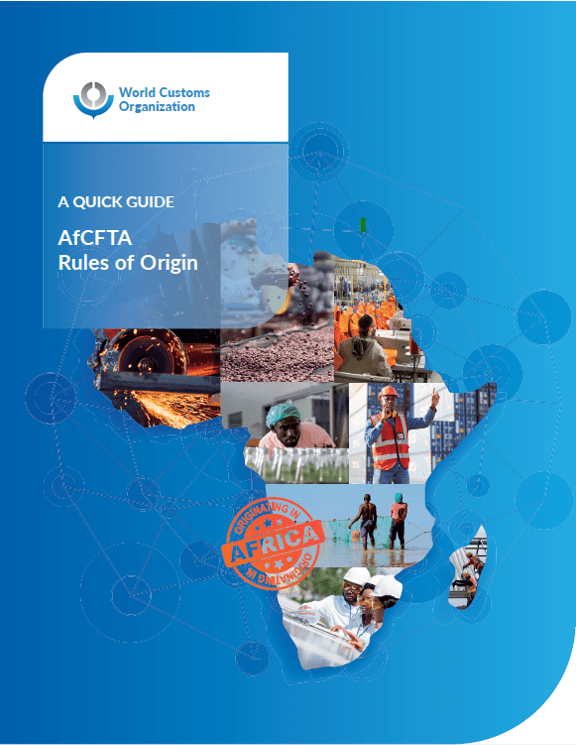
AfCFTA Rules of Origin – Quick Guide for the Private Sector

The World Customs Organization with the support of the European Union under the EU-WCO Rules of Origin Africa Programme has developed a quick guide to the private sector to assist with the practical implementation of the African Continental Free Trade Area (AfCFTA) Agreement Annex 2 on Rules of Origin of the Protocol on Trade and its relevant appendices.

The main objectives of the AfCFTA Agreement are to create a single continental market for goods and services, with free movement of business persons and investments, and thus pave the way for accelerating the establishment of a Customs Union in the future.

The guide is available in EnglishFrenchPortuguese and Arabic.

Source: WCO

MSC takes delivery of first Cargo Aircraft

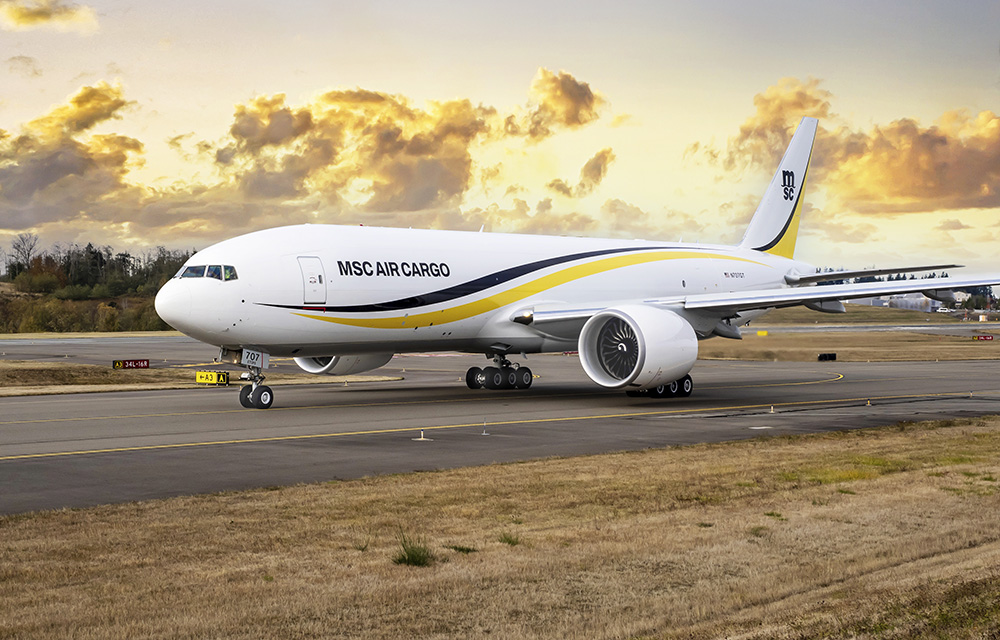
MSC has taken the next step in developing its Air Cargo solution with the delivery of the first MSC-branded aircraft, built by Boeing and operated by Atlas Air. The B777-200 Freighter will fly on routes between China, the US, Mexico and Europe.

Jannie Davel, Senior Vice President Air Cargo at MSC, said: “Our customers need the option of air solutions, which is why we’re integrating this transportation mode to complement our extensive maritime and land cargo operations. The delivery of this first aircraft marks the start of our long-term investment in air cargo.”

Jannie Davel brings extensive air cargo experience, having worked in the sector for many years, most recently heading Delta’s commercial cargo operations, before joining MSC in 2022.

He said: “Since I started at MSC, I have spoken to numerous partners and customers right across the market and it is very clear that air cargo can enable a range of companies to meet their logistics needs. Flying adds options, speed, flexibility and reliability to supply chain management, and there are particular benefits for moving perishables, such as fruit and vegetables, pharmaceutical and other healthcare products and high-value goods. 

We are delighted to see the first of our MSC-branded aircraft take to the skies and we believe that MSC Air Cargo is developing from a solid foundation thanks to the reliable, ongoing support from our operating partner Atlas Air.”

Atlas Air, Inc., a subsidiary of Atlas Air Worldwide Holdings, Inc. (Nasdaq: AAWW), is supporting MSC on an aircraft, crew, maintenance and insurance (ACMI) basis. This aircraft is the first of four B777-200Fs in the pipeline, which are being placed on a long-term basis with MSC, providing dedicated capacity to support the ongoing development of the business.

The B777-200F twin-engine aircraft has been commended for its advanced fuel efficiency measures. It also has low maintenance and operating costs, and, with a range of 4,880 nautical miles (9,038 kilometres), it can fly further than any other aircraft in its class. It also meets quota count standards for maximum accessibility to noise sensitive airports around the globe.

A Snapshot of Wealth in Africa

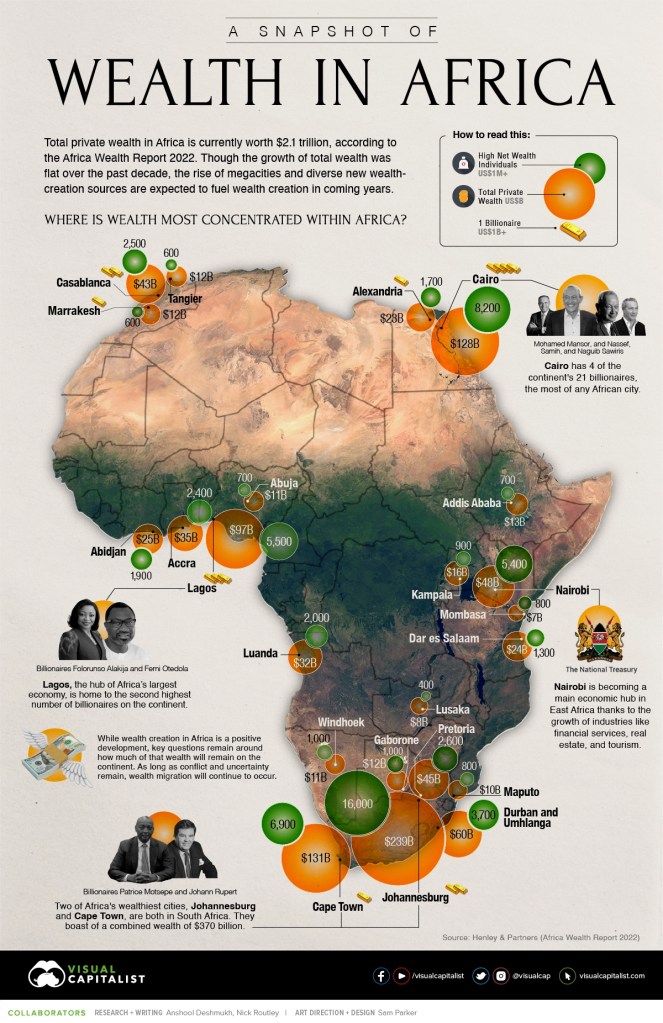
The continent of Africa contains more than 50 countries, but just five account for more than half of total wealth on the continent: South Africa, Egypt, Nigeria, Morocco, and Kenya.

Despite recent setbacks in Africa’s largest economies, wealth creation has been strong in a number of areas, and total private wealth is now estimated to be US$2.1 trillion. There also an estimated 21 billionaires in Africa today.

Drawing from the latest Africa Wealth Report, here’s a look at where all that wealth is concentrated around the continent.

South Africa is a still a major stronghold of wealth in Africa, with a robust luxury real estate market and ample wealth management services. The country is also ranked second on the continent in per capita wealth. That said, the country has faced challenges in recent years.

An estimated 4,500 high net worth individuals (wealth of US$1 million or more) have left South Africa over the past decade, migrating to places like the UK, Australia, and the United States. In one stark data point, the report points out that “there are 15 South African born billionaires in the world, but only 5 of them still live in South Africa.”

Read the full article