US Customs to assist exporters in resolving disputes with foreign customs

CBP logoU.S. Customs and Border Protection (CBP) published a Federal Register Notice inviting U.S. exporters to request CBP’s assistance in resolving disputes with foreign customs agencies over the tariff classification or customs valuation of U.S. exports. CBP explains that it is willing to assist U.S. exporters with these disputes under the auspices of the World Customs Organization (WCO). CBP is very active at the WCO and regularly participates in meetings concerning the application of the Harmonized Commodity Description and Coding System (HS System) and the World Trade Organization’s (WTO) Customs Valuation Agreement (CVA). According to CBP, this process was helpful in providing a successful outcome for clients who disputed a foreign customs agency’s classification of imported goods.

Tariff Classification
CBP represents the United States at meetings under the auspices of the International Convention on the Harmonized Commodity Description and Coding System (“HS Convention”). The HS Convention is the international agreement that provides that WCO Members will implement the HS System and comply with decisions of the various committees organized under the convention. CBP attends semiannual meetings of the WCO’s Harmonized System Committee (HSC), where contracting parties to the HS Convention examine policy matters, make decisions on classification questions, settle disputes, and prepare amendments to the HS System and its Explanatory Notes.

Article 10 of the HS Convention governs disputes between contracting parties concerning the interpretation or application of the HS Convention. The article provides that parties with potential disputes should first try to settle the dispute through bilateral negotiations. If such negotiation cannot resolve the dispute, the parties may refer the dispute to the HSC for its consideration and recommendations. The HSC, in turn, refers irreconcilable disputes to the WCO Council for its recommendations.

Customs Valuation
CBP represents the United States at the WCO with respect to issues arising under the CVA. Pursuant to Annex II to the CVA, the WCO’s Technical Committee on Customs Valuation (TCCV) is authorized to examine specific problems arising from the customs valuation systems of WTO Members. The TCCV is responsible for examining the administration of the CVA, providing WTO Members with advisory opinions regarding particular customs valuation issues, and issuing commentaries or explanatory notes regarding the CVA. Like the HSC, the TCCV may get involved in disputes amongst foreign customs agencies. CBP stands willing to help U.S. exporters with these disputes. This process may provide U.S. exporters with a faster procedure to resolve disputes than a typical WTO dispute.

CBP’s Role at the WCO May Resolve Export Issues for U.S. Exporters
CBP states in the notice that its communication with other customs administrations through the meetings of the HSC and TCCV at the WCO can “often serve to eliminate or resolve export issues for U.S. traders.” As an example, in 2014, a U.S. exporter notified CBP of a foreign customs administration’s misclassification of its textile exports. The U.S. exporter requested that pursuant to Article 10 of the HS Convention, CBP (1) contact the foreign customs administration to resolve the tariff classification dispute; and (2) refer the matter to the HSC at the WCO, if it could not be resolved bilaterally. After confirming it agreed with the U.S. exporter’s position, CBP engaged the foreign customs administration directly. Within seven months of the exporter’s request, CBP secured a favorable decision by the foreign customs administration to classify the merchandise in a manner consistent with the U.S. position. Consequently, the U.S. exporter obtained correct tariff treatment of its imported merchandise in the foreign country as a result of CBP’s engagement.

Source: http://www.internationaltradecomplianceupdate.com/
WCO 2015 Photo Competition

WCO

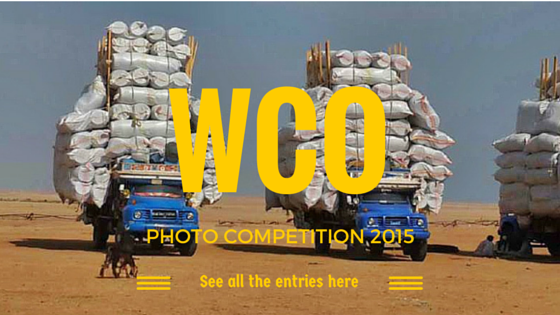
Sudan Customs administration – “Border ahead” The photo shows goods trucks ready to cross the border between Sudan and Egypt. Since April 2015, the Askeit border post is the first and only border crossing point in Sudan benefiting from a Single Window environment, with all relevant authorities gathered under one roof. The volume of trade exchange between Sudan and Egypt through this post amounts to about 185 million US dollars per year, a figure which is expected to increase twofold, or even threefold, over the next few years. [Click on the photo to see all the entries]

WCO News – June 2015 Edition

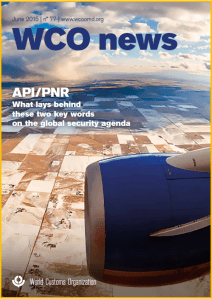
WCO News Edition no.77-2The WCO’s flagship magazine WCO News, aimed at the global Customs community, has published its latest edition which features a special dossier on API/PNR (Advance Passenger Information and Passenger Name Record) – two key words on the global security agenda.

Other highlights include a focus on Customs laboratories, interviews on the ‘illicit tobacco trade’ and the ‘killing of elephants,’ as well as articles covering trade-based money laundering, strengthening export controls, the illegal vehicle trade and much more.

The magazine is published and distributed free of charge three times a year, in February, June and October, and is available online or in paper format. If you do not want to miss future issues of WCO News, you are invited to fill out the online subscription form. Source: WCO

WCO Cooperation with Customs Brokers

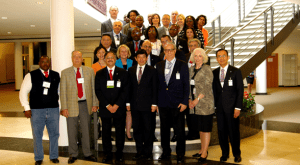
WCO & BrokersThe International Federation of Customs Brokers Associations (IFCBA) marked its 25th anniversary by holding its Board of Directors meeting at WCO headquarters on 18 and 19 May 2015.

WCO Secretary General Kunio Mikuriya addressed the meeting to stress the importance of the partnership between Customs and Customs brokers, given that Customs performance is often affected by that of service providers, including Customs brokers. Bearing in mind the need to maintain a quality service by and cooperation with Customs brokers, he explained that the WCO was carrying out a survey of its Members’ institutional frameworks for Customs brokers.

During their interaction with Secretary General Mikuriya, representatives of the IFCBA expressed an interest in working with Customs to adjust their way of doing business to the evolving trade environment, including electronic data transfer, and in assisting small and medium-sized enterprises participate in the increasingly complex global trading system. They also discussed the need to provide capacity building for brokers and to improve integrity.

Mr. Shantanu Bhadkamkar, Chairman of the IFCBA, expressed his appreciation for WCO support in improving Customs brokers’ operations and stated that, with its network of people working at borders, the IFCBA was confident that it could play a role in contributing to efficient border procedures and thereby economic competitiveness, including enabling small and medium-sized enterprises to benefit from international trade. Source: WCO

Inclusiveness Through Information Technologies – Launch of the 14th IT Conference & Exhibition

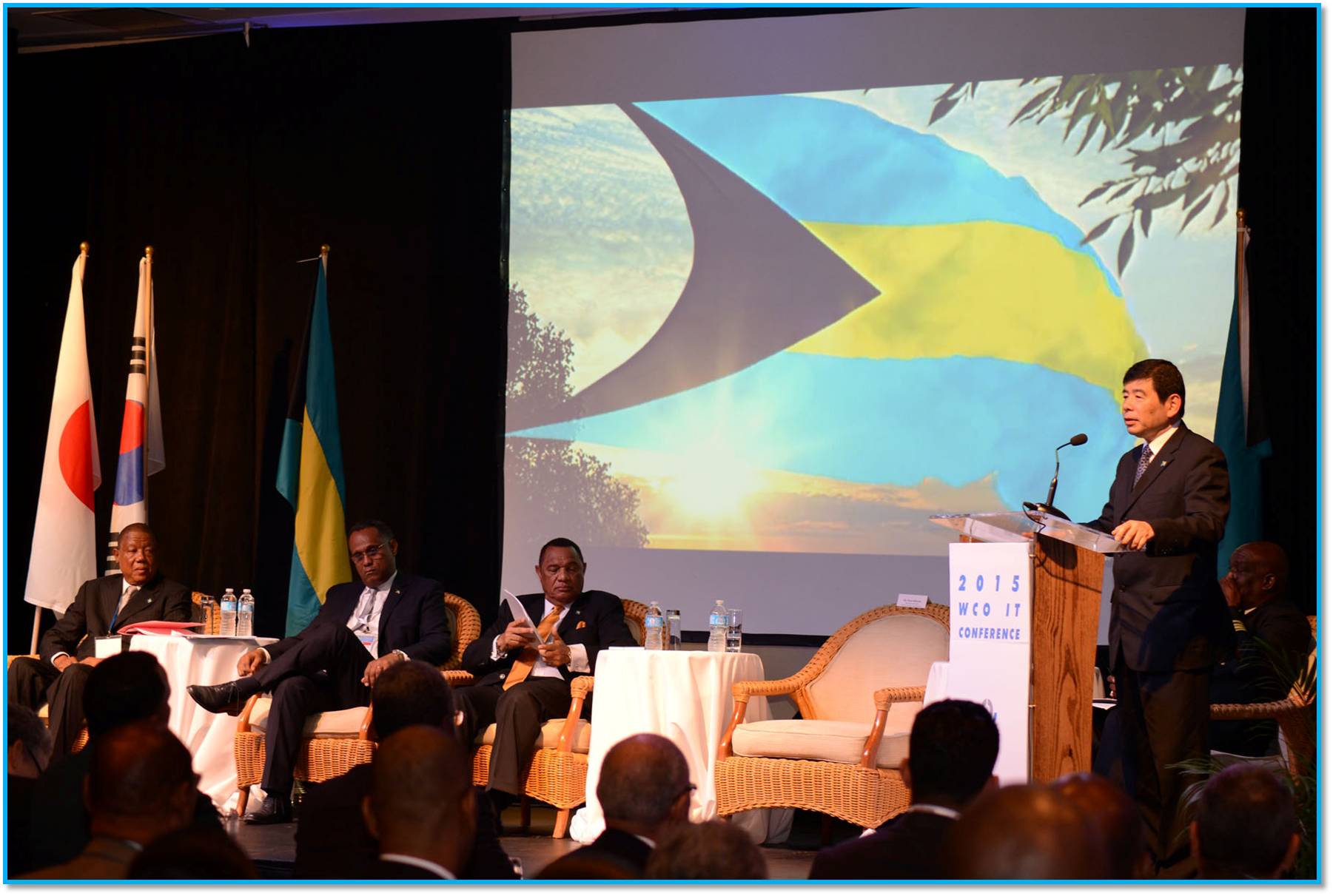
Secretary General of the WCO, Mr. Kunio Mikuriya, welcomes  delegates to what is now one of WCO’s premium external events bringing together representatives of the software industry and Customs policy makers.

Secretary General of the WCO, Mr. Kunio Mikuriya, welcomes delegates to what is now one of WCO’s premium external events bringing together representatives of the software industry and Customs policy makers.

The 14th annual WCO IT Conference & Exhibition was officially opened on 6 May 2015 in Freeport (Bahamas). Senior Government representatives of The Bahamas Government opened the 3-day Conference in the presence of over 400 participants from 75 countries.

The Right Honorouble Perry Gladstone Christie, Prime Minister and Minister of Finance of the Commonwealth of The Bahamas thanked the WCO for choosing The Bahamas for this very important global Conference. The hosting of this WCO event is an example of the government’s commitment to bring business opportunities to Grand Bahama!

The Prime Minister further continued by reminding the delegates that the WTO concluded negotiations on a Trade Facilitation Agreement at the Bali Ministerial Conference in December 2013 and about its potential of reducing international trade costs of approximately 12%. He underlined that the WTO Trade Facilitation Agreement owes much to the technical work that had already been carried out at the World Customs Organization.

In his speech, the Prime Minister stressed: “Our efforts are very much consistent with the theme of this Conference “Inclusiveness Through Information Technology”. It is in our interest here in The Bahamas to pursue an inclusive approach to the introduction of the new IT systems. These new systems must bring benefits, not only to government, but also to commercial operators and to the general public who will use these services. We recognize that with the introduction of these IT systems we must adopt a more client focused and customer orientated approach to make it easier to conduct business.”

The Secretary General of the WCO, Mr. Kunio Mikuriya, welcomed the delegates to what is now one of WCO’s premium external events bringing together representatives of the software industry and Customs policy makers. The Secretary General emphasized the theme of this year’s Conference “Inclusiveness Through Information Technologies”, adding that it addresses three key priorities of the WCO Members – Implementation of the WTO Trade Facilitation Agreement, Regional Economic Integration and Coordinated Border Management.

Mr. Charles Turner, Comptroller of Customs and Excise Department of the Commonwealth of The Bahamas, stressed that the IT Conference & Exhibition comes at an important juncture for The Bahamas as the Customs Department implements the Trade Sector Support Program. Having such a broad range of exhibitors and international delegates provides a rare opportunity to share ideas and learn from the experiences of others. Source: WCO

WCO publishes the Correlation Tables between the 2012 version and the 2017 version of the Harmonized System

OMD_7760The Correlation Tables between the 2012 version and the 2017 version of the Harmonized System (HS) are an essential device for preparation of new national Customs tariffs and a trade statistical classification based upon the HS Nomenclature 2017 Edition; modification of HS-based international Nomenclatures such as the Standard International Trade Classification (SITC) and the Central Product Classification (CPC); and preparations for possible WTO negotiations.

At its 55th Session in March 2015, the HS Committee examined and approved the Correlation Tables correlating the 2017 and 2012 versions of the HS.

Table І establishes the correlation between the 2017 version and the 2012 version of the HS. It contains remarks opposite certain correlations briefly specifying the nature of the goods transferred. In many cases, reference has also been made to the amended legal provisions.

Table ІІ establishes the correlation starting from the 2012 version to the 2017 version. It is simply a mechanical transposition of Table І and therefore includes no remarks. Source: WCO

WCO – Sub-Saharan Africa Customs Modernization Programme Newsletter

WCO Sub-Saharan Customs Modernisation Programme NewsletterHerewith a new newsletter informing about developments of Capacity Building Projects in Sub- Saharan African Customs Unions as sponsored by the government of Sweden. The project includes the WCO- EAC CREATE Project, the WCO- WACAM Project, The SACU Connect Project and the WCO INAMA Project.

With this newsletter we share with you updates about ongoing activities as well as an outlook for the events of the upcoming months. Click this hyperlink to download the newsletter.

Whilst this newsletter can only provide a snapshot of key developments, it may raise your awareness and encourage you to address us for more detailed publications or to contact us. Source: WCO

Event – Role of the Private Sector in Support of the Trade Facilitation Agreement

international-trade1The role of the private sector in the implementation of the World Trade Organization’s (WTO) Trade Facilitation Agreement (TFA) will be the focus of the 2015 edition of the Global Facilitation Partnership for Transportation and Trade (GFP) meeting. With the world’s customs administrations currently identifying their respective TFA  implementation commitments and setting up National Trade Facilitation Committees, trade and logistics operators can learn how they can participate in such initiatives by attending these sessions.
The GFP meeting will be held at Palais des Nations, Geneva, on 22 April, and will be divided into three thematic sessions.

The first session, ‘Governments’ Priorities: Strategies for Fostering Private Sector Participation in the TFA Implementation Process’ will look at how governments are planning to implement the TFA.

It will focus on how the private sector is consulted and how an effective participation of the private sector can be facilitated to implement the Agreement.

The second session, ‘Priorities, Perspectives, and Expectations from the Private Sector on TFA Implementation’ will assess how the private sector – including large corporates and small and medium-sized enterprises – view TFA implementation. It will look at the potential benefits from a private-sector perspective, and how the sector can contribute to national and international initiatives to implement the agreement.

The third session, ‘International Organizations’ Co-ordination and Partnership for Supporting TFA Implementation’, will provide an opportunity to share information and experiences on how the TFA can be implemented with public-private partnerships in mind, as how national trade facilitation committees can better support this process.

ITC invites all interested stakeholders to join the GFP meeting at the Palais des Nations on 22 April from 9:00. Click here for link to online registration.

Source: International Trade Centre (Geneva)

WCO News – February 2015 Edition

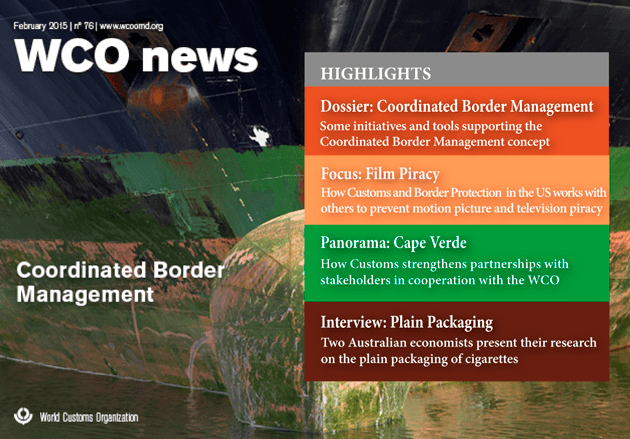
WCO News - Coordinated Border Management Feb 2015Check out the latest WCO News – per usual a wealth of interesting customs and supply chain information:

  • WCO launches IRIS, an application exploiting open source information
  • Harmonized System amendments effective from 1 January 2017
  • Beginning the CBM process: the Botswana experience
  • Inter-institutionality – a distinctive feature of the Colombian AEO model
  • WCO Data Model: the bridgehead to connectivity in international trade
  • Implementing New Zealand’s Joint Border Management System

and a whole lot more…

Source: WCO

International Customs Day – 2015

For more information about Co-ordinated Border Management visit the WCO website.

IRIS – WCO launches application to exploit open source information

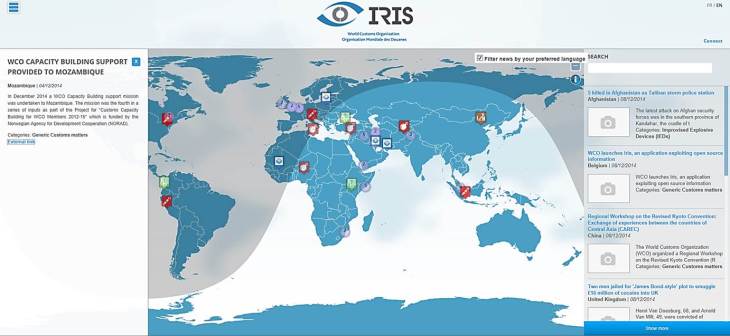
WCO IRISOpen sources, such as the Internet, include a considerable amount of useful information for Customs purposes. For instance, such information can benefit Customs risk management through improved analysis and by enabling sounder decisions to be made on the basis of solid information, thereby providing decision-makers with better situational awareness.

The exploitation of this vast repository of data has become easier and markets are full of different tools that allow Customs officers to keep track of issues that impact on their daily work. Although many WCO Members already use such tools at the national level, no international tool exists that collects all this Customs related information together and makes it available in one location.

To fill this void, WCO Secretary General announced the launch of the Iris application during the Policy Commission meeting in Brazil on 8 December. Iris is a new and innovative tool which acts as an “aggregator” for all types of open source Customs information, and as such falls within the framework of the of theme of the year 2014, “Communication”.

The application utilizes Web-crawlers to search the Internet for news items and presents this information in a graphic-style world map in real-time. The system also allows for the storing of the “hits” on a specific database where they will be available for intelligence experts and other operational front-line Customs staff for further analysis.

Iris also allows the WCO to push out information about major Customs seizures which have been reported to the WCO Customs Enforcement Network (CEN) database or to the Global Shield application (seizure information itself will not be reported, but a notice about a seizure will be displayed).

“Iris is a ground-breaking initiative and will allow the WCO, for the first time, to monitor open source information on a 24/7/365 basis and to provide its Members with enhanced intelligence support”, declared Secretary General Mikuriya.

“The application also promotes CEN and Global Shield application and we hope it will encourage Members to increasingly report their seizures to both of these existing enforcement tools”, he added.

All WCO Members, Regional Intelligence Liaison Offices (RILOs), and WCO staff will benefit from Iris. Its benefits extend beyond these specific user groups, as the application is aimed at a broader audience. Some of the Iris functionality will be made available to WCO’s private sector partners, the academic community, and the public.

Iris works in all different types of devices including smart phones and tablets. The system is hosted at https://iris.wcoomd.org and can also be accessed through the WCO’s website. Source: WCO

WCO supports Capacity Building in Mozambique

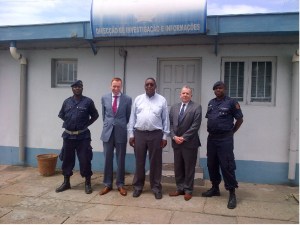
Mozambique: Maputo, Mozambique Revenue Authority, Customs Division, Risk Management Unit

Mozambique: Maputo, Mozambique Revenue Authority, Customs Division, Risk Management Unit

In December 2014 a WCO Capacity Building support mission was undertaken to Mozambique. The mission was the fourth in a series of inputs as part of the Project for “Customs Capacity Building for WCO Members 2012-15” which is funded by the Norwegian Agency for Development Cooperation (NORAD). The aim of the project is to deliver technical assistance to seven countries in specific areas of Customs operations. As one of the countries participating in the project the assistance provided to Mozambique has been designed to strengthen their capacity in the areas of Risk Management and Human Resources/Training Policy Management.

The mission commenced with a meeting between the WCO delegation and Mr. Guilherme Mambo Director General, Customs. Progress with the project was discussed and specific plans for the introduction of new risk management procedures.

The mission focused on the delivery of a high-level strategic Risk Management workshop. The workshop was designed to support the implementation of a new Risk Management Framework and was attended by several members of the MRA Senior Management Team.

Together with the workshop, the WCO experts also conducted a Risk Management organizational review and prepared a report summarizing key findings and recommendations. Work also continued on supporting the MRA with the development of their new Strategic Plan and specifically with a review of existing risk profiles to ensure that they are aligned with the organization’s strategic objectives.

The opportunity was taken to also discuss establishing procedures for access to the WCO e-learning modules so that the MRA can make best use of the wide range of training modules that are available for their use, particularly in the areas of Risk Management, CBM, PCA and the Revised Kyoto Convention. Source and picture: WCO

SADC Customs Training Course on NTBs in cooperation with the WCO

SADC organizes a Customs Training of Trainers Course on NTBs in cooperation with the WCO [SADC]

SADC organizes a Customs Training of Trainers Course on NTBs in cooperation with the WCO [SADC]

The Southern African Development Community (SADC) organized a Training Course under its Customs Training of Trainers (TOT) Programme between 17 to 20 November 2014 at its Headquarters (Gaborone, Botswana). The training was conducted in collaboration with the World Customs Organization (WCO), the WCO Regional Office for Capacity Building (ROCB) for the Eastern and Southern Africa Region, and the Deutsche Gesellschaft für Internationale Zusammenarbeit (GIZ). Forty-two senior Customs officers from 13 of SADC’s 15 Member States, many of whom are active in their administrations’ training departments, participated in the Training Course.

The main objective of the TOT Programme is to provide technical and professional support, particularly in view of the contribution by Customs administrations to the consolidation of the SADC Free Trade Area and the successful implementation of the SADC Protocol on Trade. This will be achieved through the TOT Course on Non-Tariff Barriers (NTBs), which continue to be major stumbling blocks to trade in the region and many of which are Customs-related (or perceived as such). Participants who complete the Training Course will disseminate the knowledge gained, at national level, to relevant stakeholders including Customs officers from their own administrations.

Participants learnt the basic principles and definition of Non-Tariff Measures and NTBs, covering the World Trade Organization (WTO) Agreement on the Application of Sanitary and Phytosanitary Measures (SPS Agreement) and inter-regional initiatives such as the online NTB monitoring mechanism and national monitoring committees. They also gained an overview of the Agreement on Trade Facilitation (TFA) recently concluded under the auspices of the WTO. The WCO gave an introduction to its tools and instruments for applying trade facilitation measures and to the Revised Kyoto Convention (RKC). Particular emphasis was placed on the new Transit Handbook and the TFA Implementation Guidance.

The course was highly interactive and participants shared their views on the importance of global standards to facilitate regional integration and various trade facilitation measures. They discussed how they could promote Coordinated Border Management (CBM) and increase public-private dialogue at national and regional level. Source: WCO

Coordinated Border Management – An inclusive approach for connecting stakeholders

WCO Customs Theme 2015The WCO is dedicating 2015 to promoting Coordinated Border Management (CBM) under the slogan “Coordinated Border Management – An inclusive approach for connecting stakeholders”.
WCO Members will have the opportunity to promote the enhanced coordination practices and mechanisms that they have implemented within their administrations and with other Customs administrations and government agencies, as well as with economic operators involved in cross-border trade.

The term Coordinated Border Management (CBM) refers to a coordinated approach by border control agencies, both at the national and international level, in the context of seeking greater efficiencies over managing trade and travel flows, while maintaining a balance with compliance requirements.

CBM can result in more effective service delivery, less duplication, cost-savings through economies of scale, enhanced risk management with fewer but better targeted interventions, cheaper transport costs, less waiting times, lower infrastructure improvement costs, more wider sharing of information and intelligence, and strengthened connections among all border stakeholders. Source: WCO


WCO addresses the United Nations Conference on Landlocked Developing Countries

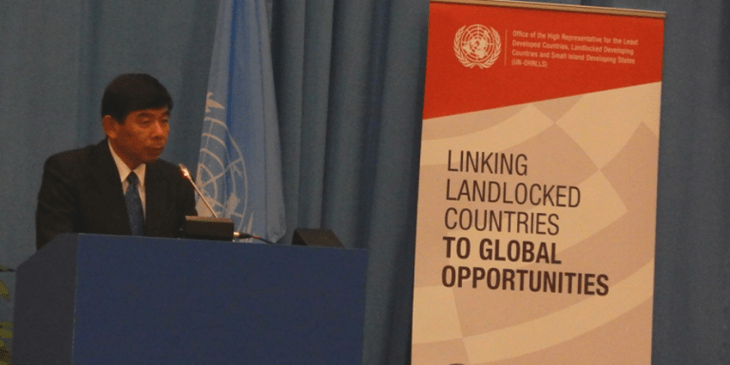
WCO Secretary General Kunio Mikuriya addressing delegates at the high-level opening ceremony of the ConferenceWCO Secretary General Kunio Mikuriya addressed delegates at the high-level opening ceremony of the United Nations Conference in Vienna on 3 November 2014.

The Conference aimed to seek a renewed political commitment to address the special needs of landlocked developing countries (LLDCs) and identify priorities, ways, and means to address them. This was the second Conference after the first one held in Almaty, Kazakhstan in 2003. The Conference takes place only once a decade and is an important milestone for formulating a focused, forward-looking and action-oriented development agenda for LLDCs for the next decade.

Secretary General Mikuriya made a statement together with other heads of international organizations, including Mr. Ban Ki-moon, Secretary-General of the United Nations, and Mr. Roberto Azevêdo, Director General of the World Trade Organization, and several heads of state, including President Heinz Fischer of Austria. In his remarks, he highlighted the importance for Customs administrations to establish an effective and efficient transit regime which is an essential element to promote regional economic integration and ensure economic growth of LLDCs.

He also used his speech to launch the WCO Transit Handbook that the Permanent Technical Committee finalized last week. Secretary General Mikuriya announced that the Transit Handbook would be formally published shortly after further editing and incorporating the outcomes of the Conference. He also described other WCO instruments that facilitate transit, including the Revised Kyoto Convention and the Time Release Study. He gave an assurance of enhanced delivery of technical assistance and capacity building for LLDCs through the Mercator Programme, a tailor-made assistance programme supported by a wealth of instruments and best practices, a network of accredited experts and a comprehensive donor engagement mechanism. Source: WCO

Related links