Commencing with the US Container Security Initiative (CSI) in 2002, it became clear that traditional cargo and conveyance reporting was a thing of the past. Let’s face it without the events of 9/11, none of the security advances in the customs space would have been possible. Many customs administrations did not even have a formal cargo manifest reporting system. Some relied on 3rd party terminal access to carrier and airline manifest data, others interfaced with cargo community systems, but only a few placed any real relevance on a dedicated cargo management and reporting facility. Most electronic messaging formats today still rely on an electronic ‘derivative’ of some document/form or another. This perhaps is a logical departure point. However, recent developments under the banner of the WCO SAFE Framework of Standards indicate a departure from the traditional form of customs information reporting. Let’s see, the framework itself appears to delineate cargo and clearance security data elements for exports and imports. But, at the same time we see the release of version 3 of the WCO Data Model clearly advocating a single overarching electronic messaging architecture which portends to accommodate not only current EDI reporting requirements but future ‘all-of-government’ messaging in so far as it relates to the transactional clearance of import and export goods. Moving ahead into the current environment, the impending EU advance cargo reporting requirements are very similar to that of the US 24 Hour Rule. What is more interesting is the fact that the EU – through its Entry Summary Declaration (ENS) – has created a new information exchange requirement which effectively applies a combination of both clearance and cargo information. This clearly indicates that traditional forms of cargo manifest and conveyance reports/exchanges no longer fulfil customs information and risk assessment requirements. I think it is important for all shippers and operators to realise that in today’s rapidly changing environment, we can no longer speak strictly in terms of pre-arrival notifications, carrier’s manifests, house manifests, discharge lists, or customs clearances. Customs requires ‘DATA’ (not forms/documents) in order to achieve its security, fiscal and enforcement obligations; and it needs this information way in advance of what shippers and operators have become accustomed to over the last 50 years – this is in effect the ‘change’ which international supply chain operators need to embrace. Unfortunately, the developments on automated processing and risk management are not taking place uniformly across all customs administrations; hence the envisaged benefits of so-called ‘paperless clearance’ are still a pipe dream in many respects. Before the 2005 security amendment, EU Customs legislation required that goods be presented to customs authorities on arrival to the customs territory, but how that was done was left to each individual EU member state; and, there was no emphasis on safety and security or requirement of sharing of risk data among EU members. Another factor, it would seem, is that the EU (comprising 27 members), has opted for the introduction of the ENS, realising the so-called disparity and complications related to coordinating controls and sharing information between independent customs administrations. A ‘single’ country does not have to deal with this – only its own domestic requirements. For example, under the new dispensation, where a flight is destined for two EU airports, and the carrier submits the ENS to the first, Customs needs to make provision for pushing the risk information and results of control to the second country, or allowing that second country to pull the control results and ENS data from the first. Also, such a system depends on mutual recognition across all EU members of an AEO granted in one member state. Bottom line, EU traders must prepare for some chaos to occur on 1 January 2011. The new requirements will be a true litmus test of what is possible in the supply chain, as it will surely become the defacto standard in other regions in the globe. At the same time the WCO will undoubtedly observe the first wide scale application of its SAFE Framework of Standards with keen interest.
Category / WCO
WCO Data Model V.3 available online!
 The WCO Data Model 3 is a maximum set of carefully combined and harmonized data requirements derived from cross-border regulation. These requirements are mutually supportive and are updated on a regular basis to meet the procedural and legal needs of cross-border regulatory agencies such as customs, controlling export, import and transit transactions. The WCO Data Model 3 is only available online, by the means of an annual subscription which will enable you to – (a) Have access to a database of knowledge through a FAQ module, and (b) Ask any question directly to the WCO Data Model 3’s Project Managers.
Please visit: http://wcoomdpublications.org/data-model-3.html for pricing and conditions.
EDI is Dead – Long Live EDI!
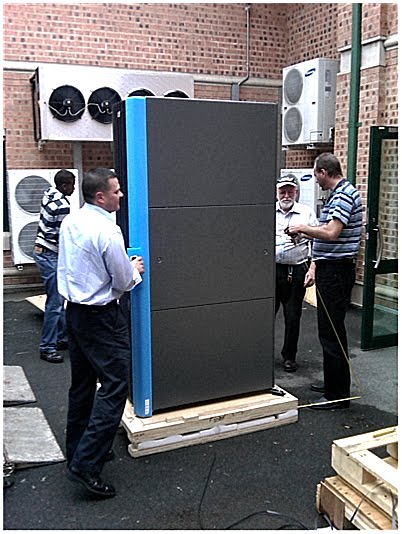 SARS Customs mainstream communication channel with the South African business community has received a major boost, with the installation of a new EDI Gateway. This forms part of SARS’ commitment – relating to increasing demands on its ICT architecture – to meet the rapid increase in B2G (business-to-government) electronic transaction exchanges. Currently for every import, export or cross border declaration transactions, there are a minimum of 2 EDI interchanges per consignment – a Customs declaration message (CUSDEC), and a Customs response message (CUSRES).
 Once cargo reports (cargo manifests and cargo notifications) are all being received electronically this average will increase substantially. The future customs clearance process envisages a totally paperless environment. Therefore, any instruction or notification regarding an import or export transaction will need to be handled via electronic messaging between Customs and the Trader. This implies significant more data storage and a reliable network ensuring continuity of business. At present trade declaration (SAD500) volumes are in the region of about 4, 3 million per annum. The need for high-volume / real-time processing is therefore a no-brainer.
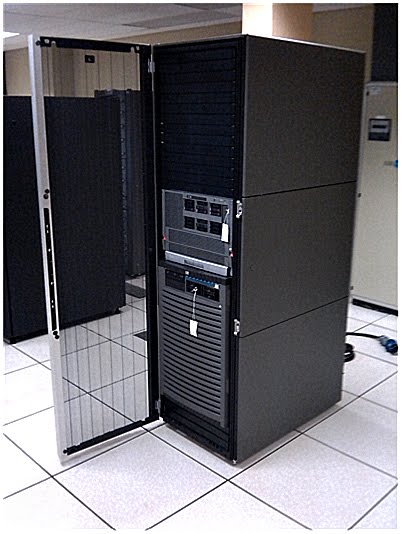
The Customs Modernisation Programme (CMP) has undertaken a number of initiatives in regard to maintaining pace with world trends. It is currently reviewing its data models; consolidating import, export and cross border modes; and aligning all its data requirements with the WCO Data Model version 3. Combined with envisaged changes being brought about through the introduction of clearance within Customs Procedures, SARS’s desire is to adequately meet the demands of trade and its accession obligations regarding the WCO Revised Kyoto Convention. In the near future, Customs Response and Cargo Report data requirements will be aligned and consolidated in similar manner. This alignment therefore puts SARS in a position to consider a future migration path – the adoption of the Government Cross Border Regulatory message (GOVCBR).
 What Happened to the Portcullis?
You must be logged in to post a comment.