First Containership with Integrated Automation Systems Departs Korea

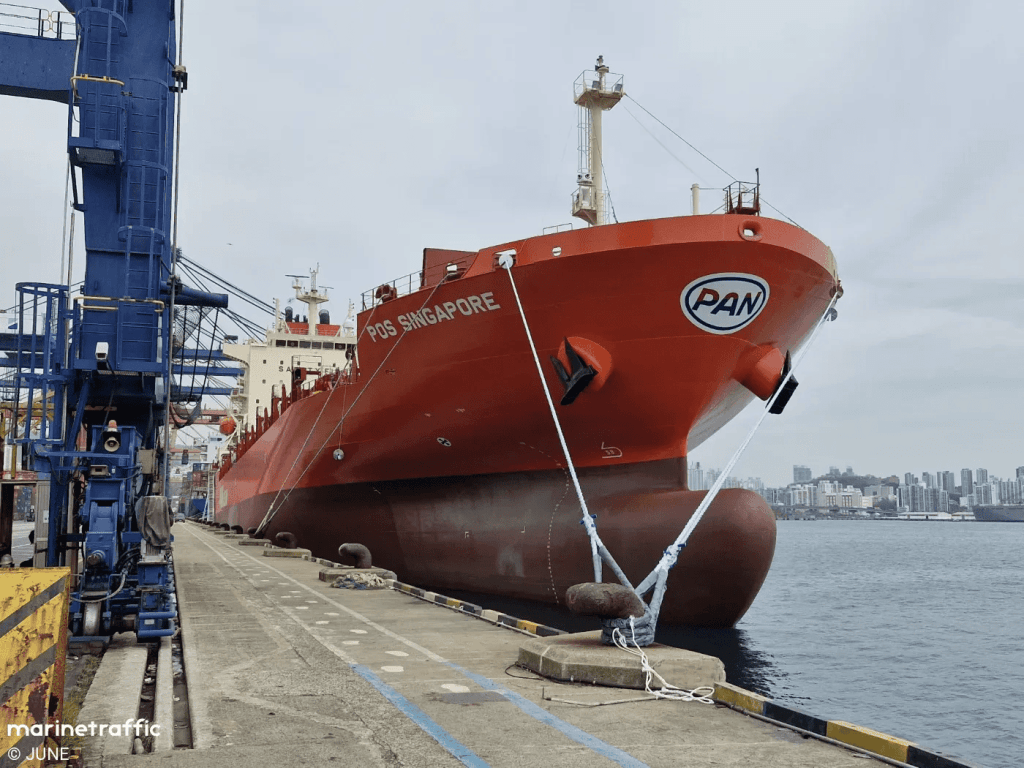
Picture: Maritime Traffic

South Korea highlights that the first containership designed with an integrated automation system has completed its installation and testing and is now starting international service. The project which was supported by South Korea’s Ministry of Trade, Industry and Energy and the Ministry of Oceans and Fisheries is designed to advance and commercialize autonomous shipping.

The automation systems for the vessel, POS Singapore (22,867 dwt) were designed in South Korea as part of a government-sponsored program to develop the new technologies. PAN Ocean, South Korea’s bulk shipping company, is participating in the program and worked to integrate the systems into the 1,800 TEU vessel. 

POS Singapore was ordered in 2022 and built by Hyundai Mipo Dockyard in Ulsan. It measures 576 feet (172 meters) in length and is registered in Liberia. The ship was floated in March and delivered in April. Since then, it has been undergoing the outfitting and testing of the automation system.

During today, September 23, sendoff ceremony, government officials highlighted that the ship will be used for the next year in testing and validation of the automation systems. The ship is currently underway bound for Shanghai. It will operate for the next year on routes between Korea and Southeast Asia.

The ship integrates core technologies including intelligent navigation and monitors and interprets the weather conditions for situation awareness and navigation. Other systems provide for engine automation and maintain cybersecurity. The ministries have invested $119 million in the project which they view as a blueprint for the commercialization of automation technology.

Using the results from this year of demonstrations, Korea also looks to lead the development of international standards for the automation of ships. The International Maritime Organization launched the effort to develop the MASS Code (international automation standards). Academics, researchers, and government officials are contributing to the creation of the new standard.

Korea looks to lead the development of automation to create a competitive edge in the next generation of shipbuilding. HD Hyundai led the first test of automation during a Pacific voyage on an LNG carrier in 2022. Korea has conducted additional tests including last year with a smaller domestic cargo ship.  

Source: The Maritime Executive online, 23 September 2024
A revamped Time Release Study e-learning course is now available on WCO CLiKC!

Photo by Tiry Nelson Gono

The World Customs Organization (WCO) is delighted to announce the release of an updated e-learning module on Time Release Study (TRS), now accessible on the CLiKC! platform.

The TRS is a strategic and internationally recognized tool designed to measure the average time taken to release or clear goods at borders. It tracks every step from the moment cargo arrives until its physical release.

This course provides practical guidance on conducting TRS, demonstrating how to execute each phase effectively. It starts with preparing for the study, then moves on to collecting, recording and analyzing data, and finally ends with the monitoring and evaluation phase.

In summary, these updates to the TRS module reflect the WCO’s commitment to bridging the gap between theory and practical application, empowering Customs professionals and stakeholders with the knowledge, skills, and tools necessary to conduct efficient, effective, and impactful TRS implementation tailored to diverse Customs environments. 

The module’s comprehensive approach includes integrating real-world scenarios, interactive exercises, and role-playing activities to deepen understanding and immediate application of TRS methodologies. It also emphasizes developing detailed work plans, addressing data collection methods, sampling techniques, process ownership, stakeholder engagement, and data quality assurance for informed decision-making and process improvements. Ultimately, these updates facilitate the efficient execution of TRS assessments and actionable strategies, enhancing trade facilitation outcomes worldwide.

The course is now available to all WCO Members on CLiKC!, the WCO’s e-learning platform. The WCO achieved this update with the support of the State Secretariat for Economic Affairs of Switzerland (SECO) through the SECO-WCO Global Trade Facilitation Programme (GTFP).

For further information, please contact capacity.building@wcoomd.org.

First commercial ships sail through Baltimore’s deep-draft channel

Picture by USACEBaltimore (Twitter/X)

After over a month since the Baltimore bridge collapse, the first commercial vessels have started to move out of the Port of Baltimore via newly opened 35-feet channel.

he first commercial vessels have started to transit through the limited access channel at the Francis Scott Key Bridge site, in conjunction with scheduled passages for a limited number of commercial vessels into and out of the Port of Baltimore, the U.S. Army Corps of Engineers (USACE) said.

The channel, named the Fort McHenry Limited Access Channel, opened on Thursday, April 25 as part of the response effort to the suspension of vessel traffic at the Port of Baltimore, following the collapse of the Key bridge.

The channel has a controlling depth of at least 35 feet (around 11-12 meters) and provides a crucial route for vessels that have been stranded in the Port of Baltimore following the bridge collapse, offering them a path back to the open waters. It is the fourth alternative channel opened near the wreckage site, and runs the length of the northeast side of the federal channel, providing additional access to commercially essential traffic.

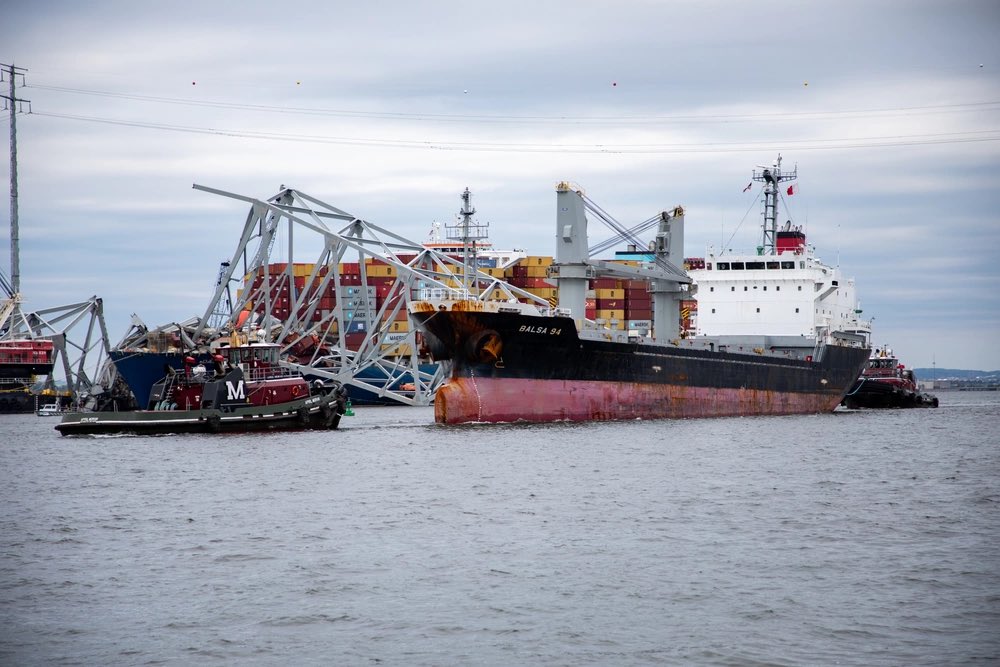
The first vessel to pass the channel was Balsa 94, USACE Baltimore said. Balsa 94 is a general cargo ship built in 2019 and sailing under Panamanian flag. The ship’s registered owner is Eastern Capital Marine from Panama, according to the data from VesselsValue. The ship was guided through the channel by two tugs, and the vessel continued its voyage toward Canada.

Source: World Cargo News, article by Jasmine Ovcina Mantra, 26 April 2024

MSC takes delivery of first Cargo Aircraft

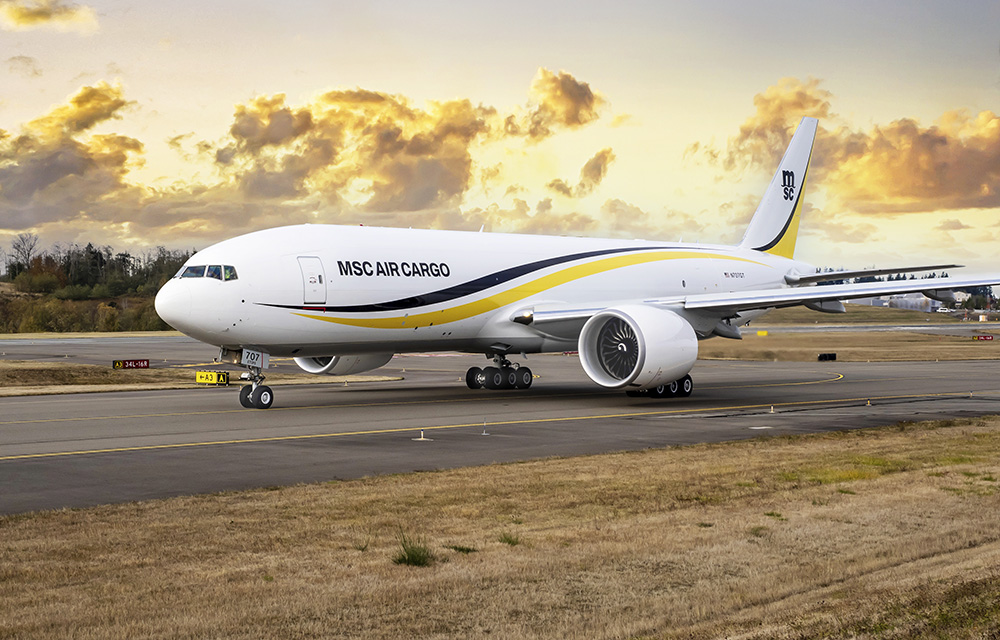
MSC has taken the next step in developing its Air Cargo solution with the delivery of the first MSC-branded aircraft, built by Boeing and operated by Atlas Air. The B777-200 Freighter will fly on routes between China, the US, Mexico and Europe.

Jannie Davel, Senior Vice President Air Cargo at MSC, said: “Our customers need the option of air solutions, which is why we’re integrating this transportation mode to complement our extensive maritime and land cargo operations. The delivery of this first aircraft marks the start of our long-term investment in air cargo.”

Jannie Davel brings extensive air cargo experience, having worked in the sector for many years, most recently heading Delta’s commercial cargo operations, before joining MSC in 2022.

He said: “Since I started at MSC, I have spoken to numerous partners and customers right across the market and it is very clear that air cargo can enable a range of companies to meet their logistics needs. Flying adds options, speed, flexibility and reliability to supply chain management, and there are particular benefits for moving perishables, such as fruit and vegetables, pharmaceutical and other healthcare products and high-value goods. 

We are delighted to see the first of our MSC-branded aircraft take to the skies and we believe that MSC Air Cargo is developing from a solid foundation thanks to the reliable, ongoing support from our operating partner Atlas Air.”

Atlas Air, Inc., a subsidiary of Atlas Air Worldwide Holdings, Inc. (Nasdaq: AAWW), is supporting MSC on an aircraft, crew, maintenance and insurance (ACMI) basis. This aircraft is the first of four B777-200Fs in the pipeline, which are being placed on a long-term basis with MSC, providing dedicated capacity to support the ongoing development of the business.

The B777-200F twin-engine aircraft has been commended for its advanced fuel efficiency measures. It also has low maintenance and operating costs, and, with a range of 4,880 nautical miles (9,038 kilometres), it can fly further than any other aircraft in its class. It also meets quota count standards for maximum accessibility to noise sensitive airports around the globe.

Satellite Maps – Shanghai’s Supply Chain Standstill

China has mandated a strict “zero COVID” policy since the onset of the global pandemic, which has led to tight lockdowns across the country whenever cases have started to spike. 

Recently, lockdown restrictions have been enacted in major cities like Shenzhen and Shanghai, as China deals with one of its worst outbreaks since Wuhan in December 2019.

These cautionary measures have had far-reaching impacts on China’s economy, especially on its supply chain and logistics operations. Shanghai’s port system, which handles about one-fifth of China’s export containers, is currently experiencing significant delays as a result of the recent government lockdown.

Shipping volume has dipped drastically since early March this year, right after partial lockdowns began in Shanghai. By the end of March, as restrictions continued to tighten up, shipping activity dipped nearly 30% compared to pre-lockdown levels. And while activity has recently picked up, it’s still far below average shipment volumes prior to the recent lockdown.

While the port is still technically operating, shipping delays will likely cause hiccups in the global supply chain. That’s because the Shanghai port is a major hub for international trade, and one of the largest and busiest container ports in the world.

How Bad is the Back-Up?

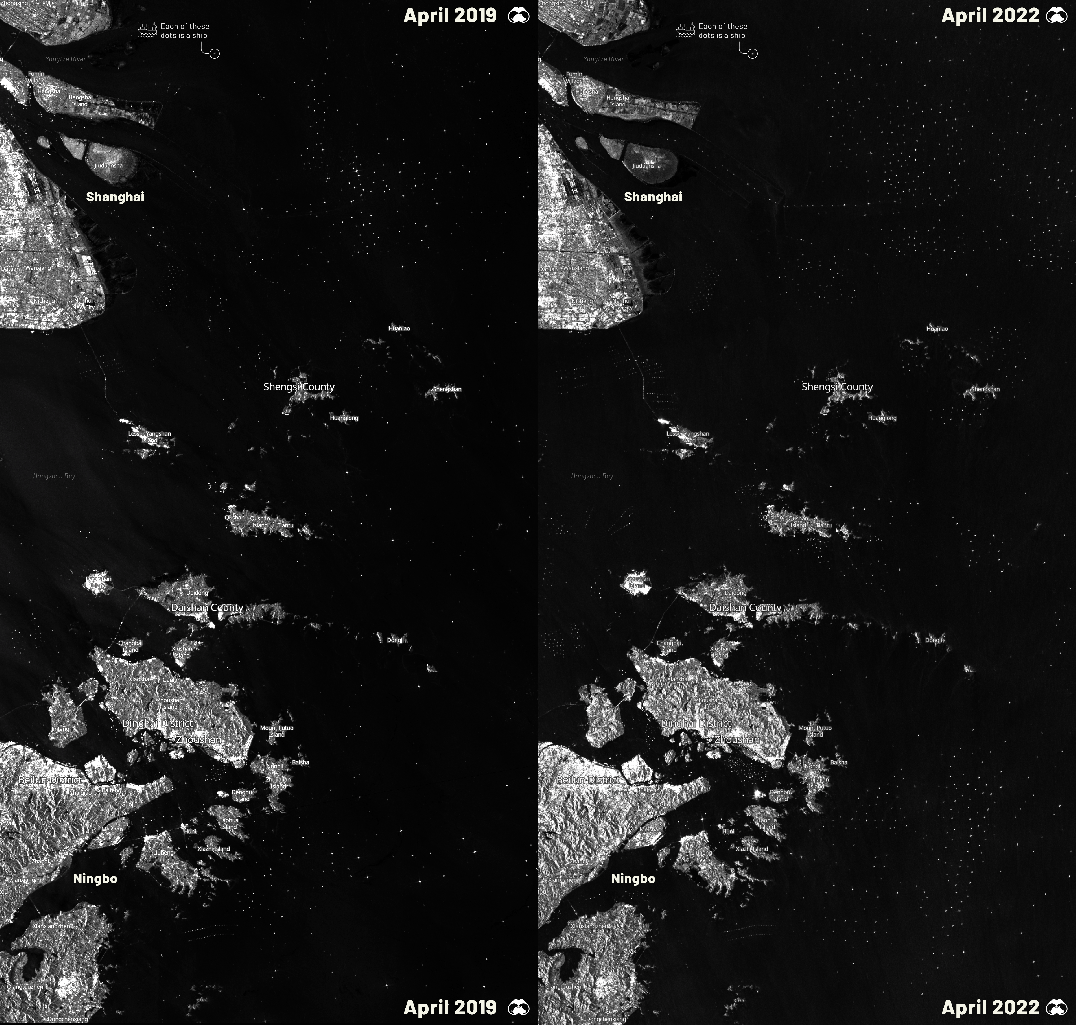
Here’s a closer look at satellite imagery that was captured by the Sentinel-1 satellite, which shows the current congestion at Shanghai’s port as of April 14, 2022. In the image, a majority of the white dots are cargo ships, many of which have been stuck in limbo for days.

Traffic has been building up at the Shanghai terminal. As of April 19, 2022, over 470 ships are still waiting to deliver goods to China. If you’d like to check out the Shanghai ports most up-to-date traffic, this live map by MarineTraffice provides real-time updates.

Much of these delays are due to transport issues—an estimated 90% of trucks that support import and export activities are currently offline, which is causing dwell time for containers at Shanghai marine terminals to increase drastically. 

Wait times for at Shanghai marine terminals has increased nearly 75% since the lockdowns began. Delays at the Shanghai terminal have sent ships to neighboring ports in Ningbo and Yangshan, but those ports are beginning to get congested as well.

The global impacts of this current bottleneck are still pending, and depend greatly on the length of Shanghai’s lockdown. According to an article in Freight Waves, this could turn into the biggest supply chain issue since the start of the pandemic if China’s marine shipping congestion isn’t cleared up soon.

Read Full Article Here!

Source: Visual Capitalist, article by Carmen Ang and Graphics by Nick Routley, dated 21 April 2022

USA – White House Announces New Initiative to Improve Supply Chain Data Flow

Last year, the ports and the private sector moved a historic amount of goods with record holiday sales and delivery times below pre-pandemic levels. Currently, real retail inventories excluding autos are six percent higher than at the end of 2019 and products at grocery and drug stores are 90 percent in stock, just 1 percentage point below pre-pandemic levels.

The US government is also focused on addressing the longer-term weaknesses in our nation’s supply chains, the result of decades of underinvestment, outsourcing, and offshoring instead of investment in long-term security, sustainability, and resilience. The Bipartisan Infrastructure Law (BIL) is now making a generational investment in our ports, highways, and other parts of our physical infrastructure, which will help speed up the movement of goods and lower costs. But we can further strengthen our goods movement supply chains by making a similarly bold improvement in a digital infrastructure to connect the supply chain.

To take the first step toward addressing this challenge, the US government is announcing the launch of Freight Logistics Optimization Works (FLOW), an information sharing initiative to pilot key freight information exchange between parts of the goods movement supply chain. FLOW includes eighteen initial participants that represent diverse perspectives across the supply chain, including private businesses, warehousing, and logistics companies, ports, and more.  These key stakeholders will work together with the Administration to develop a proof-of-concept information exchange to ease supply chain congestion, speed up the movement of goods, and ultimately cut costs for American consumers. DOT will lead this effort, playing the role of an honest broker and convener to bring supply chain stakeholders together to problem solve and overcome coordination challenges. This initial phase aims to produce a proof-of-concept freight information exchange by the end of the summer.

Recent supply chain disruptions have raised national awareness of the need for improved information exchange. Supply chain stakeholders deserve reliable, predictable, and accurate information about goods movement and FLOW will test the idea that cooperation on foundational freight digital infrastructure is in the interest of both public and private parties. FLOW is designed to support businesses throughout the supply chain and improve accuracy of information from end-to-end for a more resilient supply chain.

Resiliency—the ability to recover from an unexpected shock—requires visibility, agility, and redundancy. The lack of digital infrastructure and transparency makes our supply chains brittle and unable to adapt when faced with a shock. The goods movement chain is almost entirely privately operated and spans shipping lines, ports, terminal operators, truckers, railroads, warehouses, and cargo owners such as retailers. These different actors have made great strides in digitizing their own internal operations, but they do not always exchange information with each other. This lack of information exchange can cause delays as cargo moves from one part of the supply chain to another, driving up costs and increasing goods movement fragility.

View the entire Fact Sheet here!

Source: White House, 15 March 2022

Abu Dhabi Customs joins TradeLens

Abu Dhabi Customs hosted a workshop recently with key Importers and Exporters discussing how TradeLens and digitized transportation documentation has the ability to streamline processes in customs declaration processes.

 “Abu Dhabi Customs is excited to work with a group of importers and exporters to explore the benefits that collaboration using blockchain can offer to all those involved. This joint approach is critical to create time savings in the process and to improve access to international trade to all entities that trade with Abu Dhabi. We really believe TradeLens will be bringing a lot of benefits to our ecosystem here in Abu Dhabi”. – Yanal Qasim Mohammad Alkhasoneh, Division Director – Information Technology, Information Technology Division  

“The collaboration across public and private entities towards a single shared goal was immensely encouraging. The gathering of industry leaders, authorities, and ocean carriers to jointly and openly address international transportation documentation highlights the desire to improve existing processes using innovative digital tools like TradeLens”. – Thomas Sproat, Global Head of Network TradeLens

Source: TradeLens, 9 February 2022

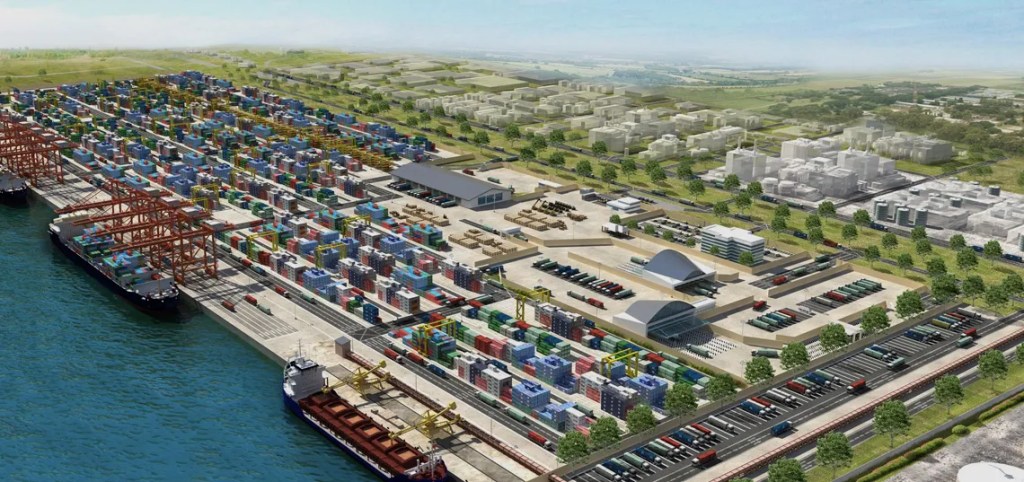
Nigeria – Lekki Seaport now 80% complete, to be commissioned 2022

The Minister of Transportation, Chibuike Amaechi, has urged contractors of the Lekki Deep Seaport Project to speed up work to enable the government approve all the necessary processes before the next election.

Mr Amaechi made this known in a statement on Saturday while inspecting the ongoing construction of the Lekki Deep Seaport Project in Lagos.

He, however, commended the contractors for the progress of work done so far stating that in less than five months, a lot of civil work had been done.

“I want to congratulate you for the very huge progress. By the time we came here, there were no civil works; it was just pure sand. You have tried.

“I am suggesting that if you work day and night you will go far and complete the work before commissioning. If the President sees it, approval will be easier.

“You need to speed up the work so we can get approval from the government side before election, process of election will be completed in July.

“This is because by law, six months to election people start politics and if you wait till that time, you won’t meet anyone in the office,” he said.

Mr Amaechi, however, said that the port should be automated to avoid all forms of physical contact.

Speaking during the tour, the Chief Technical Officer, Lekki Port, Steven Heukelom, explained that construction work on the project was on course and as scheduled.

He noted that dredging and reclamation works had reached 89.93 per cent completion, Quay Wall 85.65 per cent completion, Breakwater 79.66 per cent completion, and the landside infrastructure development 67.82 per cent completion.

He added that this brings total works carried out on the project to approximately 80 per cent completion stage.

Mr Heukelom also informed the minister that work had commenced on the marine services jetty, which the NPA would use to carry out their marine services obligation.

He commended the Acting Managing Director, Mohammed Bello-Koko, for the support and partnership in preparing the port to start operations.

Mr Bello-Koko reaffirmed the agency’s readiness to provide marine services for the port’s operations.

To this end, he disclosed that NPA was procuring tug boats and other necessary infrastructure for the smooth take-off of the Port.

In his remarks, the Chief Operating Officer of Lekki Port, Laurence Smith, reaffirmed the company’s commitment to delivering the project by the fourth quarter of 2022.

He noted that the EPC Contractor, China Habour Engineering LFTZ Enterprise, was working day and night to make this commitment a reality.

Mr Smith expressed confidence that the Port, upon completion, would be a world-class port and would become a regional distribution and transhipment hub for the African region.

The News Agency of Nigeria reports that Lekki Port is being developed by Tolaram and China Harbour Engineering Company.

The Lagos State Government and NPA are also shareholders in the project company.

The port is scheduled to start port operations by the end of 2022.

Source: PremiumTimesng, 23 January 2022

Former SpaceX Engineers making Electric & Autonomous Railway Vehicles

Former SpaceX engineers banded together to create a new startup looking to make electric and autonomous railway vehicles to revolutionize rail-based freight transport. They have a big task ahead of them.

The railway business is a tough one to break into. It’s a static oligopoly dominated by a few giants sitting on their railroad rights and making minimal investments to maximize profits.

Over the years, railroads were privatized in North America, and the businesses have no issues closing smaller railroads. They often close smaller railroads when they can’t find a way to make money off of them and focus on the most profitable routes with longer trains – often as long as 3 miles.

Despite those issues, freight trains have remained a good solution since they are about four times as efficient as trucks. But, with trucks expected to become electric and autonomous in the coming years, they are going to close the efficiency gap with trains.

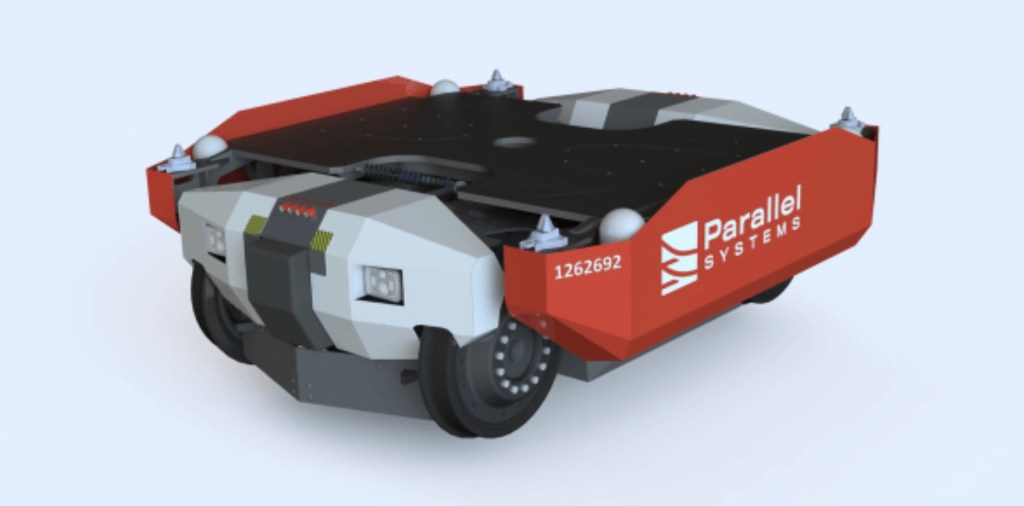
Now Matt Soule, a former long-time SpaceX engineer, has partnered with former colleagues at Elon Musk’s space company to launch a new startup, Parallel Systems, developing new electric and autonomous vehicles.

The company just raised $50 million in a Series A funding round and came out of stealth mode with an article in Fortune. The idea is to create small autonomous electric-powered rail vehicles that can enable a different way to use railroads.

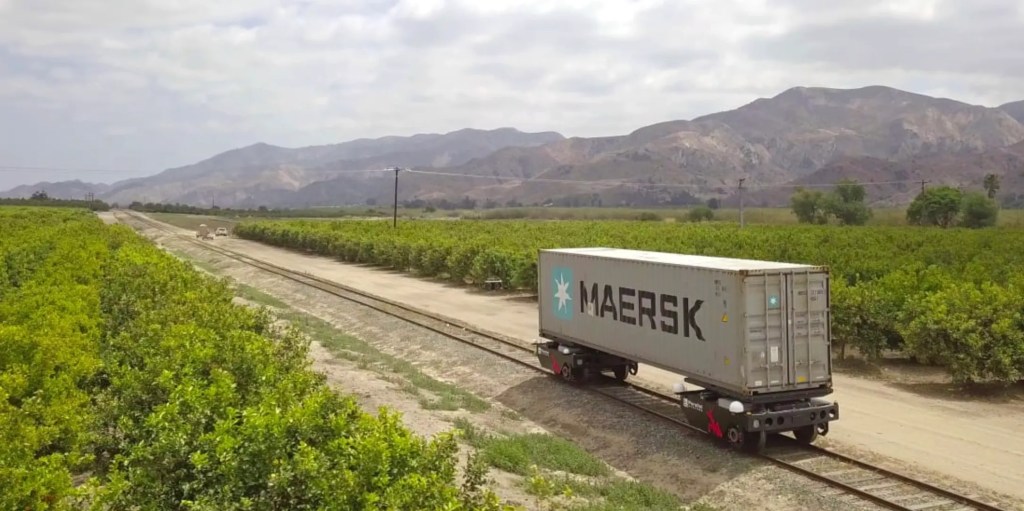
You can drop the cargo on individual Parallel Systems vehicles and have them move without waiting for the whole train to be unloaded.

As for the vehicle itself, Parallel Systems vehicles can carry 128,000 pounds, which is more than twice the capacity of a semi-truck. The vehicles have a range of 500 miles on tracks and can charge in about an hour.

Visit Elecktrek’s webpage for the full article and related media.

DP World Komatipoort – Handles First Import

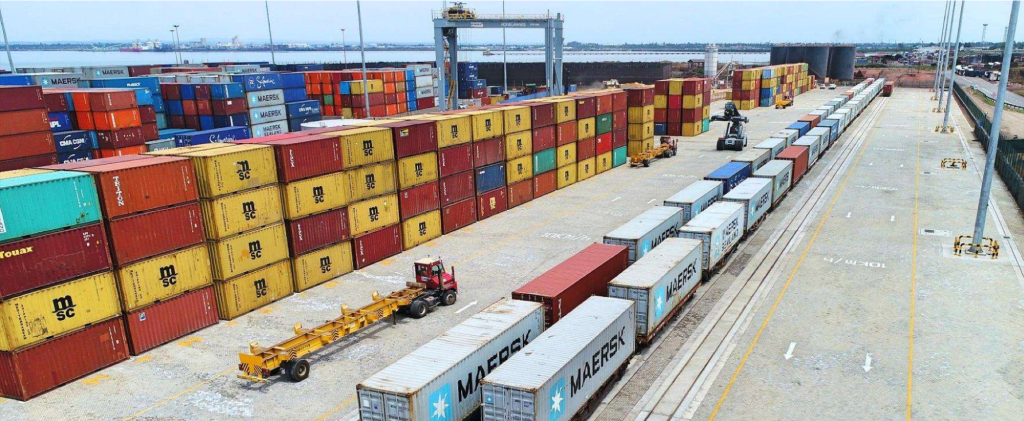
Trade solutions multinational DP World has completed the first transit import through the DP World Maputo port, in Mozambique, to DP World Komatipoort, in South Africa.

This is a significant milestone as it demonstrates that the Maputo port can be seamlessly used as a gateway to South Africa, the company says.

International container imports landed in the Maputo port and destined for the South African hinterland can be moved under bond to Komatipoort where full customs clearance can be provided and made ready for delivery across South Africa.

“The Komatipoort facility as a bonded container depot is a game changer for the Maputo Corridor. The success of the trial brings DP World a step closer to enabling a more cost effective, seamless and efficient user experience for our local customers and enhances trade linkages for countries in the Southern African region,” DP World Maputo CEO Christian Roeder says.

Currently, in South Africa, 69% of maritime imports are transported through the Port of Durban. Local customers now have the option to consider using the Maputo port as a gateway to transport their international freight to Komatipoort where it can be cleared more easily and efficiently for customers based in and around Gauteng.

DP World Komatipoort has a full-service offering and links via the Maputo Corridor to DP World Maputo’s modern and efficient container terminal where there is no vessel and port congestion, as well as fixed berthing windows available to major shipping lines, which provides customers with transport savings and avoids delays for consignees in Mpumalanga, Limpopo and Gauteng.

Once a shipment is retrieved at the DP World Maputo port, the organisation handles the entire supply chain process from there to Komatipoort without delay and beyond to various areas in the hinterland. While the cost of this service varies per user, the service is estimated to be equivalent in costs or cheaper compared to traditional routing through Durban.

However, it is more efficient, especially for the northern areas of the country, DP World note.

Source: Engineering News, Schalk Burger, 3 May 2021

Kazungula Bridge nears completion

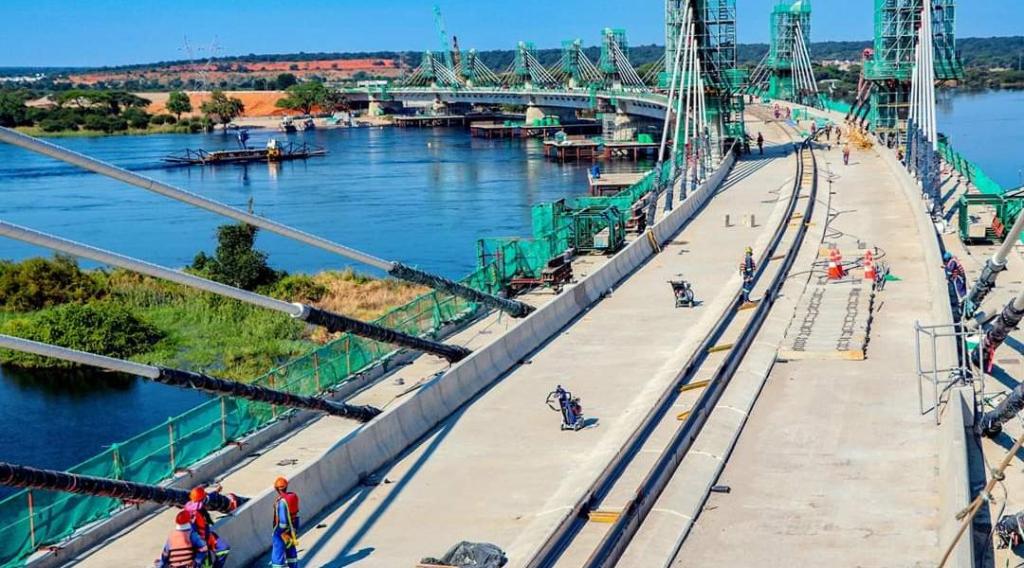
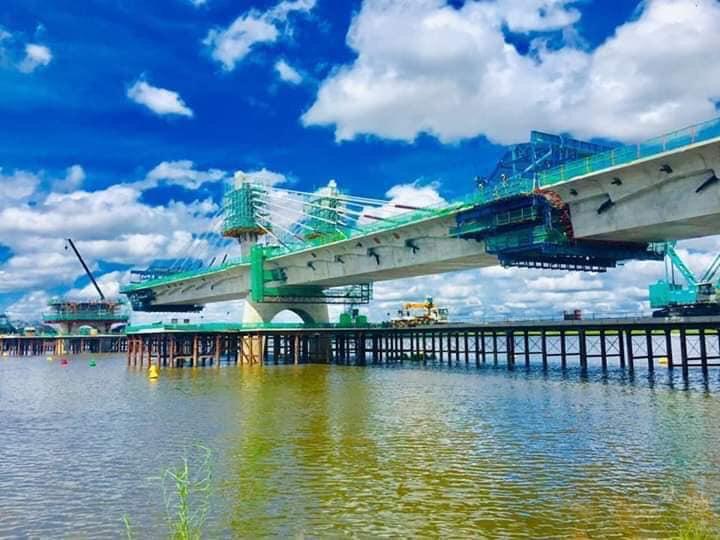
Construction of the Kazungula bridge which will connect Zambia and Botswana and ultimately link the port of Durban in South Africa to the Democratic Republic of the Congo nears completion and by end of 2020 it is expected to be open to the public.

The Kazungula Bridge is located at the Kazungula crossing, where Botswana and Zambia share a border measuring about 750m over the Zambezi River. It is also at the confluence of Zambezi and Chobe rivers, and the meeting point of the four southern Africa countries – Botswana, Namibia, Zambia and Zimbabwe.

The US $259.3m project was officially launched in September 2014 by then Vice-presidents of Zambia and Botswana, and is financed by the African Development Bank (AfDB) and the two governments. The multi-million-dollar project was hailed as the Southern African Development Community (SADC) economic integration success stories, one of the missing links to realizing the North-South Corridor identified under the Regional Infrastructure Development Master Plan (RIDMP).

Kazungula Bridge under Construction

The new bridge will facilitate trade with Botswana and within the SADC region. The project, which entails a 923 metre-long rail/road extra dosed cable stayed bridge with approach roads as well as construction of one stop border posts on the Zambia and Botswana sides; was scheduled for completion last year but failed due to Zambia’s failure to pay.

The bridge is expected to reduce transit time for freight and passengers, boost the regional economy and even increase global competitiveness of goods from Botswana and Zambia due to reduced time-based trade and transport costs.

HMRC – Border Operating Model with the EU

From 1 January 2021, the transition period with the European Union (EU) will end, and the United Kingdom (UK) will operate a full, external border as a sovereign nation. This means that controls will be placed on the movement of goods between Great Britain (GB) and the EU.

The UK Government will implement full border controls on imports coming into GB from the EU. Recognising the impact of coronavirus on businesses’ ability to prepare, the UK Government has taken the decision to introduce the new border controls in three stages up until 1 July 2021.

Her Majesty’s Revenue & Customs (HMRC) published the first iteration of the Border Operating Model in July 2020, setting out the core model that all importers and exporters will need to follow from January 2021 as well as the additional requirements for specific products such as live animals, plants, products of animal origin and high-risk food not of animal origin. We also provided important details of Member State requirements as traders and the border industry will need to ensure they are ready to comply with these, and not just Great Britain (GB) requirements. Indeed, as set out in the recently published ‘Reasonable Worst Case Scenario’ assumptions, it is largely the level of readiness for Member State requirements which will determine whether there is disruption to the flow of goods at the end of the transition period. This is why we have included additional signposting to those requirements throughout the document, and are encouraging all GB businesses not just to ensure their own readiness but also the readiness of EU businesses to whom they export, and throughout their supply chains.

Since July, the HMRC has worked closely with industry to further develop plans for the end of the transition period, and also to respond to industry questions since the publication of the first iteration of the Border Operating Model. This latest iteration of the Border Operating Model provides additional information in a number of key areas as set out below as well as clarifying a number of questions from industry.

You can access the HMRC Border Operating Model here.

Harmonised Message Structures for International Forwarding and Transport Messages on the way

NEWS From the GEFEG Blog

UN COVID-19 project to support data exchange for international supply chain processes

The emergence of COVID-19 has shown an increased demand for coordination, efficient planning, modelling and risk control in many areas. The United Nations Economic Commission for Europe (UNECE) and its trade related United Nations Centre for Trade Facilitation and Electronic Business (UN/CEFACT) are strongly supporting multilateral engagement for interoperable cross-border standards, such as UN/CEFACT Data exchange Standards.

Multi-Model Transport Reference Data Model Ready for use

Many current regulations, standards, instructions and business capacity-building measures are available already. The comprehensive Multi-modal Transport Reference Data Model (MMT RDM) covers the requirements of international forwarding and transport, including related trade, insurance, customs and other regulatory documentary requirements based on the integration of trade facilitation best practices, developed by UN/CEFACT.

COVID-19 Project lead by GEFEG: Development of a standardised data set for the Transport sector

On behalf of the UN, GEFEG provides the project lead for the COVID 19 project. The project concentrates on ensuring the flow of goods and the transport across the various transport modes. Its overall objective is to set up a multi-modal harmonized set of mainly transport documents as a profile of the UN/CEFACT Multi-modal Transport Reference Data Model (MMT RDM).

The data sets developed include seven electronic exchange messages such as Booking Instruction, Shipping Instruction, Waybill, Bill of Lading, Packing List, Status Messages, Rapid Alert Security Food and Feed (RASFF) and their Business Requirement Specifications (BRSs). It has been checked that every data element with the same name also has the same semantic meaning.

The new profile of the MMT RDM will build a bridge to the already existing electronic exchange formats and allow a better use of state-of-the-art technologies such as block chain and APIs regarding the different transport modes.

Focusing on the different transport modes in the next phase

Additional information will be collected in the next phase, with a stronger focus on the different modes of transport. Results will be reported back to the Multi-modal Transport RDM and change processes initiated regarding relevant yet missing information in the MMT RDM. And last but not least, profiles of the MMT for the different modes of transport, such as air, rail, road, and maritime will be published.

Michael Dill, CEO of GEFEG is looking forward to welcome further participants in the project: It will be important to get advice and hints on any missing data requirements across the various modes of transport! I would like to encourage colleagues involved in transport processes to join the next phase of the project. Your valuable input and expert knowledge would be very much appreciated.”

Interested parties wishing to participate in the project should contact info@gefeg.com with subject detail: New Participant in COVID-19 project.

Source: GEFEG News Blog, dated 16 September 2020

HMM’s 24,000 TEU boxship fleet is complete

Picture: HMM

South Korean container shipping line HMM has has completed its fleet of mega-ships with the unveiling of the 24,000 TEU HMM St Petersburg

The announcement marks the end of a two-year journey for HMM to provide “efficient and stable services” by using larger containerships. In an online update the carrier said all 12 of the vessels will be deployed on the Asia-Europe service.

The HMM St Petersburg was built by Samsung Heavy Industries (SHI) and delivered on September 11. Five of the vessels were built by SHI with the other seven by fellow Korean shipbuilder Daewoo Shipbuilding and Marine Engineering (DSME). 

Additionally, it will receive eight 16,000 TEU containerships from Hyundai Heavy Industries (HHI), due to be delivered in the second quarter of 2021. This will take its new fleet to 20. 

The 12 24,000 TEU vessels have been fitted with scrubbers and an optimised hull design that cuts emissions and increases fuel efficiency. 

The first vessel of the mega-ship fleet, the HMM Algeciras was unveiled in April 2020 and remains the largest in the world. 

South Korea’s maritime industry, in particular its shipbuilding sector, has suffered substantially since Hanjin Shipping went bankrupt in 2017.

Source: Port Technology, 15 September 2020

New terminal at Walvis Bay becomes fully operational

The new container terminal at the Namibian Port of Walvis Bay is now fully operational, according to a report by the African Development Bank (ADB). 

In a statement, the ADB said the terminal was built on constructed on 40 hectares of land reclaimed from the ocean by China Harbor Engineering Company Ltd (CHEC) as part of a project worth $300 million. 

It will, according the the bank, turn Walvis Bay into becoming a logistics hub for southern Africa to meet the growing regional demand for freight and provide maritime access for landlocked countries of the Southern Africa Development Community (SADC).

The African Development Bank provided a ZAR 2,982 million ($178 million) loan representing over 70% of the project funding.

The works included the dredging over 3.9 million cubic metres of sand, used partly for the reclamation, construction of a 600-metre quay wall, the laying of 304,000 square metres of paved surface and the construction of a workshop and administrative buildings. 

It also entailed the installation of four ship-to-shore (STS) cranes, the construction of a one-kilometre road, the laying of 2.3 km of rail lines, and the installation of service networks. The facility’s electricity supply was also successfully upgraded, the report noted.

“Overall, the project has fully achieved its goals,” the report said, increasing the terminal’s capacity from 355,000 TEUs (20-foot equivalent unit) to 750,000 TEUs yearly. It has also reduced vessel waiting time to less than 8 hours and cut container transit time from 14.5 days to 9.5 days. 

Expanded activities required the training of seven pilots and 26 ship-to-shore crane operators, including one woman.

The demand for services from the port of Walvis Bay has increased by about 8% following the commissioning of the new terminal, the report notes. Cargo volumes, revenues and income from other services (maritime, port, berth and light dues, and other storage and handling fees) are expected to increase by at least 8% in 2020 and 2021. After that, growth should reach 5% yearly the report projects.

The project completion reporting team was led by Richard Malinga, Bank Principal Transport Engineer and Task Manager for the project.

The Walvis Bay expansion aligns with the Bank’s High-5 strategic priorities, including promoting the integration of Africa.

Source: Porttechnology, 11 September 2020