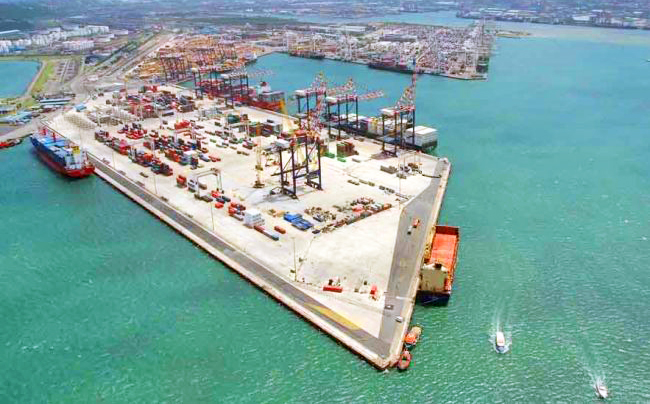
Price of Modernisation – technology encroachment and people displacement

An interesting dynamic has developed with the introduction of ICT in business. In the customs and trade environment there are a few fundamental objectives around which technology has proven to be effective –

  • Elimination of tedious labour intensive paper delivery and manual distribution processes.
  • The ability to generate more work, in dramatically shorter timeframes thereby improving customer expectation and service delivery.
  • Seamless replication of a common message or instruction across a broad spectrum of stakeholder’s networks to enable better planning and execution of ‘the next steps’ in the supply chain process.
  • Rules driven automated processes that eliminate human intervention and more specifically, human intuition. Why? Because people make mistakes.

We see this everywhere. Electronic trading with your bank, customs broker, revenue service, or online shopping store. All these enterprises have developed (and to a large degree perfected) complex rules-based systems which work effectively 90% of the time. Your trouble occurs if your transaction happens to fall into the 10% category. Once again companies have recognised that there is a role for people to play. It also happens to be a conditioned environment based on the principle of tiers and handovers – the Call Centre. This is where the ‘customer’ generally encounters an ignoramus at first; and hopefully, through the process of escalation, finally speaks to someone with the knowledge to assist and resolve the enquiry. All the same, this is a faceless experience and the chances are you may never get to speak to that ‘consultant’ again, in the time of need.

In time the branch offices will close, with online facilities having become the way of life. No more need for the maintenance of real estate, storage vaults for paper records, and costly expenditure on people you once grew fond of as your local branch manager and friendly staff. Peace of mind has given away to convenience. The extent of technological advancement in many organisations is such that with payment mechanisms all being electronic, any impact or potential for disruption to day-to-day operations is virtually negated in the event of industrial action. The cost to business benefit of a new system far out-weighs the onerous responsibility of maintaining a traditional branch office – it’s a no-brainer!

In as much as man has been weary of progress since the invention of the wheel, so today, the average employee questions the rationale of it all, and where his/her future lies. And herein lies the dilemma – what to do with all the displaced people. In the private sector it’s rather simple (if not tragic) – just retrench the excess. For government departments and parastatal organisations, i.e. semi-autonomous branches of government, it’s not that easy. Nobody can be put out onto the street. It is therefore up to individual employees to consider their options. It’s time to wake up, you are still fortunate. Bursary programmes are available, so seek out an opportunity to improve your lot in life, perhaps in a totally different field from the one you have become accustomed to.

Port Community Systems – a voyage of discovery

Port Community SystemSince the mid-1980’s the concept of port community systems have abounded in various guises. Portnet (now Transnet Port Terminals / National Ports Authority) initiated a drive around this time as well, however the maturity of B-2-B e-commerce, at the time, was in its infancy and there were simply not enough ‘takers’ due to the unknowns such as ‘cost’ and ‘what’s in it for me’. Similarly, the air cargo community – in Europe especially – operated what was called ‘cargo community systems’ (CCS), most of which were operated by a value added network operator who provided the infrastructure and together with an ‘industry/community’ project team developed all the necessary transaction interchanges to facilitate data exchange between participating trade and logistics entities. Some of these CCS’s interfaced with Customs, but mainly serviced the forwarding and cartage community. Towards the end of 1998, South Africa established its very own known as ZA-CCS. Like Portnet’s endeavour, it was perhaps ahead of its time with very few participants to support the anchor sponsor, being the South African Airways. Two years later SARS implemented its EDI programme, and so developed a new era in information exchange for the customs clearing fraternity. The number of service providers also increased to support a burgeoning need for ICT capability. Mainframe systems gave way to thin client and PC-based solutions making it all the more affordable and accessible to the greater trading community.

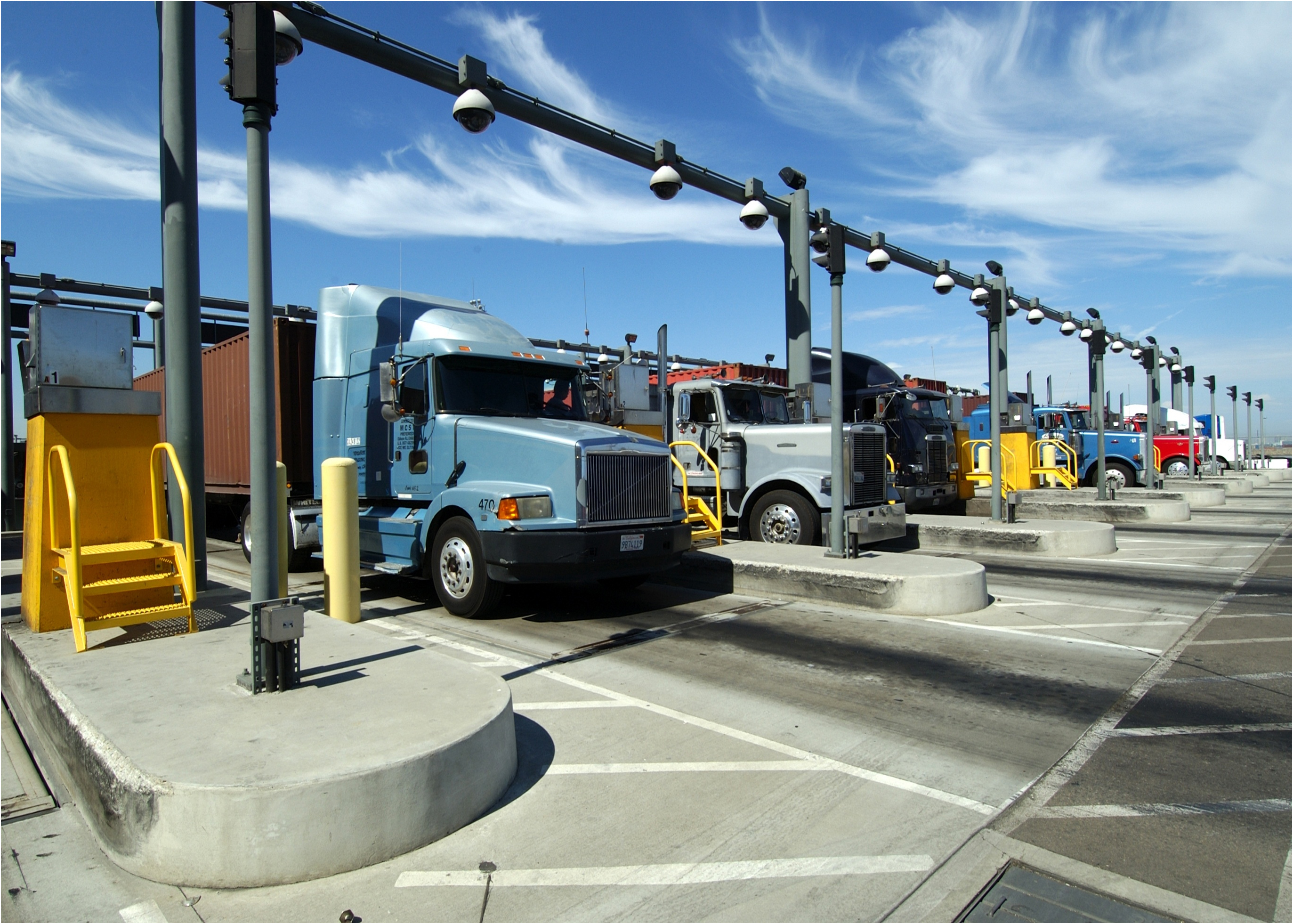
In the US, Los Angeles has spent considerably more installing security cameras than ports have spent in other countries on setting up a Port Community System. However these have yet to prove their worth in the lucrative US market. Much like the voyages of discovery to the New World 500 years ago, Port Community Systems are taking their time to spread beyond Asia and Europe. In the US, they are virtually unknown outside their uses in security and safety.

European ports have undoubtedly benefitted from PCS in varying forms. An outstanding system is Portbase, linking Rotterdam and Amsterdam in virtually every activity. So far, 40 different services are offered, with Notification of Dangerous Goods next in line. The big test in extending Portbase lies in fitting the programme into less homogenous conditions elsewhere.

At Gothenburg in Sweden, the most significant aspect was integrating with the government systems, regulations and requirements – especially in areas such as control of dangerous goods and waste disposal. The single window application is a key to success. Based on a module approach, three sub-programs – the Vessel Clearance System, Marine Service System, and Cargo Management System – cover the spectrum of operations linking port customers, users, management and government authorities.

In developed countries the differences are marginal when new systems are set up, because every port is already heavily computerised. In emerging markets even the most basic computer system can mean a huge step forward. It’s also a big plus when free trade agreements are signed. Customs administrations will zero in on the most efficient port as the designated Trade Zone or bonded manufacturing facility. The more efficient a port, the more likely that it will be used as a trade lane.

In the US, the focus of information exchange is almost solely on safety and security, a consequence of the 2001 terrorist attacks. Commercial and operational information sharing is almost non-existent, and the reason is the extremely competitive culture that pervades business.

The universal opinion is that terminal operators and port authorities jealously guard their business models and details from rivals. It’s all a case of ‘you jump in first’. There is a total refusal to be the first to set up a system – the competitors would be only too happy to plunder the information without giving anything back in return. In complete contrast, the approach to security and safety is “the more the better“. (In South Africa we refer to it as a ‘data rich’ environment). These are undoubtedly interesting times we live in. Source: PortStrategy.com.

SARS experiments with QR Barcodes

With growing adherents to the smart phone and tablet market, the number of technology apps seems endless. Also, as most of us are continually on the move it makes sense to be able to access important documents or files without having to lug around the laptop computer. Both Apple and Android have a vast library of downloadable QR barcode applications – most of them free of charge! While up until recently, many magazines and the like carried the URL for an advertisement or article, it is now possible to scan a QR barcode in any publication/print media merely using the onboard camera on your tablet or smart phone. The software deciphers the barcode and will automatically open up the file, video clip, or other media contained within the URL.

Visit http://www.mobile-barcodes.com where you will find links for readers and software for virtually all available smart phones. Who knows, one day you may be able to download your customs status and release information without having to be at your desktop. It seems that with some innovation and thought such a seemingly simple application can become a powerful information and decision-making tool. Try out the QR-code.

Cargo Dwell Time in Durban

An acquaintance in the forwarding industry brought this working paper to my attention. Titled “Cargo Dwell Time in Durban“, it is very useful reading for logistics operators, Customs and government agencies, and policy makers. The object of the working paper attempts to identify the main reasons why cargo dwell time in Durban port has dramatically reduced in the past decade to a current average of between 3 and 4 days. A major customs reform; changes in port storage tariffs coupled with strict enforcement; massive investments in infrastructure and equipment; and changing customer behavior through contractualization between the port operator and shipping lines or between customs, importers, and brokers have all played a major role. The main lesson for Sub-Saharan Africa that can be drawn from Durban is that cargo dwell time is mainly a function of the characteristics of the private sector, but it is the onus of public sector players, such as customs and the port authority, to put pressure on the private sector to make more efficient use of the port and reduce cargo dwell time. The Working Paper is the product of the World Bank’s Africa Region, Transport Unit, being part of a larger effort  to provide open access to its research and make a contribution to development policy discussions around the world. Policy Research Working Papers are also posted on the Web at http://econ.worldbank.org

Related articles

SARS and SARB – Closing the international trade transaction loop

SA Reserve Bank, PretoriaSince the recent implementation of the Import Verification System (IVS) by the South African Reserve Bank (SARB), local traders would have come to realise that processing a forex transaction at the local bank has come more and more under scrutiny. Why is this? For one, all import and export trade transactions processed through Customs are relayed electronically to the Reserve Bank. Historically, the Bank has been responsible to ensure that South Africa maintains good account in terms of its balance of payments, ensuring that fiscal inflows and outflows are fully and lawfully accounted for. For government to operate accurately, it needs to know exactly what is occurring in this space. On the one hand trade statistical information provides both the Bank and National Treasury vital information which informs its fiscal policies. Trade and Industry (DTI) likewise use trade statistics to maintain a grip in terms of trade policy which governs the duty structure on imported goods as well as oversee the effectiveness of various duty relief (rebate and drawback) schemes. Like all things new,  the South African importer and exporter’s experience with the local commercial bank might prove a bit tedious and painful, given the added scrutiny and awareness of bank officials. These controls are however necessary and in keeping with government’s broader objective to ensure that fiscal and trade control measures compliment new enhanced supply chain security initiatives. To this end, SARB and SARS have initiated a dedicated line of support to facilitate query resolution.

Shakeup!

Unpacking of the Customs draft Bills reveals more and more surprises – despite the fact that there is still no site of the subordinate rules. Without any shadow of doubt, the ‘clearing and forwarding industry’ will be hardest effected by the ‘change’.  Why is this? Well there are a number of factors.

Firstly, this industry has always faced the immediate brunt of the law. Customs historical focus on the goods declaration – to ensure optimum revenue collection – has always relied on a high degree of competence and compliance from this sector.  As mentioned before, ITC has made significant inroads in this industry to the extent that specialisation in qualified entry clerks (for instance) is no longer an attribute in this sector. Consequential developments, and in particular, the creation of an deferment scheme gave ‘clearing agents’ even more flexibility to manage cash flow and minimise administrative burden. Several clerks and runners either lost their jobs or were otherwise absorbed in the company.  The first round of accreditation also gave forwarding brokers some leverage to accrue their client base. This did however prove ineffective from a compliance point of view especially where shady shippers merely used brokers for their apparent accreditation. Many brokers did however institute due diligence mechanisms to vet existing and prospective clients to ensure their own credibility and compliance with SARS.

Secondly, the specialised skills in valuation, tariff and trade remedies became more difficult to hold onto. This expertise will be found now mostly in the big ‘audit firms’. Still, the larger forwarding houses have retained some of these skills as it is vital to their overall service offerings to local conglomerates and multi-national clients.

Thirdly, the emergence of ITC service providers has likewise created a niche industry that for all intents and purposes seeks increased business knowledge and understanding of the customs compliance regime. Growth in this sector can be attributed to an organic increase in the need to service a greater and more mechanised supply chain. This has been particularly beneficial to the Customs Modernisation Programme as these entities have been relied on to champion the ICT change externally for Customs.

Naturally, the ‘clearing and forwarding’ sector will bound to feel some pain, as there would appear to be no less emphasis of Customs’ pressure on them to maintain ‘seemingly impossible’ levels of compliance. Forwarders would also no doubt feel some level of grievance in that there is still no visibility of parity in the supply chain. By this I mean the allocation and expectation of binding agreements (legal obligations) by SARS on other supply chain operators – carriers, transit sheds, terminals, etc.  Truthfully, this is being done albeit slow and tedious.

Change, despite all the anxiety it creates, brings about opportunity. My wish is that all parties recognise this and make the best of the situation, irrespective of the challenges. In this latter regard challenges relate to the mercenary-like approach of some role-players versus, honesty and business acumen of others. In todays’ world, being scrupulous and morally right does not always translate into being successful or prosperous. Modernisation implies that everyone changes! Some casualties are inevitable.

Next up: We’ll discuss the attributes of the bills in terms of liability, compliance and punitive measures.

Mandatory reporting of Cargo Carrier Code

On Sunday, 31 July 2011, SARS will implement a stepping stone towards full cargo/declaration matching and acquittal. All goods declarations must reflect a valid cargo carrier code as part of the house waybill number data field.  The requirement was implemented successfully in the sea cargo environment some years ago with the launch of the old Manifest Acquittal System; the challenge now lies largely within the air cargo community.

The ‘House Waybill” data field comprises two parts – The first part must reflect the Cargo Carrier Code (Eight-digit Alpha Numeric Code). This is the code assigned by the Automated Cargo Management (ACM) system to the entity who issued the House Bill of Lading e.g. the Groupage Operator or his appointed agent in the Republic. The second part must reflect the actual number of the transport document.

By way of faciliatory gesture to legitimate importers who may be blissfully unaware of the non-compliance of their forwarding agent / carrier, SARS will allow the insertion of a specific code “ZZZ99999” for non-compliant cargo reporters. This code must only be used in the event the cargo reporter is not registered with SARS for submission of cargo reports to ACM. The facility is a temporary measure which will be withdrawn after a short period.

In the event a declarant inserts the aforementioned code, the associated declaration will be selected by the customs system for scrutiny by a customs official. In order to remedy any delay to an otherwise legitimate import, the unregistered cargo reporter must immediately identify themselves to SARS by way of disclosing their company name and contact details to enable SARS to expedite registration of the entity for ACM compliance. The sooner this is accomplished the quicker the importer can obtain release if there is no further outstanding impediment.

Subsequent registration of the non-compliant carrier could also result in the imposition of a penalty against the entity concerned. Therefore as of 31 July 2011, declarants will need to be more vigilant concerning the status/standing of their local forwarding agent in regard to compliance with SARS reporting requirements. Once the temporary dispensation above is withdrawn, the effect of a customs intervention will directly impact on the release of an importer’s goods.

Freight forwarders, Customs Brokers and Service Providers are urged to make their clients and business partners aware of the new developments to mitigate disappointment.  For more information refer to the SARS Modernisation webpage.

Draft Taxation Laws Amendment Bill, 2011 – Impact on Customs

As if the myriad of changes affecting the Customs industry are not enough, there’s some more important considerations for customs traders and practitioners, soon, posed by the Draft Taxation Laws Amendment Bill [2011].

Goods Sold in Bond. For the purposes of the VAT Act, the Bill proposes that ‘the value to be placed on the importation of goods into the Republic which have been imported and entered for storage in a licensed Customs and Excise storage warehouse but have not been entered for home consumption shall be deemed to be the greater of the value determined in terms of subsection (2)(a) or the value of acquisition determined under section 10(3) if those goods while stored in that storage warehouse are supplied to any person before being entered for home consumption.’

Duty free goods imported on a temporary basis. Goods imported in terms of Rebate Item 470.03, which are duty free, will in future have to be declared under a specific rebate sub-item for duty free goods. In addition, provision is also to be made for the importer of duty free goods, where the importer is contractually entitled to keep a portion of the goods manufactured, processed, finished, equipped or packed in lieu of payment for the operations carried out, that importer must:
a) export those goods within the 12 month period, or
b) process a goods declaration for payment of the VAT on the goods retained and pass a voucher of correction amending the quantity and value of the original declaration.

New tax incentives for Industrial Development Zones. Government is seeking to renew its efforts to enhance the Industrial Development Zone (IDZ) regime to encourage industrial development within certain geographical areas. The main focus of the incentive is to promote capital expenditure. Greenfield projects receive an additional 55% allowance and brownfield projects receive a further 35% additional allowance. The additional allowance for greenfield projects located in IDZ’s will be increased to 100% (instead of the current 55%) and to 75% for brownfield projects (instead of the current 35%).This change will be welcomed by IDZ Operators that are constantly looking for ways to make IDZ’s more attractive. In terms of the Customs and Excise Act, it should be noted that duty rebate and VAT dispensations ONLY apply to entities establishing licensed premises within the customs controlled area of an IDZ.

For more information on the above please click here!

The Draft Taxation Laws Amendment Bill, 2011 is available on the SARS website.


SARS honoured by WCO for World Cup work

SARS receives WCO Award

Acting Chairperson of the WCO Council, Zouhair Chorfi (left) with SARS Commissioner Oupa Magashula and WCO Secretary-General Kunio Mikuriya at the award hand-over

A special award was recently presented to SARS by the World Customs Organization (WCO) in recognition of SARS Customs’ commitment in the fight against counterfeiting and piracy, in particular before and during the 2010 FIFA Soccer World Cup. South Africa was flooded with counterfeit products, particularly clothing and footwear, in the run-up to the World Cup, and SARS Customs pulled out all stops to prevent these goods from entering the country. Approximately R350 to R400 million worth of counterfeit goods, including over 1.1 million Bafana Bafana shirts, were confiscated by Customs during this time. The award was handed over to the Commissioner of SARS at a WCO Council meeting in Brussels at the end of June. Source: SARS eNews

For more pictures of the WCO Council Session 2011, click here!

Modernisation Release 2 under scrutiny

Significant changes to South African Customs internal declaration processing and inspection procedures were introduced just over two weeks ago under the banner of Release 2. From the outset it was clear that while technical developments had attained a level of stability through a substantial testing process, both internally and with external traders, the real impact would only be gauged upon implementation, or to quote a ‘sage’ in SARS – when the users begin to use the system in anger.

For traders, the biggest challenge lay in two areas: use of the new E@syScan software – a facility to scan, package and submit shipping documents to Customs – the intellectual property having been provided ‘free of charge’ to the industry’s service providers for integration in their proprietary offerings to the business community. Secondly, the operational interaction of traders with Customs branch offices in regard to the new case management and inspection system.

As was expected, there were some issues which challenged users, particularly in the area of amendment declaration processing (VOCs) and the inspection process. Tempers flared and patience was pushed to the limit. In some instances  delays resembled the kind of customs response times last seen prior to implementation of EDI in 2000. There were times too, when frustration levels so overwhelmed local customs staff, the issues spewed over to confront head office personnel.

Let’s not forget that there are no exemptions from financial loss during times like these. It’s not as though supply chain operators are going to be lenient and forgiving for shortcomings and delays in other quarters. No, these are the times of frustration and distress. On the one hand, the potential (and reality) of loss of business, and on the other, a yearning desire for better insight and judgement as to what to do when things are haywire.  At the heart of this lies the technology with it’s numerous interfaces, store and call procedures, dealing with the millions of instructions per second on which hang the expectations of all the users across the country. It matters not how much scenario testing and training occurred prior to implementation – this is the real deal.

The shortcomings of Customs have been highlighted by many, but the pandemonium and chaos at service provider call centres and indeed at clearing and forwarding houses escapes scrutiny and criticism. A finger-pointing exercise is most definitely counter-productive. What has been planned through the Modernisation Programme is indeed with the best intentions of the country in mind – of this most parties will agree. The fact that people’s comfort zones are jolted is what causes the pain.

With the logic and decision-making of customs and trade business activities becoming more and more embedded in the information systems we use, the frustration and helplessness of the user will continue until such time as these systems stabilise and the users become more trusting. The ‘challenge’ for systems builders and users lies in their ability and willingness to communicate and exchange the issues, solutions, and temporary workarounds. Clearly we have some way to go in this department. Users want systems and the convenience they bring. They are however not very forgiving when things go wrong; tolerance and understanding in short supply. Get used to this; there are at least another half-dozen forthcoming Modernisation Releases. In Part2 I’ll discuss some of the transitional pains which lie ahead. I also encourage readers to share their views on the matter – please be constructive.

Why are customs and excise taxes treated differently and left outside of the fold of the Tax Administration Bill?

SARS moved forward in creating a new legislative framework for tax when updates to the Tax Administration and Customs Control Bills were published for comment. Werksmans Attorneys Director Alison Wood says contradictions between the Bills may cause delays.

Read the full article titled Second Draft Customs Control Bill – why are customs and excise taxes treated differently and left outside of the fold of the Tax Administration Bill?

Source: Creamer Media

Customs Bill makes Local Headlines

The Business Day has published an article featuring the Customs Bills. Prominent attention has been given to the question of penalties under the new dispensation. Given months of industry analysis of the Bills, I think it is a welcomed occurrence that the topic has reached the press. For the full article please click  HERE!

Help with applying CPCs is here!

Apply-CPCs-betterSARS has recently produced a two-part guide to assist Customs Users in the application of Customs Procedure Codes (CPCs). This comes on the back of several enquiries concerning procedures from both the trade community and customs officers. The guides have been prepared in two parts to begin with.
Part 1 provides the user with a table of the permissible CPCs against which he/she can identify the appropriate codes that preceed that which appears in the table. For example, if you wish to clear warehoused goods, in bond, from one customs warehouse to another customs warehouse using CPC E43 42, then you must already have lodged a preceding clearance with CPC E42 00; E42 20; or E42 37. Part 2 provides the same table of CPCs, this time illustrating what CPC codes are available for use for a secondary or followup clearance. For example, , if your original or primary declaration declared goods directly into a Customs Warehouse under CPC E40 00, then your follow-up or subsequent options will be A10 40; A11 40; A13 40; A14 40; A15 40; E41 40; E43 40; F53 40; H67 40; J80 40; or K85 40.

It is important for the Customs User to understand that these are the ONLY applicable CPC combinations, and that the customs system will not permit any variations on these. Most computer service providers have likewise built-in system rules which only allow the CPC codes as permitted. It is precisely because of past mis-use of purpose codes that lead to CPCs being introduced. Users will also now notice that any CPC combination where the previous procedure code is not ’00’ must reference a previous customs declaration. This therefore provides a complete audit-trail of a transaction from point of entry/exit through to its final state, providing the trader improved evidence of his/her compliance with the law. In the coming months, my companion blog Paperless Customs Clearance will provide detailed guidance for all CPCs.

 Related articles

Modernisation Release 2 – Trader Pocket Guide

Customs Trader Pocket Guide 2nd EditionImporters, exporters, freight forwarders, specialist trader practitioners and service providers can visit the SARS Customs Modernisation webpage and download the 2nd edition of the “Trader Pocket Guide“. Traders will find other companion documents on the webpage, in particular the “Guide to SAD Forms“. This publication will help and assist the customs user to locate the appropriate block/space for required declaration data fields. In addition, the new updated “CPC Chart” and “Guide for Application of Customs Procedure Codes” are also available for download. Stakeholders are encouraged to look out for subsequent notifications which will be uploaded to the webpage as the implementation of Release 2 progresses.

SARS e-newsletter – Customs Connect

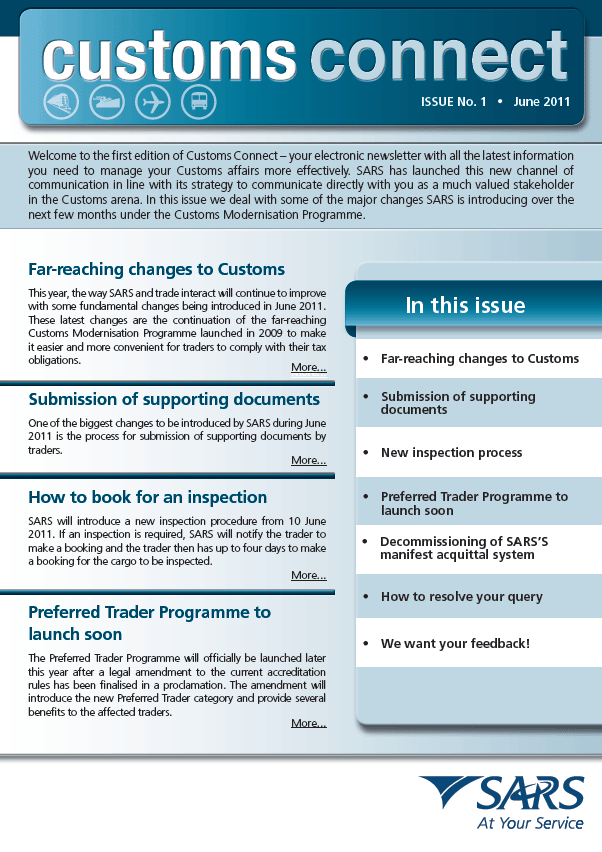
Customs Connect Issue 1SARS has just introduced a new communication medium directed specifically for external stakeholders. It is called  ‘Customs Connect’. Given the ever increasing need for public awareness and outreach in regard to on-going developments in the Customs Modernisation Programme, it is necessary to expand the scope of information to as wide an audience as possible. SARS encourages all external parties (including trade associations) in the local and regional trade community to read and circulate this newsletter. It can be accessed through the Customs Modernisation webpage, and will bring regular updates on modernisation issues.