
Sample NEXUS card
The opening of “Ready Lanes” to speed border crossings from Canada and Mexico into the U.S. is significant, less because RFID is used in border crossing identity cards than it is for the fact that RFID is finally being used.
On April 11, 2011, “Ready Lanes” were instituted on the Canadian and Mexican borders to expedite re-entry to the U.S. for those with the RFID enabled enhanced driver’s license, NEXUS card, new permanent resident card and U.S. passport card. Why is this significant?Because it’s one thing to issue a host of different RFID-enabled identity cards; it’s another thing to actually use them for their intended purpose.
One case in point. In accordance with Presidential Directive HSPD-12 issued by president George W. Bush, Personal Identity Verification (PIV) contactless smart cards have been issued to all U.S. government employees and contractors who must enter government buildings. The abstract of HSPD-12 states: There are wide variations in the quality and security of identification used to gain access to secure facilities where there is potential for terrorist attacks. In order to eliminate these variations, U.S. policy is to enhance security, increase Government efficiency, reduce identity fraud, and protect personal privacy by establishing a mandatory, Government-wide standard for secure and reliable forms of identification issued by the Federal Government to its employees and contractors (including contractor employees). This directive mandates a federal standard for secure and reliable forms of identification.
Therefore, what is significant about the Ready Lanes is that the RFID feature of these identity documents is actually being used. And, while the NEXUS card has been used for commercial traffic for a number of years and some of the other identity cards have been issued for a year or more, the opening of Ready Lanes is the first tangible benefit of these cards to the average person.
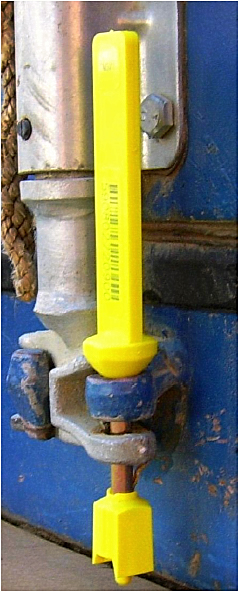
But the Ready Lanes are significant for more than that. They show not only how these cards can speed up cross-border traffic, but also how RFID should be used to speed cargo that arrives by land, sea and air. RFID container seals and RFID manifest tags with customs information, coupled with existing electronically communicated manifests and documents, could provide a provenance for the authenticity and security of incoming containers at international ports and terminals. So-called Green Lanes for pre-cleared cargo containers would be the equivalent of the Ready Lanes. That would allow the limited number of inspectors to focus their attention on containers from less trustworthy sources to enhance security and safety. Green Lanes would also save shippers and consignees money by shortening the time it takes for goods, particularly perishable goods, to move from the transportation hub to their destinations.
The lesson that should be taken from the opening of the Ready Lanes on the U.S. border, therefore, is that the use of RFID should not be our focus. Rather, it should be on the usefulness of RFID. Or, to put it in a somewhat less confusing way, it’s one thing to deploy RFID; it’s another thing to actually employ it.
Original article published by Bert Moore.
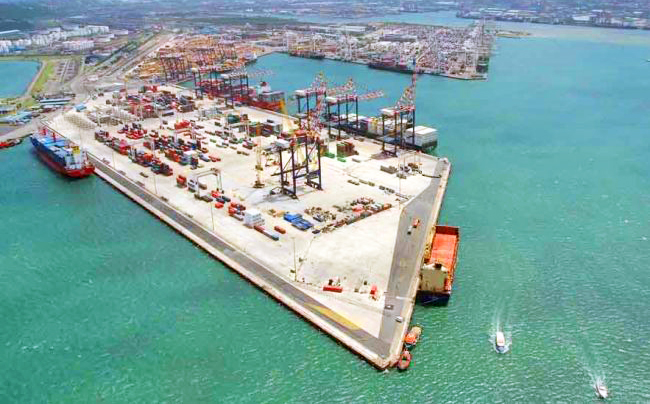 An acquaintance in the forwarding industry brought this working paper to my attention. Titled “Cargo Dwell Time in Durban“, it is very useful reading for logistics operators, Customs and government agencies, and policy makers. The object of the working paper attempts to identify the main reasons why cargo dwell time in Durban port has dramatically reduced in the past decade to a current average of between 3 and 4 days. A major customs reform; changes in port storage tariffs coupled with strict enforcement; massive investments in infrastructure and equipment; and changing customer behavior through contractualization between the port operator and shipping lines or between customs, importers, and brokers have all played a major role. The main lesson for Sub-Saharan Africa that can be drawn from Durban is that cargo dwell time is mainly a function of the characteristics of the private sector, but it is the onus of public sector players, such as customs and the port authority, to put pressure on the private sector to make more efficient use of the port and reduce cargo dwell time. The Working Paper is the product of the World Bank’s Africa Region, Transport Unit, being part of a larger effort to provide open access to its research and make a contribution to development policy discussions around the world. Policy Research Working Papers are also posted on the Web at http://econ.worldbank.org.
 What Happened to the Portcullis?
You must be logged in to post a comment.