The heart of transfer pricing tested for the first time in SA courts

Picture: Engin Akyurt (Unsplash)

The complexity of transfer pricing disputes has rarely been tested in South Africa. However, a recent case centred on the application of the arm’s length principle, which is at the heart of transfer pricing.

ABD Limited, a South African multinational company, won its appeal in the Tax Court against an additional assessment of around R1.2 billion. The assessment has been set aside. Sars is appealing the judgment.

The assessment followed an audit of ABD’s transfer pricing methodology by the South African Revenue Service (Sars). Experts believe this precedent-setting case provides a glimpse into how courts may approach transfer pricing cases in future.

It suggests a preference for “established and recognised” methods as opposed to “novel and untested approaches” to transfer pricing disputes, says Pieter van der Zwan, independent tax advisor and accounting specialist, in his analysis of the case.

The dispute stems from an audit conducted in 2014 relating to the royalty rate ABD charged its operating companies in different jurisdictions for the use of its intellectual property (its brand) during the period 2009 to 2012.

ABD charged all of them the same royalty rate of 1%. The audit resulted in an additional assessment of R7.5 billion, which was reduced to R1.2 billion by the time the case went to court around 2021.

Different methodologies

Experts used different methodologies, in line with the guidelines of the Organisation for Economic Cooperation and Development (OECD), in performing the calculations to arrive at the appropriate rate.

The royalty must be at arm’s length – what it would be if it were between two independent enterprises, as opposed to a company taxed in one jurisdiction and its subsidiary taxed in another.

Sars contended that the 1% was not an arm’s length royalty. It has the power to adjust the rate if it believes the price does not reflect an arm’s length transaction. Sars based its initial additional assessment on the report of a Dr David, who used the Transactional Profit Split Method (TPSM).

Daniel Erasmus, lead attorney in the ABD case, said Sars and ABD had been arguing from the same page for seven years.

“One month before the trial Sars booted their expert witnesses and brought in an entirely new expert with an entirely new methodology driven by the willingness to pay method.”

The new expert, a Dr Slate, proposed higher, variable royalty rates based on a “willingness to pay” survey. According to the judgment, the fluctuations created by adopting this approach were considerable – ranging from 1% to 9.2%.

No incentive to shift profits 

Multinational companies use transfer pricing to allocate profits.

The Corporate Finance Institute explains that “effective but legal transfer pricing” takes advantage of different tax regimes in different countries by raising transfer prices for goods and services produced in countries with lower tax rates.

ABD argued that it had no incentive to charge its subsidiaries a lower royalty to avoid paying higher taxes in SA.

The tax rates in the jurisdictions where the subsidiaries operated were equal to or higher than the SA tax rate.

Sars and ABD used different methodologies to support their approaches. Sars relied on the TPSM, and ABD relied on both the TPSM and the Comparable Uncontrolled Price (Cup) method. The latter method, when available, is the preferred method of the OECD.

Judge Norman Manoim considered the case in terms of the arguments based on the Cup method.

Criticism against approaches

According to the judgment, the “most significant critique” of Slate’s (Sars’s expert witness) valuation was a legal one, but it had profound implications for his survey on which it is contingent.

Slate assumed that the licensed rights included goodwill.

“This error then had implications for the survey questions on which the willingness to pay calculations were based. Questions in the survey were based on the goodwill of the ABD brand,” Manoim said.

A further criticism of its reliability is that the survey was performed in 2020. Yet respondents had to indicate what they might have done in the period 2009-2012.

Four of every 10 of the respondents would have been teenagers a decade before. Some may not have been old enough to have a phone in that period let alone pay for it.

ABD used a transaction that resembled the preferred Cup method, and while there were criticisms of its application, they were not conclusive, Manoim concluded.

However, the criticism of Slate’s approach had a solid factual basis. “Its assumptions, legal, economic, and accounting have been dismantled. If this were not enough it is an untested methodology for use in litigation in transfer pricing cases.”

Extensive resources

Manoim said he appreciated that the outcome of the case would be a disappointment to Sars as it had put extensive resources into it to create a precedent in a seldom-litigated field of tax law.

Sars not only fought a case that ran contrary to the opinions and approach of its initial expert, but “there appeared to be no rationale for ABD to have any motive to short-change the South African fiscus,” Manoim concluded.

ABD attorney Erasmus warned that Sars will challenge taxpayers on their research and surveys used to support the methodology they rely on. “You must have the information at your fingertips.”

Source: Article by Amanda Visser for Moneyweb online, 26 September 2024

WCO supports the launch of the Global NTFC Forum 2022

The World Customs Organization (WCO) has joined hands, once again, with partner Annex D+ organizations (GATF, ITC, OECD, UNECE, UNESCAP, WBG and WTO) in supporting the Global Forum 2022 for National Trade Facilitation Committees (NTFCs). The Forum is being held from 1 to 4 February 2022 in a virtual mode and led by the United Nations Conference on Trade and Development (UNCTAD). It has brought together more than 500 participants, around half of which are members of their NTFCs.

In the high-level opening session, the speakers agreed on the need to ensure well-functioning, holistic and dynamic NTFCs, with their critical role in facilitating trade especially during the COVID-19 pandemic, through collaborative arrangements amongst all relevant public and private sector stakeholders. Embracing digital tools, the e-commerce growth and the importance of MSMEs and women traders were also highlighted by the speakers.

In his video address, Dr. Kunio Mikuriya, the Secretary General of the WCO emphasized the importance of trade facilitation during the COVID-19 pandemic recovery phase. Through simplifying and standardizing border procedures and creating transparent and predictable conditions for trade, Customs administrations facilitate legitimate business that, in turn, increases economic growth and job opportunities.

Secretary General Mikuriya mentioned a survey carried out in 2021, where the WCO took stock of the situation in the area of NTFCs, including the challenges and opportunities observed during the COVID-19 pandemic. Many NTFCs have put their work on hold, due to the inability to meet in person. However, in some instances NTFCs played an important role in addressing facilitation priorities during the pandemic, and have benefited from the sense of urgency generated by the crisis.

Dr. Mikuriya emphasized the need to strengthen the partnership among all relevant government authorities for improving border agency cooperation, which is essential in emergency situations. He reiterated the need to foster the dialogue and collaboration with the business community and underscored the private sector contribution to digitization, to conducting the Time Release Studies and in advancing Authorized Economic Operator (AEO) programmes, while taking into consideration the specific challenges of MSMEs.

The importance of increased diversity and inclusion in trade facilitation reforms, including improving the conditions for women traders was also highlighted. The WCO supports this agenda through its Network for Gender Equality and Diversity, amongst others.

The WCO reiterated its commitment to the TFA agenda in developing and least developed country Members through the WCO Mercator Programme.

The NTFC Forum was made possible with the support of the United Kingdom’s Her Majesty Customs & Revenue (HMRC) through the HMRC-WCO-UNCTAD Trade Facilitation Capacity Building Programme, which brings together the WCO and UNCTAD in a partnership for TFA implementation.

The whole address of the Secretary General can be found here.

Brazil launches national AI strategy

Brazil has launched a new artificial intelligence (AI) strategy, which aims to balance ethical use of the technology while boosting research and innovation in the sector.

Following a public consultation, which ran from December 2019 to March 2020, the strategy sets out six objectives. These include to: develop ethical principles that guide responsible use of AI; remove barriers to innovation; improve collaboration between government, the private sector and researchers; develop AI skills; promote investment in technologies; and advance Brazilian tech overseas.

Since Canada became the first country to adopt a national AI strategy in 2017, other governments have raced to develop policies that will reap the benefits of AI while curbing its harms. The OECD now tracks over 60 countries’ AI policy frameworks.

Brazil’s strategy notes that the state needs to encourage entrepreneurship in the sector. “In 2019, while the US invested US$224 million in AI startups, and China US$45 million, Brazil invested only $1 million,” it said.

Trust and ethics

Brazil has adopted the OECD’s five principles for responsible AI: inclusive growth, sustainable development and wellbeing; human-centered values and equity; transparency and responsible disclosure; robustness, security and safety; and accountability.

The strategy is organised into nine pillars or axes. The first pillar – “legislation, regulation, and ethical use” – is thematic and ensures that human rights are safeguarded and that strong regulatory frameworks are established. This includes a commitment to build ethical requirements into tenders for AI-driven solutions.

Another pillar – “qualifications for a digital future” – aims to “prepare current and future generations to cope with the changes and impacts of AI”. The strategy proposes a national digital literacy programme for students, and tech training for teachers, for example.

And a third pillar focuses on how AI can be applied to government for the benefit of citizens, including a commitment to implement AI in at least 12 of Brazil’s federal public services by 2022.

Big opportunities

The strategy is also ambitious about the possible commercial benefits of doubling down on AI.

One pillar of the strategy, for example, aims to identify productive sectors — such as financial services and the law — and applications, where AI would benefit to industry. It proposes fostering links between AI start-ups and SMEs.

And another pillar – “research, development, innovation and entrepreneurship” – points out that Brazil has a good national distribution of AI experts and practitioners, but that they mostly work in academia or the public sector, rather than in private tech firms.

Source: Global Government Forum, article by Josh Lowe, 13 April 2021

UK freeports plan raises illicit trade fears

Sergio Souza, Unsplash

The UK government has promised that a plan to create eight freeports with low-tax zones will boost the post-Brexit economy, but has also sparked fears that they could allow flows of illicit trade into the country.

The designated free-trade zones (FTZs) – due to be created at Felixstowe/Harwich, Liverpool, Hull, Southampton, London Gateway, Plymouth, Teesside and East Midlands airport – will attract investment and job creation in some hard-hit areas of the country, say backers of the proposal, headed by Chancellor Rishi Sunak.

Goods can be landed, stored, handled, manufactured or reconfigured and re-exported at freeports without being subjected to customs tariffs. In addition, companies operating inside the sites will be offered temporary tax breaks, mostly lasting five years.

In the other camp are those who point to the experience with FTZs in other parts of the world in facilitating the trade in things like counterfeit goods and drug trafficking.

In 2018, a report by the Organisation for Economic Co-Operation and Development (OECD) and the EU Intellectual Property Office found that FTZs were linked to a 5.9 per cent rise in the value of counterfeit goods exported from hosting countries.

“These results confirm the anecdotal evidence pointing to the misuse of FTZs to conduct illicit trade, and they should be a prompt for future actions,” it concluded.

Since then, the EU has started to pay more attention to the activities of the 82 FTZs within its borders post-Brexit, launching new rules to crack down on what the European Commission says is a “high incidence of corruption, tax evasion, [and] criminal activity.”

The UK government reckons it can move ahead with its freeport plan without the risk of stimulating illicit trade, based in part on the findings of a report published last year by independent research body the Royal United Services Institute for Defence and Security Studies (RUSI).

That study acknowledges the evidence of criminal activity taking place at freeports around the world, saying it most commonly takes the form of counterfeit goods, drug trafficking, smuggling of untaxed goods or trade-based money laundering.

Those dangers may be mitigated, it says, through careful risk assessment at each geographical location where freeports are established, making sure crime prevention measures are proportional to those risks, and close vetting of businesses wishing to operate in them.

The freeport operators should also be regularly placed under scrutiny to assess their effectiveness in “discharging their security-related responsibilities,” and recommendations laid out by the OECD should also be adhered to.

The latter includes making sure the authorities have access to goods and related documentation, ideally digital, in addition to screening of businesses operating in the FTZ.

In its notice for the tender for freeport operators published last November, the government says operators “must adhere to the OECD code of conduct…and the specific anti-illicit trade and security measures therein,” as well as the UK’s obligations on money laundering, terrorist funding and transparent transfer of funds.

RUSI’s research has shown that a lack of oversight in freeports provides opportunities “to manufacture, assemble, tranship, relabel and repackage illegal goods, including counterfeit medicines, electronics and fashion items.”

It also notes that ‘leakage’ is common, where goods are smuggled from a freeport into a host economy, thus avoiding relevant checks on health and safety standards, import taxes and VAT.

At least seven freeports operated in the UK between 1984 and 2012, when the government stopped renewing freeport licenses and switched its attention to “enterprise zones”, which also provide tax breaks in a bid to encourage industrial growth and community regeneration.

RUSI notes that the US does seem to be able to operate FTZs without increasing the risk of illicit trade, and says it is “reassuring that, for some parts of government at least, tackling economic crime remains top of the agenda.

Critics of the UK plan, including the opposition Labour Party, think there are other downsides as well.

One viewpoint is that rather than growing the economy, the freeports will simply move it around the country, benefitting deprived areas but providing no net gain overall.

Some also argue that the net result will be even worse – a reduction in tax contributions from industry to the treasury – with businesses elsewhere undercut by those operating within freeport. Others meanwhile are concerned that the rights of people working within the FTZs will be diluted.

“If the government thinks freeports are a magic bullet that will create hundreds of thousands of new jobs, bring billions of additional pounds to the Exchequer and radically transform an area it is mistaken,” according to Professor Catherine Barnard, deputy director of UK in a Changing Europe.

“That is not to say they should not be created but the thought they’re going to transform the wealth and prosperity of this country is simply untrue. It will help the regions that get a freeport – but possibly to the detriment of those that don’t.”

Source: Securing Industry, Phil Taylor, 10 March 2021

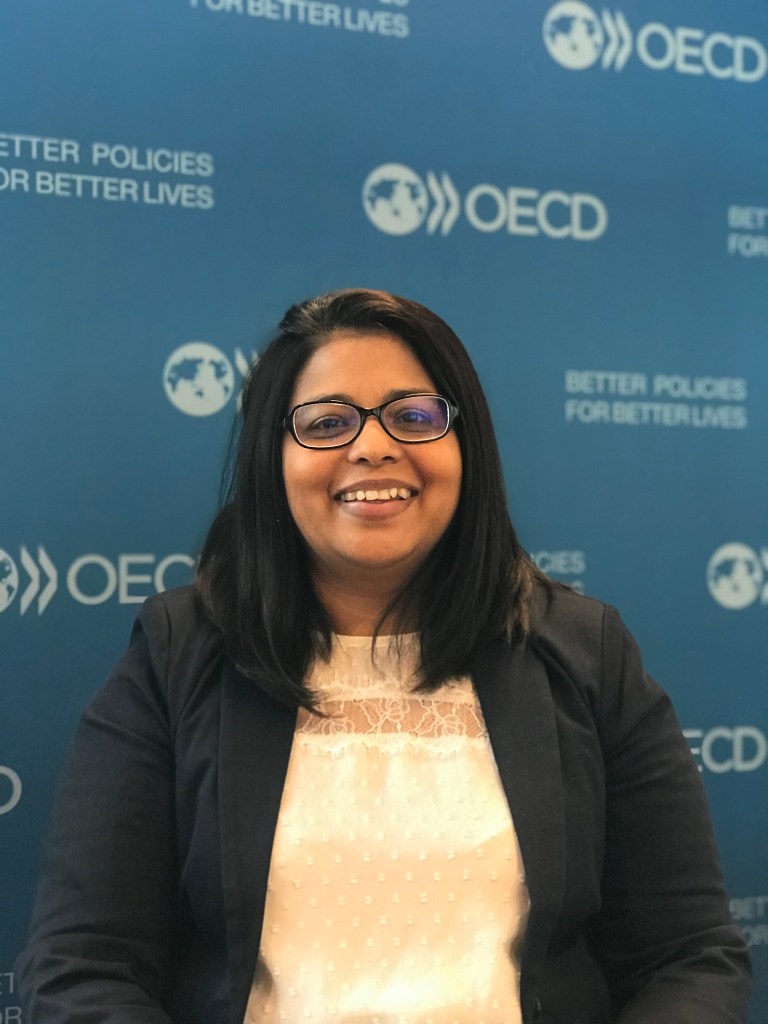
Leading by Example – Varsha Singh

It is not common for a person within a Revenue Authority to work in both the Customs and Tax disciplines. It is even more rare for such a person to excel in both. I am glad and most fortunate to know and have worked for such a person – who under duress and fortitude has scaled great heights in her career.

Just recently she was nominated and included to celebrate the achievements of women of the past and present who have contributed to and shaped the future of women working in international tax across the profession. The Woman of IFA Network (WIN) representatives of the International Fiscal Association (IFA) UK branch called upon the global WIN network to identify and recognise the leading women in their regions and local branches. A profile book and the photo montage, which it supports, was prepared in September 2019 to mark this occasion and to celebrate the contribution of women to international tax discourse and policy development in all fields of the profession. Refer to page 61 for Varsha’s profile.

Varsha Singh

Deputy Head of the Global Relations and Development Division, OECD, South Africa.

Recognised for her contribution to international tax discourse through advocacy and encouragement of developing countries perspectives in the development and implementation of global tax policy.

Varsha Singh is the Deputy Head of the Global Relations and Development Division at the OECD Centre for Tax Policy and Administration. Her primary role is to encourage developing countries perspectives in the development and implementation of OECD standards and guidelines in the tax area, and to provide assistance to developing countries to strengthen their tax systems. Ms Singh also oversees the multilateral Global Relations Programme, which delivers over 50 seminars annually through six Multilateral Tax Centres.

Before joining the OECD, Varsha worked at the South African Revenue Service (SARS) for over 22 years and has extensive experience in a range of Tax, Customs and IT matters. She previously occupied the position of Head of International Relations at SARS. In that capacity, Varsha played a pivotal role in the establishment of the African Tax Administration Forum (ATAF)and as the head of the interim secretariat of ATAF, also worked closely with other Regional and International Organisations, particularly in the area of capacity building. Varsha holds Masters degrees in Business Administration, International Customs Law and Administration and completed the Women in Leadership Programme with Henley Business School.