USA – White House Announces New Initiative to Improve Supply Chain Data Flow

Last year, the ports and the private sector moved a historic amount of goods with record holiday sales and delivery times below pre-pandemic levels. Currently, real retail inventories excluding autos are six percent higher than at the end of 2019 and products at grocery and drug stores are 90 percent in stock, just 1 percentage point below pre-pandemic levels.

The US government is also focused on addressing the longer-term weaknesses in our nation’s supply chains, the result of decades of underinvestment, outsourcing, and offshoring instead of investment in long-term security, sustainability, and resilience. The Bipartisan Infrastructure Law (BIL) is now making a generational investment in our ports, highways, and other parts of our physical infrastructure, which will help speed up the movement of goods and lower costs. But we can further strengthen our goods movement supply chains by making a similarly bold improvement in a digital infrastructure to connect the supply chain.

To take the first step toward addressing this challenge, the US government is announcing the launch of Freight Logistics Optimization Works (FLOW), an information sharing initiative to pilot key freight information exchange between parts of the goods movement supply chain. FLOW includes eighteen initial participants that represent diverse perspectives across the supply chain, including private businesses, warehousing, and logistics companies, ports, and more.  These key stakeholders will work together with the Administration to develop a proof-of-concept information exchange to ease supply chain congestion, speed up the movement of goods, and ultimately cut costs for American consumers. DOT will lead this effort, playing the role of an honest broker and convener to bring supply chain stakeholders together to problem solve and overcome coordination challenges. This initial phase aims to produce a proof-of-concept freight information exchange by the end of the summer.

Recent supply chain disruptions have raised national awareness of the need for improved information exchange. Supply chain stakeholders deserve reliable, predictable, and accurate information about goods movement and FLOW will test the idea that cooperation on foundational freight digital infrastructure is in the interest of both public and private parties. FLOW is designed to support businesses throughout the supply chain and improve accuracy of information from end-to-end for a more resilient supply chain.

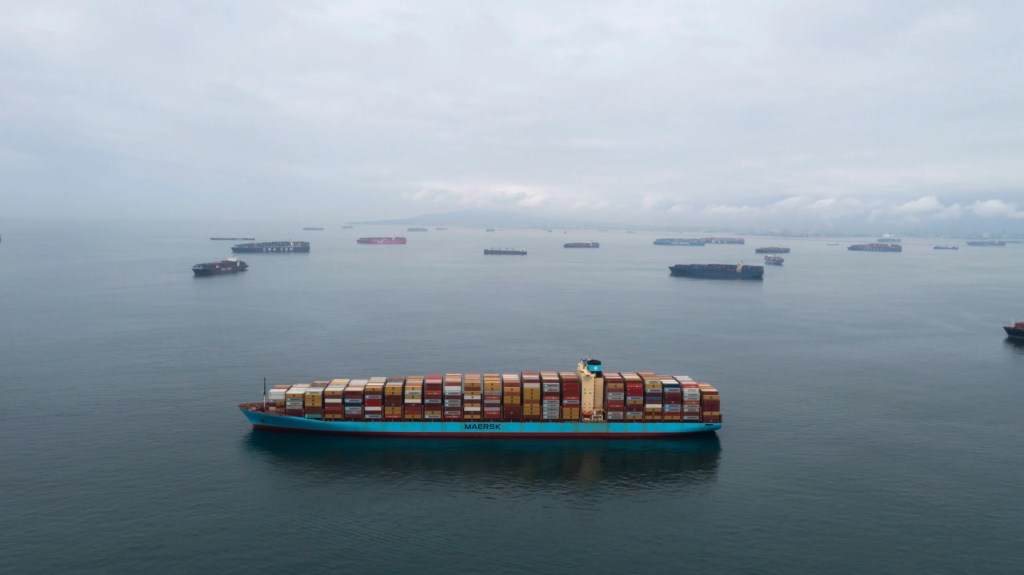
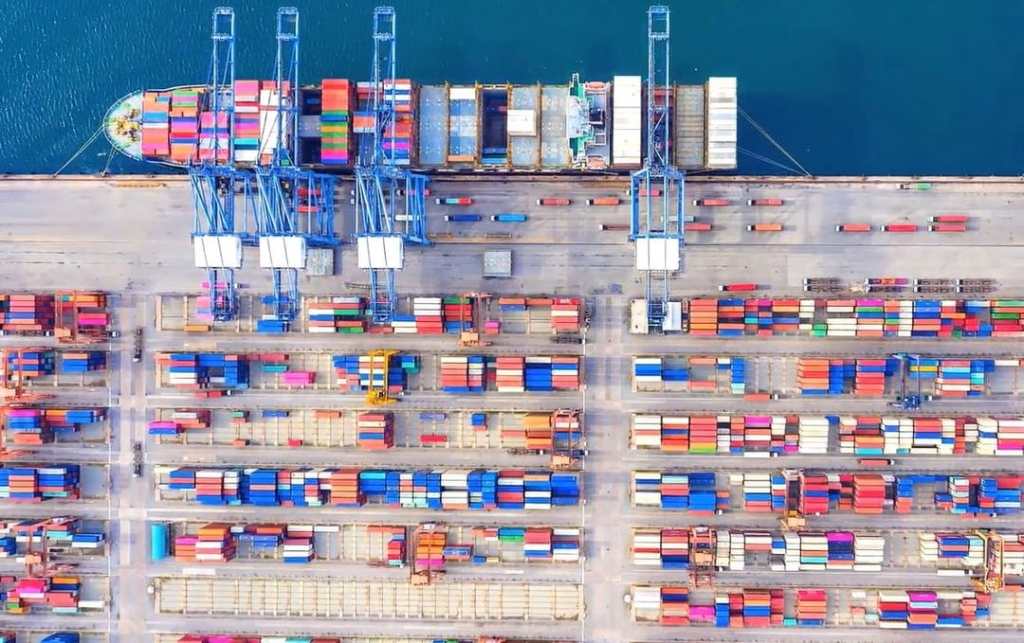
Resiliency—the ability to recover from an unexpected shock—requires visibility, agility, and redundancy. The lack of digital infrastructure and transparency makes our supply chains brittle and unable to adapt when faced with a shock. The goods movement chain is almost entirely privately operated and spans shipping lines, ports, terminal operators, truckers, railroads, warehouses, and cargo owners such as retailers. These different actors have made great strides in digitizing their own internal operations, but they do not always exchange information with each other. This lack of information exchange can cause delays as cargo moves from one part of the supply chain to another, driving up costs and increasing goods movement fragility.

View the entire Fact Sheet here!

Source: White House, 15 March 2022
Abu Dhabi Customs joins TradeLens

Abu Dhabi Customs hosted a workshop recently with key Importers and Exporters discussing how TradeLens and digitized transportation documentation has the ability to streamline processes in customs declaration processes.

 “Abu Dhabi Customs is excited to work with a group of importers and exporters to explore the benefits that collaboration using blockchain can offer to all those involved. This joint approach is critical to create time savings in the process and to improve access to international trade to all entities that trade with Abu Dhabi. We really believe TradeLens will be bringing a lot of benefits to our ecosystem here in Abu Dhabi”. – Yanal Qasim Mohammad Alkhasoneh, Division Director – Information Technology, Information Technology Division  

“The collaboration across public and private entities towards a single shared goal was immensely encouraging. The gathering of industry leaders, authorities, and ocean carriers to jointly and openly address international transportation documentation highlights the desire to improve existing processes using innovative digital tools like TradeLens”. – Thomas Sproat, Global Head of Network TradeLens

Source: TradeLens, 9 February 2022

Future International Trade Alliance Launched

https://unsplash.com/@exdigy

ICC, DCSA, BIMCO, FIATA and SWIFT have launched the Future International Trade Alliance and signed a memorandum of understanding to standardise digitalisation of international trade. Together, the industry associations will collaborate on the development and adoption of relevant standards to facilitate the use of electronic bills of lading.

Established to further digitalisation of container shipping technology standards, Digital Container Shipping Association (DCSA) – a neutral, non-profit group – in conjunction with its nine member carriers, today announced the formation of the Future International Trade (FIT) Alliance with the signing of a memorandum of understanding (MOU) between DCSA, ICC, BIMCO, FIATA and SWIFT in which the organisations commit to collaborating to standardise the digitalisation of international trade.

Through this initiative, the FIT Alliance will work together to generate awareness about the importance of common and interoperable data standards and common legislative conditions across international jurisdictions and platforms. The aim is to facilitate acceptance and adoption of an eBL by regulators, banks and insurers and to unify communication between these organisations and customers, physical and contractual carriers, and all other stakeholders involved in an international trade transaction.

“The digitalisation of documentation for container shipments will add value for international suppliers who rely on shipping across sectors,” said David Loosley, Secretary General and CEO of BIMCO. “Aligning these standards with the electronic bill of lading standard for the dry and liquid bulk sectors, which we are developing with assistance from DCSA, will help accelerate the digitalisation of trade globally.”

“Interoperability between all actors of the trade and transport industry is the key foundation to enable smooth data exchange and to streamline the end-to-end shipping process for our members,” said Dr. Stephane Graber, FIATA Director General. “FIATA, as the owner of the only negotiable multimodal transport document, endorsed by UNCTAD and ICC, is convinced that an industry-wide effort to establish open-source, interoperable, technology-agnostic standards is essential to make digitalization of international trade a reality. FIATA is committed to facilitating adoption of digital processes for freight-forwarders. We took the lead by developing the electronic FIATA Bill of Lading (eFBL) standard, which will further the acceptance of electronic documents by all stakeholders involved in a bill of lading (B/L) transaction. By simplifying their day-to-day business, our members will be able to focus on building truly differentiated offerings for their customers on top of future-proof digital foundations.”

“ICC represents 45 million companies in over 100 countries, and our mission is to make business work for everyone, every day, everywhere,” said John W.H. Denton AO, ICC Secretary General. “Living up to that means finding ways to make international trade far less complex than it currently is. Through the FIT Alliance, we are collaborating with key industry players to create and accelerate the adoption of digital standards for bills of lading that will make international shipping dramatically more simple, secure and seamless. This will drive a sea change in companies’ productivity and business models, the two critical ingredients to help businesses build back better and unleash benefits at an ecosystem level which have never before been achieved.”

David Watson, Chief Strategy Officer at SWIFT, said: “SWIFT is the way the world moves value, connecting 11,500 institutions in more than 200 countries and facilitating over US$2 trillion in global trade every year. We have significantly accelerated cross-border flows in recent years and are innovating at scale to make them instant. To that end, we are delighted to be part of this cross-industry collaboration to tackle friction through standardisation and enable interoperability across the ecosystem to allow rich data to flow freely between multiple platforms.”

“From the beginning, DCSA has understood the importance of cross-industry collaboration to achieve the elusive goal of universal eBL,” said Thomas Bagge, DCSA CEO. “The FIT Alliance is one exciting result of our ongoing effort to drive that collaboration. Container ships carry 90% of the world’s goods. As such, an incredibly diverse set of stakeholders touches the B/L transaction—from government regulators, to insurers, to shippers from every industry. To achieve widespread use of eBL, they must all be on board with adopting digital B/L standards. The agreement between DCSA and these diverse industry associations is an exciting milestone in our journey towards standardising all container shipping documentation through our eDocumentation initiative. We applaud the foresight and leadership of these organisations for joining us in the effort to bring greater transparency, efficiency, reliability and sustainability to the container shipping industry.”

Source: ICC, 15 February 2022

Global Supply Chains Making a Huge Bet on Blockchain

System Shock: The $50 Trillion Industry Making a Huge Bet on Blockchain

Blockchain may one day eliminate inefficiencies and lack of transparency in supply chains. While slow in coming, this revolution would benefit not only customers and brands, but the “invisible” workers who power global trade.

In this episode of Bloomberg’s System Shock, we explore how cumbersome, paperwork-bound supply chains—like one stretching from kitchen refrigerators in Europe and the U.S. all the way back to a small farmer in Ecuador—are being transformed by that most modern of technologies.

Source: Bloomberg, System Shock, Gloria Kurnik, 26 January 2022

WCO supports the launch of the Global NTFC Forum 2022

The World Customs Organization (WCO) has joined hands, once again, with partner Annex D+ organizations (GATF, ITC, OECD, UNECE, UNESCAP, WBG and WTO) in supporting the Global Forum 2022 for National Trade Facilitation Committees (NTFCs). The Forum is being held from 1 to 4 February 2022 in a virtual mode and led by the United Nations Conference on Trade and Development (UNCTAD). It has brought together more than 500 participants, around half of which are members of their NTFCs.

In the high-level opening session, the speakers agreed on the need to ensure well-functioning, holistic and dynamic NTFCs, with their critical role in facilitating trade especially during the COVID-19 pandemic, through collaborative arrangements amongst all relevant public and private sector stakeholders. Embracing digital tools, the e-commerce growth and the importance of MSMEs and women traders were also highlighted by the speakers.

In his video address, Dr. Kunio Mikuriya, the Secretary General of the WCO emphasized the importance of trade facilitation during the COVID-19 pandemic recovery phase. Through simplifying and standardizing border procedures and creating transparent and predictable conditions for trade, Customs administrations facilitate legitimate business that, in turn, increases economic growth and job opportunities.

Secretary General Mikuriya mentioned a survey carried out in 2021, where the WCO took stock of the situation in the area of NTFCs, including the challenges and opportunities observed during the COVID-19 pandemic. Many NTFCs have put their work on hold, due to the inability to meet in person. However, in some instances NTFCs played an important role in addressing facilitation priorities during the pandemic, and have benefited from the sense of urgency generated by the crisis.

Dr. Mikuriya emphasized the need to strengthen the partnership among all relevant government authorities for improving border agency cooperation, which is essential in emergency situations. He reiterated the need to foster the dialogue and collaboration with the business community and underscored the private sector contribution to digitization, to conducting the Time Release Studies and in advancing Authorized Economic Operator (AEO) programmes, while taking into consideration the specific challenges of MSMEs.

The importance of increased diversity and inclusion in trade facilitation reforms, including improving the conditions for women traders was also highlighted. The WCO supports this agenda through its Network for Gender Equality and Diversity, amongst others.

The WCO reiterated its commitment to the TFA agenda in developing and least developed country Members through the WCO Mercator Programme.

The NTFC Forum was made possible with the support of the United Kingdom’s Her Majesty Customs & Revenue (HMRC) through the HMRC-WCO-UNCTAD Trade Facilitation Capacity Building Programme, which brings together the WCO and UNCTAD in a partnership for TFA implementation.

The whole address of the Secretary General can be found here.

Pakistan Customs Joins TradeLens

By joining the blockchain-underpinned platform TradeLens, Pakistan Single Window is supporting Customs in modernizing its import-export documentation through a safe & secure, paperless, digital solution to strengthen its controls against trade-based money laundering.

On 20 December 2021, On behalf of Pakistan Customs, the Pakistan Single Window Company today signed an agreement with TradeLens, a blockchain-underpinned logistics platform supported by 5 of the 6 largest ocean carriers globally, to digitize import-export documentation of the containerized cargo moving in and out of the country. Pakistan’s international trade ecosystem is being rapidly transformed through the introduction of technology driven initiatives led by the Pakistan Single Window and the country’s authorities recognize the potential benefits of digitizing supply chains for efficiencies, enhanced transparency, and data-driven decision making.

Advisor to the Prime Minister on Finance and Revenue Mr. Shaukat Tarin added, “Joining the TradeLens platform is allowing us to enhance our ecosystem in a way that all the involved stakeholders get access to a transparent and secure platform that makes processes more efficient.”

Cross-border containerized supply chains are some of the largest and most complex business ecosystems in the world today. It is not uncommon for 30 independent parties, 100 people and up to 200 exchanges of information to be connected to a single shipment. With increased complexity comes increased cost. Shippers or beneficial cargo owners (BCOs) need consistent, auditable and immutable data from multiple sources to effectively manage their supply chains.

The authorization to sign the collaboration came from the PSW Governing Council chaired by Mr. Shaukat Tarin. The Chief Executive Officer of PSW Aftab Haider formally signed the agreement with Irtaza Hussain, the Regional Head of Network for TradeLens at IBM.

PSW integration with TradeLens will help Pakistan Customs and other trade regulators to improve their operational efficiency and create value through the blockchain platform. The immutability of Blockchain-underpinned document information is important in the identification of illegal activities, as well as, improving the smooth operation of legal trade.

Marvin Erdly, Head of TradeLens at IBM. commented “The growth of the TradeLens’ network is evidence that participants from all across the supply chain ecosystem can derive significant value through digital collaboration.  Pakistan now joins an increasing number of connected Customs Authorities on the TradeLens platform exploring innovative solutions to enhance global trade access and enhance process efficiencies for all involved”.  

TradeLens is a neutral platform brings together data from the entire global supply chain ecosystem including shippers and cargo owners, 3PLs and freight forwarders, intermodal operators, customs and government authorities, ports and terminals, and several ocean carriers. This data allows TradeLens and its network partners to modernize manual and paper-based documents by replacing them with blockchain-enabled digital solutions. It also allows the network partners to provide their customers with deeper visibility into the entire journey for their cargo from origin to destination and reduce uncertainty allowing for better planning and reduced inventory costs. TradeLens welcomed it’s first network member in Pakistan, Al-Hamd International Container Terminal, earlier this year.  

Source: TradeLens, 28 December 2021

WCO Data Model 3.11.0 – Online

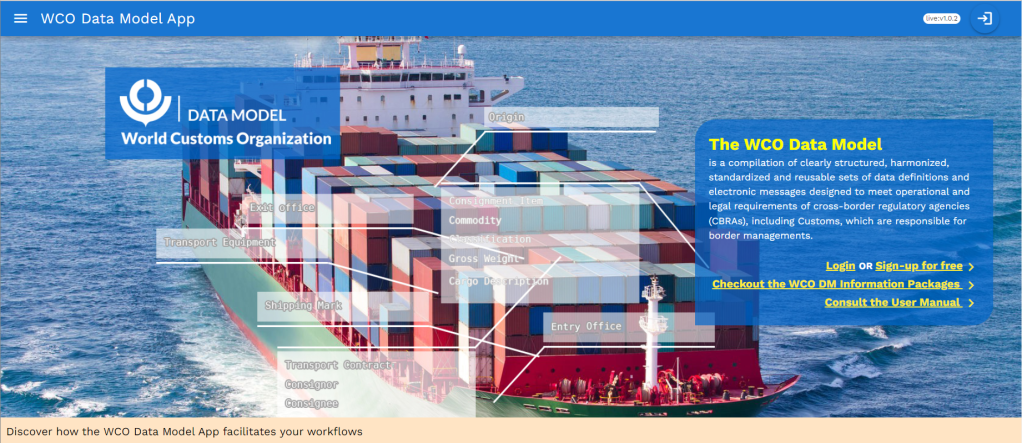
Unlike the previous versions where the WCO DM was made available on the WCO Members’ website in a downloadable format, version 3.11.0 of the WCO DM is being released on a new publication platform: the WCO DM app. This app interactively displays WCO DM components and aims to enhance the user experience of working with the WCO DM. In so doing, it helps users navigate through different WCO DM data objects, such as classes, data elements and information models, more easily.

The publication of version 3.11.0 in December 2021 marks the culmination of the maintenance process undertaken by the DMPT in its meetings held from September 2020 to April 2021.

In addition to incorporating changes requested by Members through the regular maintenance procedure, version 3.11.0 introduces two new Message Implementation Guides (MIGs) – for implementing the IMO Compendium and WCO-UPU Joint Message Standards.

The MIGs offer practical guidance and additional technical information useful for implementation of the DM, in addition to the semantic definitions available in the Base Information Packages (BIPs) and/or Derived Information Packages (DIPs).

The IMO MIG includes technical information for implementing ship reporting formalities outlined in the Convention on Facilitation of International Maritime Traffic (FAL Convention). This MIG is the result of the joint efforts of the WCO and the IMO in updating the IMO Compendium on Facilitation and Electronic Business.

The UPU MIG contains technical information relating to primary electronic message formats, namely CUSITM, a message for a postal operator to transmit mail item information to its local Customs authority, and CUSRES, a message to respond to a CUSITM message.

In accordance with the Council Decision of December 2020, the WCO DM package published in the DM app is available free of charge to all interested parties, including Members, partner international organizations and private-sector stakeholders. All those interested in accessing the WCO DM will be able to take advantage of the app after accepting the WCO DM use terms and conditions. The app is accessible at http://datamodel.wcoomd.org.

WTO Joint Statement Initiative on E-commerce

The COVID-19 pandemic has highlighted the digital economy’s importance, accelerated the digital transformation and heightened the need for global rules governing digital trade. As Co-convenors of the Joint Statement Initiative on Electronic Commerce, we are committed to responding to this challenge. This initiative will update the WTO rulebook in an area of critical importance to the global economy.

We recognise the importance of the digital economy in post-COVID-19 economic recovery. The digital economy offers enormous opportunities for developing Members and least-developed country (LDC) Members, including by lowering the costs for businesses, particularly MSMEs, to access and participate in global markets. WTO rules and commitments on digital trade can help unlock these opportunities.

In this context, we will continue to drive negotiations towards a high standard and commercially meaningful outcome building on existing WTO agreements and frameworks. We will continue to promote inclusiveness and encourage the participation of as many WTO Members as possible in the negotiations, which were launched in our January 2019 Ministerial statement.

We welcome the substantial progress made to date in the negotiations. We have achieved good convergence in negotiating groups on eight articles – online consumer protection; electronic signatures and authentication; unsolicited commercial electronic messages; open government data; electronic contracts; transparency; paperless trading; and open internet access. The outcomes already achieved in these areas will deliver important benefits including boosting consumer confidence and supporting businesses trading online.

In addition, we have seen the consolidation of text proposals in other areas, including on customs duties on electronic transmissions, cross-border data flows, data localisation, source code, electronic transactions frameworks, cybersecurity, and electronic invoicing, as well as advanced discussions on market access. We will intensify negotiations in these areas from early 2022. We note that provisions that enable and promote the flow of data are key to high standard and commercially meaningful outcome.

Participants in the initiative support the continuation of the multilateral e-commerce moratorium in fostering certainty and predictability for businesses. The co-convenors consider it crucial that the initiative makes permanent among participants the practice of not imposing customs duties on electronic transmissions.

We recognise the importance of supporting the engagement of developing Members and LDC Members in the initiative, including implementation of commitments. We will continue to deepen the discussion, including through a series of roundtables, dialogues and webinars, on capacity building options and support for implementation for developing Members and LDC Members in 2022.

In light of the strong progress that has been achieved to date, the co-convenors will arrange the JSI work programme to secure convergence on the majority of issues by the end of 2022. We will identify opportunities throughout 2022 for Ministers to provide guidance on key issues in the negotiations.

We look forward to working with all participating Members as we intensify the negotiations and work towards a successful conclusion.

The Hon Dan Tehan MP, Minister for Trade, Tourism and Investment, Australia

H.E. Mr HAYASHI Yoshimasa, Minister for Foreign Affairs, Japan
H.E. Mr HAGIUDA Koichi, Minister of Economy, Trade and Industry, Japan H.E. Mr Gan Kim Yong, Minister for Trade and Industry, Singapor
e

WCO – 2022 edition of the Harmonized System Nomenclature is now available online.

As of 18 November 2021, the online version of the 2022 edition of the Harmonized System Nomenclature is available through the WCO Website to all HS users.  The HS 2022 edition, as the world’s global standard for classifying goods in international trade, will enter into force on 1 January 2022.

Used by over 200 countries and economic or Customs unions as the basis for their Customs tariffs and for trade statistics, as well as by international organizations such as the United Nations Statistical Division (UNSD) and the World Trade Organization (WTO), the Harmonized System (HS) Convention currently has 160 Contracting Parties, making it the WCO’s most successful instrument to date.

The 2022 edition of the HS Nomenclature includes significant changes with 351 sets of amendments (including some complementary amendments): 77 relating to the agricultural sector; 58 to the chemical sector; 31 to the wood sector; 21 to the textile sector; 27 to the base metal sector; 63 to the machinery sector; 22 to the transport sector and an additional 52 that apply to a variety of other sectors, comprising a total of 1,228 headings identified by a 4-digit code, and 5,612 subheadings identified by a 6-digit code. 

These amendments have been made to update the Harmonized System Nomenclature, taking into consideration public health and safety, protection of society and fight against terrorism, goods especially controlled under various conventions, food security and environment protection, technological progress, trade patterns, and clarification of the HS texts.

Click here for the HS Nomenclature 2022 Edition.

The digital version of the HS 2022 edition is also available for free on WCO Trade Tools, which is the WCO’s new online database platform that encompasses the last five editions of the HS and functionalities to support all those involved in international trade.  The WCO Trade Tools encompasses various free and subscription only tools relating to the classification and valuation of goods, origin determination and the application of preferential rules of origin.

The paper version of the HS 2022 edition can be purchased on WCO’s Bookshop.

Global Trade Braces for a Mini Y2K With Customs Code Overhaul

Picture by Kyle Glen

The following article was published in Supply Lines, Bloomberg

As if the foot soldiers of global trade needed more complications this holiday season, many logistics managers and customs brokers are starting to brace for a mini Y2K moment come Jan. 1.

That’s when changes will take effect to the official nomenclature for hundreds of product groups used to classify imports and exports. So-called Harmonized System numbers — known as HS codes — exist on more than 5,000 product categories developed by the World Customs Organization, an intergovernmental group in Brussels that updates them every five years or so.

In 2022, the biggest changes are coming for electrical machinery and parts, wood, textiles, fish and organic chemicals.

More than 350 global HS codes are getting updated, and some 1,500 harmonized U.S. tariff codes are subject to revisions, according to a recent webinar from Flexport. The categories are important, if a little wonky, because most items of international commerce fall into one and they can determine tariff levels.

Some codes are disappearing. After a respectable run through the 1970s and ‘80s, answering machines are about to lose their HS code. Made obsolete by voicemail, they rank 5,296th among 5,832 U.S. imports this year, according to Flexport data.

Globes — those spinning spheres that taught geography to schoolkids of the 1970s — will have their number (4905.10) retired, too.

“The trade in globes is not quite what it used to be,” Marcus Eeman, a global customs manager with Flexport, lamented about the U.S.’s 4,025th-biggest import.

Chemical Weapons?

Some new HS codes will appear, like one for pomace oil, a lower-grade form of olive oil.

Among the more intriguing additions, Flexport says there’ll be a “new code created for petroleum resins and other organic chemical compounds used in the manufacture of chemical weapons.” That should make it easier for authorities to track which countries are importing it and potentially using them illegally.

Other categories are getting renamed. Lamps will no longer fall under “lamps,” they’ll be classified as “luminaires.” There will be new subheadings for popular gadgets like smart phones, high-speed digital cameras and flat panel displays.

Economies preparing for the changes include the U.S., China, the European Union, Canada and Australia. The U.K., meanwhile, is still “finding their footing with Brexit and we expect them to get their act together by the end of the year,” Eeman said.

For all the changes to take effect on Jan. 1 in the U.S., there will need to be a presidential proclamation published in the Federal Register with the required 30 days of advanced notice.

So it’s worth looking out for that in coming days.

“My fear is that Dec. 1 will come and the presidential proclamation will be published and that’s when people will start to scramble,” said Tom Gould, Flexport’s vice president of global customs. “Then Jan. 1 will hit and you’ll have a bunch of people that have products that they need to import but they don’t know the classification, because the code that they’ve used in the past is no longer a valid code.’’

Source: Bloomberg, authored by Brendan Murray, 24 November 2021

UNECE eTIR – Turning Borders into Bridges

The United Nations Economic Commission for Europe (UNECE) administers the TIR Convention, which was established in 1959 and extensively revised in 1975 and which has, at present, 68 Contracting Parties. The TIR Convention provides for an internationally recognized procedure to facilitate the cross border transportation of goods in transit through the use of a standard, internationally recognized Customs document, the TIR Carnet, which also serves as proof of existence of an internationally valid guarantee.

For many years the TIR Convention proved to be an efficient facilitation tool. However, with the progress in technology, the use of the paper TIR Carnet is increasingly becoming archaic, in particular when it comes to linking it to the electronic procedures applied by national Customs administrations. At each border crossing, Customs officers are faced with additional work of having to key in up to 50 data elements into their national electronic Customs system. In addition, the current situation does not enable Customs authorities to effectively apply risk management procedures based on advance cargo information, as demanded by an increasingly more security-conscious environment.

The eTIR Project

The Contracting Parties to the TIR Convention launched in 2003 the so-called “eTIR Project”, aimed at providing an exchange platform for all actors (Customs authorities, holders, guarantee chains) involved in the TIR system, known as the “eTIR international system”. The eTIR international system aims to ensure the secure exchange of data between national Customs systems related to the international transit of goods, vehicles or containers according to the provisions of the TIR Convention and to allow Customs to manage the data on guarantees, issued by guarantee chains to holders authorized to use the TIR system.

For more information on eTIR click here!

For more information about eTIR Specifications click here!

For the eTIR flyer click here!

5th WCO Global AEO Conference opens in Dubai

On 25 May 2021, the WCO Secretary General, Dr. Kunio Mikuriya, welcomed approximately 3,650 registered participants from 160 WCO Member administrations to the 5th WCO Global AEO Conference. The Conference is being hosted by Dubai Customs and the Federal Customs Authority (FCA) of the United Arab Emirates (UAE), with support from the Korea Customs Service. 

Under the theme “AEO 2.0: advancing towards new horizons for sustainable and secure trade”, the Conference brings together 80 prominent speakers from Customs administrations, international organizations, academia and the private sector who are engaging virtually to share collaborative input that will help shape the future of Authorized Economic Operator (AEO) programmes. This is the first time that the Global Conference has been organized in the WCO’s North of Africa, Near and Middle East region. 

The Conference was opened by His Excellency Sultan Ahmed Bin Sulayem, Chief Executive Officer of DP World and Chairman of the Ports, Customs & Free Zones Corporation, on behalf of His Highness Sheikh Ahmed Bin Saeed-Al Maktoum, President of Dubai Civil Aviation Authority and Chairman and Chief Executive of the Emirates Group. He delivered an inspiring message on the importance of innovation and collaboration among Customs and other government agencies (OGAs) to support resilient recovery for global supply chains. He congratulated the WCO for providing the international community with a discussion platform on topical issues of interest and highlighted the need for renewed trust and commitment to preserving sustainable and secure trade. 

In his welcome address, Dr. Mikuriya highlighted that in the 16 years since the SAFE Framework of Standards (FoS) was first adopted, the number of WCO Members implementing AEO programmes had increased substantially, from 45 to 97, while the number of Mutual Recognition Arrangements/Agreements had risen exponentially from 17 to 91. Dr. Mikuriya underlined that this demonstrates not only the success of the SAFE FoS but also the importance of monitoring implementation of AEO programmes. 

Secretary General Mikuriya offered food for thought regarding the possible next steps to ensure that AEO programmes more effectively support supply chain recovery as the world moves into a post-COVID-19 pandemic environment. These steps may include ways of inviting more economic operators to take part in AEO programmes, strengthening cooperation between Customs and OGAs, and leveraging disruptive and transformative technologies for the benefit of AEO programmes. Finally, consideration should be given to the role played by training and capacity building in making the AEO concept a key tool at the centre of resilient and sustainable supply chain recovery.

Dr. Mikuriya also commended Dubai Customs and the FCA for their strong commitment and generous support towards making this event an immense success. He further acknowledged the backing provided by regional entities as well as other partners, sponsors and exhibitors, who have all contributed to ensuring that this event will be a remarkable and memorable experience for all.

During his opening remarks, His Excellency Ahmed Mahboob Musabih, Director General of Dubai Customs, said that this Conference provided the UAE with the perfect forum for sharing information on innovative work pushing the boundaries of Customs. He added that it would be an opportunity for everyone to learn more about Dubai’s experience of building up Customs to form one of the pillars of the Emirate’s development and prosperity.

The Conference will continue on 26 and 27 May with discussions on topics including emerging supply chain security threats; the role of technologies in promoting supply chain renewal; risk management; best practices; and partnership and capacity building activities. 

More information can be found on the event website

MSC Introduces New Electronic Bill of Lading for Customers Worldwide Using WAVE BL’s Platform

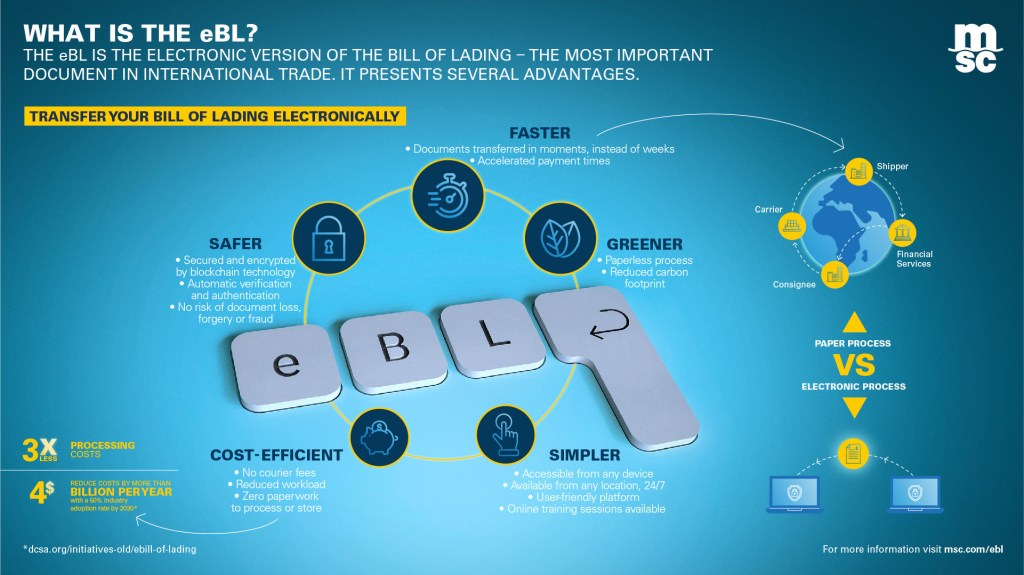
MSC Mediterranean Shipping Company, a global leader in container shipping and logistics, is officially introducing the electronic bill of lading (eBL) for its customers around the world, following a successful pilot phase, using a solution on an independent blockchain platform WAVE BL. The eBL enables shippers and other key supply chain stakeholders to receive and transmit the bill of lading document electronically, without any change or disruption to day-to-day business operations.

WAVE BL is a blockchain-based system that uses distributed ledger technology to ensure that all parties involved in a cargo shipment booking can issue, transfer, endorse and manage documents through a secure, decentralised network. Users can issue all originals, negotiable or non-negotiable, and exchange them via a direct, encrypted, peer-to-peer transmission. It’s also possible for users to amend documents. WAVE BL’s communication protocol is approved by the International Group of Protection & Indemnity Clubs, and meets the highest industry standards for security and privacy.   

“MSC has chosen WAVE BL because it is the only solution that mirrors the traditional paper-based process that the shipping and cargo transportation industry is used to,” says André Simha, Global Chief Digital & Information Officer at MSC. “It provides a digital alternative to all the possibilities available with traditional print documents, just much faster and more secure.”

The WAVE BL platform can be used free of charge throughout 2021 for exporters, importers and traders. Users only pay for issuing the original documents, and they do not need to invest in any IT infrastructure or make operational changes in order to use the service. They can simply sign up via MSC’s website: www.msc.com/eBL.

Source: Mediterranean Shipping Company, 28 April 2021

EU – Import Control System 2 (ICS2)

The European Union makes it a top priority to ensure the security of its citizens and single market. Every year trillions of Euros worth of goods are imported into EU, with the EU-27 now accounting for around 15 % of the world’s trade in goods. The European Union is implementing a new customs pre-arrival security and safety programme, underpinned by a large-scale advance cargo information system – Import Control System 2 (ICS2). The programme is one of the main contributors towards establishing an integrated EU approach to reinforce customs risk management under the common risk management framework (CRMF).

The pre-arrival security and safety programme will support effective risk-based customs controls whilst facilitating free flow of legitimate trade across the EU external borders. It represents the first line of defence in terms of protection of the EU internal market and the EU consumers. The new programme will remodel the existing process in terms of IT, legal, customs risk management/controls and trade operational perspectives.

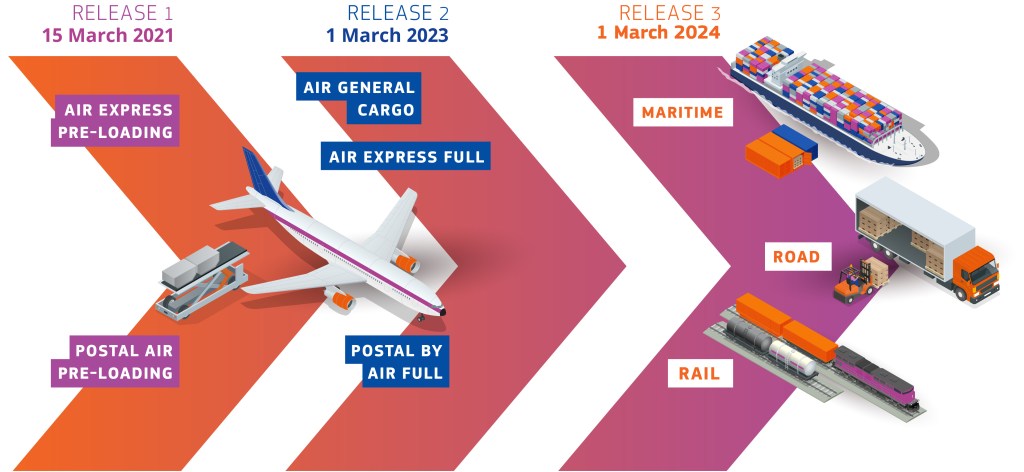
The EU’s new advance cargo information system ICS2 supports implementation of this new customs safety and security regulatory regime aimed to better protect single market and EU citizens. It will collect data about all goods entering the EU prior to their arrival. Economic Operators (EOs) will have to declare safety and security data to ICS2, through the Entry Summary Declaration (ENS). The obligation to start filing such declarations will not be the same for all EOs. It will depend on the type of services that they provide in the international movement of goods and is linked to the three release dates of ICS2 (15 March 2021, 1 March 2023, and 1 March 2024).

Advance cargo information and risk analysis will enable early identification of threats and help customs authorities to intervene at the most appropriate point in the supply chain.

ICS2 introduces more efficient and effective EU customs security and safety capabilities that will:

  • Increase protection of EU citizens and the internal market against security and safety threats;
  • Allow EU Customs authorities to better identify high-risk consignments and intervene at the most appropriate point in supply chain;
  • Support proportionate, targeted customs measures at the external borders in crisis response scenarios;
  • Facilitate cross-border clearance for the legitimate trade;
  • Simplify the exchange of information between Economic Operators (EOs) and EU Customs Authorities.

For more information on the ICS2 programme, refer to the EU Webpage here!

Source: European Union

ICC and Partners Launch eTradeHub

The International Chamber of Commerce (ICC) in partnership with West Blue Consulting, United Parcel Services (UPS), Trade Law Center (TRALAC) have officially launched the eTradeHubs portal, http://www.etradehubs.com.

The eTradeHubs portal is a one-stop for Trade Tools, Information & Collaboration which aims to reduce the time and cost of doing business by supporting businesses at all levels of maturity – the micro enterprise to the multinational.

Features

The portal which was virtually launched last week Thursday has features such as a multi country Tariff and Trade Information Tool and a Duty Calculator.

A first-time trader or existing trader wishing to import raw materials or export finished goods, can search on the portal.

The Duty Calculator further provides an estimate of the customs duty, tax and levies of the destination region or country to aid in financial and logistical planning.

eTradeHubs also provides a Trade Management Tool. Equipped with accurate trade information, the trader can proceed to transact, by generating trade compliant documentation, manage compliance, workflow and costs – all on the same platform, without the need to visit multiple regulatory agencies, entities, websites and physical offices as done previously.

The portal currently provides country data on Ghana, Kenya, Nigeria, South Africa, Zambia and the ECOWAS sub region, with more countries and sub regions to be introduced in support of the Digitise 5 million African SMES initiative.

CC, UPS, Tralac, and West Blue Consulting through a Memorandum of Understanding (MOU) announced a partnership to support women-led small and medium-sized enterprises (SMEs) in Africa.

The partners will offer capacity building programmes and tools, including co-developed trade and information portals called “e-Trade Hubs,” advocate for enabling public policy, and create electronic guidelines to help women entrepreneurs scale-up and digitise their businesses.

COVID-19

The Secretary General of ICC, Mr John W.H. Denton AO in his remarks said the economic, social, and health consequences associated with the COVID-19 pandemic had unequally impacted the lives and livelihoods of women business owners everywhere. 

“We are extremely proud to partner with UPS, Tralac, and West Blue Consulting to level the playing field in Africa and provide women entrepreneurs with the required resources to digitise their businesses. Women-led businesses are the backbone of their local economies – we can’t afford to leave them behind,” he added,

The CEO and Founder of West Blue Consulting,  noted that “The adoption of solutions by women in business and trade, will ensure benefits such as an increased ability for women to work from home whilst raising families; improved global market access, employment opportunities and a shift of women from the informal sector to the formal.

“The portal will provide a 24/7 collaborative space where women traders and entrepreneurs in the African Continental Free Trade Area (AfCFTA) and of course their male peers can connect and access timely and up to date information, skills and operational tools, offered by various providers”, she added.

Information

Ms Mintah expressed delight to partner with ICC, UPS and TRALAC to provide the needed skills training, trade information and tools via the eTradeHubs portal http://www.etradehubs.com.

President of UPS, Ms Penny Naas, the International Public Affairs & Sustainability said “Research shows that only 1 out of 5 businesses that exports is led by a woman. At UPS, we’re moving our world forward by helping women-run businesses maximize their participation in trade through public-private partnerships that provide policy recommendations and support with knowledge sharing and building skills”.

 Executive Director of Tralac, Ms Trudi Hartzenberg, said the adoption of digital trade solutions for the AfCFTA would address many border management challenges that disproportionately impact women traders.

Source: GraphicOnline, 11 March 2021