Unusual Container Weight Fraud Uncovered

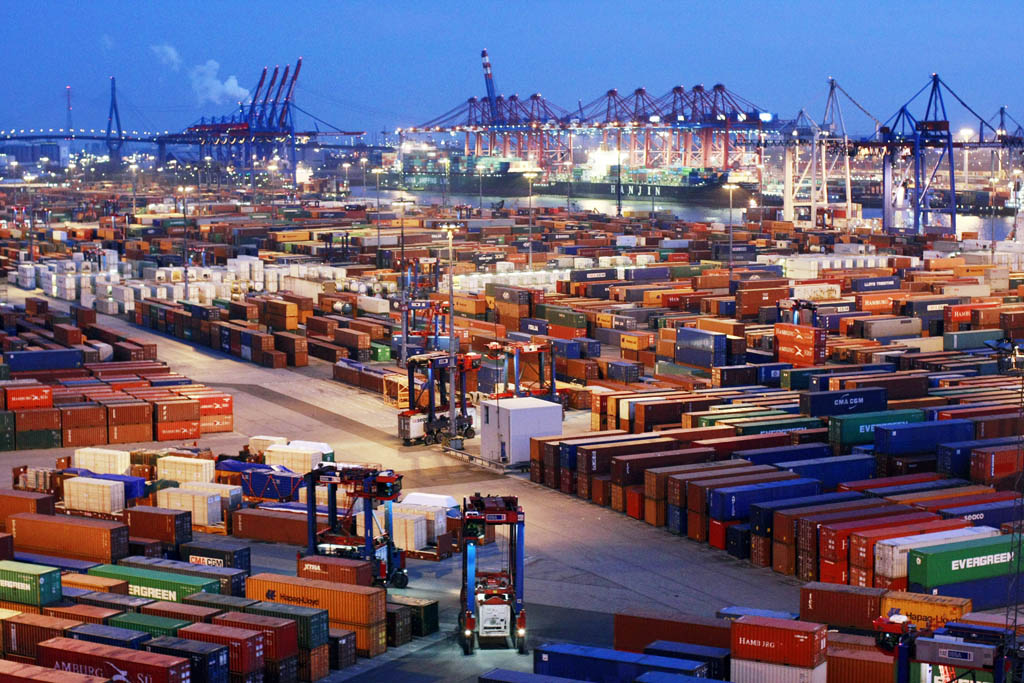
containerThe International Maritime Bureau has been alerted to a fraud involving a shipping container’s weight and size that is atypical of what one might out of a container weight fraud case; the tare weight, or unladen weight of the container itself was unrealistically falsified and much higher than the actual, correct weight of the container.

The IMB reports that the incident concerned a container of aluminium scrap in which the information outside the box was tampered with to show false weight and size. The fraud was uncovered by an IMB member after being notified of a significant weight shortage on the container, which arrived in the Far East from the Middle East.

During the investigation, the IMB member noted that the tare weight of the container, as shown on its door – and used by the shipper – was 3,680kg, while the cube, also shown on the door, was 2,700 cubic feet. While the numbers displayed were entirely acceptable for a 40 foot container, the box in question was a 20 foot one, according to the IMB. The shipper has since confirmed that the correct tare weight for the container should have been 2,200kg, much lower than what was declared.

An examination of the photos taken when the container was loaded revealed that the part of the door on which the figures were displayed was a slightly different color, which leads to the conclusion that the door had been repainted at some point, and the new, false figures were added after that. The IMB notes is not known when this was done and it is unlikely to be an isolated case.

The IMB says it has not come across a case before where a container has been repainted with incorrect weight and size information that in hindsight clearly cannot be correct for a 20 foot container, however it does have knowledge of a case where a label was placed over the container number of a stolen container to disguise the theft. The IMB says that this would be a more logical deception since carriers tend to focus on the container numbers themselves, and rely on the shipper to provide any other information required.

The IMB asks that others who detect similar container information tampering to report it so that it can attempt to establish a pattern that might indicate who is responsible and can issue suitable warnings to the industry if it proves widespread in the future.

Apart from being a fraud, mis-declaring the weight of containers can also pose a danger to the vessel and crew, as mis-declared container weights remains a contributing factor to incidents involving containers lost at sea.

This month, the International Maritime Organization’s Maritime Safety Committee is scheduled to adopt amendments to the International Convention for the Safety of Life at Sea chapter VI to require mandatory verification of the gross mass of containers, either by weighing the packed container or by weighing all packages and cargo items and adding the tare mass, in turn boosting the safety of container ships and crew.

The IMB stresses that in this case, the container owner has denied responsibility and the IMB member doubts its supplier was involved. Source: emaritimeexchange.com
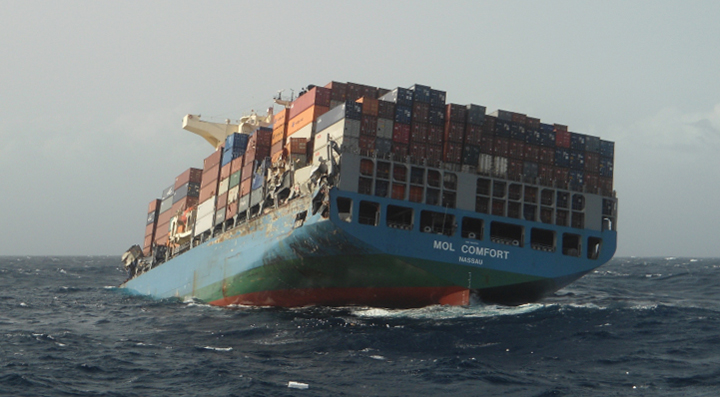
Update – Important Clues to MOL Comfort’s Demise

MOL-ComfortMany may recall the shocking pictures of MOL Comfort’s last voyage last year – images of a huge crack in the fully laden container ship on the high sea.

While conducting research for her PhD thesis at the Technical University of Denmark, Ingrid Marie Vincent Andersen, PhD had found clues prior to this incident suggesting the possibility of catastrophic failure was more real than previously thought.

Digging deep into the hydro-elastic structural response of container ships similar to the MOL Comfort, she had discovered some very interesting details.

Clearly, the ship had broken up when the hull girders failed, but what led to that failure was not so obvious. She, like many others, say it very likely had a lot to do with the cargo loading condition of the ship, but the full answer was quite a bit more complicated than that.

Anderson says the MOL Comfort and her sister vessels were simply under engineered by naval architects that didn’t fully account for enormous additional loads which were being placed on the ship.

“It is believed that the hydro-elastic effects and the effect of hull girder flexibility are capable of significantly amplifying the hull girder stresses and thus contribute to fatigue damage as well as to the extreme hull girder loading in container ships,” Andersen notes in her PhD thesis.

In her research, she studied ships in the 8000-9000 TEU range and discovered, “the hull girder vibrations due to hydro-elastic effects is capable of doubling the stress response amidships in some cases – also in the extreme loading cases.” Click here to witness a video of stress experienced on a container ship.

“I don’t think the incident was fatigue-related, but it could be due to under-estimation of the hydro-elastic effects on the wave-induced vertical bending moment at the design stage. The major uncertainty at the design stage is related to estimation of the wave loads,” notes Anderson.

Research published by Lloyd’s Register (LR) engineers Nigel White and Zhenhong Wang support Andersen’s research.

LR notes the principle design challenge inherent to large and ultra-large container ships is the combined effects of whipping, springing and warping/distortion of the hatch openings.

Until recently, Andersen notes that hydro-elastic effects have not been directly taken into account for in the classification societies’ design rules for container ships. In 2014, LR updated their design rules to reflect the discovery of much higher loadings inside the structure of container ships.

Andersen, White and Wang all cite strain data captured aboard a 2006-built CMA CGM 9,600 TEU container ship over a four-year period showing severe spikes in the vertical bending moment as wave strikes on the bow resonate down the ship.

Anderson notes that due to a large uncertainty around sea state conditions a vessel will encounter, maximum wave loading is subsequently uncertain. Wave loading is compounded by container ships that opt for greater cargo space forward, and thus greater bow flare such as on the MOL Comfort and the ultra-large 14,000 TEU+ sized vessels that are currently in operation.

These bending moments, according to their research can be upwards of 300 percent the traditionally calculated wave bending moment using linear ship motion codes – the ones that ships have traditionally been built to. The traditional codes have a realized safety factor of around 200 percent.

Anderson notes that due to a large uncertainty around sea state conditions a vessel will encounter, maximum wave loading is subsequently uncertain. Wave loading is compounded by container ships that opt for greater cargo space forward, and thus greater bow flare such as on the MOL Comfort and the ultra-large 14,000 TEU+ sized vessels that are currently in operation.

“The high strength steel used for the construction of the ship will result in a slightly lower natural frequency and possibly, together with the pronounced bow flare, making the vessel more susceptible to whipping vibrations,” adds Anderson.

Since the MOL Comfort sinking, all of the sister vessels to the MOL Comfort have been retrofitted with additional structural steel, but certainly other ships in that size range have not.

Considering the step changes being made in container ship design, logic would dictate that additional study and consideration be taken when designing and operating such vessels, including the installation of strain gauges to properly measure what is happening inside the ship. Source: gCaptain.com

24,000 TEU vessel on the way

[Picture: Alastair Wiper / Wired]

[Picture: Alastair Wiper / Wired]

Shipping lines such as Maersk may no longer be operating the world’s largest vessels, as new 24,000 TEU ships are said to traverse the waters soon.

David Tozer, container segment manager at Lloyd’s Register, said: “12 years ago researchers were looking at Malaccamaxes, 18,000 TEU vessels named after the Malacca Strait. People thought that this was absolutely crazy. But since then things have developed to the extent that we’ll soon see ships of 24,000 TEU. The volumes are there, so it’s going to happen.”

China Shipping Container Lines are said to be looking into 24,000 TEU vessels in order to bolster its fleet, according to Shipping Watch.

To read Port Technology’s piece on mega-ships not being the only solution, click here

David Tozer said: “We’re experiencing among our customers that the biggest carriers in front are working seriously with the giant ships and are looking into the future. They need to understand what the future is going to look like, and they need to take control and become part of it.”

Tozer went on to discuss the challenges of these larger vessels, stating: “Our job is to help people. We’ve studied the structural topics and we’ve looked into which problems these giant ships bring. First of all, there’s an insurance and safety issue where the two things are tied together.”

To take a tour of Maersk’s biggest vessel, click here

In addition to safety issues, larger vessels will carry global challenges, especially for the draft of the Suez Canal.

A process is currently underway in Germany to dredge the Elbe to make room for the new ultra-large vessels that are already sailing the world’s seas. Source: Port Technology

Global Shipping – One of the Last ‘Wild West’ Frontiers

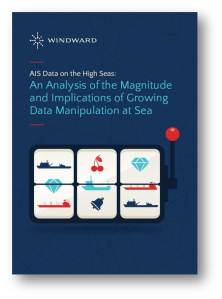
WindwardShipping activity across the world’s oceans is the lifeblood of the global economy, transporting billions of tons of goods annually and facilitating global commodity flows of oil, coal, grains and metals. Vessel activity is also of critical importance to Intelligence and Security agencies worldwide, as criminal and terrorist activity has become increasingly global and borderless.

And yet, the oceans remain one of the last ‘wild west’ frontiers, with limited visibility on what ships are actually doing once they leave port. AIS data, the most widely used data on ship activity worldwide, underlies decisions from Finance to Intelligence, but the data is unreliable and increasingly manipulated by the very ships it seeks to track.

And this trend is growing, fast, with little-understood and far-reaching implications worldwide.

AIS data, used routinely by decision makers across industries, is widely perceived as a reliable source of information on ship activity worldwide. Massive financial investments and critical operational decisions are based on this data.

New research from Windward reveals that AIS data has critical vulnerabilities when used to track ships, an ‘off label’ use of the system. The data is increasingly manipulated by ships that seek to conceal their identity, location or destination for economic gain or to sail under the security radar.

Manipulation practices are varied, according to Windward’s research, and range from Identity Fraud, to Obscuring Destinations, ‘Going Dark,’ Manipulating GPS, and ‘Spoofing’ AIS. Ships that manipulate AIS undermine not only their own data, but the entire maritime global picture — once some of the data is corrupt, all data is suspect.

If this kind of manipulation is occurring on ships, consider the impact of ‘cargoes/substances’ on board ‘ghost ships’. You can find the Windward Research paper “Analysis of the Magnitude and Implications of Growing Data Manipulation at Sea” as well as a poignant infographic on their website, by clicking the hyperlinks. Source: Windward.eu

Related article

FIATA 2014 Young Freight Forwarder of the Year Announced

Ms Nompumelelo Mboweni works as an Airfreight Import Controller at Bidvest Panalpina Logistics in Johannesburg [TT Club]

Ms Nompumelelo Mboweni works as an Airfreight Import Controller at Bidvest Panalpina Logistics in Johannesburg [TT Club]

The 2014 Young International Freight Forwarder of the Year (YIFFY) Award has been presented to South African forwarder Fortunate Nompumelelo Mboweni at the FIATA Annual Congress in Istanbul.

Each year at the FIATA Annual Congress the achievements of young freight forwarders from around the world are celebrated via an awards programme. TT Club is proud to have sponsored this award, now in its sixteenth year, since its foundation. The process of awarding the honour of Young Freight Forwarder of the Year (YIFFY) began earlier this year when entrants from all over the world submitted papers about a wide variety of transport and logistics projects.

These ranged from the transportation of tunnel drilling equipment to Bolivia to the delivery of a catamaran in Indonesia and from a project moving radioactive isotopes from South Africa to Namibia to the expedited deployment of a Disaster Assistance Response Team in the Philippines.

From this bewildering, yet highly professional array, the YIFFY Steering Committee selected a shortlist of four regional finalists. These four young professionals were then invited to attend the 2014 FIATA World Congress this week in Istanbul, Turkey to make a presentation on their dissertation topic.

The four regional finalists who proudly represented the future of the international freight forwarding industry in Istanbul were –

Africa/Middle East: Miss Fortunate Nompumelelo Mboweni, South Africa
Americas: Mr Douglas Whitlock, Canada
Asia-Pacific: Mr Saiful Ridhwan Bin Zulkifli, Singapore
Europe: Mr Christian Hensen, Germany

Following a comprehensive judging process, Ms Fortunate Nompumelelo Mboweni from South Africa was announced as the 2014 Young Freight Forwarder of the Year at the FIATA Congress’ opening ceremony on 13 October. Ms Nompumelelo Mboweni works as an Airfreight Import Controller at Bidvest Panalpina Logistics in Johannesburg. Andrew Kemp, TT Club’s Regional Director for Europe congratulated her and presented the award.

“I have been honoured as TT Club’s representative to be part of the selection process, and I personally was engrossed by the finalists’ presentations, which showed a considerable depth of understanding of their individual projects. I have to say all four finalists performed with flying colours at the recent final presentations; it was certainly a difficult decision to pick an overall winner. However, Fortunate prevailed and deservedly takes this year’s award,” said Kemp.

The award is presented in recognition of forwarding excellence and was established by FIATA with the support of TT Club to encourage the development of quality training in the industry and to reward young talent with additional valuable training opportunities. The TT Club has been a sponsor of the award since its inception and remains firmly committed to the importance of individual training and development within the global freight forwarding community. Source: TT Club

Container traffic to hit 1 billion TEU in 2020

-Dinesh Sharma, senior research manager at Drewry Maritime Advisors, says that global container throughput would rise between 5% and 5.5% a year up to the end of the decade. Speaking at a Ports & Terminals seminar in London, he cited ports in Africa and northern China as registering the strongest growth.

In his outlook, Sharma projected a 2020 global throughput volume of at least 1 billion TEU, up from 623 million TEU in 2013, with Asia accounting for 65% (650 million TEU) and transhipment traffic 32% (320 million TEU) of the total. This, he explained would compare with shares of 56% and 22.5% (140 million TEU), respectively, in 2013.

Within Asia, Sharma argued that China would become increasingly significant over the next seven years, citing that the country’s share of global container-handling activity would rise from 30% in 2013 to 40% in 2014. In 2000, China’s ports processed just 16% of a world total of 235 million TEU, a figure that reveals the spectacular growth that has occurred in the Asian country since it joined the World Trade Organisation in November 2001.
In a further assessment of the future, Sharma said the percentage of empty boxes handled would not change and would remain at about the 20% (200 million TEU) level in 2020.
Other interesting facts presented by the analyst showed that 22,000 TEU-sized ships would be in operation in 2020, the world population of super post panamax cranes would number over 2,000 units, compared with 1,160 units in service in 2013, and that the leading four global terminal operating companies would control an estimated 41% of all containers handled. Source: World Cargo News

US Bank launches freight payment ‘first’

e-invoicingUS Bank, part of the fifth-largest commercial bank in the United States, is launching a payment solution in Europe aimed at the freight industry that it said will allow shippers to hold on to cash longer while accelerating payments to carriers.

The bank’s subsidiary, Elavon Freight Payment, claimed it was the first solution of its kind for the freight industry in Europe. In addition to allowing shippers to hold onto their money longer while accelerating payment to their carriers, it claimed the solution “offers carriers a cost-effective alternative to factoring and other financing options commonly used in Europe today”.

It said the new trade finance capability joined a suite of recent enhancements to Elavon Freight Payment that reflect Europe’s diverse business, legal and regulatory environments. “The offering provides an automated solution for some of Europe’s most labour-intensive freight-payment processing needs, including VAT support and consolidated invoice processing”, the company said. Customers can choose German, French, or English-language platforms.

“As a financial institution, Elavon Freight Payment is uniquely positioned to offer this efficient method of improving cash flow for both shippers and carriers,” said Rick Erickson, global director of Freight Payment Solutions for US Bank. “We’re excited to expand our industry-leading capabilities to a wider range of customers.”

A division of US Bank’s Corporate Payments business, Elavon Freight Payment claims to give users greater visibility into their global transport spend “and more complete, timely data with which to make business decisions”. In addition to improving processing efficiencies for European shipping operations, it said the expanded system reduces costs by automating manual processing and optimizing cash flow. Source: Lloydsloadinglist.com

Also view the following article – US bank launches e-invoice base freight payment trade finance service (www.eeiplatform.com)

UK Forwarders object to New Air Cargo Surcharge

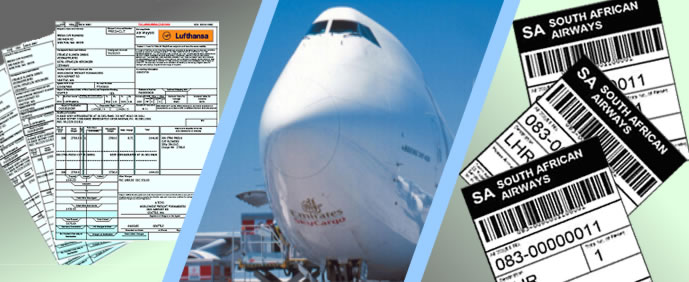
awb_welcomeIt is becoming more and more evident that every ‘automation’ project entails ‘more costs’. The benefits appear to lie in the ‘comfort’ of doing stuff at your keyboard. Much vaunted ‘cost-savings’ are a myth as technology encroaches every facet of global trading. The following is a fine example.

The trade association for UK freight forwarders and logistics service providers is encouraging its members to object to a Paper Air Waybill (AWB) Surcharge that airlines are planning for export AWBs that are not filed electronically. Robert Keen, director general of the British International Freight Association (Bifa), commented: “Bifa supports e-Commerce and e-Air Waybill implementation in the air cargo supply chain. However, we believe that implementation should create value for forwarders and airlines alike, and airlines need to recognise the costs that the originator of the information incurs to enter and transmit data.”

Keen continued: “Through our international body Fiata, Bifa will be voicing our objection to carriers that seek to apply yet another surcharge, and create yet another revenue stream, under the guise of supporting IATA’s – the airline industry body’s – e-Freight initiative, which aims to implement e-Freight worldwide.” Bifa is asking its members to join in the stand against the introduction of this surcharge by completing an online survey, which can be found here: http://www.surveygizmo.com/s3/1782849/Paper-AWB-Surcharge-Survey

The air freight sector missed IATA’s target last year of achieving 20% e-air waybill penetration “on feasible lanes”, achieving just 12%. The target for 2014 has been revised downwards to 22%, with a target for 45% e-AWB penetration by the end of 2015 and 80% by the end of 2016. IATA expects to see an acceleration of penetration levels this year, in part because of the introduction last year of the e-AWB Multilateral Agreement, to which around 70 airlines and more than 100 freight forwarders have now signed up.

But while there is increasing momentum among airlines and air cargo handlers, many forwarders remain unconvinced of the benefits. Chuck Zhao, process engineer project manager at US air cargo handler Consolidated Aviation Services (CAS), observes that only around 6% shipments out of the US are e-freight, largely because “those who cut the paper air waybills simply do not see the benefits of going paperless”.

Michael White, assistant director of cargo facilitation, security and standards for US air freight association Cargo Network Services (CNS) and regional manager of cargo for IATA, observed that there was a need for effective communication routes for the forwarders, especially small and medium-sized ones, to transmit their FWB & FHL messages – preferably a community system rather than via multiple airline portals. He said there was currently no community system in the US, but there were signs that companies are looking at that capability. Source: Lloydsloadinglist.com

Global container ports could handle 840m TEU a year by 2018

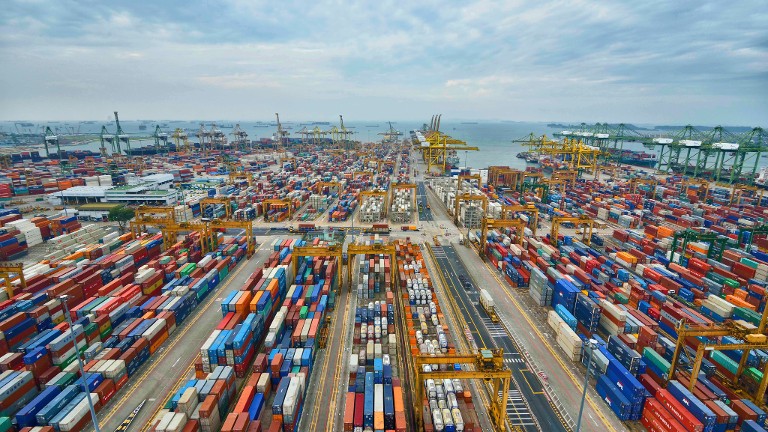
singapore-port

Port of Singapore

Projected throughput four years from now compares with 642m teu in 2013 and 674m teu projected for this year. The 2018 projection is double the 2004 throughput figure of 363m teu.

The combination of faster traffic growth and strong profit levels is attracting aggressive new players to enter the container terminal-operator business , according to the 11th Global Container Terminal Operators Annual Review and Forecast report published by shipping consultancy Drewry. It says Africa and Greater China are the regions that will see the most rapid growth.

Overall , growth rates are expected to average an annual 5.6% in the five years to 2018, compared with 3.4% in 2013. That will boost average terminal utilisation from 67% today to 75% in 2018, Drewry forecasts.

“The sector’s strong financial performance and accelerating growth is encouraging new market entrants and renewed merger and acquisition activity in the container ports sector,” said Neil Davidson, senior analyst in Drewry’s ports and terminals practice. “Financial investors are particularly active at present, attracted by typical ebitda margins of between 20% and 45%.”

Drewry has also added two companies to its league table of 24 terminal operators it considers to be global. Both China Merchants Holdings International and Bolloré Group have been growing aggressively. In the case of CMHI further acquisitions are particularly likely. Other operators, such as Gulftainer and Yilport are also expanding rapidly and are challenging for inclusion in Drewry’s league table.

The composition of the top five players, when measured on an equity teu throughput basis, has changed little from last year, except new entrant CMHI which is now in fifth place. PSA again heads the table, by virtue of its scale and 20% stake in Hutchison Port Holdings which comes second. APM Terminals is third, followed by DP World.

Drewry said that by 2018, it expects both HPH and APM Terminals to be vying closely for the top spot in terms of capacity deployed. Most portfolio expansion will be through greenfield or brownfield terminals in emerging markets, led by APM Terminals, International Container Terminal Services, HPH and DP World. “All port and terminal operators are experiencing a number of key industry trends, some of which have wide ramifications,” said Mr Davidson. “The most important trends are deployment of ever-larger containerships, expansion of shipping-line alliances, financial pressures on shipping lines, rapidly emerging international terminal operators and owners, financial investor churn, as well as the gathering pace of terminal automation.” Source: Lloydslist.com

Reefer Owners Beware

reeferThe Department of Agriculture, Forestry and Fisheries appears to have adopted a concerning stance on the requirements of the Marine Living Resources Act regarding the licensing of vessels entering South African waters. The policy affects reefer vessels in particular and owners are advised to pay attention to this development.

Among other things, the act requires that every foreign-flagged fishing vessel entering the South African exclusive economic zone apply for and obtain a fishing permit. A ‘fishing vessel’ is defined in the act as any vessel, boat, ship or other craft which is used for, equipped to be used for or of a type that is normally used for fishing or related activities, and includes all gear, equipment, stores, cargo and fuel onboard. Further, the term ‘related activities’ is defined as including:

  • storing, buying, selling, transshipping, processing or transporting fish or any fish product taken from South African waters up to the time it is first landed or in the course of high seas fishing;
  • storing, buying, selling or processing fish or any fish product onshore from the time it is first landed;
  • refuelling or supplying fishing vessels, selling or supplying fishing equipment or performing any other act in support of fishing;
  • exporting and importing fish or any fish product; and
  • providing agency, consultancy or other similar services for and in relation to fishing or a related activity.

It is a criminal offence to undertake fishing or related activities without the requisite licence. The penalties for contravention include a number of measures which may be taken by a fishery control officer, such as seizure of the vessel concerned or the arrest of anyone whom the fishery control officer has reasonable grounds to suspect has committed an offence in terms of the act.

The act seems to be sufficiently clear; what is concerning is the manner in which fishery control officers are implementing it. For example, in a recent case the fishery control officers in Cape Town conducted a raid in the port and seized a reefer vessel which had called for medical assistance to a crew member and undertook subsequent repairs, on the grounds that the vessel had no fishing licence onboard. There was no suggestion by the officers that the vessel was actually engaged in fishing or related activities. Instead, the officers’ view was that an offence had been committed by the mere fact that the vessel was capable of carrying fish and had entered the South Africa exclusive economic zone without a fishing permit. On a plain reading of the act, no criminal offence had been committed on the facts of the case. The reasonable inference is that the fishery control officers had acted outside the scope of the act.

Perhaps the most worrying aspect was that, in the face of a legal challenge to the seizure notice, the fishery control officers took it upon themselves to arrest the master of the vessel with the assistance of the South African Police Services at 7:00pm before the vessel was due to depart, so that the master might be prosecuted in the magistrates’ court under the act unless he paid an admission of guilt fine.

The extent to which actions of this nature by the department will continue is unknown, but until the fishing industry or lobby groups can get a clear understanding of the department’s policy, it is advisable for reefer owners (in particular) to canvass the issue with their local port agents well in advance of calling at South Africa. Source: Bowman Gilfillan

Kuehne + Nagel introduces ‘industry-leading’ sea freight carbon calculator

imagesCAQOK2YRKuehne + Nagel has introduced what it claims is the freight forwarding industry’s most advanced environmental emissions calculator tool, providing “exact data” on sea freight and intermodal shipments.

K+N said it had been “continuously enhancing its CO2 emission calculating capabilities and is the first to offer its customers exact data instead of estimations”. The Global Seafreight Carbon Calculator (GSCC) allows calculations of CO2, SOx and NOx emissions for container and LCL movements from door-to-door.

Built upon the European Standard EN 16258, it said the GSCC is a planning support tool that helps customers to calculate and model complex supply chains. The underlying methodology of the programme is based on the Clean Cargo Working Group standards for CO2 emissions, whereby an individual trade lane-based CO2 footprint per gramme/TEU/km can be obtained. Additionally the GSCC features detailed information about SOx.

K+N said the GSCC also provides: real-time CO2 emissions; a calculation model for strategic carbon footprint simulation; a high-level overview of CO2 emissions for sea and intermodal transport; carrier-based CO2 emissions reports.

On request, Kuehne + Nagel can also provide customer-specific CO2 emission reports with its advanced Global Transport Carbon Calculator. This tool is designed to monitor carbon emissions from specific transport activities and the reports include actual ocean carrier emissions data provided by individual carriers.

K+N said the data was fully integrated into the KN Login platform and allows scalable reports per trade lane, region, country, mode of transport and carrier. Source: http://www.kn-portal.com

Triple-E Leaves Port of Algeciras with World Record Load

Triple-E-full-loaded

MV Mary Maersk departed Algeciras, Spain fully laden [Gcaptain.com]

On July 21, 2014, the MV Mary Maersk departed Algeciras, Spain with a world record 17,603 twenty-foot equivalent units (TEU), the most TEU’s ever loaded onto a single vessel.

MV Mary Mearsk is the third vessel in Maersk Line’s Triple-E class, which have nominal capacity of 18,270 TEU, although port restrictions have prevented the vessels from reaching full capacity.

“Algeciras has been preparing for full utilisation of the Triple-E for more than a year,” says Carlos Arias, head of the South Europe Liner Operations Cluster. “This included the upgrading of four existing cranes and the arrival of four new Triple-E cranes.”

After departing Algeciras, the vessel was bound for Tanjung Pelepas, Malaysia, which included a trip through the Suez Canal. Arias added that similar upgrades needed to be made at the port of Tanjung Pelepas, and this was the first occasion where both ends were ready. Source: Gcaptain.com

Egypt Plans New $4b Suez Canal

Capesize bulk carrier at Suez Canal Bridge [www.maritemexecutive.com]

Capesize bulk carrier at Suez Canal Bridge [www.maritimexecutive.com]

Egypt has plans to build a new Suez Canal alongside the existing 145-year-old historic waterway in a multi-billion dollar project to expand trade along the fastest shipping route between Europe and Asia.

The project, to be run by the army, is a major step by new President Abdel Fattah al-Sisi to stimulate Egypt’s struggling economy and recalled some of the grand national programs of one of Sisi’s predecessors, army strongman Gamal Abdel Nasser.

The Suez Canal earns Egypt about $5 billion a year, a vital source of hard currency for a country that has suffered a slump in tourism and foreign investment since the 2011 uprising that preceded Mursi’s presidency.

An official in the Suez Canal Authority told Reuters the new canal was set to boost annual revenues to $13.5 billion by 2023. The new channel, part of a larger project to expand port and shipping facilities around the canal, aims to raise Egypt’s international profile and establish it as a major trade hub.

“This giant project will be the creation of a new Suez Canal parallel to the current channel of a total length of 72 kilometers (44.74 miles),” Mohab Mamish, authority chairman, told a conference in Ismailia, a port city on the canal.

He said the total estimated cost of drilling the new channel would be about $4 billion and be completed in five years, though Sisi said he hoped it would be finished within a more ambitious one-year deadline.

The original canal, linking the Mediterranean and Red Seas, took 10 years of brutal, poorly paid work by Egyptians, drafted at the rate of 20,000 every 10 months from “the peasantry”.

It slashed weeks if not months off journeys between Europe and Asia that otherwise necessitated a trip round Africa. Up to 20 Egyptian firms could be involved but would work under military supervision, he said.

Egypt has planned for years to develop 76,000 sq km (29,000 sq miles) around the canal into an international industrial and logistics hub to attract more ships and generate income.

Neil Davidson, senior adviser for ports and terminals at London-based Drewry Maritime Research, said the new canal would not necessarily generate greater trade but the development of a hub around it could prove lucrative.

“The strategic location of Egypt and the canal is a key advantage… being a key point where cargo can be distributed or worked on. This hubbing concept is extremely valuable,” he said.

Mamish, the chairman, said the project would involve 35 kilometers (22 miles) of “dry digging” and 37 kilometers (23 miles) would be “expansion and deepening”, indicating the current Suez Canal, which is 163 km (101 miles) long, could be widened as part of the project.

The Panama Canal linking the Atlantic and Pacific Oceans in Central America, is also being expanded with a third set of locks being built to allow bigger ships to pass through the waterway. That project is due to open in 2016.Among the bidders for the Suez project, according to Egypt’s Al Mal newspaper, was a group including state-run Arab Contractors and consultancy firm James Cubitt and Partners. Another included McKinsey & Co management consulting firm. Source: Reuters

South African Air Cargo Security Systems receive International thumbs up!

Cargo Screening [www.aircargonews.net]

Cargo Screening [www.aircargonews.net]

Both the European Union (EU) as well as the United States’ Transport Security Administration (TSA) have approved South African air cargo security systems.

Poppy Khoza , The South African Civil Aviation Authority (SACAA) director, says, “The two affirmations place South Africa in a unique position, making the country the only one on the continent with such recognition and agreements in place.”

“This essentially means that, following audits by the European Union and the United States, South Africa is acknowledged as one of the countries where the level of aviation security is regarded as robust and reliable. This will benefit air carriers operating between South Africa and the two regions.”

In the case of the US, the TSA carries out yearly assessments of South Africa’s aviation security regime with the last audit conducted in June 2014.

The results of the audit indicate that South Africa did not attract any findings or observation and in some instances, the standards were found to be higher than in previous years.

“The TSA audit comes after almost a year since the SACAA and the TSA concluded a recognition agreement on air cargo security programmes, thus acknowledging that South African systems are on par with the stringent requirements of the USA.”

“This agreement also enhances air cargo security measures and initiatives between the two countries. Most significantly, the agreement enables quicker facilitation of goods between the two countries, and helps eradicate duplicative or redundant measures while still ensuring the highest levels of security that both the TSA and the SACAA require.”

The EU recognition means that South Africa has been included in the list of third countries where air carriers are exempted from the application of the ACC3 (Air cargo and mail carrier operation into the EU from a third country airport) regime of which the requirements are viewed as stringent to operators from countries outside the EU.

In terms of the ACC3 process, carriers wishing to carry cargo into the EU have to request an ACC3 status, and this process requires rigorous screening of air cargo or the existence of a properly functioning and secure air cargo system.

As from July this year, cargo operators flying to the EU destinations must therefore either hold a valid EU validation report, proving that they have adequate security measures in place, or in the absence of such assurance, cargo operators will have to use the services of EU validators to pronounce their cargo as secured.

“The services of EU validators are not free and come at a cost to air carriers, but it does acknowledge that security measures applied in South Africa and the EU are equivalent.”

“This recognition by the EU is a significant milestone for the country and South African carriers, as this means that they can now benefit from an exemption from the ACC3 regime, provided that the level of risk remains similarly low, commensurate with a robust oversight system being in place.”

Source: SAnews.gov.za