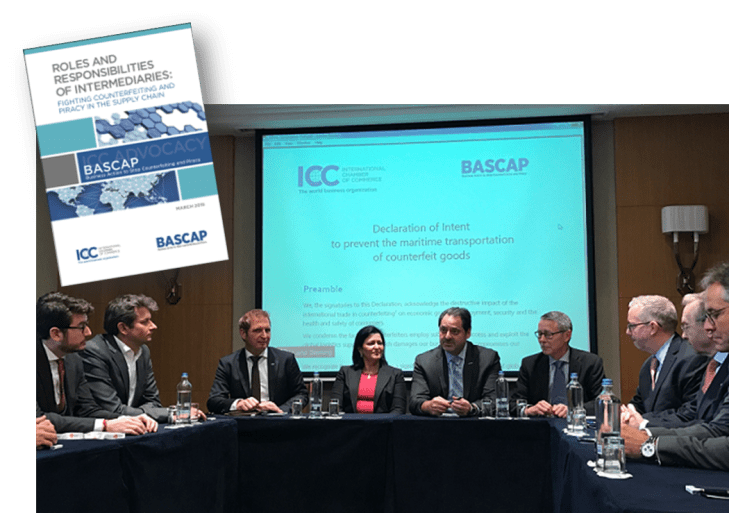
Leaders from global shipping firms, freight forwarders, brand owners whose products are counterfeited and industry organizations representing both industries signed a joint Declaration of Intent to Prevent the Maritime Transport of Counterfeit Goods in Brussels last week.
The event marked the first time the global shipping industry and brand owners have made a public commitment to work together to stop the transport of counterfeit goods on shipping vessels.
Initial signatories include the leading global shipping firms and freight forwarders and ten major multinational brand manufacturers, along with the International Federation of Freight Forwarders Associations (FIATA), and the International Chamber of Commerce’s (ICC) Business Action to Stop Counterfeiting and Piracy (BASCAP) and Commercial Crime Service (CCS).
More transporters, brand owners and their industry associations are expected to join the voluntary initiative as awareness grows.
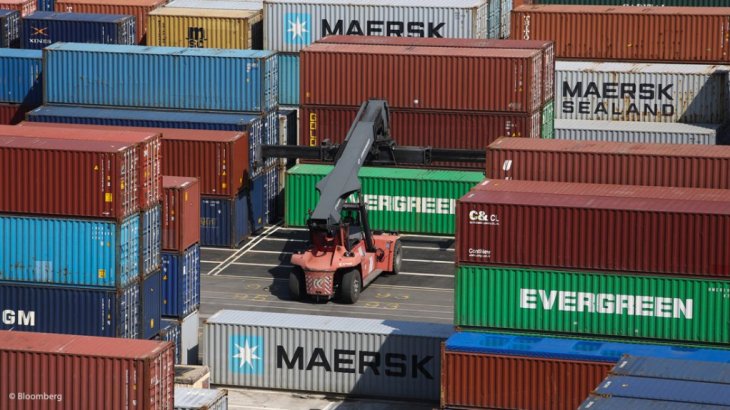
According to the United Nations Office on Drugs and Crime, about 90 percent of all international trade is moved around the world in more than 500 million containers on 89,000 maritime vessels. While this represents approximately 90 percent of all international trade, UNODC says that less than two percent of these containers are inspected to verify their contents. This results in enormous opportunities for criminal networks to abuse this critical supply chain channel to transport huge volumes of counterfeit products affecting virtually every product sector.
According to a recent OECD/EUIPO report, $461 billion in counterfeit goods moved through international trade in 2013, with almost 10 percent being shipped on maritime vessels.
Maersk Line and CMA CGM Group, two of the largest global transport companies with approximately half of all global shipping, and Kuehne and Nagel and Expeditors, two of the leading freight forwarding and logistics companies with total revenues of more than $27 billion, were the first in their industries to sign the Declaration.
The non-binding Declaration acknowledges the “destructive impact” of counterfeits on international trade. It calls on the maritime transport industry to address it “through continuous proactive measures, and corporate social responsibility principles.” The Declaration includes a zero tolerance policy on counterfeiting, strict supply chain controls and other due diligence checks to stop business cooperation with those suspected of dealing in the counterfeit trade.
This commitment paves the way for new voluntary collaboration programs between intermediaries and brand owners to stop abuse of the global supply chain by counterfeiters.
“We are proud to be among the first in our industry to sign this historic Declaration,” said Michael Jul Hansen, Customs and Trade Compliance Lead for Maersk Line. “Maersk has been a leader in taking steps to prevent the use of our vessels for the shipment of counterfeit and other illicit goods, and this Declaration is a reaffirmation of our intent to do everything we can to ensure our ships are counterfeit free.”
The Declaration is a direct reaction to the concerns of brand owners that vessels transporting their legitimate products were also being exploited by criminal networks to transport fake versions. This phenomenon was summarized in a landmark report on the Role and Responsibilities of Intermediaries: Fighting Counterfeiting and Piracy in the Supply Chain, published in 2015 by BASCAP. Following publication of the report, BASCAP organized a working group of its members to initiate a cross-sector dialogue with the transport industry to discuss ways to work together to find voluntary solutions. Source: Maritime Executive
 The following was penned by a long-time customs acquaintance Aires Nunes da Costa, who has kindly permitted me to post his article titled “Why unpack containers in Durban if you can have containers at your door step in Gauteng within 24 hours?” which first appeared on LinkedIN.
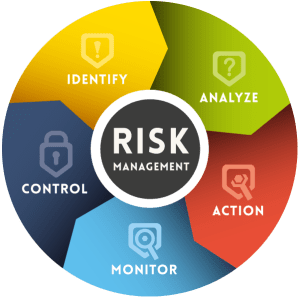 Senior Claims Executive at the TT Club in Sydney, Kate Hollis, sheds some light on the risks faced by licenced customs brokers and mitigation steps to take:
 Here follows an appreciation of AEO within the context of the EU. According to KGH customs consultancy services, being an Authorised Economic Operator (AEO) already entails advantages for companies that have invested in doing the work to gain the AEO certification. With the new Union Customs Code (UCC), companies with an AEO permit will be able to gain additional advantages leading to more predictable and efficient logistics flows as well as an increased competitive edge.
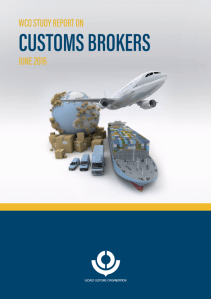 The WCO has just published a newly developed Study Report on Customs Brokers. The Study Report provides a general background and overview of Customs Brokers’ role in the international supply chain together with some suggested policy and organisational considerations on Customs Brokers regime and a model checklist for licensing/regulating brokers.
 The UK Maritime and Coastguard Agency has dropped the tolerances it was considering for weighing equipment used to weigh a container for the new SOLAS VGM requirement.

 Market forces, competition and the desire to be ahead of the competition demonstrate how dynamic the international supply chain is being maneuvered. Amazon’s latest move is not only innovative but demonstrates just how adaptable international trade and Customs Inc. need to be in order to accommodate nuances to traditional accepted norms in global trade. For Customs, it needs to intimately understand the nature of business of its registered or licensed traders so as to properly apply risk and facilitation regimes appropriately. Recent developments in mutual recognition likewise play an important role in awarding real benefits to companies and their supply chains who undertake such global innovations.
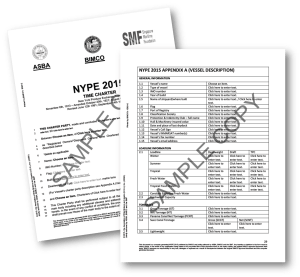 Paper bills of lading have been used throughout the world to document and effect international trade for centuries. Yet whilst the world has become increasingly digitalised the paper bill of lading has, on the whole, remained a constant feature of global trade. Its continued use is mainly due to its combination of three legal characteristics that it has developed over time: (i) it is a receipt of the goods carried; (ii) it provides evidence of the terms of the contract of carriage; and (iii) it is a document of title to the goods. It is these characteristics that have, until relatively recently, foiled attempts to replace the paper bill of lading with an electronic equivalent. However, with the inclusion of an electronic bills of lading clause in BIMCO’s NYPE 2015 time charter form, as well as the International Group of P&I Clubs’ approval of the coverage of three electronic trading systems, the dominance of the paper bill of lading may well be coming to an end.
 From time to time it is nice to reflect on a good news story within the local customs and logistics industry. Freight & Trade Weekly’s (2015.11.06, page 4) article – “SA will be base for development of single customs platform” provides such a basis for reflection. The article reports on the recent merger of freight industry IT service providers Compu-Clearing and Core Freight and their plans to establish a robust and agile IT solution for trade on the African sub-continent.
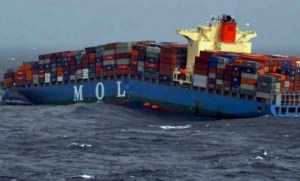 The responsibility for verifying the gross weight of loaded containers under next year’s new box-weighing rules will in many cases rest with freight forwarders, logistics operators or NVOCCs, according to freight transport insurance specialist TT Club.
 The Kenya Trade Network Agency, operator of the National Electronic Single Window System, has refuted claims by some clearing agents that the platform is lapsing.
 ![Ms Nompumelelo Mboweni works as an Airfreight Import Controller at Bidvest Panalpina Logistics in Johannesburg [TT Club]](https://mpoverello.com/wp-content/uploads/2014/10/fiata-2014-young-freight-forwarder-of-the-year.jpg)
 What Happened to the Portcullis?
You must be logged in to post a comment.