SARS honoured by WCO for World Cup work

SARS receives WCO Award

Acting Chairperson of the WCO Council, Zouhair Chorfi (left) with SARS Commissioner Oupa Magashula and WCO Secretary-General Kunio Mikuriya at the award hand-over

A special award was recently presented to SARS by the World Customs Organization (WCO) in recognition of SARS Customs’ commitment in the fight against counterfeiting and piracy, in particular before and during the 2010 FIFA Soccer World Cup. South Africa was flooded with counterfeit products, particularly clothing and footwear, in the run-up to the World Cup, and SARS Customs pulled out all stops to prevent these goods from entering the country. Approximately R350 to R400 million worth of counterfeit goods, including over 1.1 million Bafana Bafana shirts, were confiscated by Customs during this time. The award was handed over to the Commissioner of SARS at a WCO Council meeting in Brussels at the end of June. Source: SARS eNews

For more pictures of the WCO Council Session 2011, click here!

Why are customs and excise taxes treated differently and left outside of the fold of the Tax Administration Bill?

SARS moved forward in creating a new legislative framework for tax when updates to the Tax Administration and Customs Control Bills were published for comment. Werksmans Attorneys Director Alison Wood says contradictions between the Bills may cause delays.

Read the full article titled Second Draft Customs Control Bill – why are customs and excise taxes treated differently and left outside of the fold of the Tax Administration Bill?

Source: Creamer Media

Are Customs Unions Tenuous Arrangements?

Recent reports from Europe suggest all is not entirely well with the ‘customs union’ concept. Let’s face it the philosophy of such economic arrangements has existed for many years. However, human nature and the failure of politicians to learn from history prevail.

On the one hand we have Russia, Belarus, and Kazakhstan entering a new customs union on 1 July 2011. At the same time, Russian Customs will become responsible for transport, sanitary, veterinary, quarantine and phytosanitary control. The impact of this change foresees the displacement of national border controls to the outer borders of the new Customs Union. 35 customs checkpoints and approximately 3,500 customs officers will be made redundant following the implementation of the Customs Union. To take control of the additional functions (transport, sanitary, veterinary, quarantine and phytosanitary control) Customs will need to recruit over 1,000 new specialists. Customs will try to close the gap by a short-term redeploying of personnel, but in the future expects to employ some specialists previously made redundant in other governmental agencies responsible for transport, sanitary affairs. This sounds a bit ludicrous given that 3,500 customs officers are about to be turfed into economic oblivion – truly, the interests of customs staff are not very high on this agenda!

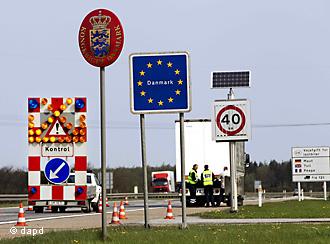
Denmark border crossingElsewhere, tension is developing between Denmark and Germany in a dispute over the Danish government‘s plans to re-establish permanent border controls – this in the EU. Some commentators have even gone so far to state that this could be the writing on the wall for freedom in Europe. The agreement guarantees the free movement of people between the 26 European member states. Denmark insists that the sole aim of the new border controls was “to fight the entry of illegal goods and drugs” into the country.

So, is the dream of a united Europe showing signs of cracks? It seems that the scourge of illegal goods and trafficking have placed some strain on the trust between these two nations. How long before it spreads to other states? At home, here in Southern Africa, there have been several reports of tension between the Republic and the BLNS states. Although the basis for this lies more in the distribution of the common revenue pool, it is no secret that the Southern African Customs Union (SACU) and its porous inland borders offers little support for maintaining the union. With the new Customs Control Bill emphasizing the movement of goods within the union as ‘imports’ and ‘exports’, it would indeed seem a matter of time before full customs controls are reinstated at the national borders rather than current VAT controls.

Customs Bill makes Local Headlines

The Business Day has published an article featuring the Customs Bills. Prominent attention has been given to the question of penalties under the new dispensation. Given months of industry analysis of the Bills, I think it is a welcomed occurrence that the topic has reached the press. For the full article please click  HERE!

WCO 2011 – Photo Contest Winner

2011 WCO Photo Competition: “In the desert, the next shift arrives” is the title of the winning photo submitted by Algerian Customs ( Photo by Francis Roche, a retired French Customs photographer – Copyright © Algeria Customs). To see a selection of this year’s entries click  HERE!

Algerian Customs

WCO News – Latest edition

WCO-News-June-2011The June 2011 edition of the WCO News is a bumper 56 pages. You will find several interesting articles relating to the latest developments and initiatives on trade facilitation. A particular article features East Africa’s efforts at facilitation at its land borders. Read also about –

  • Korea’s Client-oriented Logistics Information System which automatically measures the time taken for processing imported cargo at each stage of clearance from arrival at port to release (arrival at port > bonded warehouse > import declaration > permission > release), to diagnose and eliminate bottlenecks in logistics.
  • TradeFIRST, Singapore Customs’ latest initiative to improve trade facilitation through better partnerships with business. TradeFIRST is a single trade facilitation window that integrates the concepts of facilitation, compliance and risk management, and promises to make trade easier, fairer and more secure.
  • Latin America leads the way with AEO implementation, and
  • The concept of multi-layered security.

The Magazine is available in traditional PDF format or as an ebook. www.wcoomd.org

A new Customs Journal

Customs Scientific Journal 1st Edition 2011The Customs Scientific Journal CUSTOMS is a peer-reviewed academic journal that is published electronically, twice a year by the Academy of Customs Service of Ukraine on behalf of the Regional Office for Capacity Building & Regional Training Centers for the European Region of the World Customs Organization. It was launched by the initiative of Regional Office for Capacity Building/Regional Training Centers for the European Region of the World Customs Organization on October 1, 2010.

Founders of this Journal regard it as a mirror of the implementation of Capacity Building Strategy for the Region Europe, as the communication and the coordination mechanism within region to support the establishment of customs-to-customs partnerships as well as to enhance the identification and exchange of modern technologies and best practices within the region.

The journal covers all aspects of the roles and responsibilities of customs with the focus on: Customs & Business Partnership, Professional education in Customs domain, Implementation of the WCO Standards, Best practices, Development of scientific activity. The most prospective are also the following broad sections: Young researchers’ page, Guests (papers by representatives of Customs Administrations/Customs Universities from non-EuR Region of WCO), as well as Reference Material.

Related articles:

Customs and the Academia

Recommended reads for the Customs professional. Visit the WCO for the latest edition of WCO News. The main  articles  include why knowledge is the catalyst for customs excellence; an update on air cargo security and developments coWorld Customs Journalncerning HS2012. 

For readers and customs users requiring more academic related information, you will not be disappointed with the latest bi-annual publication of the World Customs Journal. Some very interesting papers covering AEO certification and revocation; Risk management systems and the use of data mining; Case study of Customs and other Agency role in trade facilitation initiatives in Bangladesh,  and Customs valuation compliance through corporate income tax to name but a few. You will also find the Special Report from the recent PICARD 2010 Conference held in Abu Dhabi, UAE.

Border Management ModernisationThe World Bank Border Management Modernization book  is designed to shed new light on problems related to border clearance processes by Customs and other agencies, processes which are among the most important, and problematic links in the global supply chain. In spite of widespread recognition of the need to improve the efficiency of border management regimes, Customs and other border management agencies in many countries frequently pay lip service to the trade facilitation agenda according to the authors.

The book aims to identify a range of strategies that will help officials meet their traditional control responsibilities while facilitating legitimate trade at the same time. It also provides advice to development professionals and key policy makers about what works, what does not and why. Gerard McLinden, Enrique Fanta, David Widdowson and Tom Doyle edited the new book and the WCO Secretariat contributed chapter 11 on Reform instruments, tools, and best practice approaches. For more information visit the World Bank website  http://publications.worldbank.org.

You may also acquire this publication through local site http://www.take2.co.za

RFID – its application at the Customs border

Sample NEXUS card

Sample NEXUS card

The opening of “Ready Lanes” to speed border crossings from Canada and Mexico into the U.S. is significant, less because RFID is used in border crossing identity cards than it is for the fact that RFID is finally being used.

On April 11, 2011, “Ready Lanes” were instituted on the Canadian and Mexican borders to expedite re-entry to the U.S. for those with the RFID enabled enhanced driver’s license, NEXUS card, new permanent resident card and U.S. passport card. Why is this significant?Because it’s one thing to issue a host of different RFID-enabled identity cards; it’s another thing to actually use them for their intended purpose.

One case in point. In accordance with Presidential Directive HSPD-12 issued by president George W. Bush, Personal Identity Verification (PIV) contactless smart cards have been issued to all U.S. government employees and contractors who must enter government buildings. The abstract of HSPD-12 states: There are wide variations in the quality and security of identification used to gain access to secure facilities where there is potential for terrorist attacks. In order to eliminate these variations, U.S. policy is to enhance security, increase Government efficiency, reduce identity fraud, and protect personal privacy by establishing a mandatory, Government-wide standard for secure and reliable forms of identification issued by the Federal Government to its employees and contractors (including contractor employees). This directive mandates a federal standard for secure and reliable forms of identification.

Therefore, what is significant about the Ready Lanes is that the RFID feature of these identity documents is actually being used. And, while the NEXUS card has been used for commercial traffic for a number of years and some of the other identity cards have been issued for a year or more, the opening of Ready Lanes is the first tangible benefit of these cards to the average person.

But the Ready Lanes are significant for more than that. They show not only how these cards can speed up cross-border traffic, but also how RFID should be used to speed cargo that arrives by land, sea and air. RFID container seals and RFID manifest tags with customs information, coupled with existing electronically communicated manifests and documents, could provide a provenance for the authenticity and security of incoming containers at international ports and terminals. So-called Green Lanes for pre-cleared cargo containers would be the equivalent of the Ready Lanes. That would allow the limited number of inspectors to focus their attention on containers from less trustworthy sources to enhance security and safety. Green Lanes would also save shippers and consignees money by shortening the time it takes for goods, particularly perishable goods, to move from the transportation hub to their destinations.

The lesson that should be taken from the opening of the Ready Lanes on the U.S. border, therefore, is that the use of RFID should not be our focus. Rather, it should be on the usefulness of RFID. Or, to put it in a somewhat less confusing way, it’s one thing to deploy RFID; it’s another thing to actually employ it.

Original article published by Bert Moore.

WCO Photo Competition 2011

PhotgrapherThis year the World Customs Organization is running the third edition of the Photo Competition in which a Member Customs administration will win an award for a photograph showing its services in line with this year’s theme of Customs in the 21st Century. The 20 best photos will be exhibited in the WCO Headquarters building at the Organization’s 117th/118th Council Sessions in June 2011, and an award will be presented to the representative of the winning Customs administration during the sessions.This is a fantastic chance to really understand the progress made over the years in Customs and also to encourage staff participation and awareness in our field.

The competition is open to all active WCO Member Customs administrations. The objective is to reward a Customs administration which has been able, through a photograph, to portray Customs in the 21st Century. Customs has indeed changed over the years so the idea behind this year’s theme is to reflect upon this evolution.

SARS officers will be notified shortly of the details. The competition closes mid- May 2011.

New Screening Technology for Air Cargo

I have added a new link which will be of interest to Customs Border Control officers and cargo handlers in the airfreight industry. Read all about the new screening technology recently installed at Schiphol Airporthttp://www.diag-nose.com/rascargo.html. You will also find interesting posts in regard to the use of detector dogs in the combatting narcotics and explosives.

Mandatory EDI Submission – SARS engages Cargo Manifest Providers

Some 8 years since the initial implementation of the Manifest Acquittal System (MAS), SARS has recently engaged cargo manifest providers with a fresh urgency to prepare themselves for the impending mandatory requirements for the filing of cargo reports to Customs. The legislation has been in place for several years and a fully revamped cargo management system has since been developed by SARS. Cargo Reporters (shipping lines, airlines, ships agents, terminal operators, freight forwarders, consolidation/deconsolidation agents, depot operators, ground handling agents) are now called upon to ensure that their systems are able to meet the cargo reporting requirements of SARS. (The EDI Mapping requirements for CUSCAR is now available on the SARS website).

The first imperative is to ensure the integrity of data reported to SARS. Once this is at a satisfactory level, SARS will commence the matching of cargo and customs clearance information. Not unlike other customs jurisdictions, the availability of ‘clean data’ from both cargo reporters and declarant’s is imperative to facilitate manifest matching, risk assessment and the release of goods.

A further phase will thereafter introduce measures to ensure that South Africa meets its obligations in terms of the WCO SAFE Framework of Standards. This may require some modification to

  • Data reporting requirements via EDI,
  • Some changes to legislation,
  • Introduction of formal licensing of cargo operators, and
  • Introduction of a seal integrity programme as part of the aforementioned licensing arrangement.

SARS has prioritized air and sea modalities (imports only) for initial implementation, with rail and road modes to follow. The priority not only includes cargo reporting (manifest) requirements but also other reports such as vessel call notifications and advices, discharge lists, gate-in and gate out reports, and cargo outturn reports.

SARS cargo management system will be available for test purposes to all cargo reporters as of 1 March 2011. A period of at least 2 months has been contemplated for such testing, with live implementation occurring in May 2011.

Importance of Seal Integrity for Customs

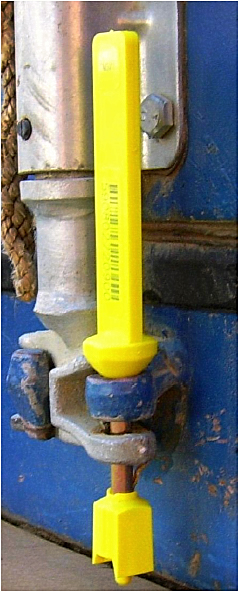
RFID SealSupply chain security in the maritime environment is underpinned by the need for seal integrity. The road to paperless trade eliminates much of the paperwork traditionally required for customs clearance and cargo reporting. The movement of ‘containerised’ import and export cargo does, however, require physical validation of the ‘integrity’ of cargo from its point of dispatch to point of delivery at destination. This is not wholly a customs requirement but at the same time one which any legitimate trader would expect in respect of the safe and secure transportation of his/her cargo.

Technology developments in the logistics industry see many forms of automated gate controls and inventory management. However, if this technology does not support a mechanism to ensure the validity of means of transport, conveyance equipment and seal, then there exists a risk of a breach in the movement of such goods.

From a customs perspective, all parties in the supply chain are both vulnerable and responsible for maintaining such integrity. For this reason, the introduction of Authorised Economic Operator (AEO) programmes and security programmes require a customs administration to implement seal integrity. SARS already contemplated the need for this through provision in the Revenue Laws Amendment Act, introducing Section 11A – Seals and sealing of containers and sealing of packages and vehicles. Formal promulgation of this has not occurred due to the fact that it is dependent on the licensing of logistics operators, its self a modernisation deliverable.

To illustrate at a practical and operational level the import of seal integrity, please refer to an article, authored by Andre Landman (SARS), place under “Downloads”, titled “Seal Reporting Requirements for Containerised Goods“.

SARS clampdown nets R40.8m in illegal vehicles

For some, particularly government enforcement agencies and the motor industry will laud such a headline. Read the full article on FTWOnline .

The real question is why South Africa allows the importation and storage of these vehicles for subsequent re-exportation? This also implies the continued operation of licensed warehousing facilities for a commodity which seemingly is impossible to monitor and control. If the illegal importation of second-hand motor vehicles was outlawed we wouldn’t have to print such a headline, nor would enforcement agencies have to waste scarce resources and taxpayers money in counteracting such a threat. There is an argument that political and social conditions in our neighbouring BLNS states necessitate the ‘exportation’ of cheap vehicles to the people in these countries. Yet, this implies full customs controls at the internal land border posts between South Africa and the SACU states. Unfortunately, SARS provides little more than domestic VAT control at these borders which beckons the question why this practice is allowed.

Freight Forwarders and Brokers – a US perspective

Of all supply chain operators, the brokers and freight forwarders undoubtedly have the most challenging business – highly competitive and so dependant on the activities and integrity of all other logistics players. For an interesting analysis of the US environment you will find the following white paper both interesting and thought-provoking.

10 Best Practices and Recommendations for customs brokerage and freight forwarding