Addressing Apathetic Compliance Mentality – Part 2

Now that Africa has sufficiently patronized the demands of the west and the east, it’s time to focus on the realities in our own back yard – charity begins at home. At this juncture it is a good reminder that had the WCO not had a non Anglo-American chairperson post 9/11, the present climate in Customs could have been a whole lot different from what it is today….someone that had the mind and intent to ensure that ALL of the customs world should have a bite at the ‘modernization’ cherry, not just those paying the highest subs.

The tidal wave of US initiated security measures peeved many foreign governments and at one point even threatened a stand-off between the US and the European Commission over its unilateral approach to annex key European ports to its Container Security Initiative (CSI) programme. Needless to say most international carriers rallied their support for heightened security measures in exchange for ‘green lane’ treatment for their goods arriving in the US. Never before (in living memory) has Customs (in the US that is) been able to impose such influence on the international trading community – all for its own domestic policy.

Now, unless I’m seriously mistaken local freight forwarders, NVOCCs, consolidators and carriers must at some time or another be confronted with ‘advance security reporting requirements’ for China, EU and North American bound consignments. This being the case, the least your local authority is asking is that you extend the same courtesy here.

It is no understatement that SARS values the time, effort and goodwill of many locally based forwarders, transporters, and their service providers. The input and cooperation gained from fortnightly gatherings of the Cargo Reporting Technical Workgroup is a minor revelation to say the least. It is the dedication of these who stave off the mite which SARS may inflict on non-compliant and apathetic operators, for now.

The co-creation spirit of SARS/Trade interaction therefore implies that SARS considers the latter’s recommendations in pursuit of attaining the desired outcome – a fully automated cargo reporting system, involving known parties committed to the seamless processing of import and export cargoes, creating a real market opportunity for foreign investors and traders. At this point let’s consider a process going forward –

  • Participating cargo reporters (freight forwarders, NVOCCs, and carriers) will continue their efforts to ramp up their performance concerning the submission of manifests (master and house level). SARS will monitor all electronic exchanges and provide continued feedback to these parties on performance and progress.
  • Those (cargo reporters) concerned with cargo outturns, arrival schedules and reports, discharge and load listings, and gate control reports (container depots, transit shed operators, ground handlers, off airport degroupers, and terminal operators), will continue their efforts in testing such electronic exchanges with SARS until an appointed time for ‘live’ operation is determined. Live operation will include the coordination and sequencing of cargo manifests and most important – the issuance of ‘release’ based on manifest/declaration matching.
  • SARS will redress its approach in communication (direct and through the media) with industry stakeholders. This will follow a more focused outreach, in layman’s language, which will leave no doubt in any party’s mind as to what SARS’ cargo reporting requirements are.
  • It is acknowledged that the industry umbrella organisations SAAFF, SAASOA, and ACOC can only do as much according to the extent of their membership. SARS will therefore encourage increased urgency by these associations in bringing their respective constituencies in line with cargo reporting requirements. SARS is satisfied that these association’s membership comprise at least 80-90% of international cargo reporters in the country.
  • Simultaneously, SARS will –
    • Continue its discussion with stakeholders to bring finality relating to cargo outturn, manifest versus declaration matching, acquittal and exception reporting expectations.
    • Finalise and publish the required legislation for the new cargo reporting requirements. Upon publication SARS will have the necessary means to enforce such new provisions as well as the punitive measures associated with non-reporting of manifest and conveyance reports.
    • Broach 2nd phase requirements with stakeholders. This will include discussion and prioritization of remaining modes of transportation (rail and road).

None of the above is beyond the means of reality. To re-iterate, without the abovementioned building blocks in place, there is little chance of extending benefits on an AEO basis. A successful supply chain operation requires all members – be they traders, cargo reporters, third-party logistic providers, port, and airport operators – to act in concert with one another.  In Part 3 (the final part), I will discuss the consequences of any party’s non-compliance with cargo reporting requirements.


Addressing Apathetic Compliance Mentality – Part 1

In 1993, I recall certain members of the shipping community admonishing the Customs and Excise department for being backward, lacking the ability to meet the demands of the community – shipping lines in particular. At the time this criticism was valid, and would have still been relevant for another 10 years – the time it took SARS to eventually implement its first manifest acquittal system (MAS).  Since the inception of MAS (2003) the interest and energy to bring about trade compliance in the submission of manifest and conveyance information has been tardy and uncoordinated from a central viewpoint. In retrospect, several reasons exist for this – erratic and unpredictable systems architecture, as well as the lack of a customs champion to drive the operational compliance initiative from a national level.

Along the way there have been various milestones which have signalled a radical re-think in the philosophy of cargo reporting. Introduction of the ISPS code and the US 24-hour advance manifest rule set the tone for world-wide ‘re-engineering’ (I prefer the word ‘reform’) of processes, information exchange and legal basis. These have continued for supply chain operators through various iterations of ‘advance reporting’ – New Zealand, Canada, China and more recently the EU’s Import Security filing have required shippers and logistics operators to re-align their business models to meet new customs reporting requirements. True, all these initiatives may have their respective national or regional flavours, yet, the Customs data requirements are principally identical.

In 2008 SARS signalled its intent to mandate the electronic submission of cargo reports, supported by legislation to give this due effect. Why electronic? Because there’s a belief that any party involved in international cargo handling, forwarding, and shipping must be computer literate in order to operate (at all) in this highly competitive business. We are not talking about once-off casual importers here, but parties who have a greater or lesser degree of business acumen, knowledge of INCOTERMS and supply chain procedural requirements. Am I mistaken? Perhaps. Maybe the Customs perception of this industry tends to accord it too much credence?

Mid-2010, SARS addressed these issues and made a few fundamental decisions to improve this lot. It was time to build a new system from ground up, on a modern, stable technology platform. In order to ensure that the business principles and systems logic were kept intact, it was time to assign the best brains (internally) to accomplish this. In a very short period, a new system was developed and put into production, offering improved predictability in the data validation and processing. Over the last 2-3 months several manifest and cargo conveyance providers have been actively participating in a test initiative.

Automated Cargo Management (ACM) was launched ‘live’ on 6 May 2011. The reality is that the ratio of manifests to clearance declarations is a mere 17% for sea freight and 8% in the case of aircargo, respectively. The take-on in number of new air and sea cargo reporting registrants is equally abysmal. Let’s reserve any further ‘adjectives’ for now.

A recent poll hosted by a local industry web service revealed a predictable outcome (over a 5-day time period) where a vast majority of respondents indicated a negative experience with the introduction of the new system. The reality is that those who participated and the internal Customs’ experience suggest a more positive situation. Why then the poll result? Speculation suggests that the pre-implementation communication campaign was not adequate; that few operators in industry really understand what they are required to do. Is this really palusible when the outreach by SARS, service providers to their clients in trade, and the industry umbrella organisations have all been canvassing their respective members about the developments? How come only 10 new applications for registration were only received by SARS the week after implementation?

Clearly there is no urgency. Almost 10 years of advanced manifest reporting has transpired across various global supply chains, and yet some operators are still unsure of what their obligations are meant to be. So how are we going to fix this? In order to succesfully offer real AEO benefits and other advanced services within the context of Kyoto and the SAFE Framework of Standards, this needs to be rectified. In Part 2, I will sketch the options available to address if not rectify the current state of affairs. Bringing non-cooperating parties into a state of compliance is a SARS’ pastime. Talk to you soon.

SARS to introduce Automated Cargo Management (ACM)

Cargo freighter

Cargo freighter

SARS has announced the decommissioning of its current manifest acquittal system (MAS). This is scheduled for 6 May 2011. The new automated cargo management system (ACM) will be launched simultaneously to allow cargo reporters in the air and sea cargo environments to report cargo bills, and other related cargo reports to SARS. In recent months SARS has worked closely with external stakeholders to impart its vision and intent regarding the launch of the new system. The first phase of the cargo initiative is to ensure that all parties involved in the contract of carriage of goods against a cargo bill (bill of lading or airwaybill) are registered with SARS.

An important facet of this phase is to ensure that not only principal carriers report their cargo manifest to SARS, but also freight forwarders and NVOCCs. Customs’ aim is to perform combined risk assessment and matching of manifests with the goods declaration to enable automatic acquittal. This can only be possible if so-called house manifests are submitted electronically to SARS.

For more information refer to the SARS Customs Modernisation webpage.

Reprieve – SARS postpones implementation of Release 2

At a recent strategic session between SARS and a packed auditorium of supply chain stakeholders, it was jointly agreed to postpone the implementation of Release 2 until June 2011. For SARS there remains a significant change integration exercise – that in upskilling staff members in the use and discipline of its new user interface – Service Manager (SM).

A previous post Modernisation Release 2 – Industry testing to commence highlighted the scope for what is a significant enhancement for internal SARS’ staff. While development and testing has progressed reasonably well, stakeholders agreed that stability of certain software components was needed in order to provide all parties the necessary comfort before rolling out live to the trade. Continue reading →

South African Supply Chain – a shift in the balance of power?

The Customs Modernisation Programme has engaged supply chain stakeholders for just on a year and 3 months now. What has been seen as an unprecedented approach to Customs/Stakeholder co-creation has no doubt also revealed some significant developments in the industry which prompt some observation and comment.

It is an understatement that the modernisation development impinges upon an individual or company’s ability to modernise on the one hand, while maintaining a constant focus and commitment to their day-to-day operational dealings with clients.

It serves well to take a step back a few years – not quite to the days of antiquity – but far enough back to when declarations were framed ‘manually’ by an entry clerk and assessed ‘manually’ by a customs officer. In both instances the clearing agent and Customs required a level of capability and skills in the specific areas of tariff and valuation. This did not stop at clearances but was a well established trait at most customs branch offices, and indeed clearance brokers, where skills in all specialised areas were generally in abundance. Companies in those days had the capacity to deal with just about any kind of customs and trade issue through their in-house knowledge base and proven track record.

In short, over the last 18 years or so, the ‘skills’ and knowledge base has gradually dwindled where in most cases only the larger companies have been able to maintain top-dollar skills on a fulltime basis. The introduction of systems has to large extent negated the need for knowledgeable (highly paid) entry clerks. A lot of these ‘skills’ landed up at one or other ‘audit firm’, and if collar-and-tie was not the desired work attire, they established their own specialised consultancies.

Automation and EDI have allowed a number of smaller players to enter the fray, but the once established methods of in-house training no longer exist. True, there are reputable learning institutions offering dedicated training, but it is widely acknowledged that mentorship within the organisation was always the best form of knowledge transfer. Some local and international organisations offer highly specialised technical e-learning offerings with ‘accredited’ diplomas or degrees. Yet, one has to question seriously how companies, and Customs for that matter, ensure a return on investment on the knowledge attained? Moreover, staff retention (attrition rather) questions the motive for training, i.e. are staff only interested in training for their personal development, or are companies not focussed enough to ensure staff is retained for a reasonable period to ensure sustainable benefit?

This brings me to the point of this post. The modernisation programme will undoubtedly offer significant benefits to trade. The first release allowed ALL traders and service providers to progress at a common pace with implementation occurring only once all were fully tested and ready. This, itself, extended to joint training programmes between SARS and the trade. The forthcoming release will however reveal the competitive edge for traders whose service providers have their act together versus those who are not quite there. Is this the desired state envisaged by SARS? No. However, equal opportunity is afforded to all involved. True, a large company can dedicate more time and resource to such developments. This is a painful trade-off for some. The reality is therefore brutally clear – to stay with the game, companies must take some pain. It is quite apparent that the pace at which change is occurring is unexpected by some members of the supply chain.

A trend amongst certain service providers has been to recruit so-called customs experts. This is both a strategic and competitive move in that service providers, today more than ever before, require a more intimate understanding of customs procedure. However, while this evolution is silently occurring it needs be mentioned that there exists a fine line in terms of the manner by which these ‘experts’ operate. Bureaus need to be cognisant of this point and their real role in the industry. If such ‘expertise’ goes beyond systems development it may require them having to license with SARS to ensure parity in the industry. These developments are not going unnoticed.

The Customs Modernisation Programme has provided an environment for radical re-structuring where the ‘fit’ will survive and thrive. Unfortunately, nostalgia and novelty are no longer a criteria.

Modernisation Release 2 – Industry testing to commence

Just 3 months since the first release, SARS and Customs stakeholders together with their service providers will commence testing the second phase of the Customs Modernisation Programme. The scope of this release offers some significant opportunity for improved efficiencies benefitting both customs and trade.

There are 3 key pillars for this implementation:

  1. A new case management and inspection solution will support an automated workflow between customs assessment officers and inspectors, eliminating the current manual stop and inspection process. A modern user interface has been developed and integrated with Customs’ legacy declaration processing systems. For Release 2, this interface will allow the customs officer to initiate a case, where goods are automatically risk profiled for an intervention. A ‘case’ is an electronic stop notice where the officer is able to capture inspection outcomes, as well as view supporting documents electronically submitted by traders in mitigation of a stop or detention. In addition, the system will interface with an electronic inspection booking system which aims at expediting the customs inspection process. The outcome of each stage of an inspection triggers a response to the trader advising of the status of the consignment or inspection outcome. This is a significant step forward and SARS intends that the efficiency benefits derived will directly translate into cost savings for trade.
  2. Customs E@sySCAN and E@syPACKER software solutions. Soon traders will no longer have to hand-deliver clearance supporting documents to customs manually. SARS and service providers have collaborated for over a year developing a functionality that will radically improve efficiencies and response times in regard to ‘stopped/detained’ cargoes. It will enable a customs broker, importer or exporter to upload any required trade document which customs may require in the finalisation of a customs inspection. SARS’ ‘E@sy’ software has been made free of charge to service providers for integration into their trade applications. This forms part of SARS’ overall contribution to keeping cost of compliance to a minimum. For traders not using EDI, SARS will also be offering walk-in scanning facilities at its bulk capturing centres across the country. 
  3. A new cargo management system will replace the existing Manifest Acquittal System (MAS). Cargo operators are already working with SARS to improve the level of data cleanliness. Once the level of data integrity meets an accepted level it is SARS intention to perform the matching of import and export clearance declarations against consignment level transport document information in real time. Mismatches occurring will trigger a customs case which may either take the form of a documentary check, and if necessary a physical inspection. The automatic data matching and acquittal will obviate the need for cargo reporters to print and deliver paper manifests to customs. It will also remove the obligation on reporters to submit paper manifest acquittal documents. Similarly, significant cost savings are envisaged for trade.

It is worth mentioning that some of these innovations are a world first in customs processing, and paves the way for future enhancements in support of the new Customs Duty and Control Bills.

Withdrawal of ‘Transfer of Liability’ Clearance Declarations

Prior to 1 November 2010, SARS provided for the importation of goods (by a registered importer) which could be cleared under ‘transfer of liability’ (Purpose Code TIR) to a third party who is registered to process or manufacture goods under the conditions of Schedule 3 (Industrial Rebate).

In effect this allowed an importer, having no entitlement to rebate (duty relief), to clear and deliver goods to a rebate registrant for purposes of manufacture/assembly, receive the finished product and dispose of commercially.

The Customs Modernisation approach has put into motion a means by which previous clearance procedures (Purpose Codes, prior to November 2010) could be aligned with the new Customs Procedure Codes (CPCs) introduced subsequent to 1 November. Moving forward, the treatment of such goods under the new dispensation will require that the importer of the goods be licensed to operate a home use processing premises. No allowance is made for transfer of liability to a third party at time of primary importation into the Republic. Provision is however made to allow subsequent sub-contracting of the process of manufacture/assembly.

Given the aforementioned, SARS has approached ITAC regarding the economic justification of the stance permitting transfer of liability.

Manufacturers and importers must therefore take note of this matter and consider the impact to their current business models. The basic principle is that unless an importer is properly registered or licensed (as the case may be) he/she may not be entitled to import goods under certain customs procedures, specifically ‘home use processing’ and ‘inward processing’.

Modernisation Release 1 – stepping stone to success!

On Sunday morning, 31 October 2010 (just after 05h00) the culmination of 11 months hard work resulted in a successful rollover of the old customs procedures to the new. All current transactional clearance systems, information systems and the EDI gateway were successfully implemented. Thus the path to compliance of the Revised Kyoto Convention has been set in motion with several more planned enhacements in the pipeline.

The Customs operational support centre, together with all the call centres supporting industry service providers (ICT providers to the shippers and brokers) – some 20 in total I believe – kicked into place to support the customs user through the new customs clearance process.

I heard a comment that Monday (1 Nov) was too late to issue a report on the Customs implementation – evidently from a reporter’s perspective, news must be pre-emptive or current. I obviously differ and believe that a few weeks of operation need to pass by in order to accurately assess and gauge the effectiveness and efficiency of the upgraded systems and procedures.

Weeks of preparation covering the new customs procedures, implementation and fall-back plans, were supported by a contingent of willing volunteers in both SARS and industry to foster knowledge and user readiness. Almost 11 months of weekly technical sessions were avidly attended by service providers and a few shipping experts. Regular health checks were conducted to gauge trade readiness and developments. The original implementation date of 1 October 2010, was timeously postponed to afford SARS and trade additional time to satisfactorily accomplish a state of ‘joint’ readiness. While this created some initial setbacks for some providers, hindsight proves that the additional month was both very necessary and warranted for all parties.

After almost a week’s operation of the new process, it can be unequivocally stated that the implementation was a success. However, while this view is held by most, it is vigorously opposed by others. More about this in a followup post.


What Modernisation means for Customs – Part 4

While on this subject, it is good to recognise the role which automation played in South Africa’s technology migration in the supply chain. Our choice to adopt Electronic Data Interchange (EDI) as preferred communication channel, opposed to Direct Trader Input (DTI) as did most European countries, has positioned this country as a world leader in many areas of supply chain automation.
The external trade practitioner, importer, exporter and logistics operators in South Africa have at least 30 years experience in e-commerce with Customs and other operators in the local supply chain. As far back as the early 1980’s there has existed some form of automated support for trade to interact with Customs. This gradually evolved into more sophisticated processes requiring more than simple tariff data base, duty calculator, and currency conversion worksheet to prepare a customs declaration.
Late in the 1970’s a bunch of customs officers and COBOL programmers set up a makeshift office, overlooking Seapoint, Cape Town developing custom’s first computer system. 1981 saw the introduction of the Customs Automated Processing of Entries (CAPE) system – imports only. There was one primary goal – to eliminate computation errors by trade. In fact, the extent of errors obviated in the first 9 months of operation more than paid for the cost of the system.
Within a year or two, one entrepreneur introduced the first broker system which was embraced enthusiastically by trade practitioners – the clearing and forwarding agents. This would now pose a role-challenge to the ‘entry clerk’ who was used to framing customs declarations ‘by hand’, in seven fold by carbon copy, to satisfy the state’s information requirements. You see photocopy machines were not commercially vialble to be the mainstream copy medium in those days.
Notwithsatnding the fact that automation provided a fraction of the operational functionality of the customs import clearance process; the sheer speed within which tariffs could be validated and duties and taxes calculated was in itself impetus enough for the Commissioner to insist on more functionality. In time, the manual cash register was replaced by a customs revenue accounting process providing more integration within the system. The mid 1990’s saw significant developments on the CAPE system with the introduction of the automated deferment of payment scheme. The log-jamming at customs cash halls had become untenable for trade forcing Customs to undertake a major revamp of its system – it was not uncommon for pay-in clerks to spend two full days waiting to remit monies to the cashier before obtaining release for their consignments.

Over the years the demand for broader access to EDI functionality lead to several more bureaus coming onto the scene. For more than a decade EDI was only an option for medium and large freight forwarding concerns due to cost constraints. Today, there are several companies offering desktop solutions which can be tailored to suite the needs of the customer big and small. It is key to note that these systems are fully-fledged supply chain solutions, not just frontend clearance declaration capturing solutions. The trade has evolved drastically in the last 15 years. In the not too distant past a clearaing agent/broker made profit from framing declarations. Today such organisations must offer a variety of ‘automated’ supply chain options and services including costing, warehousing, inland distribution, consolidation and credit facilities. In the past, most brokers were able to provide all the necessary specialist services such as tariff and valuation appraisal, refunds/drawbacks and trade remedy submissions to ITAC and the DTI. These days, due to the high premium of manitaining such skills, few agents/brokers can offer the full scope of these services. The big audit companies have by-and-large cashed in on this business with good and bad results. The ‘good’ is that such ‘applied customs audit skills’ are available in limited quantity to traders who have recourse to refunds/drawbacks and trade remedies. The ‘bad’ is that not all the audit firms provide the best advice all the time, and charge the earth for their services. I suppose this is not unlike the legal fraternity where truth and justice are not always the prime objective.

Back to Customs – in the mid-1980’s Customs introduced a selectivity module in the clearance system to improve throughput and efficiency. This was the first significant change to impact on the role of the customs checking officer. While the solution worked adequately, the effectiveness of ‘true’ tariff and valuation appraisal went down the tubes. I will discuss this specific matter in detail in a future post.

It was in 1993 that the first discussions around EDI were considered in SARS Customs. The WCO had been making overtures on the subject and shortly released the first version of its ICT Guidelines, later to be published as the Kyoto ICT Guidelines. The concept of EDI was vigorously pushed at the WCO, even though the G7 managed and maintained the the Customs data model. At the time, EDI message standards were anything but standard with only a few administrations adopting UN/EDIFACT. The US and Canada pursued ANSI X-12, and it was mainly Australian Customs who formerly spear-headed the development and use of EDIFACT in the customs domain. January 2002 the result of the G7 initiative to standardise and simplify Customs Data requirements of the G7 countries was handed over to the WCO for maintenance, further development and to address a wider Customs community. The last G7 version became version 1 of the WCO Customs Data Model. In 2003 the WCO published version 1.1 in order to cover the Supply Chain Security requirements. From the list of 27 data elements required to identify high risk consignments only 1 data element was added to version 1 of the WCO Customs Data Model. It is now the de facto standard for all WCO members and is widely used, although predominently its version 1 and 2 releases.

Since the WCO has taken full control over its EDI destiny, the Information Management Sub-committee (IMSC) – a dedicated unit set up to administer manitainance and control over Customs message development. – has since progressed the Customs Data Model into its 3rd generation, which now includes options for both both UN/EDIFACT and XML formats.

SARS Customs took seven years to implement its EDI capability, eventually transacting the first EDI CUSDEC and CUSRES interchanges with trade in 2000. The protracted delays occured as a result of  huge organisational change between 1995 and 1998 leading up to the amalgamation of The Department of Customs & Excise and the Receiver of Revenue into SARS. Having achieved success on imports, SARS’ next challenge was to bring all other modes of clearance – exports, inbond movements and cross border (Customs Union) movements – to an automated state. Talk to you soon.


What Modernisation means for Customs – Part 3

It is important to consider that ‘modernisation’ is not just a facet or trait of the African continent. Through my experience and involvement in other modernisation programmes, it is quite clear that the pre and post 9/11 world of customs administrations has in fact laid most, if not all customs administrations on a platform or cause for much introspection and rebuilding.
The collapse of the Berlin Wall in the 1980’s brought about a significant change beyond the political domain in the so-called dismantling of the Communist Block. Many of the former ‘iron curtain’ countries had little or no internal structures to deal with the impending establishment and rebuilding of their individual economies – in a modern commercial world. From a customs point of view, few in fact had a ‘Customs’ department. The West European countries had a significant advantage over their eastern counterparts from a trade and technological point of view. The burgeoning European Union (EU) had little choice but to assist in their eastern neighbour’s development. Donor aid through international assistance packages saw the proliferation of ‘customs programmes’ – providing both ‘consultants’ and ‘consulting houses’ significant opportunity to rake in huge profits in developing or modernising a host country’s customs administration. At this time there was very little by way of choice in terms of automated systems. A country either accepted the UN’s ‘free’ ASYCUDA system, or if its government had favourable ties with the French, then the alternative was the SOFIX system. Microsoft and others were too busy developing operating systems and desktop software at the time. Besides, the well-to-do developed countries were all too busy pushing ASYCUDA on unsuspecting ‘developing’ countries, and little thought was ever given to customs software development on a commercial level. At that time UK and US Customs were so involved in securing assistance programmes under the ASYCUDA banner and were exceedingly opposed the French offering, which had proven very successful in the French-speaking territories. It was a well-known fact at the time that neither of the aforementioned administrations thought ASYCUDA a viable option for their own countries.
It is therefore easy to understand why UNCTAD can stake claim to over 80 installations worldwide, of its various ASYCUDA software versions. Many of these countries have benefitted little through the painful experiences of ‘freeware’ installation. The experience normally consisted in ‘European’ customs influences being forced on the target country with little option of ‘customisation’ to the state’s needs. Hordes of consultants would ‘construct’ a customs administration around the software product. Customs technique would take the form of crash courses on the ASYCUDA application and the HS Nomenclature. The donor aid ‘buddy system’ also ensured that Pre-Shipment Inspection (PSI) agencies (in many cases the same consulting houses) were awarded lucrative contracts to inspect all consignments being exported from the developing ‘third world’ state to ‘first world’ countries. The reason: these states had no experience on tariff classification and customs valuation. In reality, this was never going to form part of the donor aid. After all, why train a nation when so much money can be made from outsourcing the operation of key customs functions. Once again, is it not surprising that the poorer countries seek to rid themselves of domination by global outsiders. This practice continues even today, where many a contract for the implementation of non-intrusive inspectional (NII) equipment – X-Ray and Gamma Ray scanners – is awarded to the same PSI culprits who, in turn, hold a nation’s traders to ransom through onerous scanning fees. The host nation is dangled a carrot in not having to foot the bill for any NII infrastructure, while the concessionaire recoups all capital costs, and more, through the aforementioned screening fees – all in the name of supply chain security! Fortunately, African states are beginning to avoid these deals.
Over the last 10 years, new developments in ‘customs’ software has seen a numerous array of software houses developing customs, port community and supply chain computerised solutions. To avoid polarisation some of these vendors have been forward-thinking in modelling their solutions on standards as established by the World Customs Organisation (WCO). At the same time, so-called developing countries are also questioning more profoundly the credibility of companies and consultancies in the customs space. External supply chain operators and software vendors supporting the trade and industry are likewise concerned with the level of sophistication and ease of implementation of these products.
My experience over the last 15 years bears little support for the so-called management consultants who act as ‘change agents’. This is a space which the host nation must control at all costs; otherwise there will be nothing but disaster. My home country, South Africa, is one such place that has taken a key decision not to consider implementation of a software solution, supported by a 3rd party vendor. Likewise, the onerous and often dangerous involvement of too many management consultants is also being kept in check.
The developments unravelling in the SARS Customs modernisation programme will in my view provide a world-class case study for any nation aspiring to a modernisation of such magnitude. All the key criteria are in place to enable this success: government funding and buy-in, management support and sponsorship, and external stakeholder involvement.
Watch my blog for more customs modernisation developments, soon.

What ‘Modernisation’ means for Customs – Part 2

Autonomy‘ has provided SARS with latitude in the key areas of human resources development and procurement. Safe from the dictates and prescription of state bureaucracy, the organisation was free (within the prescriptions of the Public Finance Management Act, however) to determine its own criteria for recruitment, salary banding, and procurement. Very few, having endured years of tireless efforts without reward in the former revenue and customs departments, can complain about the significant improvements which occurred within the revenue authority. Labour laws such as the Basic Conditions of Employment Act also played a role in the improvement of leave benefits.

Relocation of the SARS Head Office from downtown Pretoria to the plush green surroundings of Brooklyn, was in itself a milestone development. Staff traded their real-wood and leather ‘government’ furniture for modern minimalist workstations. Office bound individuals had to get used to the new open-plan environment.

 From a Customs point of view, it was still a question of maintaining its identity which lay at the heart of most issues. The formation years of SARS gave little by way of direction to the customs service and the results were consequently felt in the business sector. This, however, did not dampen the spirits of all. Once SARS announced the appointment of a General Manager for Customs – Vuso Shabalala, a renewed sense of purpose and vigour materialised amongst the ranks. Having experienced an abrupt halt to its first attempt at ‘transformation’ (CTP), the new ‘head’ helped institute some key changes which laid the foundation for the delivery of projects, with varying levels of success:

  
  • Firstly, a customs uniform was introduced which gave the staff a sense of pride – even if it cost SARS (i.e taxpayer) dearly and annoyed the ‘tax’ officers who felt left out. After all, SARS was a ‘single’ revenue agency so why should customs staff benefit by sponsored clothing and the tax staff not? A uniform is a key distinction of any enforcement agency around the world – particularly Customs. By way of contrast, a uniformed official in the old Customs and Excise Department signified to internal staff (at that time) that such person only had a Std.8 qualification. Was this not a form of demeaning segregation? I for one had the privilege of working with many of these individuals – I actually doubt that SARS would ever be able to breed officers of that calibre given the present pre-occupation with revenue-focussed KPIs. 
  • Secondly, a significant stride was made to develop automated systems in support of customs operations, this, after a protracted delay and the inevitable cancellation of an ICT tender intended to ‘modernise’ customs systems. To some extent this materialised due to short-sightedness or a lack of understanding within the revenue authority of what customs business is. Bespoke development resulted in a plethora of customs systems. Each initiative saw a new system on a new platform, each having varying levels of success. A critical observation is that under SARS, funds were now available for systems development which was not the case before the formation of the revenue authority.
  • Thirdly, a new operating structure was implemented which intended to maximise the use and experience of skills on the ground. Overall, some would later suggest that this back-fired due to the lack of discipline. Others would say that the new approach provided little latitude for staff to evolve in a specific discipline. Organizationally, the abolishment of (public sector) ‘promotion-based’ advancement saw young, inexperienced individuals attaining levels of seniority without the skills or where-with-all to manage such positions. This influenced the staff attrition rate. So-called senior staffers were relegated to positions of ‘specialists’, who would have little influence in talent, training or operational interventions.  

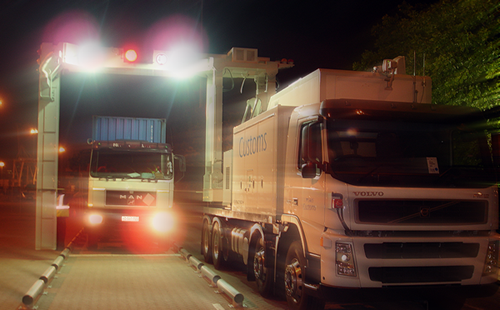
  • Fourthly, following from the above, South Africa’s voluntary accession and participation in the US Container Security Initiative (CSI) provided Customs a platform upon which to launch its migration from a customs administration to a customs and border protection agency. This initiative made the acquisition of X-ray inspection equipment and border control vehicles possible. Moreover, SARS has since launched the Customs Border Control Unit as part of its commitment to frontline enforcement and border security. 

Customs Border Control Vehicle

Container inspection under the US Container Security Initiative

SARS Customs X-Ray Scanner Site – Night time operations

It is clear that over the last 10 years, SARS as an institution has provided several opportunities for the previous tax and customs administrations as a joint unit. In retrospect it is doubtful that the current state (automated business tools and remuneration conditions) would ever have been attainable under the former respective government departments. In fact, SARS is the envy of most government departments today. Its ability to meet its mandate, and evolve on the business front of things continues to capture the attention of many, even it’s detractors. Looking forward, recent developments on the Customs front hold even greater possibilities and opportunities – principally these will target service levels, integrity and efficiency. 


What ‘Modernisation’ means for Customs – Part 1

This is the first of a four-part article dealing with the realities and approach to setting up a Customs administration within a Revenue Authority. I hope others will find it of interest given the widespread restructuring of customs administrations across the world today.  In fact, it would seem that a Revenue Authority approach is old fashioned by comparison to how some customs administrations are nowadays being ‘tethered and feathered’ in the name of  Border Security and the combatting against International Terrorism.

My home country South Africa is no new entrant in the arena of ‘Customs Modernisation’. At least a decade of evolving developments and incremental improvements have realised an organisation which has a semblance of 1st world customs capability – particularly in its endeavours to automate processes and business interchanges with various traders, operators and government organizations. It has however experienced difficulties  in regard to organisational and management maturity and capability. A dearth in managerial skills and basic discipline have prevented the development of sufficient capacity to administer controls over the country’s vast land and sea borders spanning some 8000 kms.

What is abundently clear is that ‘modernisation’ of a customs administration is dependent upon its mandate and positioning within the government structure, as well as the drive and inspiration of those that are charged to lead it. Customs, here, is a component of the South African Revenue Service (SARS) – based on the World Bank’s ‘revenue authority’ model. From a technological perspective the ‘revenue authority model’ made it possible for Customs to leverage access to much needed funding which was non-existent while it was a stand-alone Department under the Finance Ministry. Furthermore, a bigger expenditure budget provided much relief to cash-strapped staff who, in within a relatively short period of time, realised a significant improvement in their salary packages and benefits. In some cases the result meant as much as a 100% increase.

However, once the novelty of a ‘semi-autonomous parastatal party’ dwained, managing such multi-facetted revenue authority and maintaining its initial fervour proved very challenging indeed. The first attempt at a single agency management structure consisted of existing managers, i.e. people with 20+ years of experience and more. Feverish attempts to forge integration resulted in the polarisation of the Tax and Customs disciplines. This state of affairs continued until an ‘outsider’ was appointed to lead the organisation and bring it in line with the desired objectives of the new democratic government. Thus the evolution of SARS was to witness a fundamental shift in direction where the term ‘modernisation’ gave way to ‘transformation’. The latter being more politically appealing in that it emphasized a human culture change – to redress the so-called social inequalities of the country’s past history –  ahead of business improvement and efficiency.

The die hard experienced Customs’ campaigners (managers) saw the writing on the wall and within 6 months only a single senior manager remained. Some 900-odd customs and excise officials were left leaderless and demoralised. Nonetheless, the survivors  battled along with an unwavreing hope that things would improve over time, in their time. South Africa was a country under change. SARS was not only part of this journey, but the leading public sector enforcement agency. Telecommunications (Telkom SA) and the state owned port, freight and logistics enterprise (Transnet) were likewise, at the time, running a similar path towards operational autonomy.

True to form, the international donor agencies made inroads with government and before long what seemed as a lucrative opportunity to re-structure SARS Customs turned out to be a 5-year consultant’s paradise. The British tax payers had been lobbied to sponsor a R100 million loan (grant, excuse me) towards Customs Modernisation. Instead it turned out to be little more than a job brokering exercise to enrich foreign companies and provide hours of fantastic sunshine to the fortunate UK customs officials assigned to ‘uplift’ the impoverished peoples of this land. Let it be noted that most of the visiting ‘experts’ were very well meaning, but the lack of real knowledge transfer and the ability to affect real improvement casts serious doubt on the abilities and effectiveness of international missions in developing countries. [Over the last 10 years, I can without doubt vouch for the fact that most foreign organisations are more intent on gleaning insight and knowledge from this administration as opposed to enlightening it.]

Customs in literature

I thought I should share some comments in regard to certain published works which relate to Customs.

First up is a book introduced to me by a learned colleague – The Great Hedge of India, by Roy Moxaham. It is the story of a huge hedge the British built from Pakistan across India. Moxhan discovered though a much bigger story of oppression and how a large corporation sought to dominate a people. The hedge – the proverbial Customs line – was built to control the movement of taxable commodities like salt and had a huge impact on the lives of Indians. The British East India company‘s salt tax affected every one, but none more so than the poor of India. The company made huge profits from the tax in the 1700s and 1800s, [also visit:  History of excise in India for additional insight]. Many British aristocrats and businessmen made fortunes from their investments in the British East India company. After the British government took over the rule of India from the British East India company, it could have stopped the salt tax, but didn’t – what’s changed in the modern world.The World Trade Organization is doing just the same today (at the behest of the G8), under the banner of free trade agreements which technically cripple the economies of developing nations. A truely eye-opening story!

Another thought-provoking work is titled – “Illicit” authored by Moisés Naím. It tells a sensational tale of how smugglers, traffickers and copycats are Hijacking the Global Economy. The book is regrettably devoid of the kind of firsthand reporting from the field that would have made the subject matter really jump off the page. Yet Naím creates a picture of illicit trade which demonstrates that, far from taking place in a shadowy underworld, such activity is inextricably linked to legitimate commerce and directly affects all of us. In Naím’s view, globalization’s “diffusion of power to individuals and groups” and away from sovereign states has created a “smuggler’s nirvana,” in which the lines between legitimate and illegitimate economic activity are blurred and criminal networks possess an unprecedented degree of political influence.

Making matters worse, the widening gap between global haves and have-nots—what Naím calls “geopolitical bright spots and black holes”—has increased the incentive for individuals and groups on both sides of the divide to participate in illicit activities. The remedy? In addition to offering a bevy of specific policy ideas, Naím urges readers to move away from simplistic moral denunciations and to focus, instead, on reducing the demand for criminals’ goods and services and on weakening the incentives for ordinary people to become involved in their enterprises.

This book is important in two very big ways: the first, the one that most are noticing, is that it documents very ably the fact that crime pays–the author has done a superb job of itemizing the global illegal trade industry in a manner that could be understood by anyone, and the bottom line is frightening in that illicit trade is perhaps $2 trillion a year, while legal trade is between $5 trillion and $10 trillion. Off-the-books bartering and immoral invoicing within corporations are additional reducers of government tax revenue–import export tax fraud in the USA is known to be $50 billion a year ($25 rocket engines going out, $10 pencils coming in).

The second reason this book is important – the real value of this book – is in documenting the revenues lost to government. Legalizing prostitution has economic as well as public health implications. Reducing the arms trade, where the US is the greatest exporter of violence and bribery, has implications across ethnic conflict, stability, water and oil conservation, and so on. Eliminating counterfeiting and illegal immigration would have enormous implications for positive constructive government revenue. Eliminating crime, and corporate crime, provides the financial foundation for restoring the democratic contract, the social contract, with the working class and the middle class.

Finally, on a more practical note, I would be lacking if I did not include reference to the Dictionary of International Trade. This compendium is the most respected and largest-selling dictionary of trade in the world. It is used by importers, exporters, bankers, shippers, logistics professionals, attorneys, economists and government officials in more than 100 countries worldwide. Every business has its own language, lexicon and lingo, and international trade is no exception. Consider: ad valorem, C-TPAT, most favored nation, FAST, antidumping, NAFTA, countertrade, FOB, ocean bill of lading, letter of credit, FTZ, Harmonized Tariff Schedule, IMF and chaebol. International trade is a business where “I think I know” isn’t good enough. What you don’t know can really hurt you.

Comment: On the national front Customs administrations are indeed focussed on a multiplicity of cross-border and international threats. The very fact that politicians squabble over the legal framework and structure of the Customs organisation bears testimony to both the concern and confusion which continues to prevail in governments across the globe. Little wonder illicit operations prevail. In most cases, this new-found interest in the global counterfeit and trafficking industry is seized upon by politicians and administrators to fashion a new form of ‘hybrid’ organisation – the Border Security Agency. For the customs officer on the ground it is both confusing and challenging. Most officials are only now getting used to the Revenue Authority model which many governments, upon the suggestion or insistence of the World Bank, adopted to improve revenue collection. Since 9/11, all this has changed. Even the most ardent proponents of the ‘revenue authority’ model have had to concede – on the international stage – the need for more focus and investment in their Customs administrations. This all takes a lot of money, which few governments can afford. The bottom line is that most hold more dearly their desire to secure the ‘national revenue ticket’, and continue to pay lip-service to the fundamental question of ‘customs control’.