The new edition of the Harmonised Commodity Description and Coding System 2022 (HS2022) entered into force on the 1st of January 2022. This development means that Customs tariffs, associated Information, Communication and Technology (ICT) management systems as well as accompanying Harmonised System (HS) tools and instruments must have been successfully migrated from the previous edition (HS2017) to the new version (HS2022).
A few weeks prior to entry into force of HS2022, African countries’ experiences in this regard still indicated widely ranging inconsistencies and discrepancies in the application of the HS in general. Whilst all the Contracting Parties were expected to have fully migrated to the HS2017 by then, apparently some had not yet done so. The majority of those were still either using HS2012 or even HS2007, whilst some had huge delays in rolling out HS2017. Only 30 African countries had successfully migrated to HS2017 and were already applying it. At the launch of the operational phase of the African Continental Free Trade Area (AfCFTA) during the 12th Extraordinary Session of the Assembly of the Union on the AfCFTA in Niamey, Niger held on the 7th of July 2019, HS2017 was already in its third year. At that time, half of the African Union Member States were still to ratify the AfCFTA.
By joining the blockchain-underpinned platform TradeLens, Pakistan Single Window is supporting Customs in modernizing its import-export documentation through a safe & secure, paperless, digital solution to strengthen its controls against trade-based money laundering.
On 20 December 2021, On behalf of Pakistan Customs, the Pakistan Single Window Company today signed an agreement with TradeLens, a blockchain-underpinned logistics platform supported by 5 of the 6 largest ocean carriers globally, to digitize import-export documentation of the containerized cargo moving in and out of the country. Pakistan’s international trade ecosystem is being rapidly transformed through the introduction of technology driven initiatives led by the Pakistan Single Window and the country’s authorities recognize the potential benefits of digitizing supply chains for efficiencies, enhanced transparency, and data-driven decision making.
Advisor to the Prime Minister on Finance and Revenue Mr. Shaukat Tarin added, “Joining the TradeLens platform is allowing us to enhance our ecosystem in a way that all the involved stakeholders get access to a transparent and secure platform that makes processes more efficient.”
Cross-border containerized supply chains are some of the largest and most complex business ecosystems in the world today. It is not uncommon for 30 independent parties, 100 people and up to 200 exchanges of information to be connected to a single shipment. With increased complexity comes increased cost. Shippers or beneficial cargo owners (BCOs) need consistent, auditable and immutable data from multiple sources to effectively manage their supply chains.
The authorization to sign the collaboration came from the PSW Governing Council chaired by Mr. Shaukat Tarin. The Chief Executive Officer of PSW Aftab Haider formally signed the agreement with Irtaza Hussain, the Regional Head of Network for TradeLens at IBM.
PSW integration with TradeLens will help Pakistan Customs and other trade regulators to improve their operational efficiency and create value through the blockchain platform. The immutability of Blockchain-underpinned document information is important in the identification of illegal activities, as well as, improving the smooth operation of legal trade.
Marvin Erdly, Head of TradeLens at IBM. commented “The growth of the TradeLens’ network is evidence that participants from all across the supply chain ecosystem can derive significant value through digital collaboration. Pakistan now joins an increasing number of connected Customs Authorities on the TradeLens platform exploring innovative solutions to enhance global trade access and enhance process efficiencies for all involved”.
TradeLens is a neutral platform brings together data from the entire global supply chain ecosystem including shippers and cargo owners, 3PLs and freight forwarders, intermodal operators, customs and government authorities, ports and terminals, and several ocean carriers. This data allows TradeLens and its network partners to modernize manual and paper-based documents by replacing them with blockchain-enabled digital solutions. It also allows the network partners to provide their customers with deeper visibility into the entire journey for their cargo from origin to destination and reduce uncertainty allowing for better planning and reduced inventory costs. TradeLens welcomed it’s first network member in Pakistan, Al-Hamd International Container Terminal, earlier this year.
As of 18 November 2021, the online version of the 2022 edition of the Harmonized System Nomenclature is available through the WCO Website to all HS users. The HS 2022 edition, as the world’s global standard for classifying goods in international trade, will enter into force on 1 January 2022.
Used by over 200 countries and economic or Customs unions as the basis for their Customs tariffs and for trade statistics, as well as by international organizations such as the United Nations Statistical Division (UNSD) and the World Trade Organization (WTO), the Harmonized System (HS) Convention currently has 160 Contracting Parties, making it the WCO’s most successful instrument to date.
The 2022 edition of the HS Nomenclature includes significant changes with 351 sets of amendments (including some complementary amendments): 77 relating to the agricultural sector; 58 to the chemical sector; 31 to the wood sector; 21 to the textile sector; 27 to the base metal sector; 63 to the machinery sector; 22 to the transport sector and an additional 52 that apply to a variety of other sectors, comprising a total of 1,228 headings identified by a 4-digit code, and 5,612 subheadings identified by a 6-digit code.
These amendments have been made to update the Harmonized System Nomenclature, taking into consideration public health and safety, protection of society and fight against terrorism, goods especially controlled under various conventions, food security and environment protection, technological progress, trade patterns, and clarification of the HS texts.
The digital version of the HS 2022 edition is also available for free on WCO Trade Tools, which is the WCO’s new online database platform that encompasses the last five editions of the HS and functionalities to support all those involved in international trade. The WCO Trade Tools encompasses various free and subscription only tools relating to the classification and valuation of goods, origin determination and the application of preferential rules of origin.
The paper version of the HS 2022 edition can be purchased on WCO’s Bookshop.
The following articlewas published in Supply Lines, Bloomberg
As if the foot soldiers of global trade needed more complications this holiday season, many logistics managers and customs brokers are starting to brace for a mini Y2K moment come Jan. 1.
That’s when changes will take effect to the official nomenclature for hundreds of product groups used to classify imports and exports. So-called Harmonized System numbers — known as HS codes — exist on more than 5,000 product categories developed by the World Customs Organization, an intergovernmental group in Brussels that updates them every five years or so.
In 2022, the biggest changes are coming for electrical machinery and parts, wood, textiles, fish and organic chemicals.
More than 350 global HS codes are getting updated, and some 1,500 harmonized U.S. tariff codes are subject to revisions, according to a recent webinar from Flexport. The categories are important, if a little wonky, because most items of international commerce fall into one and they can determine tariff levels.
Some codes are disappearing. After a respectable run through the 1970s and ‘80s, answering machines are about to lose their HS code. Made obsolete by voicemail, they rank 5,296th among 5,832 U.S. imports this year, according to Flexport data.
Globes — those spinning spheres that taught geography to schoolkids of the 1970s — will have their number (4905.10) retired, too.
“The trade in globes is not quite what it used to be,” Marcus Eeman, a global customs manager with Flexport, lamented about the U.S.’s 4,025th-biggest import.
Chemical Weapons?
Some new HS codes will appear, like one for pomace oil, a lower-grade form of olive oil.
Among the more intriguing additions, Flexport says there’ll be a “new code created for petroleum resins and other organic chemical compounds used in the manufacture of chemical weapons.” That should make it easier for authorities to track which countries are importing it and potentially using them illegally.
Other categories are getting renamed. Lamps will no longer fall under “lamps,” they’ll be classified as “luminaires.” There will be new subheadings for popular gadgets like smart phones, high-speed digital cameras and flat panel displays.
Economies preparing for the changes include the U.S., China, the European Union, Canada and Australia. The U.K., meanwhile, is still “finding their footing with Brexit and we expect them to get their act together by the end of the year,” Eeman said.
For all the changes to take effect on Jan. 1 in the U.S., there will need to be a presidential proclamation published in the Federal Register with the required 30 days of advanced notice.
So it’s worth looking out for that in coming days.
“My fear is that Dec. 1 will come and the presidential proclamation will be published and that’s when people will start to scramble,” said Tom Gould, Flexport’s vice president of global customs. “Then Jan. 1 will hit and you’ll have a bunch of people that have products that they need to import but they don’t know the classification, because the code that they’ve used in the past is no longer a valid code.’’
Source: Bloomberg, authored by Brendan Murray, 24 November 2021
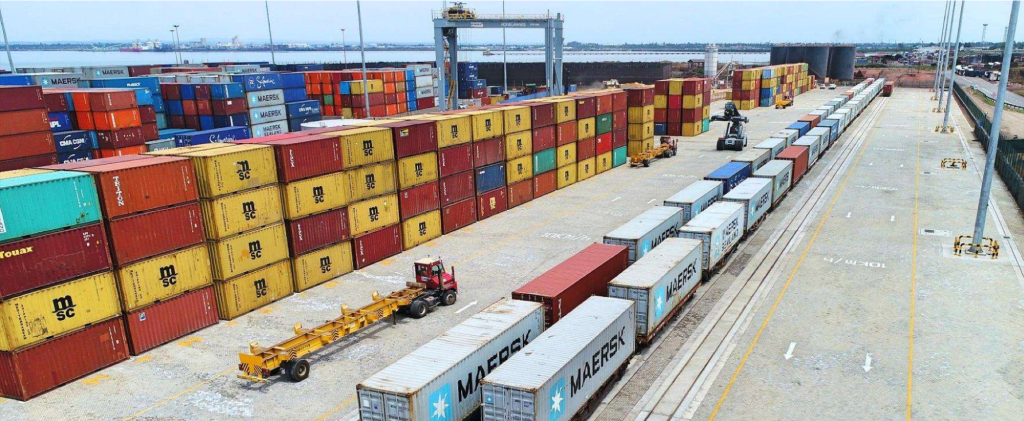
U.S. e-commerce grew by 32.4% in 2020—the highest annual growth rate in over two decades. Such rapid growth has resulted in many more goods being imported, leaving America’s western ports completely overwhelmed.
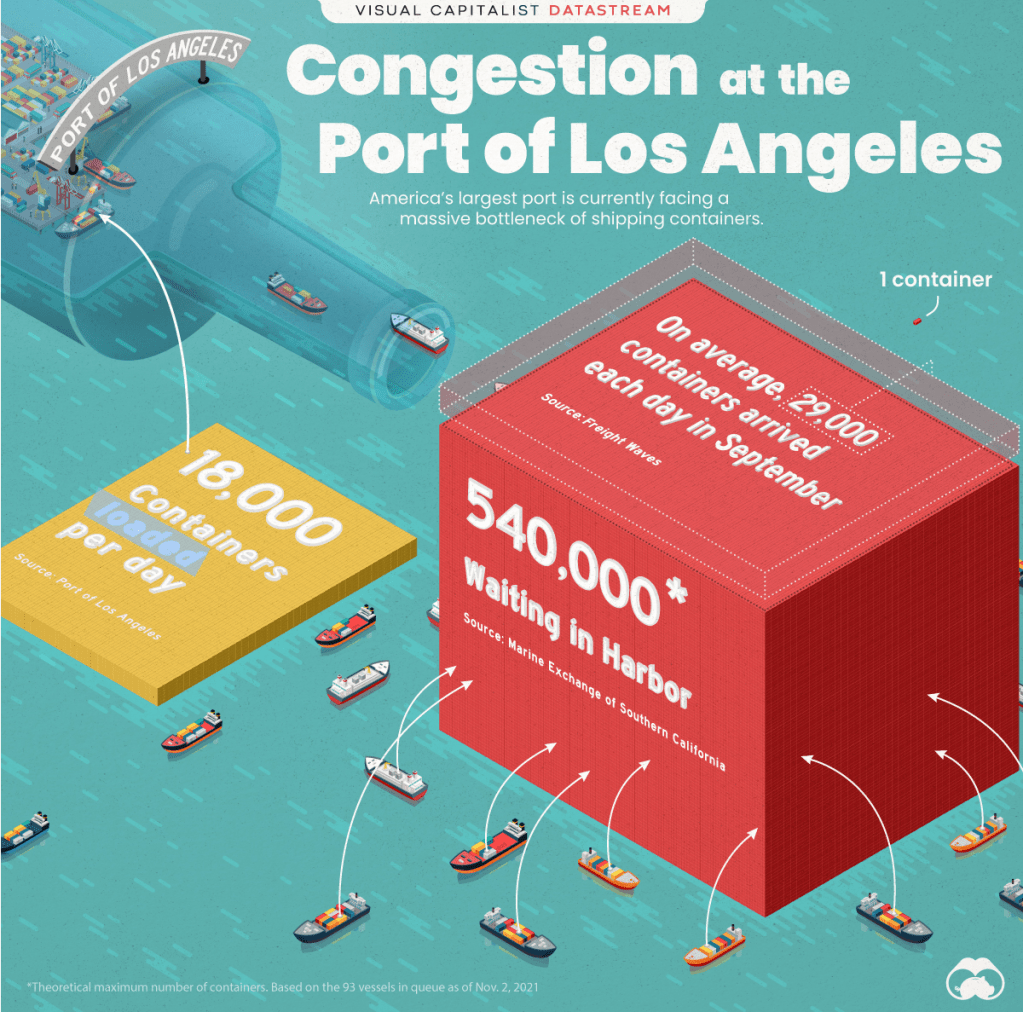
To help you understand the scale of this issue, we’ve visualized the number of containers waiting at sea in relation to the Port of Los Angeles’ daily processing capacity.
Stuck at Sea
As of November 2, 2021, the Port of Los Angeles reported that it had 93 vessels waiting in queue. Altogether, these ships have a maximum carrying capacity of roughly 540,000 containers (commonly measured in twenty-foot equivalent units or TEUs).
On the other side of the equation, the port processed 468,059 import containers in September (the most recent data at the time of writing). Because the port does not operate on Sundays, we can conclude that the port can load roughly 18,000 containers each day.
That capacity seems unlikely to reduce the congestion. Over a two-week timeframe in September, 407,695 containers arrived at the Port of Los Angeles, which averages to around 29,000 containers arriving each day…
The WCO has published the 96th edition of WCO News, the Organization’s magazine aimed at the global Customs community, providing a selection of informative articles that bring the international Customs and trade world to life.
This edition’s “Dossier” focuses on cross-border e-commerce, in other words those “transactions which are effected digitally through a computer network (e.g. the internet), and result in physical goods flows subject to Customs formalities”. We have invited several administrations to share information on the initiatives they are taking to build their capacity for monitoring the compliance of such flows. Despite every country’s situation being unique, we still believe that it is important to share experiences and explain initiatives.
The “Panorama” section addresses a broad variety of topics such as rules or origin, goods classification, training and reforms. It also includes two articles which respectively present, from a Customs perspective, two recent regional Free Trade Agreements: the Regional Comprehensive Economic Partnership (RCEP) and the African Continental Free Trade Area.
The “Focus” section brings together two articles dealing with non-intrusive inspection (NII). In the first one, the WCO Secretariat shows how some Customs administrations and manufacturers manage the decommissioning of NII equipment when it has reached the end of its life. The second article describes the challenges of X-ray image analysis and the value of training.
Lastly, in the “Point of View” section, Dutch Customs explains the structure of the ISO Audit Data Collection Standard and why it supports the Standard’s extension to cover data related to Customs and indirect tax audits, while an attorney from Israel argues that governments should consider waiving taxes on transport costs until we are back to “normal” and the effects of the COVID-19 pandemic are no longer being felt.
To discover the full content of this edition please visit the magazine website.
The World Bank Group today issued the following statement on the Doing Business report:
“Trust in the research of the World Bank Group is vital. World Bank Group research informs the actions of policymakers, helps countries make better-informed decisions, and allows stakeholders to measure economic and social improvements more accurately. Such research has also been a valuable tool for the private sector, civil society, academia, journalists, and others, broadening understanding of global issues.
After data irregularities on Doing Business 2018 and 2020 were reported internally in June 2020, World Bank management paused the next Doing Business report and initiated a series of reviews and audits of the report and its methodology. In addition, because the internal reports raised ethical matters, including the conduct of former Board officials as well as current and/or former Bank staff, management reported the allegations to the Bank’s appropriate internal accountability mechanisms.
After reviewing all the information available to date on Doing Business, including the findings of past reviews, audits, and the report the Bank released today on behalf of the Board of Executive Directors, World Bank Group management has taken the decision to discontinue the Doing Business report. The World Bank Group remains firmly committed to advancing the role of the private sector in development and providing support to governments to design the regulatory environment that supports this. Going forward, we will be working on a new approach to assessing the business and investment climate. We are deeply grateful to the efforts of the many staff members who have worked diligently to advance the business climate agenda, and we look forward to harnessing their energies and abilities in new ways.”
WCO Secretary General Dr. Kunio Mikuriya stated, “How to achieve equitable distribution of COVID-19 vaccines is critical, and Customs administrations around the world should support global efforts by not only facilitating the cross-border movement of the vaccines themselves, but also by speeding up and facilitating the Customs clearance of the raw materials and components used in the vaccine manufacturing process.” He added that “This will greatly contribute to the efforts to scale up vaccine manufacturing and the 2nd edition of the Secretariat Note highlights the critical role Customs”.
The guidance outlined in the Secretariat Note draws upon relevant WCO instruments and tools, Members’ good practices and insights gathered as a result of the collaboration with other international organizations, the pharmaceutical industry, logistics providers and other relevant private sector entities.
The Secretariat Note is designed to be a living document that will be enhanced with more Members’ practices and further practical guidance as WCO Members and the industry gain experience and share information with the WCO Secretariat on the Customs clearance of COVID-19 vaccines, related supplies, inputs and equipment.
The United Nations Economic Commission for Europe (UNECE) administers the TIR Convention, which was established in 1959 and extensively revised in 1975 and which has, at present, 68 Contracting Parties. The TIR Convention provides for an internationally recognized procedure to facilitate the cross border transportation of goods in transit through the use of a standard, internationally recognized Customs document, the TIR Carnet, which also serves as proof of existence of an internationally valid guarantee.
For many years the TIR Convention proved to be an efficient facilitation tool. However, with the progress in technology, the use of the paper TIR Carnet is increasingly becoming archaic, in particular when it comes to linking it to the electronic procedures applied by national Customs administrations. At each border crossing, Customs officers are faced with additional work of having to key in up to 50 data elements into their national electronic Customs system. In addition, the current situation does not enable Customs authorities to effectively apply risk management procedures based on advance cargo information, as demanded by an increasingly more security-conscious environment.
The eTIR Project
The Contracting Parties to the TIR Convention launched in 2003 the so-called “eTIR Project”, aimed at providing an exchange platform for all actors (Customs authorities, holders, guarantee chains) involved in the TIR system, known as the “eTIR international system”. The eTIR international system aims to ensure the secure exchange of data between national Customs systems related to the international transit of goods, vehicles or containers according to the provisions of the TIR Convention and to allow Customs to manage the data on guarantees, issued by guarantee chains to holders authorized to use the TIR system.
Trade solutions multinational DP World has completed the first transit import through the DP World Maputo port, in Mozambique, to DP World Komatipoort, in South Africa.
This is a significant milestone as it demonstrates that the Maputo port can be seamlessly used as a gateway to South Africa, the company says.
International container imports landed in the Maputo port and destined for the South African hinterland can be moved under bond to Komatipoort where full customs clearance can be provided and made ready for delivery across South Africa.
“The Komatipoort facility as a bonded container depot is a game changer for the Maputo Corridor. The success of the trial brings DP World a step closer to enabling a more cost effective, seamless and efficient user experience for our local customers and enhances trade linkages for countries in the Southern African region,” DP World Maputo CEO Christian Roeder says.
Currently, in South Africa, 69% of maritime imports are transported through the Port of Durban. Local customers now have the option to consider using the Maputo port as a gateway to transport their international freight to Komatipoort where it can be cleared more easily and efficiently for customers based in and around Gauteng.
DP World Komatipoort has a full-service offering and links via the Maputo Corridor to DP World Maputo’s modern and efficient container terminal where there is no vessel and port congestion, as well as fixed berthing windows available to major shipping lines, which provides customers with transport savings and avoids delays for consignees in Mpumalanga, Limpopo and Gauteng.
Once a shipment is retrieved at the DP World Maputo port, the organisation handles the entire supply chain process from there to Komatipoort without delay and beyond to various areas in the hinterland. While the cost of this service varies per user, the service is estimated to be equivalent in costs or cheaper compared to traditional routing through Durban.
However, it is more efficient, especially for the northern areas of the country, DP World note.
The European Union makes it a top priority to ensure the security of its citizens and single market. Every year trillions of Euros worth of goods are imported into EU, with the EU-27 now accounting for around 15 % of the world’s trade in goods. The European Union is implementing a new customs pre-arrival security and safety programme, underpinned by a large-scale advance cargo information system – Import Control System 2 (ICS2). The programme is one of the main contributors towards establishing an integrated EU approach to reinforce customs risk management under the common risk management framework (CRMF).
The pre-arrival security and safety programme will support effective risk-based customs controls whilst facilitating free flow of legitimate trade across the EU external borders. It represents the first line of defence in terms of protection of the EU internal market and the EU consumers. The new programme will remodel the existing process in terms of IT, legal, customs risk management/controls and trade operational perspectives.
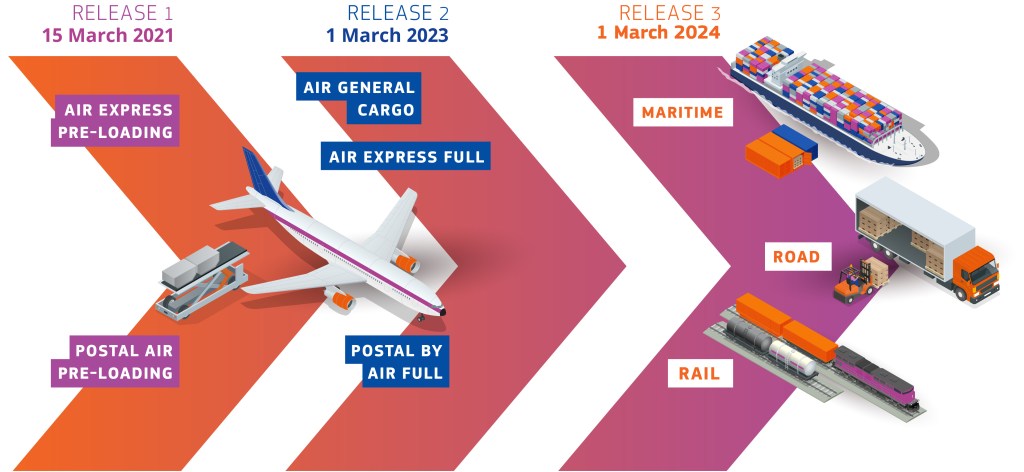
The EU’s new advance cargo information system ICS2 supports implementation of this new customs safety and security regulatory regime aimed to better protect single market and EU citizens. It will collect data about all goods entering the EU prior to their arrival. Economic Operators (EOs) will have to declare safety and security data to ICS2, through the Entry Summary Declaration (ENS). The obligation to start filing such declarations will not be the same for all EOs. It will depend on the type of services that they provide in the international movement of goods and is linked to the three release dates of ICS2 (15 March 2021, 1 March 2023, and 1 March 2024).
Advance cargo information and risk analysis will enable early identification of threats and help customs authorities to intervene at the most appropriate point in the supply chain.
ICS2 introduces more efficient and effective EU customs security and safety capabilities that will:
Increase protection of EU citizens and the internal market against security and safety threats;
Allow EU Customs authorities to better identify high-risk consignments and intervene at the most appropriate point in supply chain;
Support proportionate, targeted customs measures at the external borders in crisis response scenarios;
Facilitate cross-border clearance for the legitimate trade;
Simplify the exchange of information between Economic Operators (EOs) and EU Customs Authorities.
For more information on the ICS2 programme, refer to the EU Webpage here!
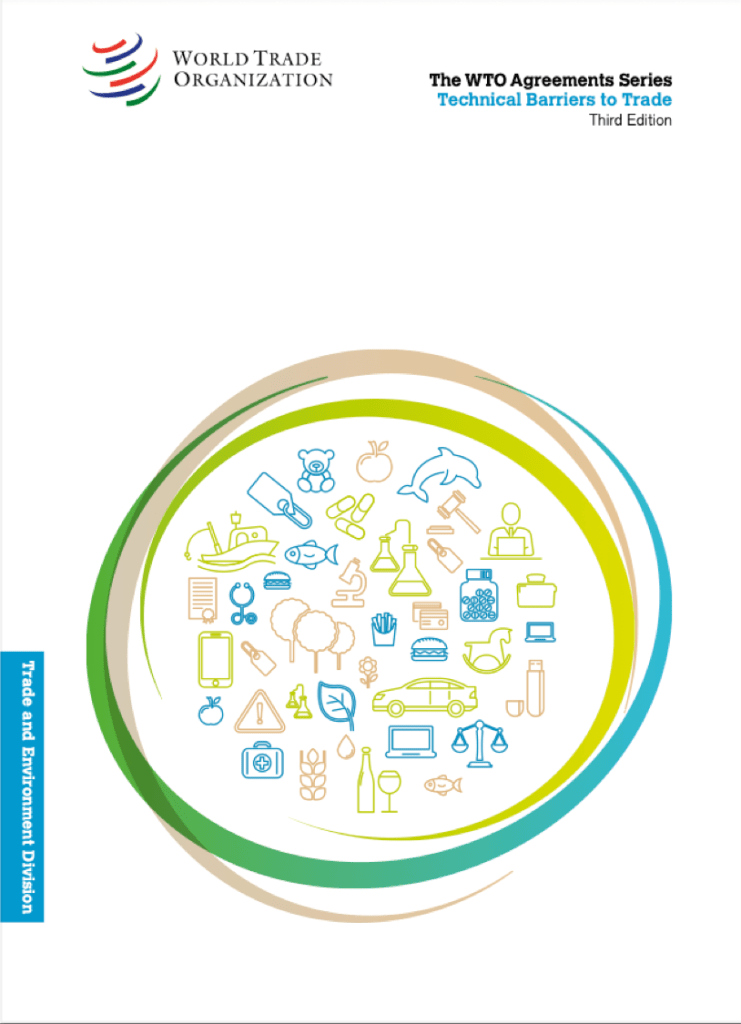
A new WTO publication, launched on 22 February, provides an overview of the purpose and scope of the WTO Agreement on Technical Barriers to Trade (TBT Agreement), the types of measures it covers and its key principles. Prepared by the WTO Secretariat, this new edition in the “WTO Agreements” series aims at enhancing understanding of the TBT Agreement.
The TBT Agreement entered into force with the establishment of the WTO on 1 January 1995. It aims to ensure that product requirements in regulations and standards — on safety, quality, health, etc. — as well as procedures for assessing product compliance with such requirements (testing, inspection, accreditation, etc.) are not unjustifiably discriminatory and do not create unnecessary obstacles to trade. The Agreement also emphasizes the importance of transparency and strongly encourages the use of international standards as a basis for harmonizing regulations across WTO members.
The handbook sets out the key principles of the TBT Agreement and discusses how these have been addressed in recent disputes brought under this Agreement. The publication looks into requirements on transparency, a cornerstone of the TBT Agreement, and describes the mandate, role and work of the TBT Committee. It also considers how TBT‑related matters have been tackled in negotiations at the WTO.
The handbook also contains the full text of the TBT Agreement, as well as a compilation of all decisions and recommendations adopted by the TBT Committee since its creation in 1995.
“Standards and regulations are among the most important types of trade-related measures used around the world. Crafting them carefully, in line with the disciplines of the WTO Agreement on Technical Barriers to Trade, can help governments achieve important policy objectives, including safeguarding human health and safety, as well as protecting the environment — and this without unnecessarily disrupting trade. This Handbook is a must-read for anyone interested in these issues,” says Deputy Director-General Alan Wolff in a foreword to the handbook.
The publication contains many substantive updates, changes and additions as compared to previous editions (this is the 3rd edition). It can be downloaded here. Printed copies can be purchased from the WTO’s Online Bookshop.
Other publications in this series cover the Agreement on Agriculture and the Agreement on the Application of Sanitary and Phytosanitary Measures.
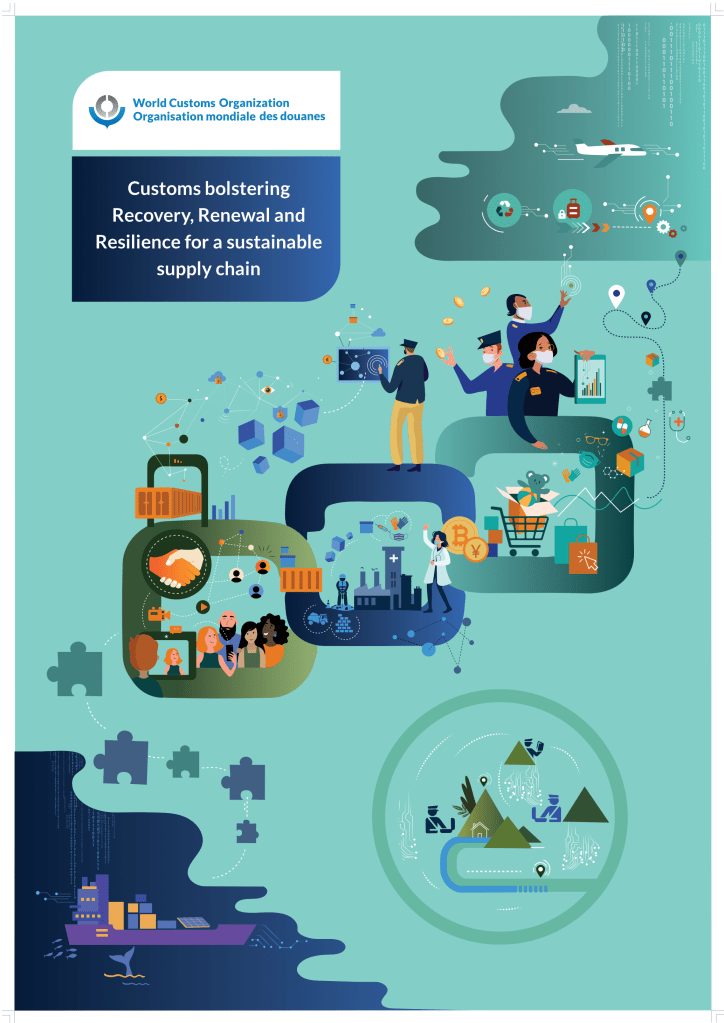
Once again, the Customs community comes together, united in celebrating International Customs Day, which officially falls on 26 January of each year. This special day enables WCO Members, the WCO Secretariat and Customs’ worldwide partners to dedicate themselves to taking forward a particular theme. Thus, throughout 2021, under the slogan “Customs bolstering Recovery, Renewal and Resilience for a sustainable supply chain,” the Customs community will be focusing on emerging from the global pandemic and support people and businesses by strengthening the global supply chain, reinforcing collaboration, harnessing technology and putting “people” at the centre of the transformation process.
Indeed, as Customs will be moving to reconstruction in the wake of COVID-19, Members will be invited to embrace digital transformation at the borders, paying particular attention to automation, the use of innovative technologies, and the adoption of collaborative approaches with all stakeholders along the supply chain.
Customs, being uniquely positioned and mandated at borders, can contribute to a sustainable supply chain in the following ways:
Reinforcing collaboration to drive the Recovery process. The economic impact of the pandemic on companies has been colossal, with considerable disruption of global supply chains. The herculean task of reconstruction cannot be undertaken in isolation, and the expertise of all border agencies and stakeholders will be a decisive factor. Customs will be called upon to demonstrate its leadership during this process, at the national and international levels. The COVID-19 crisis has demonstrated that coordinated border management is possible, efficient, and can be further institutionalized at international and national levels. The sound implementation of the SAFE Framework of Standards, including the AEO standards and cooperation with other government agencies, appears to be a relevant focus in this context. Given the increase in e- commerce observed during the COVID-19 period, it would be timely for Members to implement the WCO E- Framework of Standards on Cross-Border E-Commerce in order to address security and facilitation in the context of this emerging supply chain trend, in close collaboration with stakeholders.
Embracing advanced technologies to enable Renewal rather than return to how things were before. The COVID-19 pandemic has shown the importance of major innovative and technological concepts which the WCO has been promoting for years. These include all-digital and paperless clearance methods, and the use of technology for implementing effective controls and facilitating, enhancing and accelerating processes. Irrespective of the pandemic, Customs administrations have been sensitized – through specialized forums and conferences – about thebenefits that can be reaped from the integration of technologies based on the use of big data, telematics and the Cloud into Customs operations. Building on the lessons learned, Customs administrations should look at the way goods are cleared at borders from a fresh perspective. Non-intrusive inspection devices, blockchain, artificial intelligence, sensors and connected objects, and other technological advances offer tangible benefits in terms of collecting, combining, sharing and analysing data, and these benefits should be maximized.
Putting “people” at the centre of change for a Resilient and sustainable supply chain. In order to address the vulnerability of Customs to systemic risks such as pandemics, Customs administrations will be called upon to build on the lessons learned and ensure that no one is left behind as we move towards a deeper transformation. To create greater resilience, “people” should be at the centre of the recovery model. Citizens around the globe have changed their daily lives drastically to adapt to the new reality. By the same token, Customs are called upon to rethink and adapt the way they operate, and enhance the preparedness of their staff through awareness raising and capacity building for the provision of a professional service. At the same time, resilience cannot be achieved without integrity, diversity and inclusion. A lack of integrity in Customs can distort trade and investment opportunities, undermine public trust in government administration and ultimately jeopardize the wellbeing of citizens, which in times of recovery could prove to be a recipe for failure.
The WCO will continue to provide guidance, help to share best practices and information, and deliver capacity building and technical assistance support to Members for the achievement of the above goals.
As in previous years, I am fully convinced that Customs administrations and the wider Customs community will rise to the occasion, fully committed to actively promoting their efforts and activities aimed at bolstering “Recovery, Renewal and Resilience for a sustainable supply chain” that includes sharing relevant practices and activities with others at WCO meetings and in key WCO publications.
Wishing you all a happy International Customs Day!
The WCO, through the Data Model Projects Team (DMPT), maintains the WCO Data Model (WCO DM) and produces annual releases to keep the WCO DM up to date. The maintenance processes were undertaken in accordance with the WCO DM Maintenance Procedure that enables WCO DM users, including WCO Members, partner government agencies, and other international organizations to submit Data Maintenance Requests (DMRs) to the DMPT for its consideration. From September 2019 (55th Meeting) to June 2020 (57th Meeting) the DMPT has received 33 DMRs submitted by Members and approved 21. All of those approved DMRs were incorporated in the WCO DM and released as version 3.10.0.
The WCO DM version 3.10.0 is an iteration of the overall version 3 series. The version maintains the core scope of version 3 datasets, which cover not only data requirements for Customs import/export/transit procedures, but also Customs’ partner government agencies in the context of a Single Window environment for supporting regulatory digital collaboration. As such, version 3.10.0 of the WCO DM consists of datasets that are useful to facilitate submission of regulatory data requirements by traders (i.e., Business to Government (B2G) Declaration, such as import declaration, cargo report, transit declaration, etc.); electronic certification (i.e., Licences, Permits, Certificates, and other kinds of electronic documents – LPCO); regulatory notifications or responses (G2B; and Inter-Governmental data exchange (i.e., INTERGOV – G2G). Being a part of the version 3 series, the new version also maintains backward compatibility to the previous versions.
Further information on the WCO DM can be found on http://wcoomd.org/DataModel. The publication packages of the WCO DM could be found in its e-Handbook1. Any inquiry on how to access the publication package could be addressed to dm@wcoomd.org.
From 1 January 2021, the transition period with the European Union (EU) will end, and the United Kingdom (UK) will operate a full, external border as a sovereign nation. This means that controls will be placed on the movement of goods between Great Britain (GB) and the EU.
The UK Government will implement full border controls on imports coming into GB from the EU. Recognising the impact of coronavirus on businesses’ ability to prepare, the UK Government has taken the decision to introduce the new border controls in three stages up until 1 July 2021.
Her Majesty’s Revenue & Customs (HMRC) published the first iteration of the Border Operating Model in July 2020, setting out the core model that all importers and exporters will need to follow from January 2021 as well as the additional requirements for specific products such as live animals, plants, products of animal origin and high-risk food not of animal origin. We also provided important details of Member State requirements as traders and the border industry will need to ensure they are ready to comply with these, and not just Great Britain (GB) requirements. Indeed, as set out in the recently published ‘Reasonable Worst Case Scenario’ assumptions, it is largely the level of readiness for Member State requirements which will determine whether there is disruption to the flow of goods at the end of the transition period. This is why we have included additional signposting to those requirements throughout the document, and are encouraging all GB businesses not just to ensure their own readiness but also the readiness of EU businesses to whom they export, and throughout their supply chains.
Since July, the HMRC has worked closely with industry to further develop plans for the end of the transition period, and also to respond to industry questions since the publication of the first iteration of the Border Operating Model. This latest iteration of the Border Operating Model provides additional information in a number of key areas as set out below as well as clarifying a number of questions from industry.






 What Happened to the Portcullis?
You must be logged in to post a comment.