I thought I should share some comments in regard to certain published works which relate to Customs.
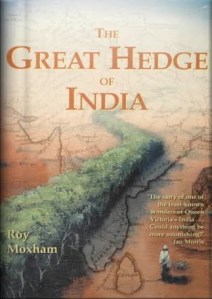
First up is a book introduced to me by a learned colleague – The Great Hedge of India, by Roy Moxaham. It is the story of a huge hedge the British built from Pakistan across India. Moxhan discovered though a much bigger story of oppression and how a large corporation sought to dominate a people. The hedge – the proverbial Customs line – was built to control the movement of taxable commodities like salt and had a huge impact on the lives of Indians. The British East India company‘s salt tax affected every one, but none more so than the poor of India. The company made huge profits from the tax in the 1700s and 1800s, [also visit: History of excise in India for additional insight]. Many British aristocrats and businessmen made fortunes from their investments in the British East India company. After the British government took over the rule of India from the British East India company, it could have stopped the salt tax, but didn’t – what’s changed in the modern world.The World Trade Organization is doing just the same today (at the behest of the G8), under the banner of free trade agreements which technically cripple the economies of developing nations. A truely eye-opening story!
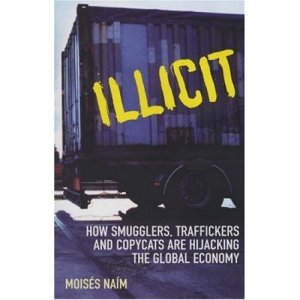
Another thought-provoking work is titled – “Illicit” authored by Moisés Naím. It tells a sensational tale of how smugglers, traffickers and copycats are Hijacking the Global Economy. The book is regrettably devoid of the kind of firsthand reporting from the field that would have made the subject matter really jump off the page. Yet Naím creates a picture of illicit trade which demonstrates that, far from taking place in a shadowy underworld, such activity is inextricably linked to legitimate commerce and directly affects all of us. In Naím’s view, globalization’s “diffusion of power to individuals and groups” and away from sovereign states has created a “smuggler’s nirvana,” in which the lines between legitimate and illegitimate economic activity are blurred and criminal networks possess an unprecedented degree of political influence.
Making matters worse, the widening gap between global haves and have-nots—what Naím calls “geopolitical bright spots and black holes”—has increased the incentive for individuals and groups on both sides of the divide to participate in illicit activities. The remedy? In addition to offering a bevy of specific policy ideas, Naím urges readers to move away from simplistic moral denunciations and to focus, instead, on reducing the demand for criminals’ goods and services and on weakening the incentives for ordinary people to become involved in their enterprises.
This book is important in two very big ways: the first, the one that most are noticing, is that it documents very ably the fact that crime pays–the author has done a superb job of itemizing the global illegal trade industry in a manner that could be understood by anyone, and the bottom line is frightening in that illicit trade is perhaps $2 trillion a year, while legal trade is between $5 trillion and $10 trillion. Off-the-books bartering and immoral invoicing within corporations are additional reducers of government tax revenue–import export tax fraud in the USA is known to be $50 billion a year ($25 rocket engines going out, $10 pencils coming in).
The second reason this book is important – the real value of this book – is in documenting the revenues lost to government. Legalizing prostitution has economic as well as public health implications. Reducing the arms trade, where the US is the greatest exporter of violence and bribery, has implications across ethnic conflict, stability, water and oil conservation, and so on. Eliminating counterfeiting and illegal immigration would have enormous implications for positive constructive government revenue. Eliminating crime, and corporate crime, provides the financial foundation for restoring the democratic contract, the social contract, with the working class and the middle class.
 Finally, on a more practical note, I would be lacking if I did not include reference to the Dictionary of International Trade. This compendium is the most respected and largest-selling dictionary of trade in the world. It is used by importers, exporters, bankers, shippers, logistics professionals, attorneys, economists and government officials in more than 100 countries worldwide. Every business has its own language, lexicon and lingo, and international trade is no exception. Consider: ad valorem, C-TPAT, most favored nation, FAST, antidumping, NAFTA, countertrade, FOB, ocean bill of lading, letter of credit, FTZ, Harmonized Tariff Schedule, IMF and chaebol. International trade is a business where “I think I know” isn’t good enough. What you don’t know can really hurt you.
Comment: On the national front Customs administrations are indeed focussed on a multiplicity of cross-border and international threats. The very fact that politicians squabble over the legal framework and structure of the Customs organisation bears testimony to both the concern and confusion which continues to prevail in governments across the globe. Little wonder illicit operations prevail. In most cases, this new-found interest in the global counterfeit and trafficking industry is seized upon by politicians and administrators to fashion a new form of ‘hybrid’ organisation – the Border Security Agency. For the customs officer on the ground it is both confusing and challenging. Most officials are only now getting used to the Revenue Authority model which many governments, upon the suggestion or insistence of the World Bank, adopted to improve revenue collection. Since 9/11, all this has changed. Even the most ardent proponents of the ‘revenue authority’ model have had to concede – on the international stage – the need for more focus and investment in their Customs administrations. This all takes a lot of money, which few governments can afford. The bottom line is that most hold more dearly their desire to secure the ‘national revenue ticket’, and continue to pay lip-service to the fundamental question of ‘customs control’.


 What Happened to the Portcullis?
You must be logged in to post a comment.