Container Weighing – industry solution on the horizon

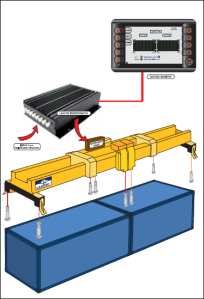
Click Picture for full report at porttechnology.org [Port Technology International – Container weighing device]

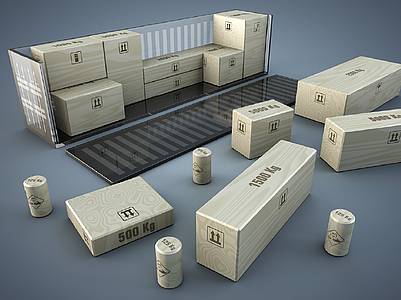
The International Maritime Organization (IMO) is expected to make the weighing of sea containers mandatory. The purpose is to make the entire container supply chain safer. This regulation is expected to be issued through the International Convention for the Safety of Life at Sea (SOLAS Convention) as a result of a number of accidents involving container losses and container stack collapses. The existing SOLAS regulation already obliges shippers to declare the correct container weights, but this is not always done. The new regulation is likely to require specifically that the container is actually weighed or calculated by reference to the contents, packing and securing materials and the tare weight of the container itself. Importantly, however, the regulation is anticipated to forbid the loading of containers unless the verified gross mass is available to the terminal and the ship’s master.

Practically speaking this means that the shipping lines may require terminals to verify container weights prior to being loaded onto their ships. There will, however, be a cost to it which the shipping lines are likely to pass on to their shippers. But besides added safety, there is another important aspect: optimising ship stowage which should reduce fuel consumption for the shipping lines. A ship is more stable at sea and consumes less fuel when the center of gravity is low and if the cargo is optimally distributed. Therefore, it is in the interest of the shipping lines to know the exact weights. Arguably, there are multiple aspects which determine fuel consumption of a ship, and some may be more important than stowage, but this is nevertheless a factor.

Determining container weights and related costs

First of all, to weigh a container and to use the load information to update the stowage plan, containers need to be weighed preferably at the completion of packing. Clearly, weighing export containers needs to be done sufficiently in advance for the stowage plan to be optimised. If the actual weight is not determined at the completion of packing, the port is in a prime position to provide this service or, indeed, to verify the documented weight. For containers that arrive at the port by road, rail or river an obvious ‘check point’ is during the inward process. Weighing with the quay side crane is too late, since the container position on the ship is determined well before loading.

Weights of transshipped containers should be verified at the original port of loading, but there will always be situations where this has not been physically possible. In that event, it can be said with certainty that every container, whether exported or transshipped, will pass through the stacking yard. It is therefore argued that equipping the stacking cranes with weighing systems best caters for all circumstances. Operators in those countries that require imported containers to be weighed may consider weighing with quay side cranes as well.

What does it cost to weigh a container? Let’s base the calculation on the capacity of a quay side crane which can typically load 100,000 twenty-foot equivalent unit (TEU) per year. Let’s also assume there are three rubber-tyred gantry cranes (RTG) or rail-mounted gantry cranes (RMGs) required per quay side crane. Let’s further assume a weighing system costs US$20,000 per stacking crane and it is amortised over three years. The cost per year to weigh 100,000 TEU is therefore US$0,20 per TEU. In addition to the capital expenditure for the weighing equipment, the terminal will incur some integration costs plus ongoing maintenance and administration costs, so let’s double this amount to US$0,40 per TEU. Weighing by the stacking cranes during the handling of the containers is also more economical than weighing with weigh bridges which very often involve manual intervention, when trucks are carrying two 20 foot containers which need to be individually weighed. Weighing in the stacking yard is therefore the fastest, most economical and non-disruptive way to the operation. Some terminals have calculated that they could offer their weighing services for US$1 per TEU and earn a profit with it. Continue reading →
Rotterdam – The signficance of ‘hinterland’ container services

Picture1BILK (Budapest Intermodal Logistics Center) Kombiterminál has become the first Hungarian terminal to join the InlandLinks network, comprising of nearly 40 terminals across the Netherlands, Belgium, Germany, Poland, Italy and Hungary.

InlandLinks, an initiative of the Port of Rotterdam Authority which was developed two years ago in cooperation with VITO (Dutch Inland Container Terminal Organisation), is an online platform for container terminals in the hinterland, offering intermodal services to and from the Port Rotterdam – Europe’s largest port complex

Rotterdam expects to see container flows triple over next 25 years in line with growth in world trade and the increasing size of container vessels. Of the 30 million TEU anticipated to be handled by the Dutch port in 2035, approximately 2 million are expected to be shipped in and out using smaller vessels from and to European ports. Some 18 million TEU will travel to and from the hinterland via intermodal transport, and the Port of Rotterdam hopes that InlandLinks will help to provide greater insight into better and more sustainable connections for this projected flow of cargo.

BILK, located in a suburb in the southeast of Budapest, consists of a railway station/marshalling yard, a bi-modal terminal for combined traffic, and a 70-hectare logistics centre. The terminal has the capacity to handle an annual traffic of 220,000 TEU. Source: Porttechnology.org


Nigerian Inland Port, Kano to Begin Operations This Year

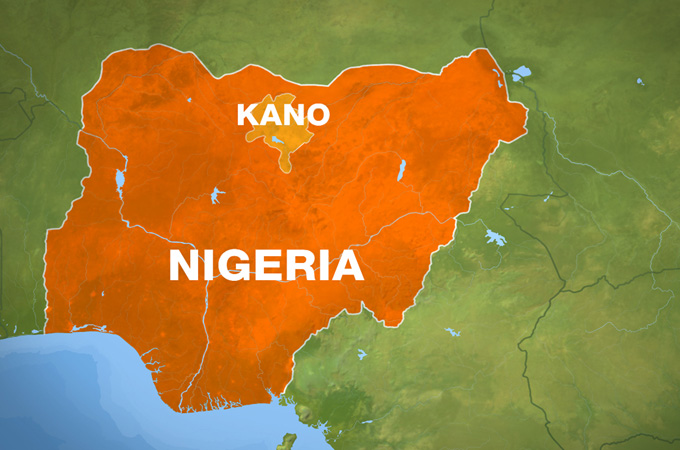
201215124949311580_20Kano Inland Container Port is scheduled to commence operations by the end of this year, Chairman Governing Board Nigerian Shippers Council, Lieutenant General Salihu Ibrahim (Rtd) has said.

According to him, all gray areas that cause the delay in the processing and documentation of Kano port which affects the commencement of operations has been resolved.

Speaking during an interactive dinner session organized by Nigerian Shippers Council, North West zone, the chairman stressed that the council is all out to ease some of the transaction difficulties faced by shippers in Nigeria. He added that commencing operation at the inland ports will absolutely ensure reduction of about 90% in the expenses incurred during shipments of goods. According to him, all things being equal, Kano inland port is hoped to be fully operational at the end of 2013. Source: Daily Trust (Nigeria)

Mega ships: positive asset or terminals’ worst nightmare?

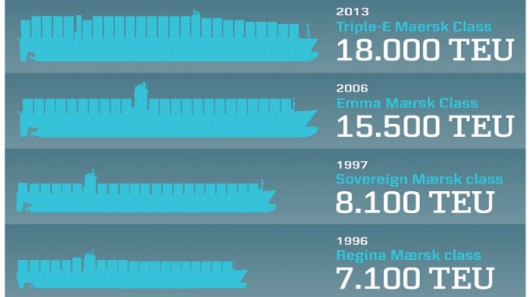
triple-e-maersk-worlds-largest-shipA Financial Times article reported Maersk’s Triple E Class (18,000 TEU) to be 26 percent more cost efficient than the current E class (15,000 TEU). – Wright, R (2011), Financial Times. ‘Big Ships: Container lines reach for scale’. Recent research into supply chain costs indicates that this is not obvious for the entire supply chain – Streng, M. (2012). Slow steaming: an economic assessment of lowering sailing speeds on a supply chain level’, Master Thesis Urban, Port and Transport Economics, Erasmus University Rotterdam.

The capital cost per TEU moved has increased even considering the increase in slot size of newer larger vessels. Due to the increase in transportation duration, the capital costs and insurance of goods transported have gone up. Further cost increase could be accounted for in the increase in time to market. Fast moving goods (such as consumer electronics) that need longer to get from the world’s production centres to the markets is also a cost. Shipping lines are demanding ever shorter port stays in order to make the economies of scale work. The bigger the ship, the greater the cost of hours lost in port, and an increased port stay is a diseconomy of scale.  Port Technology have published the following article which should be useful for shippers, freight forwarders, port planners in better understanding the economics of international shipping and logistics – Mega ships: positive asset or terminals’ worst nightmare?.

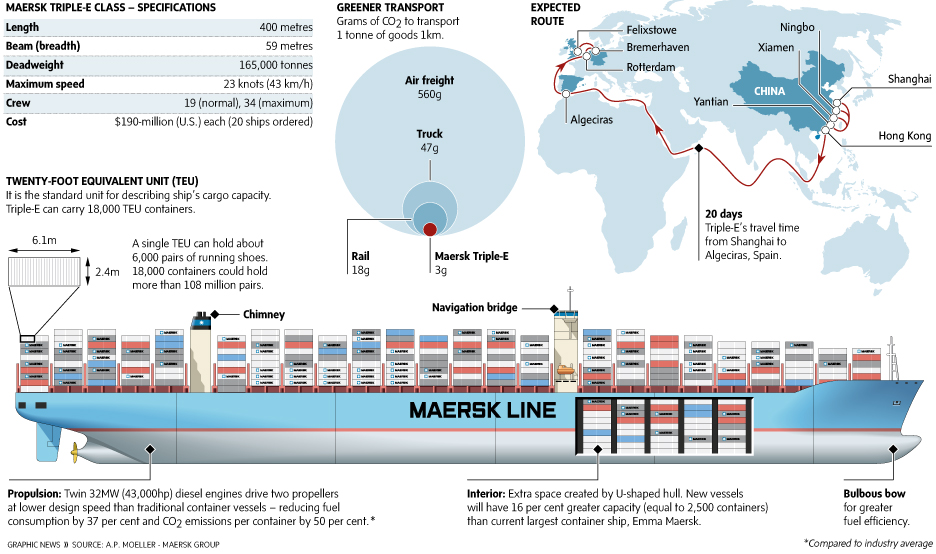
Triple E Class Specifications - (AP Moeller/MAERSK Group)

Triple E Class Specifications – (AP Moeller/MAERSK Group) [Click to Enlarge]

Is it a TEU or a FEU?

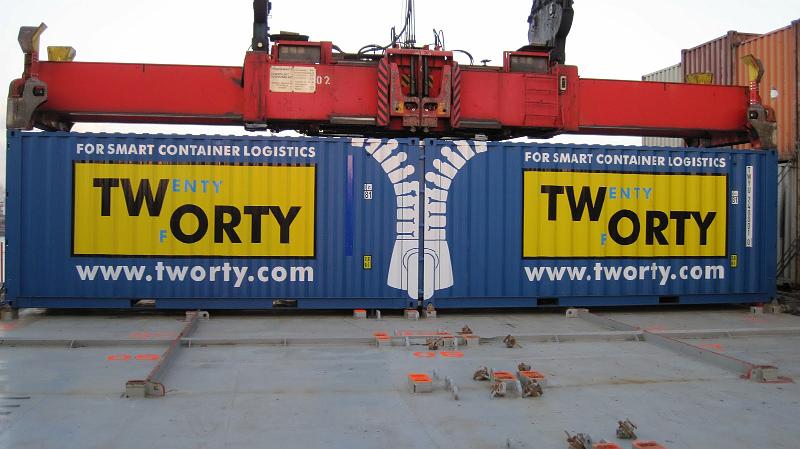
Thinking outside the box - Tworty’s unit has doors at each end, the second opening to and locked from the inside.

Thinking outside the box – Tworty’s unit has doors at each end, the second opening to and locked from the inside.

An innovative new ISO container design that allows a unit to be used either as a 40 ft or 20 ft box has completed its maiden voyage.

The Tworty Box, two 20 ft containers that can be linked together to form a single 40 ft unit – “twenty + forty = tworty” – competed its maiden voyage from Hamburg to Montreal on the containership OOCL Montreal.

Two containers joined together as a single unit were stuffed with 20 tonnes of breakbulk cargo, mainly car parts and granulate, for Canadian consignees.

Developer Tworty Box said the container was designed to reduce the cost of repositioning empties, caused by imbalances between supply and demand for 20 ft and 40 ft containers. As the company humourously explains on its website, 1 x tworty = 20ft, 2 x tworty = 40ft.

It has doors at each end; the second door opens to the inside and can only be locked from the inside. This door can be fixed to the container ceiling and, with the use of its special bonding elements, another Tworty Box can be joined up, thereby creating a 40 ft unit of full value and standard doors at both ends.

Tworty Box prototypes have received full International Convention for Safe Containers certification for single and for coupled operation. Source: Tworty.com and Lloyds.


MOL Comfort – off to Davey Jone’s Locker!

Ironically, nature always has the last say. Mitsui OSK Lines has confirmed that the fore section of MOL Comfort has sunk in the Indian Ocean despite salvage and coastguard teams battling for seven days to contain a blaze that broke out on board after the vessel split in heavy seas.

MOL Comfort sank in high seas near 19º56’N and 065º25’E in waters around 3,000 metres deep at about 0400 hrs Japan standard time on 11 July, MOL said in a statement .

Mitsui has reported this fact to the flag state of Bahamas, Indian authorities and parties concerned, and will keep the salvage team at the scene to monitor if there is any oil leakage and floating containers. The salvage team comprises Smit Salvage, which was overseeing the operation from Singapore, and Nippon Salvage.

The Indian Coast Guard sent a patrol vessel with firefighting capability two days go to help put out the fire.

The 2008-built, 8,110 TEU ship ruptured on 17 June off the coast of Yemen while en route from Singapore to Jeddah with some 4,372 boxes on board. It split in two the following morning and the stern section sank after drifting for 10 days.

Tugs reached the forward section, which still had much cargo intact, on 24 June, which slipped free from its tow wire on 1 July, but was reattached on 3 July. Adverse weather has hampered the salvage operation since it began. Source: Mitsui. Pictures courtesy gCaptain.com

As Maersk Line’s Triple E, The World’s Largest Cargo Ship, Preps For Maiden Voyage, Many Ports Can’t Handle It

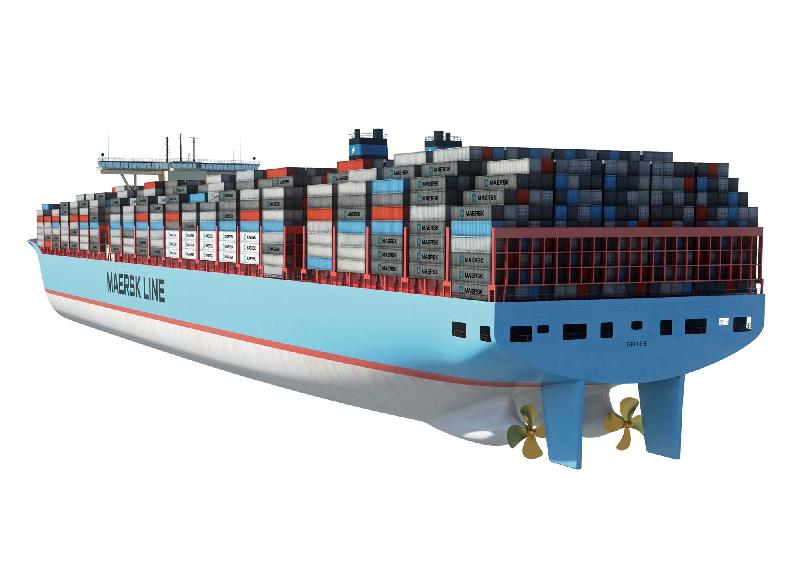
5_triple-eThe world’s largest cargo ship is leaving its shipyard this week to prepare for its July 15 maiden voyage, but much of its cargo space will be under-utilized as many ports don’t have the ability unload the 20-story-high container stacks the vessel can lug between Asia and Europe.

The ship, a $185-million, 1,300-foot long behemoth with a capacity of 18,000 containers, is a gamble for the vessel’s owner, Danish group A.P. Møller-Maersk A/S. Freight, which has been so battered by the recent global economic downturn that at one point it had hundreds of cargo ships sitting idle in Singapore. The ship is so big, it’s essentially leap-frogged over many ports’ ability to off-load it when it’s at full capacity.

“We will operate it as a smaller ship for the first few months while ports upgrade their cranes,” Lars Jensen, head of Maersk Line’s Asia-Europe operations, told Dow Jones Newswires.

The problem is that ports lack gantries — those giant square-shaped cranes that slide over loaded cargo ships and pick up or drop off loaded containers — that can accommodate a fully loaded Triple E. So before Maersk can utilize the ship’s full capacity at major ports, many of those ports have to invest in upgrading, a process that could take years.

Dow Jones says 16 ports on the ship’s route are certified to handle it, but “several” lack the adequate crane ability to handle it when it’s fully loaded. So for now, the ship will have to haul less, which eats into the company’s potential profit. It will embark on its first journey on July 15 from Busan, South Korea, to Europe, after a stop at Singapore. Source: Seanews.com and International Business Times


TT Club – Container packing standards must be improved

TT ClubThe TT Club, has called for higher levels of training to maintain and improve the expertise of those employed by shippers, consolidators, warehouses and depots to pack containers properly.

The insurance organisation said it is no surprise that the correct packing of containers is high on the agenda for industry bodies, regulators and insurers, as the consequences of unsafe and badly secured cargo are serious. According to freight transport insurer TT Club’s claims, some 65 per cent feature cargo loss or damage, of which over one-third result from poor packing.

It is timely that TT Club and Exis Technologies have come together to develop CTUpack e-learning, an online training tool for those involved in the loading and unloading of containers or Cargo Transport Units.

Designed and produced by Exis Technologies on the initiative of the TT Club, and with its financial investment, the CTUpack e-learning(tm) course is aligned with IMO/ILO/UN ECE guidelines for packing containers. Beginning with the foundation course, which will be launched later this year, it will comprise modules that include topics such as cargo or transport and elements equivalent to lessons, covering areas like forces and stresses.

In future the course will evolve to reflect developments and updates to the ILO guidelines and there is a capacity for additional modules to incorporate cargo specific and more advanced training elements. Source: Seanews.com