WCO publishes new SAFE 2025

The World Customs Organization (WCO) sets the standards to facilitate and secure international trade. As part of its ongoing commitment to the protection of society, the SAFE Framework of Standards to Secure and Facilitate Global Trade (SAFE FoS) has been updated to ensure that the pathway for a resilient global trading environment is secure and reflects current realities. With a focus on inter-agency cooperation, the WCO’s 186 Members can now implement the new SAFE FoS in areas that highlight collaboration between Customs and environmental authorities, as well as now recognizing the important role that Micro-, Small, and Medium-sized Enterprises (MSMEs) play by ensuring the Authorized Economic Operator (AEO) programme is accessible to them. 

WCO Secretary General, Ian Saunders, said: “As we look to the future, the SAFE FoS 2025 is a clear and visible demonstration of the WCO’s enduring commitment to a secure, transparent, and innovative trade environment.”

Advancing secure, efficient, and innovative international trade

The 2025 edition of the SAFE FoS reflects a modernized approach to the full spectrum of supply chain management and focuses on expanding inter-agency cooperation in new areas. Over the past four years, the WCO has worked diligently, in close collaboration with Customs administrations, Private Sector Consultative Group and various stakeholders, to review and identify the areas in this flagship international tool requiring an update to improve cooperation across WCO Members, AEOs and supply chain actors. 

The core elements of the SAFE FoS remain unchanged; this new edition expands and enhances the FoS. Building on best practices and lessons learned by the community serves to strengthen collective defenses and drive continual improvement in many aspects of global trade operations. 

Through joint efforts, under the leadership and co-facilitation of the New Zealand Customs Service and the Private Sector Consultative Group, four key areas have been added that reflect the realities of today’s supply chain and trade environment. 

The key updates in the FoS 2025 are:

  • New provisions to enhance collaboration with environmental authorities to increase the focus on global climate change and reflect the desire of Customs to support the global sustainability agenda. By recognizing the linkages between trade, environment, and security, this edition recognizes the importance of environmental authorities. Alignment of procedures and controls for applicable standards between Customs and environmental authorities will support sustainability of trade.
  • Recognition that MSME’s should be part of the AEO programme. The WCO and its members determined it was time to expand the reach of AEO programmes to Micro-sized enterprises along with Small and Medium-sized Enterprises (MSMEs). A focus on inclusivity for the eligibility of AEO programmes and the tailoring of standards to the MSMEs’ unique needs will serve to further expand opportunities for secure trade and increase sustainable economic growth of businesses of all sizes.
  • A requirement for AEOs to adopt a Code of Conduct (Ethics) will serve to enhance the integrity and accountability of the supply chain for AEOs and Customs. The addition of this requirement, with a focus on ethics, demonstrates that AEOs are committed to the security of their organization which will facilitate future recognition as trusted traders. By improving integrity in the premises of AEOs, the implementation of Codes of Conduct will contribute to the overall security of international trade.
  • Addressing insider threats and internal conspirators is a growing concern. The SAFE FoS 2025 expands upon the joint role that Customs and AEOs play in raising awareness and proactively implementing measures to combat this issue given the risk to the supply chain and security in the trade environment. Now both the AEOs and Customs are encouraged to make every effort to educate their personnel with regard to the risks posed by internal conspirators and insider threats to supply chain integrity.

With specific recognition to the participation and contributions of Customs representatives from Australia, the European Union, Guatemala, and the United Kingdom along with the International Chamber of Commerce, the FoS 2025 updates will fortify the collective defences and drive continual improvement in many aspects of global trade operations for Customs administrations, industry stakeholders and business communities around the world.

Implementation

The implementation of each of the three pillars of the SAFE FoS – Customs-to-Customs network arrangements, Customs-to-Business partnerships and Customs-to-other Government Agencies cooperation – is designed to be done as a whole to balance trade facilitation and supply chain security. By implementing the SAFE FoS 2025, all stakeholders can enhance and expand existing cooperation and build trust and transparency in their operations. 

Secretary General Ian Saunders calls upon Customs administrations, industry partners, and business of all sizes “to embrace these standards as a foundation for achieving a more secure and prosperous future with the support of international trade.”

Source: WCO

WCO Council Adopts Resolution on Strengthening Customs-Industry Resilience

On 30 June 2024, the World Customs Organization (WCO) Council approved a Resolution of the Customs Co-operation Council on Strengthening Customs-Industry Resilience. This new Resolution, developed under the leadership of Australia, responds to the growing need for collaboration between Customs administrations and industry partners to ensure global security and economic stability amidst rapid technological advancements, environmental challenges, and other emerging threats. Recognizing the critical role Customs played during the COVID-19 pandemic, the Resolution seeks to evolve the Customs-Industry relationship from a focus on trade facilitation to building resilience in the supply chain.

The Resolution emphasizes the importance of committing to resilience as a strategic priority, encouraging Customs administrations to review and develop robust business continuity plans that are prepared for disruptive global events. It also highlights the need for innovative partnerships, urging the reaffirmation of existing relationships while fostering new collaborations. A key component of the Resolution is the enhancement of digitalization and the adoption of paperless trade practices, advocating for the use of secure digital formats for risk assessment and clearance processes.

Building trust through increased data sharing and information exchange is another crucial element, with a specific focus on strengthening relationships with Authorized Economic Operators (AEOs) and enhancing the benefits of AEO programmes. Capacity-building activities are also encouraged to ensure Customs and Industry can respond agilely to disruptions. The Resolution calls on the WCO to support Members in implementing these measures, particularly through the enhancement of AEO programmes and cooperation with international industry stakeholders. Monitoring of the Resolution’s implementation will be overseen by the Permanent Technical Committee and the Enforcement Committee.

The Private Sector Consultative Group (PSCG) is invited to support the actions reflected in this Resolution by driving industry engagement through its global network. This Resolution marks a significant step towards creating a more resilient global trade environment by fostering stronger partnerships and leveraging digital technologies to build a secure and efficient supply chain capable of withstanding future disruptions.

Source: WCO website, 17 July 2024

WCO supports harmonised implementation of SACU’s Authorised Economic Operator Mutual Recognition Arrangement

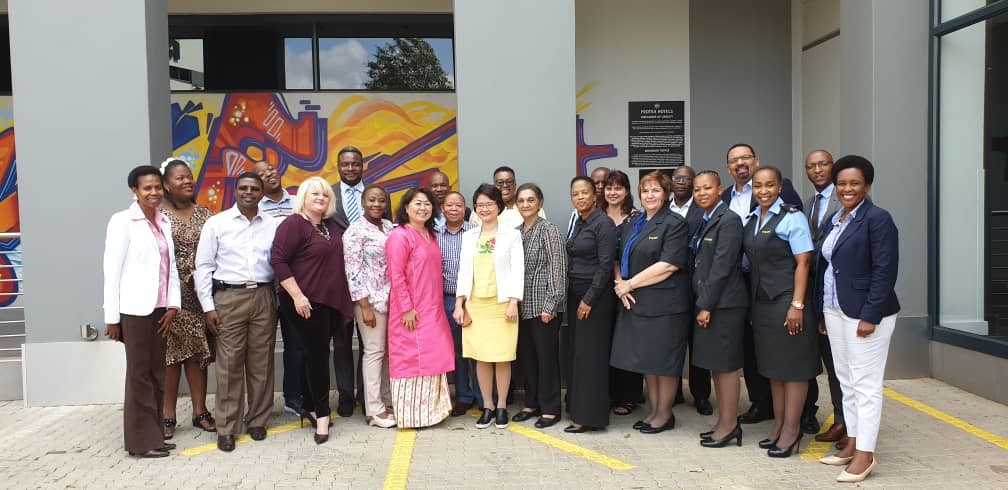
The World Customs Organization (WCO)’s Accelerate Trade Facilitation Programme, as funded by the United Kingdom’s His Majesty’s Revenue and Customs (HMRC), in partnership with the SACU Secretariat and the South African Revenue Service (SARS), delivered a Workshop to support SACU Members to increase a harmonized approach towards implementing the SACU AEO Mutual Recognition Arrangement (MRA). The Workshop followed a blended approach, with virtual sessions taking place from 2 to 12 April and a Workshop hosted by SARS in Johannesburg, South Africa, from 15 to 19 April. 

The SACU Secretariat’s Deputy Director of Trade Facilitation, Ms Maggie Ngoanamokgotho Tladi, underlined the SACU strategic priorities as approved by the SACU Council of Ministers, underscoring the region’s commitment to enhancing trade facilitation, investment promotion and regional integration through the AEO Programme. In this context, the Workshop focused on joint efforts to increase the uptake of the AEO Programme in the SACU member states as part of the SACU AEO MRA adopted in May 2023. This endeavour seeks to ensure a harmonized approach and clear benefits for traders with AEO status across respective SACU member countries while expanding the AEO Programme to economic operators beyond importers and exporters. 

WCO experts from the Association of Southeast Asian Nations (ASEAN), the East African Community (EAC) and the European Union (EU) shared their experiences in designing and implementing their respective regional AEO Programmes and MRAs, thus contributing to the SACU deliberations on further developing its operational instruments. The Head of the WCO’s Accelerate Trade Facilitation Programme highlighted the importance of leveraging the benefits of the Customs-to-Customs partnership to share expertise, experience, and best practices to ensure traders can fully benefit from the potential that the SACU MRA offers.

The Workshop cemented the AEO concept’s importance in boosting economies and regional integration through various tools and instruments.

In addition, the participants were given tools on performance management by the WCO to identify potential Key Performance Indicators. 

During the closing ceremony, Ms. Penny Bologo, Executive Accreditation SARS AEO Division, stated, “These insights will inform our strategies and shape our approach moving forward. I can confidently say that SACU has been empowered. This week, we have delved deeper into the AEO MRA and explored the practical tools for implementing our AEO Programme.”. 

The WCO is looking forward to continuing its strategic multi-year partnership with its partner countries in the region (i.e. South Africa, Namibia, Eswatini and Lesotho) under the framework of the WCO Accelerate Trade Facilitation Programme and appreciates the collaborative efforts, support and participation of the SARS and SACU Secretariat in this regional partnership. 

For more information on the WCO Accelerate Trade Facilitation Programme, please see here or contact capacity.building@wcoomd.org.

Source: WCO website, 16 May 2024

SARS and SACU host the Regional AEO Awareness Engagement Session, 29-31 May 2023

The Southern African Customs Union (SACU) and SARS will host a Regional Authorised Economic Operator (AEO) Awareness Engagement Session from 29 to 31 May 2023 at Emperor’s Palace in Johannesburg to promote visibility and uptake of the AEO Programme within the SACU region.

This session, which is intended for Customs officials, partner government agencies, and the Private Sector, is also an opportunity to demonstrate partnership between the Private Sector and Government to ensure that the benefits offered by the AEO Programme provide greater access to African Continental Free Trade Agreement (AfCFTA) markets. The three-day engagement further aims to promote the  AEO Programme among traders in order to create awareness about the accreditation programme to prospective authorised traders.

The AEO is a flagship programme that is envisaged to support industrialisation and the trade agenda; to enable the region to achieve improved administrative efficiencies including through digitisation, as well as automation of data exchange; to reduce the time and cost associated with cross-border trade; improve compliance and security of the supply chain; and enhance competitiveness of the SACU member states.

The Southern African Customs Union (SACU) has adopted and prioritised the implementation of the AEO Programme to strengthen compliance, safety, and security within the supply chain. Consisting of five member states, including South Africa, Botswana, Namibia, Eswatini and Lesotho, SACU aims to address inefficiencies related to cross border movements amongst Customs and Partner Government Agencies.

The long-term impact of the AEO Programme includes improved revenue collection, reduction in entry and circulation of illicit trade within SACU, ease of facilitation of market access, and competitiveness of firms that are based in the SACU region.

To date, all SACU member states have established and are implementing their respective AEO Programmes, with a total of 176 Accredited Economic Operators under the AEO Programme. As of 2 May 2023, the uptake in member states is as follows: Botswana (3); Eswatini (2); Lesotho (10); Namibia (1); and South Africa (160). 

SARS aims to achieve 300 accredited traders with AEO-accreditation status by the end of 2024. Of the current 160 authorised traders, 155 possess AEO-Compliance (AEO-C) and 5 AEO-Safety (AEO-S) accreditation. 

Public engagements that create awareness about the accreditation programme to prospective new authorised traders are of significant importance, not only for South Africa but also for African countries alike to foster bilateral relations while keeping up with the changing dynamics of the international supply chain.

Source: Article authored by Nadine Metuba, 26 May 2023 – SA Revenue Service (SARS)

Guidance to Customs and trade practitioners on how to deal with the complex, demanding and risky field of Customs knowledge

The following article featured in the 1st Issue of the WCO Newsletter 2023. It is authored by Anthony Buckley, Chair of Customs Knowledge Institute. The article argues that a formal plan for building and managing Customs knowledge is necessary for a Customs brokerage to operate effectively. The components of such a plan are discussed, as well as the determinants that may affect the choices made. The discussion refers also to general issues of Customs knowledge acquisition, management and updating. The considerations apply to all Customs practitioners and trading businesses.

The number of possible games of chess is greater than the number of atoms in the observable universe according to Claude Shannon. In Customs, there are many more variables than the 32 pieces on a chessboard. In any transaction, we have the interested parties, the type of transaction, the goods involved, the route being followed, the intended procedure, the non-tariff controls, the rates of duty and the liability for payment, each of them with many possible variations, combinations, and types of supporting evidence. On that basis, it seems that every single movement of goods across a Customs border is unique, at least in some minor way. How does a Customs broker meet the expectation of a client, who expects the broker to be familiar with every possible variation?

As if the challenge of complexity is not enough, the broker is also expected to maintain records of all transactions and retrieve them in various formats as required by customers and Customs administrations.

In practice, of course, we find ways of doing things that are theoretically impossible. Most Customs movements fall into certain categories and are handled accordingly, by operators familiar with one or a few of the categories. High value complex transactions are handled by teams with a mix of expertise, at considerable expense. Low value consignments use simplified procedures and reduced checking. Significantly, evidence[1] suggests that many transactions proceed despite errors, sometimes of significant effect. Thus, when considering “Customs knowledge”, we must distinguish between what is necessary for all, and what is essential only for certain functions.

All economic operators must have a general understanding of what Customs is, how it controls trade, what its legal structure is, what rights, entitlements and obligations attach to the operator and to the Customs authorities, the importance of compliance with legal requirements, and the costs of non-compliance. For many who buy and sell internationally, their knowledge does not proceed far beyond this general understanding, except perhaps for some detail concerning the particular goods they trade.

For a Customs broker, this level of knowledge is only the beginning.

Continue reading →

WCO – Two new Instruments on Customs Valuation to Support Customs and Economic Operators

At its 52nd Session, held from 17 to 19 May 2021, the Technical Committee on Customs Valuation adopted two instruments (Advisory Opinions 4.18 and 24.1) concerning royalties and licence fees under Article 8.1 (c) of the WTO Customs Valuation Agreement (Agreement) and the Customs valuation treatment of imported goods bearing the buyer’s own trademark, respectively. 

These two instruments were adopted after a virtual session which extended over three days, having regard to the current circumstances relating to the pandemic. It rewards the efforts constantly being made by the Technical Committee to improve the certainty of the interpretation and uniform application of the provisions of the Agreement in all member countries of the WTO. Practical instruments of this kind help Customs, the private sector and the Members in the fair control of Customs valuation, the facilitation of international trade and the optimization of Customs revenue.

In the first instrument, the Technical Committee gives its opinion on the valuation treatment of income tax deriving from the royalty paid to the country of importation’s tax authorities in accordance with the terms of the licence agreement signed by the importer and the seller, who is also the licence holder.

The second instrument relates to the valuation treatment of the trademark belonging to the buyer and provided free of charge to the seller for use in connection with the production of the imported goods.

These instruments adopted by the Technical Committee, once they have been approved by the WCO Council, will be available on the WCO Publications website and published in the WCO Customs Valuation Compendium.

Source: WCO, 27 May 2021

5th WCO Global AEO Conference opens in Dubai

On 25 May 2021, the WCO Secretary General, Dr. Kunio Mikuriya, welcomed approximately 3,650 registered participants from 160 WCO Member administrations to the 5th WCO Global AEO Conference. The Conference is being hosted by Dubai Customs and the Federal Customs Authority (FCA) of the United Arab Emirates (UAE), with support from the Korea Customs Service. 

Under the theme “AEO 2.0: advancing towards new horizons for sustainable and secure trade”, the Conference brings together 80 prominent speakers from Customs administrations, international organizations, academia and the private sector who are engaging virtually to share collaborative input that will help shape the future of Authorized Economic Operator (AEO) programmes. This is the first time that the Global Conference has been organized in the WCO’s North of Africa, Near and Middle East region. 

The Conference was opened by His Excellency Sultan Ahmed Bin Sulayem, Chief Executive Officer of DP World and Chairman of the Ports, Customs & Free Zones Corporation, on behalf of His Highness Sheikh Ahmed Bin Saeed-Al Maktoum, President of Dubai Civil Aviation Authority and Chairman and Chief Executive of the Emirates Group. He delivered an inspiring message on the importance of innovation and collaboration among Customs and other government agencies (OGAs) to support resilient recovery for global supply chains. He congratulated the WCO for providing the international community with a discussion platform on topical issues of interest and highlighted the need for renewed trust and commitment to preserving sustainable and secure trade. 

In his welcome address, Dr. Mikuriya highlighted that in the 16 years since the SAFE Framework of Standards (FoS) was first adopted, the number of WCO Members implementing AEO programmes had increased substantially, from 45 to 97, while the number of Mutual Recognition Arrangements/Agreements had risen exponentially from 17 to 91. Dr. Mikuriya underlined that this demonstrates not only the success of the SAFE FoS but also the importance of monitoring implementation of AEO programmes. 

Secretary General Mikuriya offered food for thought regarding the possible next steps to ensure that AEO programmes more effectively support supply chain recovery as the world moves into a post-COVID-19 pandemic environment. These steps may include ways of inviting more economic operators to take part in AEO programmes, strengthening cooperation between Customs and OGAs, and leveraging disruptive and transformative technologies for the benefit of AEO programmes. Finally, consideration should be given to the role played by training and capacity building in making the AEO concept a key tool at the centre of resilient and sustainable supply chain recovery.

Dr. Mikuriya also commended Dubai Customs and the FCA for their strong commitment and generous support towards making this event an immense success. He further acknowledged the backing provided by regional entities as well as other partners, sponsors and exhibitors, who have all contributed to ensuring that this event will be a remarkable and memorable experience for all.

During his opening remarks, His Excellency Ahmed Mahboob Musabih, Director General of Dubai Customs, said that this Conference provided the UAE with the perfect forum for sharing information on innovative work pushing the boundaries of Customs. He added that it would be an opportunity for everyone to learn more about Dubai’s experience of building up Customs to form one of the pillars of the Emirate’s development and prosperity.

The Conference will continue on 26 and 27 May with discussions on topics including emerging supply chain security threats; the role of technologies in promoting supply chain renewal; risk management; best practices; and partnership and capacity building activities. 

More information can be found on the event website

SARS hosts Single Government Authorised Economic Operator Workshop in collaboration with Border Management Agency (BMA)

Customs activities for this year are underpinned by the World Customs Organization’s (WCO) 2021 theme “Customs bolstering recovery, resilience and renewal for sustainable global supply chain”. The colossal task that lies ahead as nations look to reconstruct their global supply chain is one of the reasons that the WCO has advocated Authorised Economic Operator (AEO) programmes as a tool to promote reconstruction.  

SARS, in collaboration with the Border Management Agency (BMA), is leading the process  of creating  a Single Government  AEO (SGAEO) programme to ensure improved trade facilitation and supply chain security in South Africa, the Southern African region, the African continent and globally. The World Bank (WB) and WCO have agreed to assist SARS to create a SGAEO programme, through the WB Trade Facilitation Programme.

The agreement to conceptualise a SGAEO for South Africa culminated in agreement that SARS and the BMA would jointly host a workshop with all agencies involved in managing trade at the border. The WB and WCO have agreed to participate in the workshop on 2 March 2021. The workshop is intended to contextualise and set the scene for the creation of a SGAEO programme in South Africa and to allow for comparison of the various OGA risk management programmes for cross border trade with the SARS AEO programme.

International drivers for Single Government AEO programmes include the World Trade Organisation’s Trade Facilitation Agreement and the WCO’s SAFE Framework of Standards. South Africa’s scoring on the OECD’s Trade Facilitation Indicator is used as input into the World Bank’s (WB) Ease of Trading across Borders in its annual Doing Business Report.

For Customs Administrations, AEO programmes are vital tools for developing trust-based partnerships with economic operators who have high levels of commitment to compliance and supply chain security. Economic operators, on the other hand, are interested in the tangible benefits offered to participants, particularly, mutual recognition agreements (MRAs) with trading partners. 

While several countries have adopted different OGA (Other Government Agencies)AEO models, SARS’ preferred model is a Single Government AEO Programme with one certification process and benefits granted by all agencies.

Source: South African Revenue Service, Rae Vivier, 2 March 2021

Joint WCO-ICAO Guiding Principles and Guidelines to enhance Air Cargo Security and Trade Facilitation

Today, the World Customs Organization (WCO) and International Civil Aviation Organization (ICAO) released their Joint WCO-ICAO Guiding Principles for Pre-Loading Advance Cargo Information and Joint WCO-ICAO Guidelines on Alignment of the Customs Authorized Economic Operator and Aviation Security Regulated Agent/Known Consignor Programmes. These Guiding Principles and Guidelines are a result of continuous joint efforts over the last 10 years, following serious threats and vulnerabilities to international trade supply chains.

“In the context of the COVID-19 pandemic and the need to facilitate safe and secure vaccine distribution, strong collaboration among Customs, Civil Aviation Authorities and the relevant stakeholders is highly recommended,” said the WCO Secretary General, Dr. Kunio Mikuriya. “WCO and ICAO Members are encouraged to make the best use of advance cargo information for risk assessment as well as to align partnership and security programmes to ensure secure and efficient air cargo supply chains,” he added.

With the new Joint WCO-ICAO Guiding Principles for Pre-Loading Advance Cargo Information (PLACI), another layer is being added to the multi-layered approach to Aviation Security in order to detect Improvised Explosive Devices/Improvised Incendiary Devices (IED/IID) in air cargo. These PLACI principles should not be used as a standalone method of Aviation Security (AVSEC) screening or air cargo security control, but rather to perform an additional assessment of the potential Aviation Security risks represented by a consignment.

These Joint Guiding Principles comprise several key and specific principles to meet the needs and capabilities of both regulators and industry, and provide guidance for the risk analysis process. Combined with intelligence and other information, PLACI consignment data enables regulators to perform an initial assessment of the potential risks posed by a consignment. The results of the initial assessment may also indicate the need for additional action.

In addition, the new Joint WCO-ICAO Guidelines on Alignment of the Customs Authorized Economic Operator (AEO) and AVSEC Regulated Agent/Known Consignor (RA/KC) Programmes seek harmonization and alignment between the WCO AEO and the AVSEC RA/KC Programmes, capitalizing on synergies and thus increasing efficiency, while also reducing duplication of efforts by regulators and burdens on trade.

These Guidelines aim to assist WCO and ICAO Members wishing to assess the similarities between their Customs and AVSEC security programmes, with the intention of further aligning them. This collaborative work should ultimately lead to simplification of procedures and eradication of duplicate security requirements and controls, to the benefit of the authorities and the airline industry. 

Joint WCO-ICAO Pamphlet

Source: WCO website, 16 February 2021

USA & Singapore – Letter of Intent to Explore Single Window Connectivity

U.S. Customs and Border Protection (CBP) and Singapore Customs signed a historic letter of intent today that will enable closer cooperation in the areas of trade facilitation, revenue protection and risk management.

Executive Assistant Commissioner for the Office of Trade Brenda Smith signed the letter of intent in Washington, DC on behalf of CBP and Deputy Director-General Lim Teck Leong signed the letter of intent in Singapore on behalf of Singapore Customs.

The Letter of Intent to Explore Single Window Connectivity between Singapore’s Networked Trade Platform (NTP) and the U.S. Automated Commercial Environment (ACE) formalizes the United States’ and Singapore’s commitment to sharing trade data and to exploring the possible connection of the two countries’ national Single Windows for trade facilitation. Single Windows are electronic systems that automate and expedite the processing of import and export data by allowing traders to input standardized information in a single entry point to fulfill all import and export requirements. In doing so, Single Windows reduce costs, enhance accountability and improve collaboration among government agencies and the trade community.   

“We value the opportunity for transparency and cooperation that a shared Single Window will bring,” said Executive Assistant Commissioner Smith. “Government-to-government data sharing is rapidly becoming an important component of efficient and secure trade, and CBP looks forward to working with Singapore Customs on this forward thinking approach to trade facilitation.”

“The signing of this letter of intent signifies the first step towards trade data connectivity between the two Customs administrations, and reinforces our commitment to maintain the security of international supply chains, while facilitating legitimate trade,” said Deputy Director-General Lim. 

The letter of intent follows the successful negotiation of the U.S.-Singapore Free Trade Agreement in 2004 and builds on the Authorized Economic Operator-Mutual Recognition Agreement and the Customs Mutual Assistance Agreement concluded by CBP and Singapore Customs in 2014. These efforts support the principles, standards and objectives of the World Customs Organization Framework of Standards to Secure and Facilitate Global Trade.

The collaboration between CBP and Singapore Customs complements the United States’ continued engagement with the Association of Southeast Asian Nations (ASEAN) Single Window Steering Committee on trade facilitative data exchange and Single Window connectivity/interoperability. Singapore is an active member of ASEAN and the ASEAN Single Window. 

In 2019, two-way trade in goods between the United States and Singapore totaled $57.6 billion, making Singapore the United States’ 17th largest trading partner and its second-largest trading partner in ASEAN. 

Source: US Customs and Border Protection, 10 November 2020

Third anniversary of WTO Trade Facilitation Agreement

Three years since the Trade Facilitation Agreement (TFA) entered into force on 22 February 2017, WTO members have continued to make steady progress in its implementation. Director-General Roberto Azevêdo, on the occasion of the TFA’s third anniversary, welcomed members’ efforts to ensure traders can reap the full benefits of the Agreement.

The TFA, the first multilateral deal concluded in the 25-year history of the WTO, contains members’ commitments to expedite the movement, release and clearance of goods across borders. As of the TFA’s third anniversary, 91% of the membership have already ratified the Agreement. It entered into force three years ago when the WTO obtained the two-thirds acceptance of the Agreement from its 164 members.

The Agreement is unique in that it allows developing countries and least-developed countries (LDCs) to set their own timetables for implementing the TFA depending on their capacities to do so. They can self-designate which provisions they will implement either immediately (Category A), after a transition period (Category B), or upon receiving assistance and support for capacity building (Category C). 

As of 22 February 2020, over 90 per cent of developing countries and LDCs have notified which provisions they are able to implement after a transition period, and the ones for which they will need capacity-building support to achieve full implementation of the Agreement. Developed countries committed to immediately implement the Agreement when it entered into force.

Based on members’ notifications of commitments, 65 per cent of TFA provisions are being implemented today compared to the 59 per cent implementation rate recorded on the Agreement’s first anniversary. Broken down, the latest figure equates to a 100 per cent implementation rate for developed members and 64 per cent for developing members. As for least-developed countries, the improvement in the implementation rate is particularly notable at 31 per cent today versus the 2 per cent recorded a year after the Agreement entered into force. The implementation rate for each WTO member can be viewed here

The Agreement has the potential, upon full implementation, to slash members’ trade costs by an average of 14.3 per cent, with developing countries and LDCs having the most to gain, according to a 2015 study carried out by WTO economists. It is also expected to reduce the time needed to import and export goods by 47 per cent and 91 per cent respectively over the current average.

Source: World Trade Organisation, 22 February 2020

WCO supports SARS with AEO programme implementation

Under the framework of the Southern African Customs Union (SACU) Customs Modernization Programme, funded by the United Kingdom Foreign and Commonwealth Office, WCO experts were invited to lead an AEO Validation Workshop for the South African Revenue Service (SARS). The Workshop was held from 10 to 14 February 2020 in Pretoria, South Africa. Mrs. Rae Vivier who is the Group Executive responsible for AEO in SARS opened the workshop and welcomed the WCO and SACU representatives with a key note address to all attendees. She gave assurance to the audience that AEO is taken seriously by SARS and is one of the organization’s key deliverables. 

During the five day Workshop, the SARS AEO validation team was given an introduction to the WCO SAFE Framework of Standards (FoS), including all its Pillars, core elements, and AEO criteria etc. This was followed by a discussion on the essential elements of the AEO Validation Guidance, the sequential steps of the AEO validation procedures and the skills required by AEO validators. 

The participants, comprised of Customs auditors, legal experts and client relationship managers, were given an opportunity to share their views on the similarities and differences between AEO validation and post-clearance audit. The core values of Customs-Business partnerships were highlighted as an important aspect towards achieving AEO programme implementation. Auditors with a Customs compliance mindset were given security validation knowledge and taught how to hold discussions with business on coordinating and enhancing international supply chain security and safety. Another important element underscored during the training was that validation of the applicant is central to accreditation, and that the applicant’s supply chain may not be tested. Accordingly, the applicant is responsible for securing its own supply chain. 

The Workshop entailed extensive discussions on the self-assessment questionnaire prepared by SARS for potential AEOs taking part in the country’s AEO pilot. While referring to the WCO self-assessment template, the WCO experts also shared questionnaires by other Customs administrations. The participants and experts discussed how to enhance the questions posed, making it simpler for business to understand and answer them. A number of recommendations were made, including adding explanatory notes to the self-assessment questionnaire to help clients provide accurate information about their security and safety protocols.

A further aim of the Workshop was to include practical sessions, such as the mock validation process held at BMW’s South African plant in Rosslyn. Participants were told how BMW guarantees supply chain safety and security. Equipped with this information, the Workshop participants were given a walk-through of BMW South Africa’s processes for receiving goods. The lessons learned were shared among the Workshop participants and SARS management during the post-validation assessment. During that session, several Mutual Recognition Arrangements/Agreements (MRAs) signed between different Customs administrations were also referenced, so as to enhance learning and information sharing. 

SARS embarked on its Preferred Traders Programme (PTP) in May 2017. The initial number of 28 accredited traders (importers/exporters) has grown to reach 119 as of 14 February 2020. Under the SARS Strategic Plan for 2023, the priority will be to focus on improving voluntary compliance and supply chain security through implementation of the standardized WCO SAFE/AEO programme. At the same time, SACU wishes to roll out PTPs for all its Members, while moving towards a full-fledged AEO programme in phases. To this end, the WCO experts discussed and shared views on the PTP compatibility assessment tool aimed at ensuring mutual recognition of Preferred Traders among SACU Members.

Source: WCO, 19 February 2020

South Korea – aiming to become a Global Customs Services Leader

South Korea hopes to be a leader in global customs services by offering solutions to complex international clearance procedures.

South Korea Customs Service (KCS) chief Kim Yung Moon said the agency hopes it can help foster trade relations between local businesses and partner nations worldwide.

In an interview with the Korea Times, he said the agency would continue to devote its manpower and resources to provide full support for export firms, especially the small and medium sized enterprises (SMEs) that were the foundations of the South Korean economy.

The agency’s commitment was well-illustrated as the KCS under his leadership helped limit the fallout following the ongoing South Korea – Japan trade war that has led to major losses for South Korean exporters.

Since March, KCS officials have been dispatched to 30 customs offices nationwide to offer various forms of support, including consulting, technical aid and trade statistics data management.

The support has helped 2,189 SMEs log a combined US$2.4 billion (RM10 billion) in exports in the March-October period, up 2.2 per cent from US$2.3 billion (RM9.8 billion) the year before.

“We tried to identify what the firms needed most and came up with ideas on how we could be of assistance. I am glad we were able to fulfil our public duty,” Kim said.

In July, the KCS saved a local zinc coated steelmaker 1.3 billion won (RM4.5 million) in tariffs imposed by Taiwanese customs authorities after they accepted KCS opinion asking them to reclassify the item as a tariff-exempt product.

Similarly, a team of KCS officials was able to have the Indian customs authorities in March rescind a 10 per cent tariff imposed on Korea-made copy papers categorised as a no-tariff item under the Comprehensive Economic Partnership Agreement (CEPA), a free trade agreement between South Korea and India.

This helped a local paper maker not only avoid what could have been an annual tariff of 200 million won (RM700,000), but also cleared the way for similar businesses to enter the market without the uncertainty of hefty, unexpected tariffs.

Most significant is that the agency was able to finalise the international standards on display modules, Korea’s key export item.

This allowed them to be classified as LCD modules exempt from tariffs in line with the Information Technology Agreement (ITA), a multilateral agreement enforced by the World Trade Organization (WTO).

The process required painstaking efforts to persuade members of the World Customs Organization (WCO) and it proved South Korea’s “soft power” with the international customs body comprised of 183 countries representing over 98 percent of international trade.

A senior KCS official Kang Tae Il has also been elected a director of the Capacity Building Directorate at the WCO, whose members look to South Korea for training, consulting and multilateral aid utilising official development assistance funds and Customs Cooperation Fund-Korea.

Since 2009, 3,727 customs officials from around the world have undergone training offered by the KCS.

The appointment of Kang has also boosted KCS’ standing on the global stage, coupled with its artificial intelligence-based block chain customs services in a country recognized for its high-tech infrastructure and ICT expertise.

The agency’s key achievement is UNI-PASS, a KCS-developed electronic clearance system designed to enhance swift customs clearance and logistics service convenience.

The e-clearance system highly regarded by the KCS’s global peers increases work efficiency by minimizing manual errors and improving input accuracy by auto-generation of trade records.

“We will continue our efforts to strengthen influence and boost our say in the international customs circle. We will also become a leading standard setter involving the implementation and revision of related customs practices concerning e-commerce and risk management. This will boost the standing of Korea on the global stage,” Kim said.

Source: New Straits Times – December 11, 2019 

SA Customs launches AEO Programme

Customs stakeholders with members of the SARS Preferred Trader team 

The stakeholders – from various business associations and Customs umbrella bodies – were very positive after the engagement and were open to form part of an AEO Working Group going forward. The idea is to have representatives from the public and private sectors who would discuss and examine the various issues related to the design and roll-out of the future AEO programme.

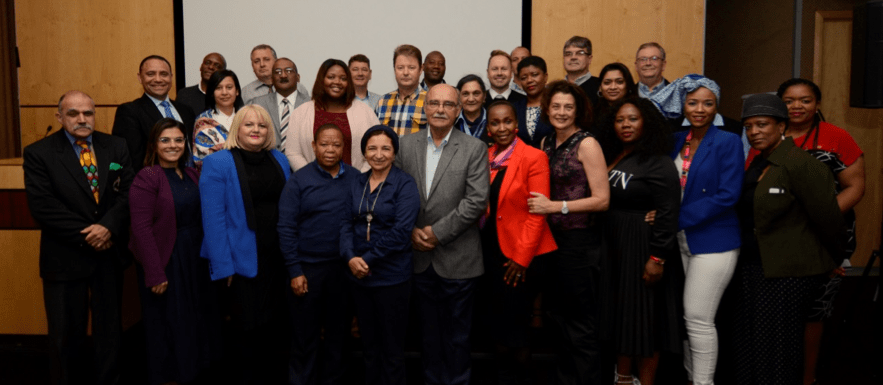
An engagement with various key Customs stakeholders was held on 25 September to share Customs’ plans to introduce an Authorised Economic Operator (AEO) programme in South Africa.

The AEO programme follows in the footsteps of Customs’ Preferred Trader programme which offers various benefits to compliant Customs clients. The SARS’ Preferred Trader programme, which was officially launched in May 2017, currently has 105 accredited clients who have been awarded Preferred Trader status. 

The AEO programme – based on the World Customs Organisation’s SAFE Framework of Standards – requires an extra level of safety and security compliance from traders and offers additional benefits, compared to the Preferred Trader programme. It is also open to the entire Customs value-chain, as opposed to only local importers and exporters.

SARS Customs intends to pilot the AEO programme in South Africa before the end of 2019. Clients in the motor vehicle manufacturing industry – representing big businesses have been earmarked to participate in the pilot, as well as SMMEs in the Clothing and Textile Industry. SARS is also in the planning stage of engagements with its major trading partners within BRICS and the EU for the purpose of establishing Mutual Recognition Agreements (MRAs) for its AEO Programme and intends to commence engagements within Africa as well.

At the recent stakeholder engagement session, Customs and Excise Group Executive, Rae Vivier, indicated that the AEO programme was being designed for Customs to partner with the private and public sector to improve voluntary compliance and trade facilitation in the country. She mentioned a few key points that SARS was looking at when it came to AEO, including Mutual Recognition Agreements with SACU/SADC trading partners, close cooperation with Other Government Agencies (OGAs) in South Africa to ensure the programme is recognised by all government departments, exploring modern technology such as block chain and augmenting AEO benefits in order to design a programme that would be beneficial for trade. 

She also mentioned that C&E Trade Services would soon be sending a survey to Customs traders to find out what clients’ requirements are, from a trade facilitation point of view. “We need to collaborate with each other to ensure we design something for the future,” she said. 

Source: South African Revenue Service

WCO SAFE FoS – 2018 Edition

SAFE FoS 2018 Edition2

The WCO has published a 2018 edition of its Framework of Standards. The 2018 version of the SAFE Framework augments the objectives of the SAFE Framework with respect to strengthening co-operation between and among Customs administrations, for example through the exchange of information, mutual recognition of controls, mutual recognition of AEOs, and mutual administrative assistance.

In addition, it calls for enhanced cooperation with government agencies entrusted with regulatory authorities over certain goods (e.g. weapons, hazardous materials) and passengers, as well as entities responsible for postal issues. The Framework now also includes certain minimum tangible benefits to AEOs, while providing a comprehensive list of AEO benefits.

The updated SAFE Framework offers new opportunities for Customs, relevant government agencies and economic operators to work towards a common goal of enhancing supply chain security and efficiency, based on mutual trust and transparency.

Customs officers and trade practitioners also be on the lookout for then new WCO Academy course on SAFE and AEO. The Framework of Standards to Secure and Facilitate Global Trade is a unique international instrument which usher in a safer world trade regime, and also heralds the beginning of a new approach to working methods and partnership for both Customs and business. This E-Learning course aims to present this tool and the benefits of its implementation.