Unknown's avatar

Posts by Mike Poverello

I have spent the best part of 28 years in the service of South African Customs, and a further 5 years as a free-lance consultant to the customs industry as well as an advisor on several customs systems modernisation programmes with international ICT and consulting firms between 1998 and 2002. Like many of my peers and numerous colleagues worldwide, "customs" is not another government department, but an institution which has as much a 'corporate identity' as it is an arm of government. Perhaps, I'm guilty of nostalgia at times gone by, but it nevertheless concerns me what is happening to so many customs administrations. First, many have by government decree merged into what is otherwise known as a 'Revenue Authority', with some success - as is the case with Customs in South Africa. A more recent development sees the customs being removed from its traditional 'treasury' base into 'Border Security Agencies'. Some fortunate administrations appear to have retained their independance which makes the organisational mandate and objectives more focussed and attainable. Through this 'blog' I wish to share my experiences and encourage those of you of like mind to collaborate.

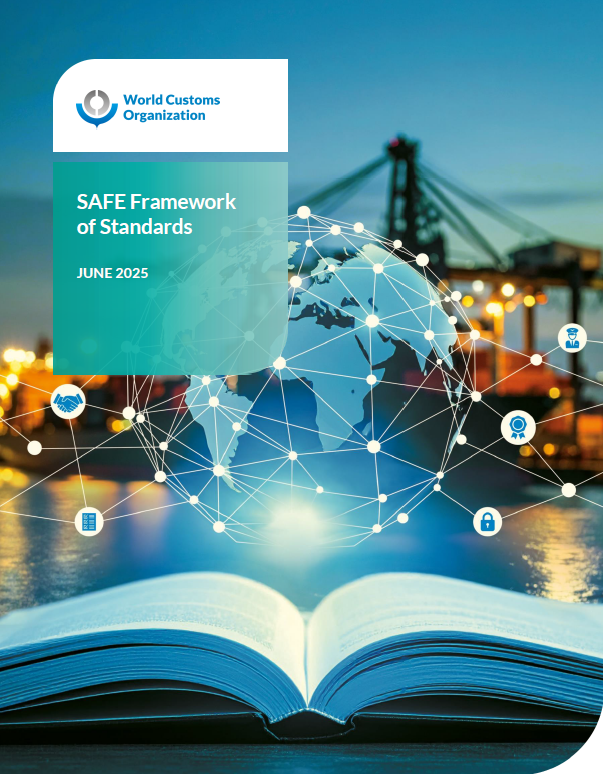
WCO publishes new SAFE 2025

The World Customs Organization (WCO) sets the standards to facilitate and secure international trade. As part of its ongoing commitment to the protection of society, the SAFE Framework of Standards to Secure and Facilitate Global Trade (SAFE FoS) has been updated to ensure that the pathway for a resilient global trading environment is secure and reflects current realities. With a focus on inter-agency cooperation, the WCO’s 186 Members can now implement the new SAFE FoS in areas that highlight collaboration between Customs and environmental authorities, as well as now recognizing the important role that Micro-, Small, and Medium-sized Enterprises (MSMEs) play by ensuring the Authorized Economic Operator (AEO) programme is accessible to them. 

WCO Secretary General, Ian Saunders, said: “As we look to the future, the SAFE FoS 2025 is a clear and visible demonstration of the WCO’s enduring commitment to a secure, transparent, and innovative trade environment.”

Advancing secure, efficient, and innovative international trade

The 2025 edition of the SAFE FoS reflects a modernized approach to the full spectrum of supply chain management and focuses on expanding inter-agency cooperation in new areas. Over the past four years, the WCO has worked diligently, in close collaboration with Customs administrations, Private Sector Consultative Group and various stakeholders, to review and identify the areas in this flagship international tool requiring an update to improve cooperation across WCO Members, AEOs and supply chain actors. 

The core elements of the SAFE FoS remain unchanged; this new edition expands and enhances the FoS. Building on best practices and lessons learned by the community serves to strengthen collective defenses and drive continual improvement in many aspects of global trade operations. 

Through joint efforts, under the leadership and co-facilitation of the New Zealand Customs Service and the Private Sector Consultative Group, four key areas have been added that reflect the realities of today’s supply chain and trade environment. 

The key updates in the FoS 2025 are:

  • New provisions to enhance collaboration with environmental authorities to increase the focus on global climate change and reflect the desire of Customs to support the global sustainability agenda. By recognizing the linkages between trade, environment, and security, this edition recognizes the importance of environmental authorities. Alignment of procedures and controls for applicable standards between Customs and environmental authorities will support sustainability of trade.
  • Recognition that MSME’s should be part of the AEO programme. The WCO and its members determined it was time to expand the reach of AEO programmes to Micro-sized enterprises along with Small and Medium-sized Enterprises (MSMEs). A focus on inclusivity for the eligibility of AEO programmes and the tailoring of standards to the MSMEs’ unique needs will serve to further expand opportunities for secure trade and increase sustainable economic growth of businesses of all sizes.
  • A requirement for AEOs to adopt a Code of Conduct (Ethics) will serve to enhance the integrity and accountability of the supply chain for AEOs and Customs. The addition of this requirement, with a focus on ethics, demonstrates that AEOs are committed to the security of their organization which will facilitate future recognition as trusted traders. By improving integrity in the premises of AEOs, the implementation of Codes of Conduct will contribute to the overall security of international trade.
  • Addressing insider threats and internal conspirators is a growing concern. The SAFE FoS 2025 expands upon the joint role that Customs and AEOs play in raising awareness and proactively implementing measures to combat this issue given the risk to the supply chain and security in the trade environment. Now both the AEOs and Customs are encouraged to make every effort to educate their personnel with regard to the risks posed by internal conspirators and insider threats to supply chain integrity.

With specific recognition to the participation and contributions of Customs representatives from Australia, the European Union, Guatemala, and the United Kingdom along with the International Chamber of Commerce, the FoS 2025 updates will fortify the collective defences and drive continual improvement in many aspects of global trade operations for Customs administrations, industry stakeholders and business communities around the world.

Implementation

The implementation of each of the three pillars of the SAFE FoS – Customs-to-Customs network arrangements, Customs-to-Business partnerships and Customs-to-other Government Agencies cooperation – is designed to be done as a whole to balance trade facilitation and supply chain security. By implementing the SAFE FoS 2025, all stakeholders can enhance and expand existing cooperation and build trust and transparency in their operations. 

Secretary General Ian Saunders calls upon Customs administrations, industry partners, and business of all sizes “to embrace these standards as a foundation for achieving a more secure and prosperous future with the support of international trade.”

Source: WCO
USCBP Revokes ‘De Minimis’ Rules

In what may be viewed as a step forward in the war against the illicit trade in counterfeit goods, US Customs and Border Protection (CBP) has revoked the ‘de minimis’ exemption for low-value shipments of FDA-regulated goods.

The CBP’s notice means that, effective immediately, all FDA-regulated products like food, animal feed, cosmetics, medical devices and equipment, and medicines can no longer be released by CBP without FDA review, with all earlier exemptions now rescinded.

The agency notes that since the exemptions were granted, the “technological capabilities of both the trade and the FDA have advanced significantly” and that means the agency now has the capacity to “review all electronically transmitted FDA-regulated products offered for import, regardless of shipment quantity and value, to facilitate legitimate trade and prevent the importation of violative products…that may pose risks to health, safety, and security.”

The move comes against the backdrop of a plan to remove the de minimis exception for all products by the Trump administration. The mechanism, which allows goods valued at $800 or less to enter the US duty-free, is thought to have played a role in the emergence of small shipments as a major carrier for counterfeit goods entering the US.

For many years, small-package shipments have qualified for streamlined customs procedures that have made it difficult for border security to detect and stop packages containing counterfeit goods, as well as other illicit products such as fentanyl and other illicit drugs, pill press parts, and products that are made with forced or child labour.

Lawmakers have argued that the sheer volume of packages is overwhelming the capacity of CBP to protect US citizens from illegal goods, given that, on average, CBP processes over 4 million de minimis shipments into the US each day.

That is now all set to change, however, as the Trump administration did away with de minimis exemptions for goods arriving from China and Hong Kong – two notorious sources of counterfeit goods – on May 2. More than three-quarters (76 per cent) of de minimis shipments entering the US originated from China before the ban.

Moreover, the passage earlier this month of Trump’s wide-ranging One Big Beautiful Bill Act (OBBBA) means that the de minimis exemptions will be stripped from imports from all other countries on July 1, 2027.

CBP Acting Commissioner Pete Flores recently estimated that in fiscal 2024, de minimis shipments accounted for 97 per cent of intellectual property rights seizures, equating to 31m counterfeit items. He added that such shipments also accounted for 77 per cent of health and safety seizures, equivalent to more than 20m dangerous or illicit items.

Source: Securingindusdtry.com, article dated 16 July 2025

World Customs Organization Releases Data Model Version 4.2.0, Advancing the Digitalization of Customs Processes

The World Customs Organization (WCO) is proud to announce the release of the WCO Data Model Version 4.2.0, marking a significant step forward in the digitalization and harmonization of customs procedures worldwide. This latest version introduces two critical data sets: Customs Bonds and Certificates of Origin, providing WCO Members with tools to streamline operations, and enhance the efficiency of digital customs processes.

The WCO Data Model provides a comprehensive framework for standardizing data elements in cross-border trade. Version 4.2.0 builds on this foundation by incorporating standardized data sets that support key customs processes.

Key Highlights of Version 4.2.0:

  1. Customs Bonds Information Package: This new data set enables WCO Members that require surety-issued customs bonds to streamline and digitalize their bonds submission processes. By adopting this standard, Members can reduce administrative burdens, enhance compliance, and automate obligation management to protect revenue. Importantly, the standardized approach also reduces the time and costs required for implementation, enabling Members to achieve operational efficiency and faster deployment of digitalized customs bond processes.
  2. Certificate of Origin Information Package: Developed using the dataset created by the Technical Committee on Rules of Origin (TCRO), this package empowers Members to digitalize electronic Certificates of Origin (eCOs). This digitalization improves validation of product origin, helping to combat fraud and ensure fair trade practices.

The WCO Data Model Version 4.2.0 is now available to WCO Members and stakeholders. The WCO encourages its members to adopt and implement this latest version to fully realize the benefits of standardized and digitalized customs procedures.

Source: WCO 15 July 2025

Madagascar’s AI Revolution in Customs: IMF Support Enabling Change

Madagascar’s customs authority is currently receiving technical support from the International Monetary Fund (IMF) to accelerate its digital transformation. Two specialists, Victor Budeau and François Chastel, began their mission in Antananarivo on Thursday, April 24th. Their assignment, scheduled to conclude on Wednesday, May 7th, includes intensive training focused on incorporating artificial intelligence (AI) into customs procedures.

The objective is to improve the efficiency, accuracy, and transparency of operations. During a working session, the Director General of Customs, Ernest Zafivanona Lainkana (pictured, center), underscored the significance of centralizing data within a unified database to fully harness the potential of AI. He also affirmed that this technology must now become a fundamental component of customs tools.

This initiative is not merely an experiment but rather part of an ongoing strategy. The customs administration is already using several AI-driven solutions: automatic image analysis (RESNET), Smart Scanning, and the Enhanced Risk Assessment (ERA) system. These tools have contributed to a 68% increase in customs revenues in January 2025 compared to January 2024.

Given these positive outcomes, the IMF has designated Madagascar as a pilot project in Africa for the integration of AI into customs services. This strategic recognition could lay the foundation for a continent-wide strategy. By 2029, Madagascar’s customs authority aims to extend these technologies to additional control sectors, strengthen its digital infrastructure, and share its expertise at the regional level.

Source: WeAreTech.Africa

Boosting Transshipment: Kenya Lifts Cargo Stripping Ban

Mombasa port projects an increase in transshipment cargo after Kenya lifted the seven-year ban of stripping of cargo in containers at the port before onward delivery by dhows and barges to Zanzibar and Pemba.

The Kenya Revenue Authority (KRA) announced reintroduction of stripping, which is destuffing containerised cargo, after putting in place measures to curb smuggling, where before cargo is diverted in the ocean and finds its way into the East African Community (EAC) market.

The move is expected to cut the cost of container charges, considering that the boxes will be returned to the shipping line on time, since they will not be leaving the port as before.

Millers Association’s representative at the Mombasa port Naseeb Mbarak said the reintroduction of stripping would reduce the cost of transporting cargo to Zanzibar and Pemba by returning containers on time. 

“Smaller traders will also benefit out of this as they can now import in groups,” he said. Mombasa-based clearing and forwarding agent Roy Mwanthi said the two destinations are the main transshipment destinations for Mombasa and the move will increase cargo numbers.

“Last year, Mombasa registered exceptional growth in transshipment traffic, which recorded 491,666 twenty-feet equivalent units (Teus), reflecting an extraordinary increase of 280,593 Teus and translating into 132.9 percent growth against 2023. With these numbers, stripping will surpass 500,000 units which will mean more Mombasa port revenues,” Mr Mwanthi said.

In 2018, the KRA in a public notice banned the stripping of containers destined for Zanzibar and Pemba. Before the ban, cargo destined for Zanzibar was being redirected to ports closer to the destination, such as Dar es Salaam, Tanga, or Zanzibar itself under a different manifest.

In November 2022, the Tanzania Revenue Authority (TRA) wrote to KRA requesting a review of the ban on stripping to facilitate their importers in Zanzibar and Pemba. 

“KRA reviewed the same and granted indulgence on the stripping of cargo to Zanzibar and Pemba under conditions. In this regard, the earlier public notice issued is hereby set aside in line with this communication,” said the notice by KRA.

Before the ban, the volumes of cooking oil and other food stuff destined for Pemba and Zanzibar surpassed the consumption capacity of the two islands as a result of cargo diversion and smuggling.

KRA also seized different products, including edible oil cleared at Old Port in the go-downs of Mombasa, emanating from cargo stripped at the port of Mombasa.

To avert cargo diversion and control stripping, the KRA has prohibited changing the status of goods through manifest amendments.

The taxman said goods from the port of Mombasa have to be entered under the Single Customs Territory Framework (SCT) in Zanzibar before they are allowed into the islands.

“The shipments are to be cleared under SCT arrangement on duty paid basis and verified by TRA (Tanzania Revenue Authority) officers stationed in Mombasa before stripping and shipment. KRA enforcement to supervise stripping and loading of the cargo in the port before shipment,” read the notice dated April 8, 2025, and signed by customs officer Nicholas Ngeera.

Mr Ngeera said KRA will continue to liaise with the Kenya Ports Authority (KPA) to ensure that standard operating procedures and best practices on transshipment are implemented to protect and facilitate legitimate business.

Investigations by KRA and TRA show risks and challenges regarding transshipment cargo stripped at the port of Mombasa with increased cases of smuggling adversely Zanzibar islands and Pemba reported.

KRA also flagged med prolonged risks posed by stripping of cargo at the Port of Mombasa.

Last month, while in Mombasa, Zanzibar’s Minister of State in the President’s Office (Labour, Economy, and Investments), Sharif Ali Sharif, said delays in cargo delivery from Mombasa have historically caused shortages and price hikes in Zanzibar thus need to streamline transshipment process.

“Our cargo from China and the Middle East is first offloaded in Mombasa but, due to a lack of reliable transshipment, it often takes weeks or even months to reach Zanzibar. This has contributed to price increase for essential goods,” he said.

He said that the government had introduced tax exemptions and reductions on essential goods to keep prices reasonable.

With stripping of cargo reintroduced, Zanzibar expects a smoother supply of goods and ensures food security and price stability.

Source: The East African, article by Anthony Kitimo

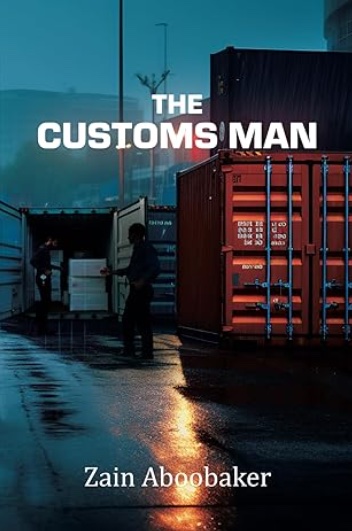
Former SARS Customs Official Turns Author – The Customs Man

The following review was authored by Wendy Jason DaCosta of the Independent on Saturday, 1 February 2025, titled” Durban author demystifies what happens in customs“.

LOVE or the law. That’s the choice a customs official has to make in The Customs Man, a gritty debut novel by Durban author Zain Aboobaker.

In the book he exposes the dark underbelly of customs’ enforcement and organised crime in South Africa, revealing layers of intrigue which are usually hidden from the public eye.

The book starts in Durban harbour but then takes readers across the country as the story picks up pace, shining a light on issues usually whispered about in dark corridors.

It tells the story of a customs official, the choices he faces every day, and his inner conflicts like whether he should protect those he loves or stick to his morals and let the law take its course.

Lovers of crime and suspense are in for a treat as corruption, betrayal, smuggling and even South Africa’s ailing clothing industry are featured in the book.

It’s clear that Aboobaker is familiar with the goings on in customs after spending nearly two decades on the inside before starting up his own consultancy.

“So it’s about 17 years on the inside and then 17 years on the outside. It’s nice to have had both views. You know, when you work inside customs, you see one side of things and you look at the law in a certain way. When you step outside it’s like looking at it from the other end of the telescope,” he revealed earlier this week.

Aboobaker told the Independent on Saturday that his career gave him the opportunity to observe people and human nature which served him well when he took up writing.

“When people are normally in a bind, when the goods are seized or they’ve been detained, they start to really get stressed and anxious, and they’re pleading and they’ll move heaven and earth.

“As soon as they have relief, you see a different human being come out of them. They forget the pain that they were in and some of them begin to get arrogant again.”

As a child he loved reading and just over 10 years ago, he looked back on his life and remembered all the colourful characters he had met along the way.

“So, it was actually just taking the characters that I met and sort of fictionalising them, and then it just got a life of its own and it morphed,” he said. He wrote the first chapter in 2013 and then left it there until his wife, Katherine, and best friend Quintas van der Merwe convinced him to continue in 2022.

“My wife says to everybody, ‘oh, Zane’s writing a book’ and so the pressure starts,” he said.

Aboobaker met Van der Merwe when he was working in Customs as head of its national Anti-Smuggling Division.

In the foreword of the book, Van der Merwe, who is a lawyer, wrote: “The author and I met working on opposite ends – he tried to catch non-compliant taxpayers, and I tried to get them off.”

Despite the rocky start, they have been firm friends for many years.

The book is filled with familiar places and relatable characters. It tells the story of Charlotte the doctor who suffers from white guilt and wants to help the community. She passes on diamonds to Georgie, the son of a fisherman who is forced to smuggle abalone after overfishing destroys his family’s livelihood. Georgie’s role is to get the diamonds out of the country.

There’s a Zimbabwean electrical engineer who smuggles cigarettes across the border and whose sister was killed during xenophobic attacks in South Africa.

“It’s a light read but there are heavy themes in it that I hope will spark debate,” said Aboobaker.

The Customs Man is available in paperback and retails for R290 on Amazon and Ike’s Bookshop in Morningside.

WCO ICD 2025 – Customs Delivering on its Commitment to Efficiency, Security and Prosperity

Nigeria’s digital SEZs are the future of the African economy

When Nigerian president Bola Tinubu launched a steering committee in July to develop ‘digital free zones’ focussed on tech and services-based businesses, he signalled the start of a new era for special economic zones (SEZs) in the country. 

Nigeria’s current SEZ framework dates back 32 years and is centred on export-oriented manufacturing activities. However, the national economy is shifting and technology and services-based sectors are becoming its drivers of growth. 

The country is well-positioned to become an African, if not global, leader in tech and financial innovation. By adopting a modern, adaptive regulatory model for SEZs dedicated to future-focused industries, Nigeria can transform itself into a living lab where these businesses can thrive. 

Innovation through regulation

Dozens of jurisdictions around the world have rolled out creative regulatory schemes to attract leading firms and entrepreneurs in tech and services. Dubai became the Middle East’s leading financial hub following the establishment of the Dubai International Financial Centre (DIFC) in 2004. Estonia has become an entrepôt for the European market via its e-Residency programme, which allows foreign entrepreneurs to establish a business in the EU. And the US state of Delaware is the legal home of millions of businesses and most Fortune 500 companies, thanks to its favourable laws and world-class court system. 

Africa is yet to see a comparably ambitious jurisdiction. However, Nigeria’s innovation ecosystem and standing as one of the continent’s biggest economies make it a leading contender. Its fintech sector, for example, makes up around one-third of Africa’s market according to the World Bank. It has produced several unicorns — including Flutterwave, Paystack and Andela — and has a vibrant entrepreneurial spirit centred in Lagos. 

Itana’s infrastructure example

Today, inadequate soft and hard infrastructure both limit the potential of Nigeria’s tech and digital sectors. However, its digital free zone plans can help address this by streamlining the regulatory framework, offering business incentives and improving operational efficiencies. These digital SEZs can also leverage Nigeria’s ratification of the African Continental Free Trade Area Agreement to become a focal point for pan-African business. 

The country already has an aspiring digital SEZ which is leading by example. In 2023, Nigeria’s Itana became Africa’s first licensed digital free zone management company. It is building a digital SEZ based in Lagos which can quickly become the premier destination for established tech and digital companies and promising entrepreneurs. 

While regulatory frameworks are crucial for these businesses, they must also be supported by quality physical infrastructure. SEZs with high-speed bandwidth, uninterrupted power supply and other utilities are vital for activities largely taking place online. Many of Nigeria’s talented entrepreneurs and professionals choose to leave for places better equipped to support their work. Itana is working to attract and retain the best talent through the development of an eco-friendly, mixed-use tech campus in the Lekki free zone in Lagos, which includes its live-in Accelerate Africa programme backed by Andela founder Iyin Aboyeji. Notably, being physically present in the campus is an option for tenants. They can operate from anywhere in the world, so long as they have a virtual address tied to the digital zone.

Collaboration is key

Developing a competitive digital SEZ framework is a clear priority for Nigeria’s government. Its steering committee is chaired by the president himself, and its members include senior ministers and private sector voices — grouped under the Initiative for the Promotion of Digital Free Zones in Nigeria — including Africa Finance Corporation (AFC), Future Africa, PwC Nigeria, Charter Cities Institute and Itana. AFC is also leading the financing for Itana’s $100m phase-one development. 

For all their promise, Nigeria’s rollout of digital SEZs faces hurdles to success. Frameworks like the DIFC, Estonian e-Residency and Delaware corporate law were developed in countries with much higher income levels and more robust legal institutions. Despite Nigeria’s pan-African ambitions, economic integration across the continent remains slow and much of Africa’s best talent is still educated — and often remains — overseas.

However, Nigeria is a strong contender to join the group of countries that have found creative ways to attract and retain digital tech, financial and services-based companies and talent. Digital SEZs’ success could create thousands of good jobs and facilitate innovation and economic transformation, while failure risks permanent secondary status in the global economy. 

A digital SEZ framework that attracts global investment, talent and innovation can propel Nigeria to new economic heights as Africa’s ideal jurisdiction to do business, innovate and build the future.

Source: FDIIntelligence.com, onion piece by Jeffrey Mason, Nella Andem-Ewa

Customs facilitates first shipment from Nigeria to Kenya under AfCFTA

The Nigeria Customs Service (NCS) has facilitated Nigeria’s first shipment to Kenya under the African Continental Free Trade Area Agreement (AfCFTA), with Lucky Fibres, a subsidiary of the Tolaram Group, making its first shipment.

During a visit to the Apapa Area Command on Wednesday, last week to ensure proper documentation and verification of the shipment, Olusegun Olutayo, Senior Trade Expert and Lead of Trade Enablement at the Nigeria AfCFTA Coordination Office, noted that the shipment from Nigeria to Kenya, specifically to the port of Mombasa, demonstrates the collaborative spirit of AfCFTA.

“It is not that we are doing it alone; I have already sent a message to the Secretariat in Ghana that there will be a shipment under AfCFTA to Kenya. I have also communicated with the AfCFTA implementation committee in Kenya. So this is the spirit we are building to ensure that we increase intra-African trade,” Olutayo noted.

He emphasised the critical role of the service as the Designated Competent Authority (DCA) under AfCFTA, leveraging its expertise to ensure seamless trade.

“The Nigeria Customs Service has been fantastic; they are ready to facilitate trade. Once they hear that there is an issue, particularly around AfCFTA, you will see everybody ready to support and facilitate it, which is the essence of true trade facilitation.”

Source: Vanguard Nigeria, online, 5 November 2024

The heart of transfer pricing tested for the first time in SA courts

Picture: Engin Akyurt (Unsplash)

The complexity of transfer pricing disputes has rarely been tested in South Africa. However, a recent case centred on the application of the arm’s length principle, which is at the heart of transfer pricing.

ABD Limited, a South African multinational company, won its appeal in the Tax Court against an additional assessment of around R1.2 billion. The assessment has been set aside. Sars is appealing the judgment.

The assessment followed an audit of ABD’s transfer pricing methodology by the South African Revenue Service (Sars). Experts believe this precedent-setting case provides a glimpse into how courts may approach transfer pricing cases in future.

It suggests a preference for “established and recognised” methods as opposed to “novel and untested approaches” to transfer pricing disputes, says Pieter van der Zwan, independent tax advisor and accounting specialist, in his analysis of the case.

The dispute stems from an audit conducted in 2014 relating to the royalty rate ABD charged its operating companies in different jurisdictions for the use of its intellectual property (its brand) during the period 2009 to 2012.

ABD charged all of them the same royalty rate of 1%. The audit resulted in an additional assessment of R7.5 billion, which was reduced to R1.2 billion by the time the case went to court around 2021.

Different methodologies

Experts used different methodologies, in line with the guidelines of the Organisation for Economic Cooperation and Development (OECD), in performing the calculations to arrive at the appropriate rate.

The royalty must be at arm’s length – what it would be if it were between two independent enterprises, as opposed to a company taxed in one jurisdiction and its subsidiary taxed in another.

Sars contended that the 1% was not an arm’s length royalty. It has the power to adjust the rate if it believes the price does not reflect an arm’s length transaction. Sars based its initial additional assessment on the report of a Dr David, who used the Transactional Profit Split Method (TPSM).

Daniel Erasmus, lead attorney in the ABD case, said Sars and ABD had been arguing from the same page for seven years.

“One month before the trial Sars booted their expert witnesses and brought in an entirely new expert with an entirely new methodology driven by the willingness to pay method.”

The new expert, a Dr Slate, proposed higher, variable royalty rates based on a “willingness to pay” survey. According to the judgment, the fluctuations created by adopting this approach were considerable – ranging from 1% to 9.2%.

No incentive to shift profits 

Multinational companies use transfer pricing to allocate profits.

The Corporate Finance Institute explains that “effective but legal transfer pricing” takes advantage of different tax regimes in different countries by raising transfer prices for goods and services produced in countries with lower tax rates.

ABD argued that it had no incentive to charge its subsidiaries a lower royalty to avoid paying higher taxes in SA.

The tax rates in the jurisdictions where the subsidiaries operated were equal to or higher than the SA tax rate.

Sars and ABD used different methodologies to support their approaches. Sars relied on the TPSM, and ABD relied on both the TPSM and the Comparable Uncontrolled Price (Cup) method. The latter method, when available, is the preferred method of the OECD.

Judge Norman Manoim considered the case in terms of the arguments based on the Cup method.

Criticism against approaches

According to the judgment, the “most significant critique” of Slate’s (Sars’s expert witness) valuation was a legal one, but it had profound implications for his survey on which it is contingent.

Slate assumed that the licensed rights included goodwill.

“This error then had implications for the survey questions on which the willingness to pay calculations were based. Questions in the survey were based on the goodwill of the ABD brand,” Manoim said.

A further criticism of its reliability is that the survey was performed in 2020. Yet respondents had to indicate what they might have done in the period 2009-2012.

Four of every 10 of the respondents would have been teenagers a decade before. Some may not have been old enough to have a phone in that period let alone pay for it.

ABD used a transaction that resembled the preferred Cup method, and while there were criticisms of its application, they were not conclusive, Manoim concluded.

However, the criticism of Slate’s approach had a solid factual basis. “Its assumptions, legal, economic, and accounting have been dismantled. If this were not enough it is an untested methodology for use in litigation in transfer pricing cases.”

Extensive resources

Manoim said he appreciated that the outcome of the case would be a disappointment to Sars as it had put extensive resources into it to create a precedent in a seldom-litigated field of tax law.

Sars not only fought a case that ran contrary to the opinions and approach of its initial expert, but “there appeared to be no rationale for ABD to have any motive to short-change the South African fiscus,” Manoim concluded.

ABD attorney Erasmus warned that Sars will challenge taxpayers on their research and surveys used to support the methodology they rely on. “You must have the information at your fingertips.”

Source: Article by Amanda Visser for Moneyweb online, 26 September 2024

First Containership with Integrated Automation Systems Departs Korea

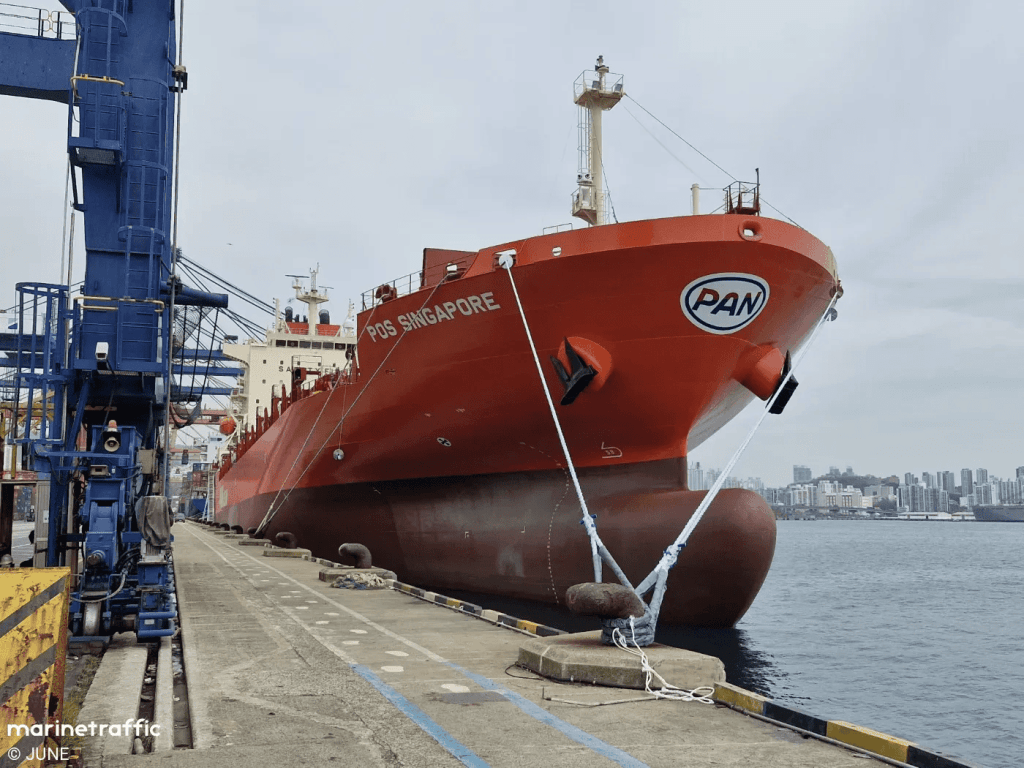
Picture: Maritime Traffic

South Korea highlights that the first containership designed with an integrated automation system has completed its installation and testing and is now starting international service. The project which was supported by South Korea’s Ministry of Trade, Industry and Energy and the Ministry of Oceans and Fisheries is designed to advance and commercialize autonomous shipping.

The automation systems for the vessel, POS Singapore (22,867 dwt) were designed in South Korea as part of a government-sponsored program to develop the new technologies. PAN Ocean, South Korea’s bulk shipping company, is participating in the program and worked to integrate the systems into the 1,800 TEU vessel. 

POS Singapore was ordered in 2022 and built by Hyundai Mipo Dockyard in Ulsan. It measures 576 feet (172 meters) in length and is registered in Liberia. The ship was floated in March and delivered in April. Since then, it has been undergoing the outfitting and testing of the automation system.

During today, September 23, sendoff ceremony, government officials highlighted that the ship will be used for the next year in testing and validation of the automation systems. The ship is currently underway bound for Shanghai. It will operate for the next year on routes between Korea and Southeast Asia.

The ship integrates core technologies including intelligent navigation and monitors and interprets the weather conditions for situation awareness and navigation. Other systems provide for engine automation and maintain cybersecurity. The ministries have invested $119 million in the project which they view as a blueprint for the commercialization of automation technology.

Using the results from this year of demonstrations, Korea also looks to lead the development of international standards for the automation of ships. The International Maritime Organization launched the effort to develop the MASS Code (international automation standards). Academics, researchers, and government officials are contributing to the creation of the new standard.

Korea looks to lead the development of automation to create a competitive edge in the next generation of shipbuilding. HD Hyundai led the first test of automation during a Pacific voyage on an LNG carrier in 2022. Korea has conducted additional tests including last year with a smaller domestic cargo ship.  

Source: The Maritime Executive online, 23 September 2024

CMA CGM vessel loses containers off the coast of South Africa

Picture by Guillame Bolduc

Adverse weather conditions impacting South Africa last week have led to yet another large container vessel losing as many as 99 containers off the east coast of South Africa, according to the South African Maritime Safety Authority (SAMSA).

In response, a navigational warning to sailing vessels has been issued and a public call made to report any sighting of the cargo containers possibly still floating at sea.

In a statement at the weekend, SAMSA confirmed that “the CMA CGM Belem, a container ship sailing under the Maltese flag, encountered severe weather off the coast of Richards Bay on Thursday, resulting in a significant stow collapse and a loss of 99 containers.”

“The vessel had initially sought refuge at Maputo Bay. However, after further assessment, the decision was made to redirect the ship to Qheberha. The CMA CGM Belem is currently slow steaming towards Port of Ngqura, with an expected time of arrival on 18 August 2024,” said SAMSA on 17 August.

According to SAMSA, the vessel, built in 2024, measures 336 meters in length, and 51 meters in height, and has a draft of 14.8 meters. The 13,000 TEU vessel is LNG dual-fuelled.

The CMA CGM Belem is the second vessel of its kind and from the same France-based company to be battered by adverse weather conditions while sailing around South Africa’s Indian Ocean area, resulting in substantial loss of containers overboard at sea.

A month ago, the ultra-large container vessel CMA CGM Benjamin Franklin, also Maltese flagged, reportedly lost up to 40 containers in about the same region of the South African Indian Ocean area, while also sailing past the country from Asia to Europe.

Due to its size, it also had to take cover at the deep water port of Ngqurha in Algoa Bay near Gqeberha, Eastern Cape both for shelter as well as an adjustment of its cargo load for the rest of the journey to Europe. A few days later, having been cleared by SAMSA to sail, it departed South Africa, while a search for its lost containers remained alive.

In Pretoria on Saturday, SAMSA said the CMA CGM Belem was also a sizeable vessel best likely to be temporarily, safely berthed at the Eastern Cape’s newest deep-water port in Algoa Bay.

“Given her draft, the Port of Ngqura has been identified as the only suitable port of refuge. Stowage collapses have been confirmed, and the affected containers will need to be discharged at a container port facility upon arrival,” SAMSA added.

Meanwhile, said SAMSA, the owners of the vessel were “cooperating with the Authorities and that a navigational warning has been promulgated for the safety of navigation of other vessels in the vicinity.”

SAMSA added: “Vessels traversing the ocean area, and the public, are requested to report any sightings of the lost containers to the relevant authorities by contacting the Maritime Rescue Coordinating Centre (MRCC) on telephone number 021 938 3300 with the position, number, and colour of the containers observed.”

Source: World Cargo News, dated 19 August 2024

WCO Council Adopts Resolution on Strengthening Customs-Industry Resilience

On 30 June 2024, the World Customs Organization (WCO) Council approved a Resolution of the Customs Co-operation Council on Strengthening Customs-Industry Resilience. This new Resolution, developed under the leadership of Australia, responds to the growing need for collaboration between Customs administrations and industry partners to ensure global security and economic stability amidst rapid technological advancements, environmental challenges, and other emerging threats. Recognizing the critical role Customs played during the COVID-19 pandemic, the Resolution seeks to evolve the Customs-Industry relationship from a focus on trade facilitation to building resilience in the supply chain.

The Resolution emphasizes the importance of committing to resilience as a strategic priority, encouraging Customs administrations to review and develop robust business continuity plans that are prepared for disruptive global events. It also highlights the need for innovative partnerships, urging the reaffirmation of existing relationships while fostering new collaborations. A key component of the Resolution is the enhancement of digitalization and the adoption of paperless trade practices, advocating for the use of secure digital formats for risk assessment and clearance processes.

Building trust through increased data sharing and information exchange is another crucial element, with a specific focus on strengthening relationships with Authorized Economic Operators (AEOs) and enhancing the benefits of AEO programmes. Capacity-building activities are also encouraged to ensure Customs and Industry can respond agilely to disruptions. The Resolution calls on the WCO to support Members in implementing these measures, particularly through the enhancement of AEO programmes and cooperation with international industry stakeholders. Monitoring of the Resolution’s implementation will be overseen by the Permanent Technical Committee and the Enforcement Committee.

The Private Sector Consultative Group (PSCG) is invited to support the actions reflected in this Resolution by driving industry engagement through its global network. This Resolution marks a significant step towards creating a more resilient global trade environment by fostering stronger partnerships and leveraging digital technologies to build a secure and efficient supply chain capable of withstanding future disruptions.

Source: WCO website, 17 July 2024

WCO News – Measuring Performance

A new edition of the WCO magazine is available covering insights of performance management in several countries. Of particular mention for the Southern African Customs Union are two articles on recent timed release studies conducted in the region, in Namibia and between Eswatini and South Africa.

You can access the magazine here!

Source: WCO Website

A revamped Time Release Study e-learning course is now available on WCO CLiKC!

Photo by Tiry Nelson Gono

The World Customs Organization (WCO) is delighted to announce the release of an updated e-learning module on Time Release Study (TRS), now accessible on the CLiKC! platform.

The TRS is a strategic and internationally recognized tool designed to measure the average time taken to release or clear goods at borders. It tracks every step from the moment cargo arrives until its physical release.

This course provides practical guidance on conducting TRS, demonstrating how to execute each phase effectively. It starts with preparing for the study, then moves on to collecting, recording and analyzing data, and finally ends with the monitoring and evaluation phase.

In summary, these updates to the TRS module reflect the WCO’s commitment to bridging the gap between theory and practical application, empowering Customs professionals and stakeholders with the knowledge, skills, and tools necessary to conduct efficient, effective, and impactful TRS implementation tailored to diverse Customs environments. 

The module’s comprehensive approach includes integrating real-world scenarios, interactive exercises, and role-playing activities to deepen understanding and immediate application of TRS methodologies. It also emphasizes developing detailed work plans, addressing data collection methods, sampling techniques, process ownership, stakeholder engagement, and data quality assurance for informed decision-making and process improvements. Ultimately, these updates facilitate the efficient execution of TRS assessments and actionable strategies, enhancing trade facilitation outcomes worldwide.

The course is now available to all WCO Members on CLiKC!, the WCO’s e-learning platform. The WCO achieved this update with the support of the State Secretariat for Economic Affairs of Switzerland (SECO) through the SECO-WCO Global Trade Facilitation Programme (GTFP).

For further information, please contact capacity.building@wcoomd.org.