Embracing Blockchain for Cross-border Trade

In August of 2019, both the United States and Thailand announced their plans to test blockchain applications for tracking and managing shipments. The U.S. Customs and Border Protection (CBP) is planning to test a blockchain application against their current system to determine how distributed ledger technology (DLT) can improve its existing processes. Thailand, on the other hand, plans to use IBM’s blockchain-based logistics platform Tradelens to improve customs processes such as data sharing.

Originally developed in a joint venture between IBM and logistics giant Maersk, Tradelens seeks to streamline processes in the global shipping industry by making the flow of information occur in real-time. The blockchain platform is reported to currently process about half of the world’s shipping data.

These moves highlight countries’ increasing interest in employing blockchain technology in their customs and border operations. The Tradelens website says its ecosystem comprises over 100 different organizations including carriers, ports, terminal operators, third-party logistics firms, and freight forwarders. More specifically, a map on the Tradelens website suggests that about 60 ports and terminals worldwide are directly integrated with TradeLens.

Elsewhere, the Directorate-General for Taxation and Customs Union (TAXUD), which develops policies and operational systems for the European Customs Union, explored the applicability of blockchain in customs and taxation with a focus on utilizing blockchain as a notarization service.

The Union is looking into using blockchain to digitize ATA Carnet, an international customs document used in 87 countries for temporarily admitting goods duty-free. A pilot project conducted in collaboration with the International Chamber of Commerce World Chambers Federation (ICC WCF), was successfully tested in 2018. 

The ICC WCF, a body of the ICC that helps facilitate mutually beneficial partnerships between ICC members, has been working with different customs authorities to develop solutions for converting ATA Carnets into electronic documents.

About 80 countries around the world have developed authorized economic operator (AEO) programs and signed a mutual recognition agreement (MRA), all in an effort to streamline cargo security. Under such arrangements, individual countries identify and approve trustworthy logistics operators that pose a low risk in security and share the approval information with participating countries. 

This allows countries to piggyback on the security checks of other countries to make customs operations more efficient. However, a few problems have arisen with the program. 

  • There are information leakage risks associated with the conventional way of sharing AEO data by email. While a sender’s email server may be encrypted, there is no guarantee that the receiver’s is as well, and vice versa.
  • Data sharing is not real-time, but monthly or at an agreed-upon interval. This limits the speed at which information on new or suspended AEOs can reach all participants.

To avoid the aforementioned problems as well as achieve additional time and cost savings on security procedures, customs administrations in Mexico, Peru and Costa Rica are working with the Inter-American Development Bank to develop a blockchain application called Cadena.

The move by governments around the world to employ blockchain to improve cross-border trade marks a step toward paperless customs processes, which originally began with the digitization of information flows by making trade-related data and documents available and exchangeable electronically. For all the improvements they’ve brought to paper-heavy processes, traditional electronic data exchange systems still face the challenges of authenticity and the unavailability of real-time data exchange.

For instance, the Netherlands and China launched a five-year project in 2010 to test the applicability of electronic sanitary and phytosanitary (SPS) certificates. A World Economic Forum white paper titled “Paperless Trading: How Does It Impact the Trade System?” noted that concerns around the authenticity of the electronic documents arose. This necessitated the adoption of electronic signature systems and a whole new legal framework that recognized the electronic signature.

Still, the entire process requires longer procedures and the introduction of new types of intermediaries — e-signature providers, for instance. Moreover, low-income countries, the trade costs of which remain high compared to high-income countries as according to World Bank data, may not have the budget to implement several new systems for data and document digitization. They still need to invest in better customs infrastructure. 

Blockchain, on the other hand, if implemented in border protection, will ensure real-time availability and immutability of customs documents while saving considerable costs on excessive paperwork.

Source: Original article titled: “Blockchain Adoption as a Cure for Cross-Border Trading“, authored by Craig Adeyanju, Cointelegraph.com, 2019.09.28
Spotting a Fake Wine – Scientifically

Researchers in France have shown that genuine Bordeaux wines can be distinguished from fakes by testing the minute quantities of lead in their composition.

Wines and indeed other foods and beverages tend to have low levels of lead, resulting from environmental contamination from natural or man-made sources that is taken up into plants.

Scientists have discovered that the amounts and ratios of elemental lead and lead isotopes can serve as a “fingerprint” that can determine the geographic origin of a wine – and be used to tell a genuine vintage from a knock-off.

Levels of lead in the atmosphere have been falling dramatically in recent decades since the use of lead as an additive in fuel has been banned. It’s been known for many years that lead isotope ratios can be used to identify the origin of wines as well as other foodstuffs such as milk powder.

The latest study puts the technique through its paces for a specific task – distinguishing genuine Bordeaux wines produced by prestigious vineyards over the last 50 years from wines bottled in China between 1998 and 2009.

The researchers took 43 authentic red and white Bordeaux wines from the winemaking estates of Médoc, Graves and Libourne, and ran a comparison with 17 red wines sourced from China, including 14 labeled as ‘Bordeaux’ as well as three genuine Chinese brands. The suspect bottles were selected because they either had spelling mistakes in the names of the known wineries or claimed to be from non-existing producers.

They found that the levels of lead in the genuine French wines reflected the reduction in environmental lead seen since 1969 – the date of the earliest bottle tested – and all fell within recognised safe levels.

The suspect wines had levels that overlapped with those from the French group, but tended to have isotopes suggesting more of the lead came from man-made sources such as leaded gasoline than natural, background sources.

Moreover, a subgroup analysis for four suspicious samples said to be produced in Pauillac in 2004, 2005, 2006 and 2007 were compared directly with genuine wines from that period and found to have different isotopic profiles.

“Despite of limited number of genuine and suspicious samples, this test give a particularly compelling example of [lead] isotopes application to authenticity issues,” write the authors.

There’s an obvious limitation to the approach of course.

“If suspicious wines … would be produced in the same region as authentic, a clear identification by lead isotopes alone may be significantly hampered or even impossible,” they note.

Source: Originally published by Securingindustry.com; Authored by Phil Taylor, 16 September 2019

Crazy Things Found By Customs

https://www.youtube.com/channel/UCV-oV8yecSfMZnzdKAhO_4A

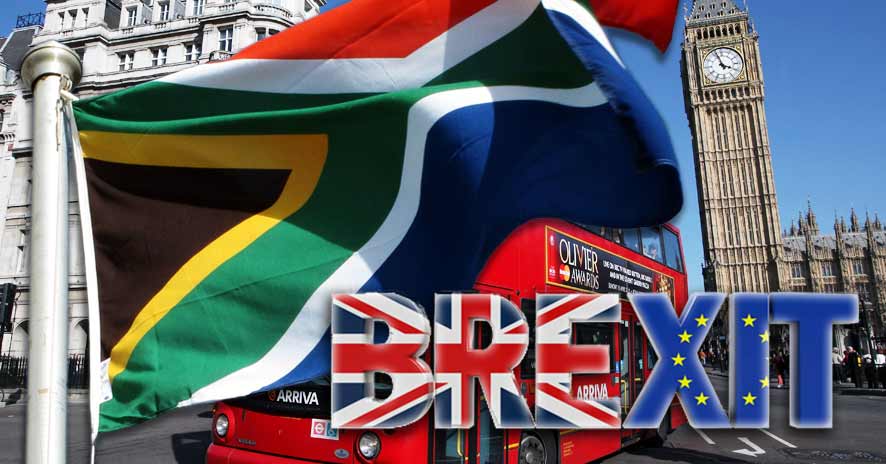
Brexit and Southern Africa – no trade impact envisaged

Reuters reports that Britain has agreed a deal with six southern African countries including South Africa, the continent’s most developed economy, that will ensure continuity of trade conditions after Brexit, the British High Commission in South Africa said on Wednesday. 

Political turmoil in the United Kingdom has generated uncertainty over how, when and even if the country will withdraw from the European Union. Its current exit date is set for Oct. 31. 

But while the situation has left the future trade relationship between Britain and the EU in doubt, London has been working to minimise the impact of Brexit on other trading partners.

Britain initialled an Economic Partnership Agreement with the Southern African Customs Union (SACU) – comprising South Africa, Botswana, Lesotho, Namibia, and eSwatini (formerly known as Swaziland) – and Mozambique on Tuesday. 

“This trade agreement, once it is signed and takes effect, will allow businesses to keep trading after Brexit without any additional barriers,” Britain’s International Trade Secretary Liz Truss said in a statement. 

The agreement is still subject to final checks. But once signed formally, it will mirror the trade conditions the southern African nations currently enjoy with the EU. 

Trade between Britain and the six countries was worth 9.7 billion pounds ($12 billion) last year, with machinery and motor vehicles topping British exports to the region. The UK meanwhile imported some 547 million pounds worth of edible fruit and nuts. 

Britain has already signed trade continuity agreements with countries accounting for 89 billion pounds of its external trade. 

Prime Minister Boris Johnson says Britain must leave the EU on Oct. 31, but parliament has passed a law compelling him to ask Brussels to delay Brexit until 2020 unless he can strike a divorce deal. Johnson says he will not request an extension.

Source: Reporting by Joe Bavier, edited by Gareth Jones, Reuters Business News, 2019.09.11.

9/11 – 18 years on

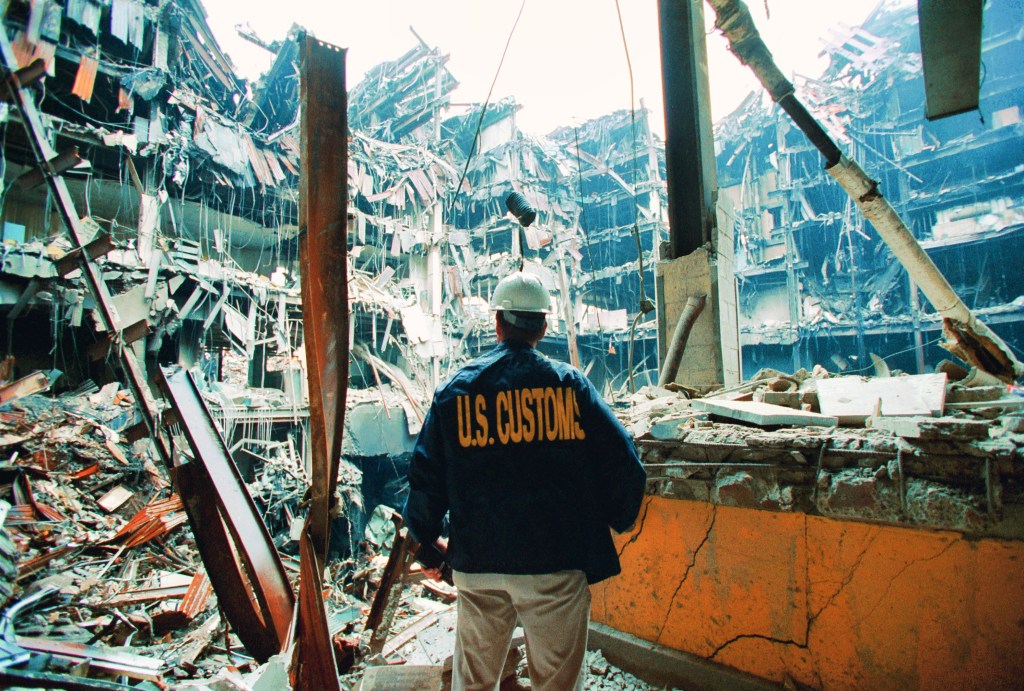
WTC 6, home to the US Customs Service, New York until September 2001

As unrecognisable as the building is, the same can be said for the world of Customs today. Few contemplated a ‘Customs’ parallel at the time; but, when the Department of Homeland Security was launched, the emergence of US Customs and Border Protection (USCBP) ushered in a new way of doing business. The world of Customs was literally ‘turned on its head’. Bilateral overtures seeking agreements on ‘container security’, ‘port security’ as well as an industry focussed ‘Customs and Trade Partnership Against Terrorism’ (C-TPAT) forced the World Customs Organisation (WCO) into swift action. After years of deliberation and negotiation several guidelines were released, later to be packaged as the WCO SAFE Framework of Standards. It seemed that the recent Revised Kyoto Convention (RKC) on simplification and harmonisation of Customs procedures was already ‘dated’. Customs as a proud solo entity was gone for ever, as country after country seemed compelled to address border security through wholesale transformation and upheaval of their border frontier policies and structures. Thus was born ‘border security’ and ‘cooperative border management’. In a manner of speaking, 9/11 put Customs onto the global map. Along with WCO developments, the tech industries brought about several innovations for risk management and other streamlined and efficient service offerings. Prior to 9/11, only the wealthy countries could afford non-intrusive inspection capabilities. One key aspect of the SAFE Framework’s was to include a pillar on Capacity Building. Through this, the WCO and business partners are able to offer tailor-made assistance to developing countries, to uplift their Customs and border capabilities. In particular, countries in Africa now are now in a position to consider ‘automated’ capabilities in the area of Customs-2-Customs information exchange as well as establishment of national Preferred Trader and Authorised Economic Operator (AEO) schemes. At the same time a parallel industry of ‘Customs Experts’ is being developed in conjunction with the private sector. The end result is the availability of ‘standards’, ‘policies’ and ‘guidelines’ fit for Customs and Border operations, focussed on eliminating incompatibilities and barriers to trade. Where these exist, they are largely attributed to poor interpretation and application of these principles. With closer cooperation amongst various border authorities still a challenge for many countries, there are no doubt remedies available to address these needs. In gratitude, let us remember the thousands of public servants and civilians who lost their lives that we can benefit today.

Leading by Example – Varsha Singh

It is not common for a person within a Revenue Authority to work in both the Customs and Tax disciplines. It is even more rare for such a person to excel in both. I am glad and most fortunate to know and have worked for such a person – who under duress and fortitude has scaled great heights in her career.

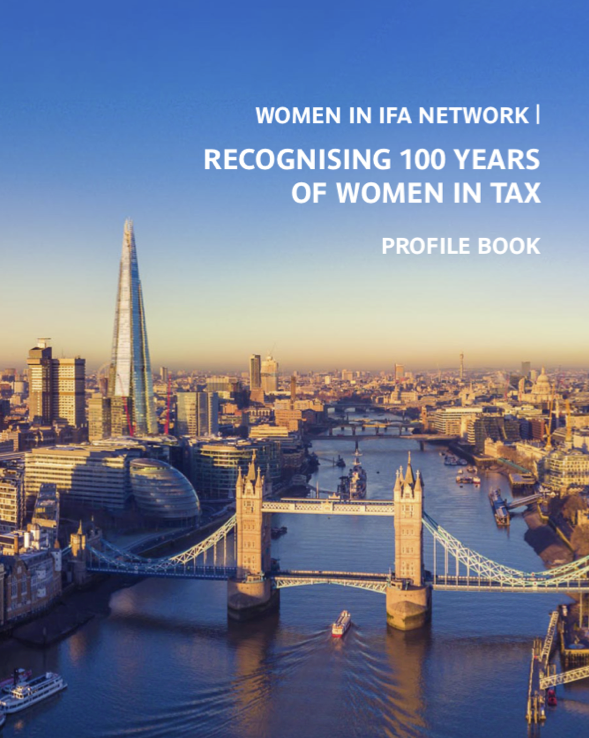
Just recently she was nominated and included to celebrate the achievements of women of the past and present who have contributed to and shaped the future of women working in international tax across the profession. The Woman of IFA Network (WIN) representatives of the International Fiscal Association (IFA) UK branch called upon the global WIN network to identify and recognise the leading women in their regions and local branches. A profile book and the photo montage, which it supports, was prepared in September 2019 to mark this occasion and to celebrate the contribution of women to international tax discourse and policy development in all fields of the profession. Refer to page 61 for Varsha’s profile.

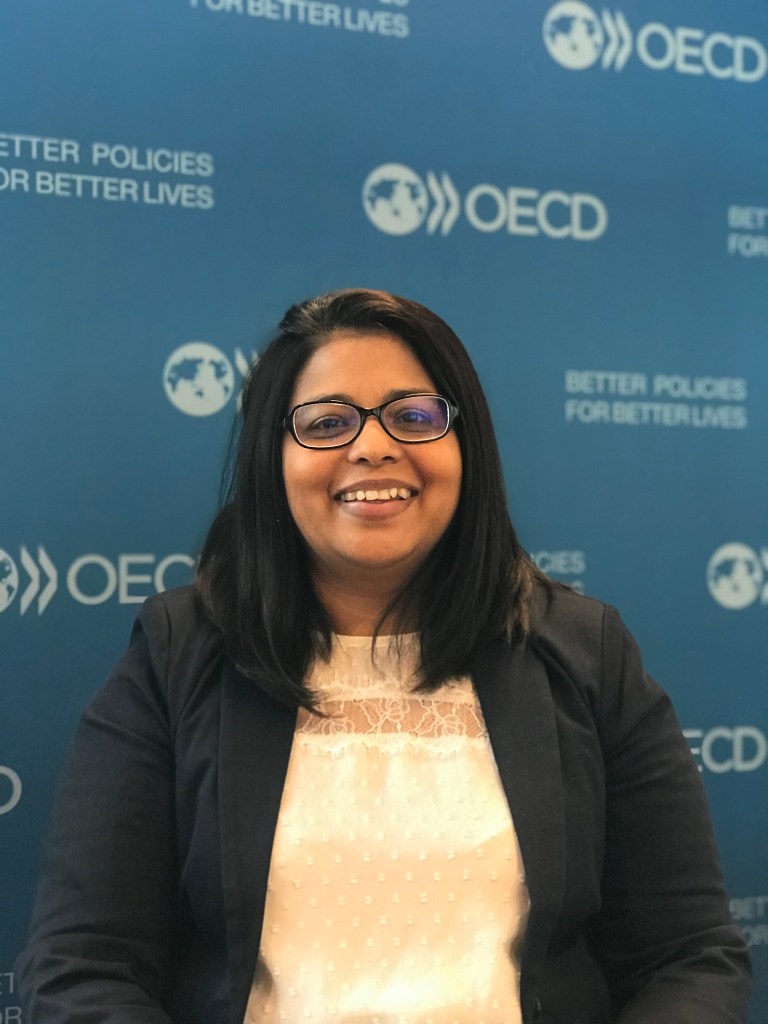
Varsha Singh

Deputy Head of the Global Relations and Development Division, OECD, South Africa.

Recognised for her contribution to international tax discourse through advocacy and encouragement of developing countries perspectives in the development and implementation of global tax policy.

Varsha Singh is the Deputy Head of the Global Relations and Development Division at the OECD Centre for Tax Policy and Administration. Her primary role is to encourage developing countries perspectives in the development and implementation of OECD standards and guidelines in the tax area, and to provide assistance to developing countries to strengthen their tax systems. Ms Singh also oversees the multilateral Global Relations Programme, which delivers over 50 seminars annually through six Multilateral Tax Centres.

Before joining the OECD, Varsha worked at the South African Revenue Service (SARS) for over 22 years and has extensive experience in a range of Tax, Customs and IT matters. She previously occupied the position of Head of International Relations at SARS. In that capacity, Varsha played a pivotal role in the establishment of the African Tax Administration Forum (ATAF)and as the head of the interim secretariat of ATAF, also worked closely with other Regional and International Organisations, particularly in the area of capacity building. Varsha holds Masters degrees in Business Administration, International Customs Law and Administration and completed the Women in Leadership Programme with Henley Business School.