CBP – e-Commerce Strategy to address online shopping and growth of illicit goods

E-Commerce Strategic PlanCustoms and Border Protection has developed an e-commerce strategy in a bid to tackle the increase in online shopping and growth of illicit and counterfeit goods shipped as small packages.

The strategy, which notes that CBP must “adapt” to the new e-commerce landscape, seeks to address emerging threats posed by the global change in commerce habits and ensure CBP has the means to enforce violations.

Under the new e-commerce strategy, CBP will, among a number of measures, look to enhance data collection and intelligence, develop and utilise state-of-the-art techniques and technologies, review its existing legal and regulatory authorities, seek to strengthen partnerships with the private sector, facilitate international trade standards for e-commerce, and educate the American public of the risks, both as consumers and as importers, associated with non-compliant products.

The crackdown and new emphasis for the CBP reflects the shift from traditional methods of importing via large, containerised shipments to small, low-value packages as direct-to-consumer business becomes more common. This has presented new inspection and data challenges for CBP, especially as the volume of these small packages has increased.

In addition, transnational criminal organisations are increasingly shipping illicit goods to the US via small packages on the belief there is a lower risk of interdiction and less severe enforcement consequences if caught. CBP said this illicit activity poses a risk to the health and safety of Americans and compromises US economic security.

The new e-commerce strategy also follows a report last month by the Government Accountability Office, which reviewed the enforcement efforts by CBP and US Immigration and Customs Enforcement in light of the increase in online shopping and sale of counterfeit goods. The report found that CBP had conducted a limited evaluation of its efforts, suggesting its activities were not the most efficient or effective, and recommended it evaluate its activities to enhance intellectual property enforcement.

The new strategy has a strong focus on data, which is one of the current limitations around enforcement of small packages. For instance, according to the strategy document, CBP will strengthen partnerships with stakeholders and encourage information sharing, proposing benefits for those parties who share advance electronic data and other information and will penalise those who are not compliant in this area.

The agency will also increase its operational efficiency and effectiveness by using data analytics, data mining, and an array of powerful analytical tools. In addition, CBP will expand its existing advance electronic data pilot in the international mail environment to include additional foreign postal operators.

Potential technology options include mobile applications and an e-commerce resource library, the strategy notes. CBP will also develop a portal that contains a database on importers that CBP has vetted and deemed “trusted”.

Source: USCBP and Securing Industry, online article 2018.03.28
eBay Authentication Service for luxury handbags – outlawing counterfeits

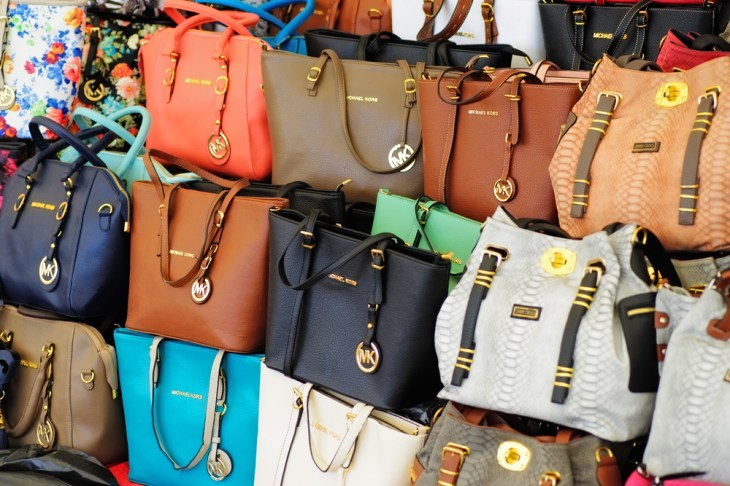
counterfeit handbags

[Picture: Ian Law/Shutterstock]

The following article, written by Katrina Megget, was published online by Securing Industry, detailing endeavours of the ‘online marketplace’ in counteracting the online sale of counterfeit products.

E-commerce sites, such as Amazon and Alibaba and including eBay and Groupon, have faced recent criticism for the level of fake products being sold on their platforms and for what, many have described, as poor efforts to stamp out these counterfeit goods.

Online marketplace eBay has officially launched an anti-counterfeiting and authentication programme for luxury handbags sold on its platform.

The service, known as eBay Authenticate which had previously been announced in January (2017), will verify, list and sell high-end handbags from 12 brands on behalf of sellers, with the aim of boosting shopper confidence in the products.

“We’re making it even easier for our buyers to shop quickly and confidently for luxury handbags,” said Laura Chambers, vice president of consumer selling at eBay. “With tens-of-thousands of high-end handbags currently available, eBay is primed to boost customer confidence in selling and shopping for an amazing selection of designer merchandise. We also believe our sellers will love this service, as it provides them with a white-glove service when selling luxury handbags.”

The service, which is only available in the US at present, is opt-in and works by using expert middle-men to ensure goods sold and bought online aren’t fake.

Sellers who have registered with eBay Authenticate, send their handbags to third-party industry experts partnering with the marketplace who verify the bag’s authenticity and then photograph, list, sell and ship the handbag to a buyer on behalf of the seller.

Verified handbags will be marked with an “Authenticity Verified” label and backed by a 200 per cent money back guarantee. Non-verified products will be returned to the seller at no charge.

Media reports suggest prices will be set by the expert rather than the seller, and will be based on eBay sales over the past 90 days.

The seller will receive 80 per cent of the final selling price, which eBay said was nearly twice as much as comparable online services.

The service is available for luxury handbags and wallets valued at more than $500 and currently includes 12 high-end brands, Balenciaga, Burberry, Celine, Chanel, Christian Dior, Fendi, Goyard, Gucci, Hermes, Louis Vuitton, Prada, and Valentino.

An introductory, limited offer will see the service accept luxury handbags valued at $250 and above until the end of January where sellers will receive 90 per cent of the final sale price.

eBay, which has 171 million active buyers worldwide, is looking to expand the programme to other brands and product categories in 2018.

According to the online marketplace, a woman’s handbag is purchased every 13 seconds on eBay in the US. But there is growing competition from other online retailers that focus on pre-owned fashion and accessories, such as The RealReal and Tradesy, which offer authentication services to keep fakes off their sites.

eBay had originally announced plans for the authentication service back in January. At the time of the announcement, Chambers said: “We know that many shoppers may be hesitant to purchase high-end products online. This service is designed to help quell some of those concerns and – in turn – enhance the opportunity for our sellers to get top dollar for their items.”

According to eBay, less than a fraction of a percentage point of all items listed on eBay are identified as potentially fake. But that hasn’t stopped infuriated brand owners taking action against eBay – the online marketplace has previously been sued by luxury brands LVMH and Tiffany & Co.

Feeling their reputations at risk, both Amazon and Alibaba have introduced a number of measures and have even sought legal action against counterfeiters to prove they are taking the issue seriously.

eBay’s authentication move shows it is following suit. The firm already has a number of detection and enforcement tools to fight fakes, including the Verified Rights Owner (VeRO) programme, which allows more than 40,000 rights owners to quickly report possible counterfeit goods.

Source: securingindustry.com, Katrina Megget, 18 October 2017.