Perhaps ‘risk management’ is the most talked about subject in Customs circles, and sometimes the most confused and least understood. Many an ‘experienced’ customs official (commonly referred to as a ‘dinosaur’ in South Africa) will tell you that in the old days, an officer had to have had a brain in order to move from a filing clerk to a fully fledged clearance verification officer, goods inspector, tariff or valuation officer, or a post clearance auditor. In fact, there was a defined migration path and grading system which had to be attained before any aspiring officer was allowed to handle a clearance declaration or the physical goods. Today, is it the computer whizz, or data analyst that has the real advantage? And what of the Customs frontline – what role do they play? This discussion deals with the dilemna of a new Customs management style and how it seeks to reconcile available skills and resources to maximum affect. However, is it attaining operational success or is it merely basking in the limelight of the Revenue Authory’s annual collection glory?
Notwisthstanding the advent of containerisation in 1977 – which saw almost all customs staff returning to the Custom House – training and knowledge transfer remained a pivotal criterion of the organisation. While the methods and duration of the various courses would probably be considered as counter productive by today’s norms, Customs and Excise followed a rigorous theory, policy and procedure cirriculum. It was rigourous in the sense that the main course lasted for no less than 3 months, in which students would learn virtually every aspect of Customs technique and the law – the Customs and Excise Act. One could not successfully pass the course without a good knowledge of the tariff, valuation, interpretation of the law, and a decent ability in mathematics. After all, the ‘checking officer’ had to perform currecy conversion, duty calculations, tariff interpretations etc. manually.
In the pre-computerisation era there was definitely more method and discipline in the way an office was run. The heart of any Customs Office was its Registry. All documents were painstakingly filed, and copies of every communication, letter or directive was circulated to managers for reading. Everybody new what was happening in the branch office. These days, more policy and directive is contained in e-mails which disappears when the harddrive crashes, or by some misfortune the PC or memory stick is stolen.
The modern customs operation sees a greater involvement (to the point of micromanagement in some instances) by the head office in the affairs of a branch office. There are a number of good reasons for this, and perhaps some which are more the trait of the post-1994 way of doing things in government. Above all, the main driving force behind the modern approach is the performance-based outcome which hangs like a proverbial ‘sword of damocles’ over any manager’s head. [Performance = how much money is being banked.] The emphasis and energy expended on this overrides the extent of detail and accuracy previously required to bring about successful outcomes to customs activities at the branch office. On the other hand the age old problem of skills loss to the private sector has had a detrimental effect to the Customs Division. While the network of experienced officers still in the organisation is drawing thinner by the year, it is hard to see their replacements filtering through the ranks.
Notwithstanding the former Commissioner himself being a key exponent of, and bastion on Customs, revenue collection remains (until today) the key performance driver in Customs. All the talk of Customs supposed role concerning international security, terrorism, and the affects of narcotics and counterfeit goods on the domestic economy and public is forgotten when it comes to performance. Lets be fair – it is easier to quantify revenue collection than the less tangible ‘effects’ of social degradation and job losses. Revenue collection in Customs is, in essence, a ‘by-product’ or ‘outcome’ of risk-based controls and trade facilitation measures. It sounds all so simple, yet in practice it is very different, and quite a difficult act to balance!

Now to get to the meat of this issue. The administration for which I work has realised all of the above. It acknowledges that reclaiming or building its former skills base is going to prove more difficult and costlier than implementing moderning systems-based processes and controls. Is this not true of just about every organisation today? Secondly, the complex rules of international trade, its variety of agreements, and institutional dependencies have forced inter-governmental collaboration, cross-frontier collaboration, and the exchange of information. On the domestic scene, trade policies fly in the face of Customs control. Many, if not most of the trade remedies today are impossible to administer through traditional Customs methods. This is due in part to the non-involvement of SARS in these schemes until they are ratified by parliment. More ludicrous are the views of some that non-intrusive technology (scanners, radiation portal monitors, etc) and pure ‘numbers’ at the ports are going to disuade criminal intent.
At the heart of this lies the ‘challenge’ to knit together all the data, rules, processes, policies and standards, and B2G (business-2-government) and G2G (government-2-government) interchanges and interfaces. Over the last two decades countries have endeavoured to achieve this through – one-to-one EDI exchange, Port Community and Single Window Systems, and One Stop Border intiatives. More recently, endeavours to co-locate staff at foreign borders, exchange of customs risk information and advance customs reporting have featured in the tools to attain a stranglehold over criminal syndicates and terrorism, with limited success.

In order to achieve this, some trade-offs have to be made. The modern notion of risk management implies the systematic approach to analyzing risk and implementing risk controls (focussing of placement of resources), based on information data received in advance of events. Of significant value is a repository of historical data from which trends can be developed on similar occurrances that occurred in the past. Traditionally,
‘Customs Intuition’ focussed on the ‘risk’ or ‘threat’ pertaining to a transaction – having little knowledge of any historical trends or analysis. It is therefore clear that a risk management strategy in the modern Customs era is ‘datacentric’. The more
data-rich the organisation becomes, the better it can position itself to compile its targetting and risk mitigation strategies. While the focus is initially to collect ‘clean/accurate’ transactional data from various trade sources through the EDI or Web channels, it is just as important for Customs to solicit 3rd party information against which to corroborate the ‘transactional’ (clearance and manifest) information.
It now becomes quite clear why organisations such as the WCO promote, not only, transactional data exchange but also key policies by which to reward participants who comply with such requirements. The Authortised Economic Operator (AEO) concept is based squarely on principle of rewarding or accrediting compliant parties on their capacity and perpetual ability to maintain risk and reporting standards. Therefore, while Customs forgoes the luxury of a ‘brains-trust’ in favour of statistical and risk analysts, trade practitioners and logistics industry players are now required to invest in risk management strategies of their own that mirror the intent of Customs’ new trader management requirements.Supply Chain Security therfore implies modernisation of ALL participants in the logistics chain – not just Customs. True, the outcome of this challenge is heavily dependent on how Customs implements its strategy. Speak to you soon!
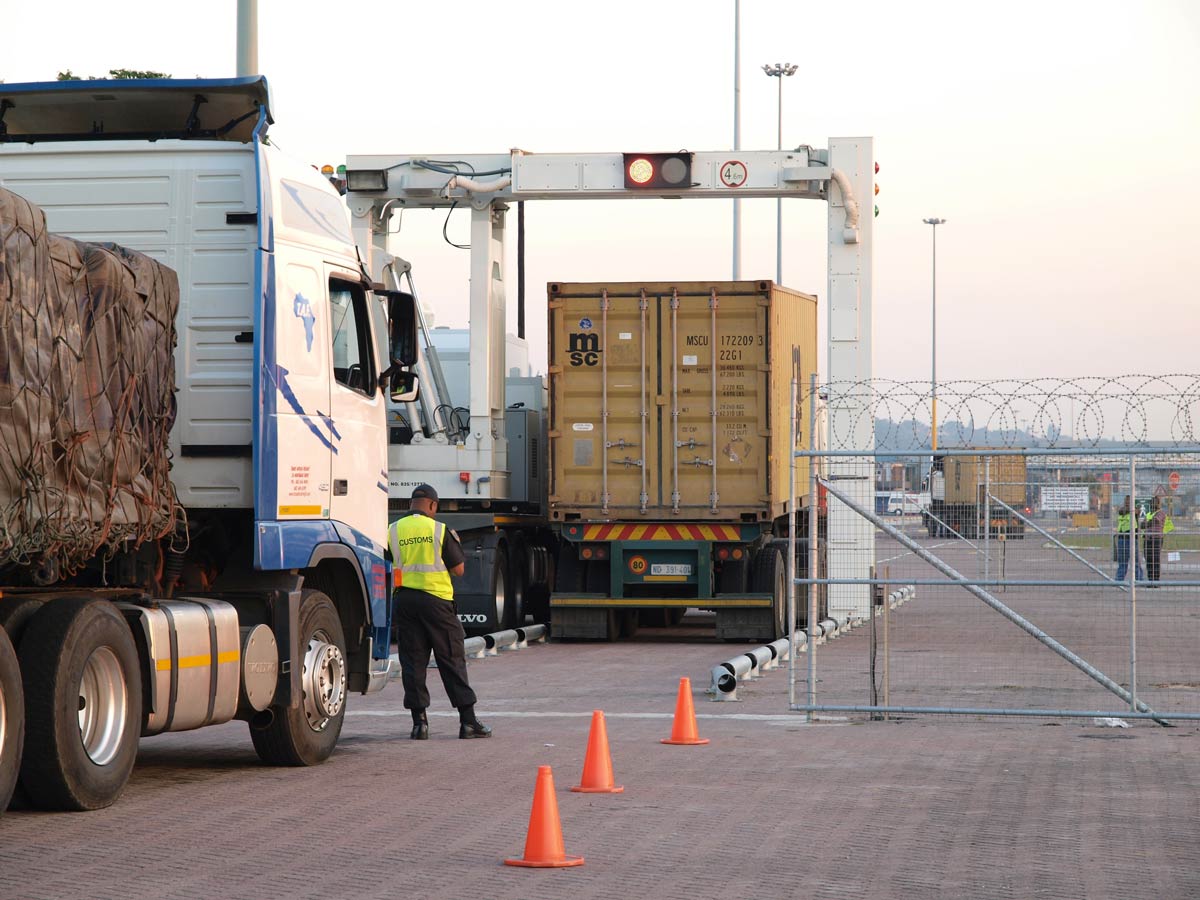
 In order to achieve this, some trade-offs have to be made. The modern notion of risk management implies the systematic approach to analyzing risk and implementing risk controls (focussing of placement of resources), based on information data received in advance of events. Of significant value is a repository of historical data from which trends can be developed on similar occurrances that occurred in the past. Traditionally, ‘Customs Intuition’ focussed on the ‘risk’ or ‘threat’ pertaining to a transaction – having little knowledge of any historical trends or analysis. It is therefore clear that a risk management strategy in the modern Customs era is ‘datacentric’. The more data-rich the organisation becomes, the better it can position itself to compile its targetting and risk mitigation strategies. While the focus is initially to collect ‘clean/accurate’ transactional data from various trade sources through the EDI or Web channels, it is just as important for Customs to solicit 3rd party information against which to corroborate the ‘transactional’ (clearance and manifest) information.
  What Happened to the Portcullis?