The article and analysis might be a few years old now, but still relevant to economists and trade specialists concerned with South Africa’s future economic viability. I think that the author of this case study, Neil Joubert, Researcher at Trade and Law Centre of Southern Africa (Tralac), has done a fine job in giving historic context to our country’s approach to trade law and the effect of its obligations under the WTO GATT agreement. Titled – The Reform of South Africa’s Anti-Dumping Regime – it examines the factors that necessitated the reform of the South African anti-dumping regime, and briefly discusses the impact of the change in regional dynamics on the anti-dumping process in South Africa.
Month / May 2011
The Geography of Transport Systems
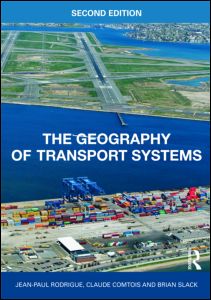 You might question why I place so many posts relating to research/academic topics. Well, it’s because several of my colleagues and work associates are crazy enough to study part-time – I naturally get bombarded with questions and therefore make a point [now] to ensure I share resourceful sites on this blog. Here is another gem of a site hosted by Dr. Jean-Paul Rodrigue, Dept. of Global Studies & Geography, Hofstra University, New York – The Geography of Transport Systems. If you’re looking for stuff on transportation, logistics, including the politics and history surrounding these topics, then you’ll find this site both interesting and useful. Kindly note the ‘usage rights’ regarding the information on this site.
Addressing Apathetic Compliance Mentality – Part 3
In conclusion of this topic, let’s consider the importance of both cargo and goods clearance. The goods declaration attests to the admissibility of goods according to the Customs tariff, valuation, origin, and all other government regulatory requirements. The cargo declaration and associated cargo reports allow Customs to confirm that what has been cleared has in fact been physically out-turned and accounted for. Moreover, in the case of transit movements, it allows Customs to track cargo movements.
It is therefore not difficult to understand that any non-participating party will undoubtedly impact on whether or not an importer receives his/her goods timeously. It is true to state that until now, the emphasis on valid clearance and release has been placed at the doorstep of the clearing and forwarding agent – the party that presents the goods declaration to Customs. In essence this is little more than a data validation exercise. It does not in any way prove the location of the goods, and the quantities received. Neither does it prove that the correct formalities have been applied as concerns the handling and temporary storage of the goods upon arrival.
What benefit is this to the country if Customs can only satisfactorily control the goods declaration? For exports this is even more nonsensical – after clearing goods for export, how often does it happen that no physical shipment leaves the country for one or other reason; and in such instances are these transactions cancelled with Customs? True, Customs should not be a barrier to trade, but it must still account to the fiscus and trade and industry with accurate trade statistics. Therefore, Customs information requirements are crucial to much more than just the clearance of goods. The SA Reserve Bank is likewise a recipient of Customs data whereupon it monitors foreign exchange and payments.
The difference now is that SARS requires this information in advance, and electronically. To re-iterate – the first phase of ACM is to ensure the registration of all sea and air cargo reporters and the consequential compliance of the cargo data which they submit. As alluded to in Part 2, SARS will continue its liaison with the business community and will mobilise campaigns shortly to get all remaining parties registered. Supply chain security is a myth if certain operators fly under the radar. The consequence of non-participation implies that importers (and exporters) will unwittingly find themselves at the wrong end the stick once SARS commences formal manifest/declaration matching.
Should SARS penalise the importer, exporter or clearance broker, where a cargo reporter fails to submit a manifest? Certainly not, the consequential delay of the latter’s action would have already damaged the his/her reputation, if not the viability of the consignment concerned. Therefore it is important for any ‘qualifying’ cargo reporter to come forward and register. As unsettling as this may sound, it is the best way to clean up the industry and bring it in line with requirements that are ‘standard’ practice in other parts of the world.
Interested parties can open the ACM Fact File, which provides the necessary details and information for registration. Further details will also be available on the Customs Modernisation webpage, shortly.
Research stuff: Supply Chain, Optimization and Compliance
Logistics operators, shippers, trade practitioners and customs officials will all find something useful visiting Management Dynamics Incorporated. They provide several white papers of educational interest. So if you’re looking for information relating to current trends in international shipping, this is a good place to start.
Addressing Apathetic Compliance Mentality – Part 2
Now that Africa has sufficiently patronized the demands of the west and the east, it’s time to focus on the realities in our own back yard – charity begins at home. At this juncture it is a good reminder that had the WCO not had a non Anglo-American chairperson post 9/11, the present climate in Customs could have been a whole lot different from what it is today….someone that had the mind and intent to ensure that ALL of the customs world should have a bite at the ‘modernization’ cherry, not just those paying the highest subs.
The tidal wave of US initiated security measures peeved many foreign governments and at one point even threatened a stand-off between the US and the European Commission over its unilateral approach to annex key European ports to its Container Security Initiative (CSI) programme. Needless to say most international carriers rallied their support for heightened security measures in exchange for ‘green lane’ treatment for their goods arriving in the US. Never before (in living memory) has Customs (in the US that is) been able to impose such influence on the international trading community – all for its own domestic policy.
Now, unless I’m seriously mistaken local freight forwarders, NVOCCs, consolidators and carriers must at some time or another be confronted with ‘advance security reporting requirements’ for China, EU and North American bound consignments. This being the case, the least your local authority is asking is that you extend the same courtesy here.
It is no understatement that SARS values the time, effort and goodwill of many locally based forwarders, transporters, and their service providers. The input and cooperation gained from fortnightly gatherings of the Cargo Reporting Technical Workgroup is a minor revelation to say the least. It is the dedication of these who stave off the mite which SARS may inflict on non-compliant and apathetic operators, for now.
The co-creation spirit of SARS/Trade interaction therefore implies that SARS considers the latter’s recommendations in pursuit of attaining the desired outcome – a fully automated cargo reporting system, involving known parties committed to the seamless processing of import and export cargoes, creating a real market opportunity for foreign investors and traders. At this point let’s consider a process going forward –
- Participating cargo reporters (freight forwarders, NVOCCs, and carriers) will continue their efforts to ramp up their performance concerning the submission of manifests (master and house level). SARS will monitor all electronic exchanges and provide continued feedback to these parties on performance and progress.
- Those (cargo reporters) concerned with cargo outturns, arrival schedules and reports, discharge and load listings, and gate control reports (container depots, transit shed operators, ground handlers, off airport degroupers, and terminal operators), will continue their efforts in testing such electronic exchanges with SARS until an appointed time for ‘live’ operation is determined. Live operation will include the coordination and sequencing of cargo manifests and most important – the issuance of ‘release’ based on manifest/declaration matching.
- SARS will redress its approach in communication (direct and through the media) with industry stakeholders. This will follow a more focused outreach, in layman’s language, which will leave no doubt in any party’s mind as to what SARS’ cargo reporting requirements are.
- It is acknowledged that the industry umbrella organisations SAAFF, SAASOA, and ACOC can only do as much according to the extent of their membership. SARS will therefore encourage increased urgency by these associations in bringing their respective constituencies in line with cargo reporting requirements. SARS is satisfied that these association’s membership comprise at least 80-90% of international cargo reporters in the country.
- Simultaneously, SARS will –
- Continue its discussion with stakeholders to bring finality relating to cargo outturn, manifest versus declaration matching, acquittal and exception reporting expectations.
- Finalise and publish the required legislation for the new cargo reporting requirements. Upon publication SARS will have the necessary means to enforce such new provisions as well as the punitive measures associated with non-reporting of manifest and conveyance reports.
- Broach 2nd phase requirements with stakeholders. This will include discussion and prioritization of remaining modes of transportation (rail and road).
None of the above is beyond the means of reality. To re-iterate, without the abovementioned building blocks in place, there is little chance of extending benefits on an AEO basis. A successful supply chain operation requires all members – be they traders, cargo reporters, third-party logistic providers, port, and airport operators – to act in concert with one another. In Part 3 (the final part), I will discuss the consequences of any party’s non-compliance with cargo reporting requirements.
Addressing Apathetic Compliance Mentality – Part 1
In 1993, I recall certain members of the shipping community admonishing the Customs and Excise department for being backward, lacking the ability to meet the demands of the community – shipping lines in particular. At the time this criticism was valid, and would have still been relevant for another 10 years – the time it took SARS to eventually implement its first manifest acquittal system (MAS). Since the inception of MAS (2003) the interest and energy to bring about trade compliance in the submission of manifest and conveyance information has been tardy and uncoordinated from a central viewpoint. In retrospect, several reasons exist for this – erratic and unpredictable systems architecture, as well as the lack of a customs champion to drive the operational compliance initiative from a national level.
Along the way there have been various milestones which have signalled a radical re-think in the philosophy of cargo reporting. Introduction of the ISPS code and the US 24-hour advance manifest rule set the tone for world-wide ‘re-engineering’ (I prefer the word ‘reform’) of processes, information exchange and legal basis. These have continued for supply chain operators through various iterations of ‘advance reporting’ – New Zealand, Canada, China and more recently the EU’s Import Security filing have required shippers and logistics operators to re-align their business models to meet new customs reporting requirements. True, all these initiatives may have their respective national or regional flavours, yet, the Customs data requirements are principally identical.
In 2008 SARS signalled its intent to mandate the electronic submission of cargo reports, supported by legislation to give this due effect. Why electronic? Because there’s a belief that any party involved in international cargo handling, forwarding, and shipping must be computer literate in order to operate (at all) in this highly competitive business. We are not talking about once-off casual importers here, but parties who have a greater or lesser degree of business acumen, knowledge of INCOTERMS and supply chain procedural requirements. Am I mistaken? Perhaps. Maybe the Customs perception of this industry tends to accord it too much credence?
Mid-2010, SARS addressed these issues and made a few fundamental decisions to improve this lot. It was time to build a new system from ground up, on a modern, stable technology platform. In order to ensure that the business principles and systems logic were kept intact, it was time to assign the best brains (internally) to accomplish this. In a very short period, a new system was developed and put into production, offering improved predictability in the data validation and processing. Over the last 2-3 months several manifest and cargo conveyance providers have been actively participating in a test initiative.
Automated Cargo Management (ACM) was launched ‘live’ on 6 May 2011. The reality is that the ratio of manifests to clearance declarations is a mere 17% for sea freight and 8% in the case of aircargo, respectively. The take-on in number of new air and sea cargo reporting registrants is equally abysmal. Let’s reserve any further ‘adjectives’ for now.
A recent poll hosted by a local industry web service revealed a predictable outcome (over a 5-day time period) where a vast majority of respondents indicated a negative experience with the introduction of the new system. The reality is that those who participated and the internal Customs’ experience suggest a more positive situation. Why then the poll result? Speculation suggests that the pre-implementation communication campaign was not adequate; that few operators in industry really understand what they are required to do. Is this really palusible when the outreach by SARS, service providers to their clients in trade, and the industry umbrella organisations have all been canvassing their respective members about the developments? How come only 10 new applications for registration were only received by SARS the week after implementation?
Clearly there is no urgency. Almost 10 years of advanced manifest reporting has transpired across various global supply chains, and yet some operators are still unsure of what their obligations are meant to be. So how are we going to fix this? In order to succesfully offer real AEO benefits and other advanced services within the context of Kyoto and the SAFE Framework of Standards, this needs to be rectified. In Part 2, I will sketch the options available to address if not rectify the current state of affairs. Bringing non-cooperating parties into a state of compliance is a SARS’ pastime. Talk to you soon.
ZARS…
 Itunes is offering more and more tax-related products. A new application has just hit the ‘Top Paid’ Apple applications list for iPhone and iPad – its called ZARS! It is a straightforward and easy to use way of tracking your business and private mileage and getting immediate cost breakdown per the current SARS published tables. One is able to maintain multiple logbooks too. The app synchronises with www.ydangleapps.com which will enable you to download a summary.
Homeland Security Demands Mozilla Remove Firefox Extension That Redirects Seized Domains
Apparently, the folks at the Department of Homeland Security (DHS) are not at all pleased with the very, very simple Firefox extension, called MAFIAAfire, that negates Immigration & Customs Enforcement‘s (ICE) domain seizures, by automatically rerouting users to alternate domains. Apparently, DHS demanded that Mozilla take the extension down from its listing of Firefox extensions claiming that the add-on “circumvented” DHS’s seizure orders. Thankfully, Mozilla didn’t just fold, but instead left it up and sent DHS a list of questions concerning the request. The list of questions is really fantastic, as it goes way beyond the direct request to really get to the heart of the questionable nature of ICE’s activity with domain seizures. Read the full article at Techdirt.
Customs and the Academia
Recommended reads for the Customs professional. Visit the WCO for the latest edition of WCO News. The main articles include why knowledge is the catalyst for customs excellence; an update on air cargo security and developments co ncerning HS2012.
For readers and customs users requiring more academic related information, you will not be disappointed with the latest bi-annual publication of the World Customs Journal. Some very interesting papers covering AEO certification and revocation; Risk management systems and the use of data mining; Case study of Customs and other Agency role in trade facilitation initiatives in Bangladesh, and Customs valuation compliance through corporate income tax to name but a few. You will also find the Special Report from the recent PICARD 2010 Conference held in Abu Dhabi, UAE.
 The World Bank Border Management Modernization book is designed to shed new light on problems related to border clearance processes by Customs and other agencies, processes which are among the most important, and problematic links in the global supply chain. In spite of widespread recognition of the need to improve the efficiency of border management regimes, Customs and other border management agencies in many countries frequently pay lip service to the trade facilitation agenda according to the authors.
The book aims to identify a range of strategies that will help officials meet their traditional control responsibilities while facilitating legitimate trade at the same time. It also provides advice to development professionals and key policy makers about what works, what does not and why. Gerard McLinden, Enrique Fanta, David Widdowson and Tom Doyle edited the new book and the WCO Secretariat contributed chapter 11 on Reform instruments, tools, and best practice approaches. For more information visit the World Bank website http://publications.worldbank.org.
You may also acquire this publication through local site http://www.take2.co.za
RFID – its application at the Customs border

Sample NEXUS card
The opening of “Ready Lanes” to speed border crossings from Canada and Mexico into the U.S. is significant, less because RFID is used in border crossing identity cards than it is for the fact that RFID is finally being used.
On April 11, 2011, “Ready Lanes” were instituted on the Canadian and Mexican borders to expedite re-entry to the U.S. for those with the RFID enabled enhanced driver’s license, NEXUS card, new permanent resident card and U.S. passport card. Why is this significant?Because it’s one thing to issue a host of different RFID-enabled identity cards; it’s another thing to actually use them for their intended purpose.
One case in point. In accordance with Presidential Directive HSPD-12 issued by president George W. Bush, Personal Identity Verification (PIV) contactless smart cards have been issued to all U.S. government employees and contractors who must enter government buildings. The abstract of HSPD-12 states: There are wide variations in the quality and security of identification used to gain access to secure facilities where there is potential for terrorist attacks. In order to eliminate these variations, U.S. policy is to enhance security, increase Government efficiency, reduce identity fraud, and protect personal privacy by establishing a mandatory, Government-wide standard for secure and reliable forms of identification issued by the Federal Government to its employees and contractors (including contractor employees). This directive mandates a federal standard for secure and reliable forms of identification.
Therefore, what is significant about the Ready Lanes is that the RFID feature of these identity documents is actually being used. And, while the NEXUS card has been used for commercial traffic for a number of years and some of the other identity cards have been issued for a year or more, the opening of Ready Lanes is the first tangible benefit of these cards to the average person.
But the Ready Lanes are significant for more than that. They show not only how these cards can speed up cross-border traffic, but also how RFID should be used to speed cargo that arrives by land, sea and air. RFID container seals and RFID manifest tags with customs information, coupled with existing electronically communicated manifests and documents, could provide a provenance for the authenticity and security of incoming containers at international ports and terminals. So-called Green Lanes for pre-cleared cargo containers would be the equivalent of the Ready Lanes. That would allow the limited number of inspectors to focus their attention on containers from less trustworthy sources to enhance security and safety. Green Lanes would also save shippers and consignees money by shortening the time it takes for goods, particularly perishable goods, to move from the transportation hub to their destinations.
The lesson that should be taken from the opening of the Ready Lanes on the U.S. border, therefore, is that the use of RFID should not be our focus. Rather, it should be on the usefulness of RFID. Or, to put it in a somewhat less confusing way, it’s one thing to deploy RFID; it’s another thing to actually employ it.
Original article published by Bert Moore.
SARS to introduce Automated Cargo Management (ACM)

Cargo freighter
SARS has announced the decommissioning of its current manifest acquittal system (MAS). This is scheduled for 6 May 2011. The new automated cargo management system (ACM) will be launched simultaneously to allow cargo reporters in the air and sea cargo environments to report cargo bills, and other related cargo reports to SARS. In recent months SARS has worked closely with external stakeholders to impart its vision and intent regarding the launch of the new system. The first phase of the cargo initiative is to ensure that all parties involved in the contract of carriage of goods against a cargo bill (bill of lading or airwaybill) are registered with SARS.
An important facet of this phase is to ensure that not only principal carriers report their cargo manifest to SARS, but also freight forwarders and NVOCCs. Customs’ aim is to perform combined risk assessment and matching of manifests with the goods declaration to enable automatic acquittal. This can only be possible if so-called house manifests are submitted electronically to SARS.
For more information refer to the SARS Customs Modernisation webpage.
 What Happened to the Portcullis?
You must be logged in to post a comment.