The trouble with Safety Sheets

The TT Club says that the abuse of safety data sheets (SDS) for cargo bookings is “uncomfortably frequent” leading to the view that shipping executives feel “surrounded by criminals”.

The following expose is no less pertinent to Customs risk-profilers.

A recent TT Club claim relating to a fire onboard a ship highlighted a number of issues. The insurance expert argues that differing global format standards and the ease of creating “viable” SDS are only serving to make cargo screening more difficult.
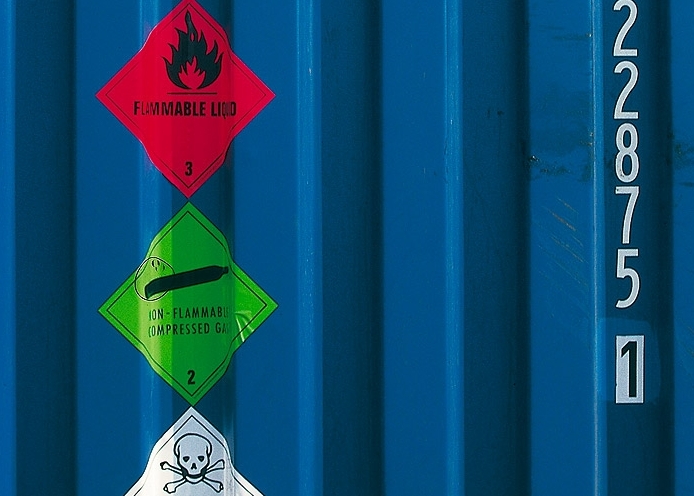
What’s really in the box asks the TT Club.  Photo: Port of Hamburg (Credit - Port Strategy)

What’s really in the box asks the TT Club. Photo: Port of Hamburg (Credit – Port Strategy)

In the claim, a cargo was booked, packed, declared and documented by a shipper as ‘Hookah burner (C.Tablets)’. When the ship caught fire at sea, significant costs were incurred by the ship because of mis-declared cargo, which was in fact activated carbon/charcoal.

Worryingly, when this was investigated further, the shipper had produced two safety data sheets – one was correct, but the other suggested that activated carbon was not considered to be a dangerous good.

TT Club argues that the situation is made far more difficult by the lack of consistency between the various governments about when SDS should be reviewed – Australia stipulates every five years, Canada every three and the EU Regulation recommends checking at “regular intervals”.

Peregrine Storrs-Fox, risk management director, TT Club, told Port Strategy: “We’ve identified two [problem]areas – firstly at the point of booking/contracting with a carrier and secondly post event. Conversations with a number of liner shipping companies confirm that the information given at the time of booking/contracting is frequently suspect. In one instance a single SDS had been presented for about 50 different cargoes over a period.”

Although this is an issue between shipper and carrier, which includes forwarders/logistics operators, there is wider issue here for port operators. During an incident, the port may be supplied with SDS in order to respond appropriately – so there is a risk associated with that too.

The advice to freight forwarders, operators and carriers from the Club is to “Be constantly vigilant and question anything that seems strange or suspicious”. The penalties for non-compliance can be severe. Source: PortStrategy.com

Nigeria to Change from FOB to CIF

Trade policy - a balancing actThe Federal Government of Nigeria is set to change its trade policy from the present Free on Board (FOB) to Cost, Insurance and Freight (CIF) which most countries across the world use because of its economic benefits, before the end of the year. FOB makes it mandatory for the buyer to determine who ships and insures the goods to his port of destination while the CIF ensures that the seller determines who ships and who insures the goods brought from him. Presently, goods bought from Nigeria are on FOB basis while Nigerian trade with other nations is on a CIF basis.

Disclosing the position of the federal government to Vanguard in Houston, Texas at the ongoing Offshore Technology Conference (OTC), Leke Oyewole, Special Adviser to President Goodluck Jonathan, said work has been completed on the document for a change in policy so as to help indigenous operators. (?)

The Economic Management Team (EMT) is to take a final look at the policy before returning it to the President for it to be signed into law.

Asked whether the policy would be reversed before the end of the year, the Special Adviser to the President said, ” I am hopeful, am very hopeful, but you also know that if today the President signs the policy into law, Nigerians would not begin by tomorrow. We need to give time sufficient enough for Nigerians to acquire vessels to begin to carry.”

He noted that the country presently “operates on FOB, in which case, as soon as we put cargo onboard the ship, foreign funds are released to Nigeria. When we go on CIF, it will mean waiting until delivery of cargo, before the money will come into Nigeria. There will be a gap, that gap most not be too wide otherwise it will hamper the national funding because we get most of our revenue from these products (petroleum products). Source: Vanguard, Lagos.

Home Affairs announces plans for Border Management Agency

safrica1Minister for Home Affairs, Naledi Pandor, in her recent budget debate  (click hyperlink to view full speech) to parliment, made brief allusion to the establishment of a Border Management Agency (BMA) in South Africa. The Agency will ensure coordination of and co-operation among the departments operating at South African points of entry and along our borders. The BMA will be led by the Department of Home Affairs and will involve SARS, SANDF, SAPS, Health and Agriculture. At present, focused attention is being paid to improving the management, capacity, and infrastructure at ports of entry. Last year over R110 million was allocated to ports of entry infrastructure via the Public Works budget. This year over R130 million is being made available in the DHA budget. A number of our ports of entry have been equipped with the enhanced movement control system (EMCS) while introducing the advanced passenger processing system (APP) for airlines. Source: Info.gov.za